Sports

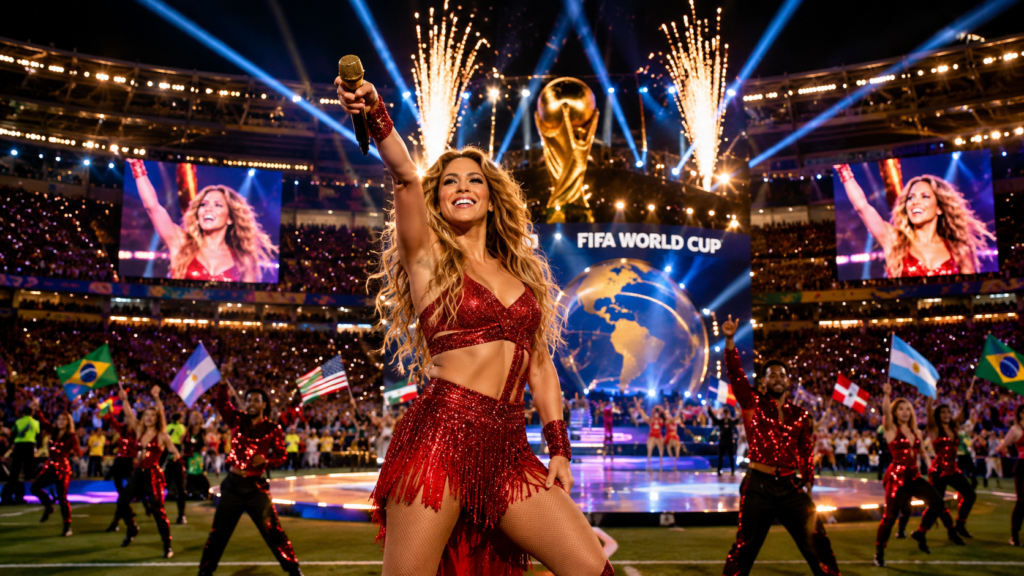
Shakira Headlines FIFA World Cup Final's Historic First Halftime Show

Shakira Headlines FIFA World Cup Final’s Historic First Halftime Show

Introduction For nearly a century, the FIFA World Cup Final followed one simple formula. The biggest match in football belonged almost entirely to the players. Halftime lasted just long enough for tactical adjustments, hydration, and recovery before the second half determined the world champion. That familiar routine changed in dramatic fashion. For the first time in FIFA World Cup history, the tournament’s championship match featured a large-scale halftime entertainment show starring internationally recognized music artists. The decision marked one of the boldest changes ever introduced to football’s biggest stage and immediately became one of the most talked-about moments of the tournament. FIFA had announced plans to introduce a Super Bowl-style halftime spectacle for the 2026 final, with Global Citizen helping produce the event and Coldplay assisting with artist selection. While football remained the centerpiece of the evening, the halftime performance sparked conversations that extended far beyond the pitch. Supporters praised the celebration of music and global culture. Critics questioned whether entertainment should reshape one of sport’s most respected traditions. The result was an event that generated headlines across sports, entertainment, and social media alike. One artist, however, attracted exceptional attention throughout the buildup and the performance itself. Shakira became one of the biggest reasons many casual viewers tuned in, reinforcing her status as football’s most recognizable musical ambassador. Shakira once again demonstrated why she remains one of the most recognizable musical figures associated with international football. Having performed at previous global football events during her career, her appearance naturally became one of the evening’s biggest talking points. A Historic First for FIFA Football has traditionally resisted adopting many entertainment elements that are common in North American sports. Unlike the NFL’s Super Bowl, the FIFA World Cup Final has historically focused almost exclusively on the match itself. Fans around the world viewed the fifteen-minute halftime break as an essential part of the competition rather than an opportunity for elaborate performances. That philosophy changed when FIFA announced plans to create the tournament’s first official halftime show. Instead of keeping the interval limited to tactical discussions inside the locker room, organizers introduced a globally televised entertainment production featuring internationally recognized performers. The move represented a significant shift in how football’s governing body envisions the future of its biggest event. Several factors likely influenced the decision: Traditional World Cup Final New FIFA Entertainment Model 15-minute halftime Expanded entertainment window Tactical focus Music and global culture Minimal stage production Large-scale live production Football-first presentation Football combined with entertainment Limited commercial activation Expanded global sponsorship opportunities Rather than replacing football, FIFA appears to be broadening the overall viewing experience for an increasingly diverse worldwide audience. Why FIFA Decided to Change Tradition Modern sports compete for attention in an entertainment landscape filled with streaming platforms, social media, and digital creators. Every major sporting organization is searching for new ways to engage younger audiences while increasing worldwide visibility. Football already commands the largest global audience of any sport. Even so, FIFA has increasingly explored ways to make its showcase events feel larger than life. Several motivations likely contributed to the decision. 1. Expanding Global Entertainment Football and music often share the same worldwide audience, and artists like Shakira help bridge those two worlds on the biggest international stage. Artists like Shakira have millions of fans across continents, making them natural ambassadors for events watched in virtually every country. Combining both worlds allows FIFA to appeal simultaneously to sports fans and casual viewers. 2. Creating Cultural Moments Major sporting events increasingly become cultural celebrations rather than simple competitions. Opening ceremonies already demonstrate this approach. Adding halftime entertainment extends that concept into the match itself. 3. Strengthening Global Broadcast Appeal Television audiences continue evolving. Many viewers now consume sporting events alongside social media conversations, live reactions, and digital content. A halftime show creates another major moment capable of generating worldwide discussion long after the final whistle. 4. Commercial Opportunities Large entertainment productions naturally attract advertisers, sponsors, and broadcast partners. Although football remains the priority, expanded entertainment programming may create additional business opportunities surrounding the tournament. Analysts have noted that FIFA’s strategy reflects an effort to broaden the event’s commercial appeal while reaching wider audiences. Why Shakira Was a Natural Choice Among the performers, few artists possess a stronger connection to international football than Shakira. Her music has accompanied football celebrations for years. She has become closely associated with major tournaments, multicultural audiences, and energetic live performances. Those qualities make her an ideal performer for an event intended to celebrate football’s global identity. Several characteristics explain her enduring popularity at sporting events. International Recognition Shakira enjoys worldwide recognition across North America, South America, Europe, Asia, and the Middle East. That international appeal aligns perfectly with FIFA’s global audience. High-Energy Performances Large stadium productions demand artists capable of maintaining excitement across enormous venues. Shakira’s stage presence has consistently suited those environments. Cross-Generational Appeal Unlike artists whose popularity centers on one generation, Shakira attracts longtime fans while continuing to reach younger audiences through streaming platforms. That broad appeal helps maximize worldwide engagement. Football and Music Have Been Growing Closer Although the World Cup had never featured an official halftime show before, football and music have shared an increasingly close relationship over the past two decades. Fans already expect: Opening ceremonies Trophy celebrations Tournament anthems Fan festivals Concerts surrounding major matches The addition of halftime entertainment represents another step in that evolution rather than a completely isolated idea. International tournaments increasingly blend: Sport Entertainment Digital media Celebrity culture Fan experiences As audiences evolve, organizers continue experimenting with new ways to celebrate football without losing the emotional importance of the competition itself. Early Fan Reactions The announcement alone generated significant debate across social media. Many supporters welcomed the opportunity to see globally recognized performers share the stage during football’s biggest event. Others remained cautious. Common reactions included: Positive Responses A celebration worthy of the world’s biggest sporting event. Greater cultural representation. Stronger global entertainment value. Exciting collaboration between music and football. Critical Responses Concern

Shakira Headlines FIFA World Cup Final’s Historic First Halftime Show Read More »

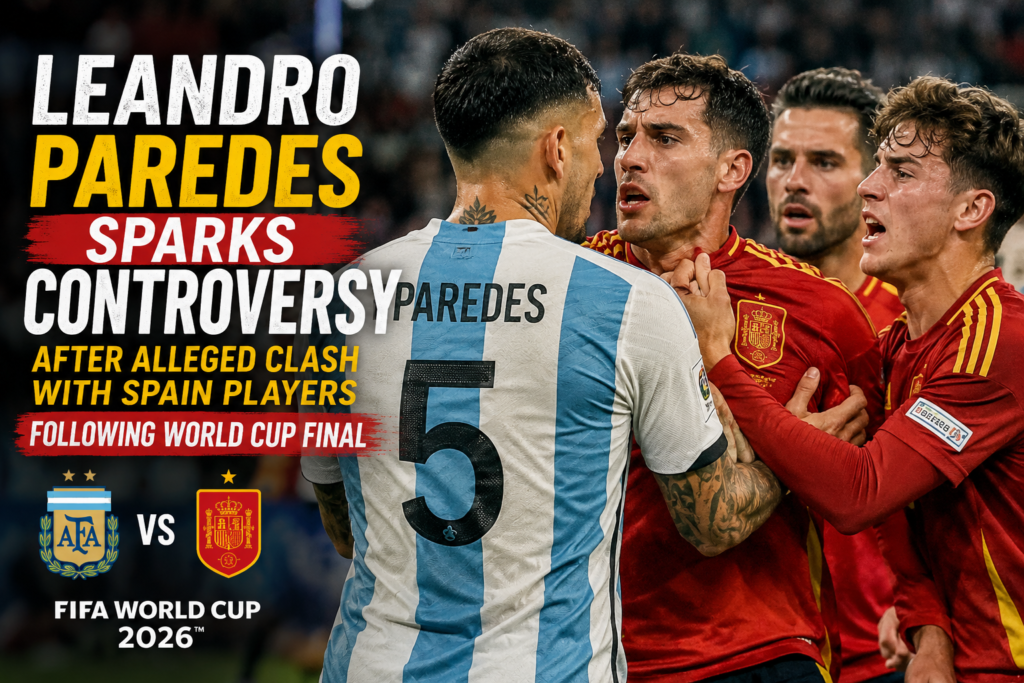
Leandro Paredes Sparks Controversy After Alleged Clash With Spain Players Following World Cup Final

Leandro Paredes Sparks Controversy After Alleged Clash With Spain Players Following World Cup Final

Introduction The 2026 FIFA World Cup final delivered everything football fans hoped for—high-level tactics, emotional moments, relentless intensity, and a dramatic finish. Yet, instead of being remembered only for Spain’s historic triumph, the match also became the center of debate because of a heated confrontation involving Argentina midfielder Leandro Paredes after the final whistle. Reports, television footage, and videos circulating online showed Paredes becoming involved in an altercation with multiple Spain players during the post-match celebrations, creating one of the tournament’s most talked-about storylines. While emotions often run high after a World Cup final, the scenes that unfolded in New Jersey quickly shifted the conversation away from football and toward sportsmanship. Fans, former players, analysts, and media outlets around the world began discussing whether the incident crossed a line and what consequences could follow. This article examines what reportedly happened, why the incident has generated widespread attention, and how it may affect both Paredes and Argentina moving forward. A World Cup Final That Had Everything Few matches carry as much pressure as a FIFA World Cup final. Every tackle, every pass, and every missed opportunity can define careers and shape football history. Spain entered the final with one of the tournament’s strongest defensive records, while Argentina arrived hoping to successfully defend its world title. The clash featured two technically gifted teams with different tactical identities, making it one of the most anticipated finals in recent memory. After a tense battle that remained scoreless for much of the contest, Spain eventually broke through in extra time to secure a 1-0 victory and lift another World Cup trophy. The win represented another landmark achievement for Spanish football and completed an impressive tournament campaign. However, celebrations lasted only moments before attention shifted toward an unexpected confrontation involving players from both teams. The Spotlight Quickly Shifted Away From Spain’s Victory Ordinarily, the story after a World Cup final centers on: The winning goal Tactical brilliance Emotional celebrations Individual awards Historic achievements Instead, social media feeds became flooded with clips showing players gathering in a tense exchange after the referee’s final whistle. Within minutes, videos spread across multiple platforms, with many viewers focusing on Leandro Paredes’ involvement in the confrontation rather than Spain’s championship celebration. Several sports broadcasters replayed the incident repeatedly while analysts debated exactly how events unfolded. Although emotions frequently boil over after major finals, many observers felt this incident overshadowed what should have been a memorable night for the new world champions. What Allegedly Happened After the Final Whistle? Based on widely circulated match footage and reports from multiple sports outlets, the confrontation began shortly after Spain secured victory. Early exchanges reportedly involved several players gathering near midfield before tensions escalated. According to available reports: Reported Sequence Description Final whistle Spain players begin celebrating their World Cup victory. Initial disagreement Players from both teams exchange words near midfield. Escalation More players arrive as the confrontation grows. Paredes becomes involved The Argentine midfielder is seen engaging physically with Spain players. Officials intervene Referees, coaching staff, and teammates separate the players. Discipline Paredes is reportedly shown a red card after the confrontation. Because several players entered the scene simultaneously, different camera angles captured different moments. As a result, discussions continue regarding the exact sequence of events that led to the confrontation. Why Leandro Paredes Became the Center of Attention Although numerous players appeared during the confrontation, much of the attention focused on Paredes. Television footage appeared to show the Argentine midfielder making physical contact with Spain defenders during the post-match chaos. Reports specifically referenced incidents involving Eric García and Gavi, with several outlets describing forceful confrontations that drew immediate reactions from nearby players. Whether viewed from television broadcasts or fan-recorded clips, Paredes quickly became the central figure in discussions surrounding the incident. Several football commentators argued that losing a World Cup final brings extraordinary disappointment, but maintaining composure remains an essential part of professional sports. Understanding the Emotional Context Before judging any player involved, it is important to recognize the extraordinary emotional environment surrounding a World Cup final. Players invest years preparing for the tournament. Many sacrifice club rest periods. Some know it could be their final appearance on football’s biggest stage. When defeat arrives after 120 exhausting minutes, emotions can overwhelm even experienced professionals. That context helps explain why tensions sometimes rise immediately after major finals. However, football’s biggest occasions also demand discipline. Many observers argued that frustration should never lead to physical confrontations after the match has ended. Reports Suggest Earlier Tensions During the Match The post-match incident did not appear to emerge without warning. Several reports indicated that Paredes had already been involved in heated moments after entering the match as a substitute. Among the reported incidents: Physical challenges Heated verbal exchanges Contact involving Spanish midfielders Referee intervention A yellow card during play These moments suggested that emotions had already been building before the final whistle, making the post-match confrontation less surprising to many analysts. Social Media Reacts Almost Instantly Within minutes, clips of the confrontation dominated online football discussions. Popular football accounts shared slow-motion videos, while supporters debated: Who started the confrontation? Did the reaction go too far? Should additional punishments follow? Were officials correct in their decisions? Could the incident have been prevented? As with many viral sporting moments, opinions varied dramatically. Some supporters defended the emotional reaction after losing football’s biggest match. Others argued there was no justification for physical conduct after the referee had already ended the game. Reddit discussions reflected the same divide. While some users questioned how the confrontation began, many others criticized the behavior shown after the match and emphasized the importance of sportsmanship regardless of the result. Why Sportsmanship Matters on Football’s Biggest Stage The FIFA World Cup reaches billions of viewers worldwide. Because of that enormous audience, players are often viewed as ambassadors for their countries and for the sport itself. Moments such as: Respectful handshakes Shirt exchanges Consoling opponents Celebrating responsibly often become lasting memories alongside the football itself. Likewise,

Leandro Paredes Sparks Controversy After Alleged Clash With Spain Players Following World Cup Final Read More »

Messi vs Yamal World Cup Final Brings Football’s Greatest Generation Clash

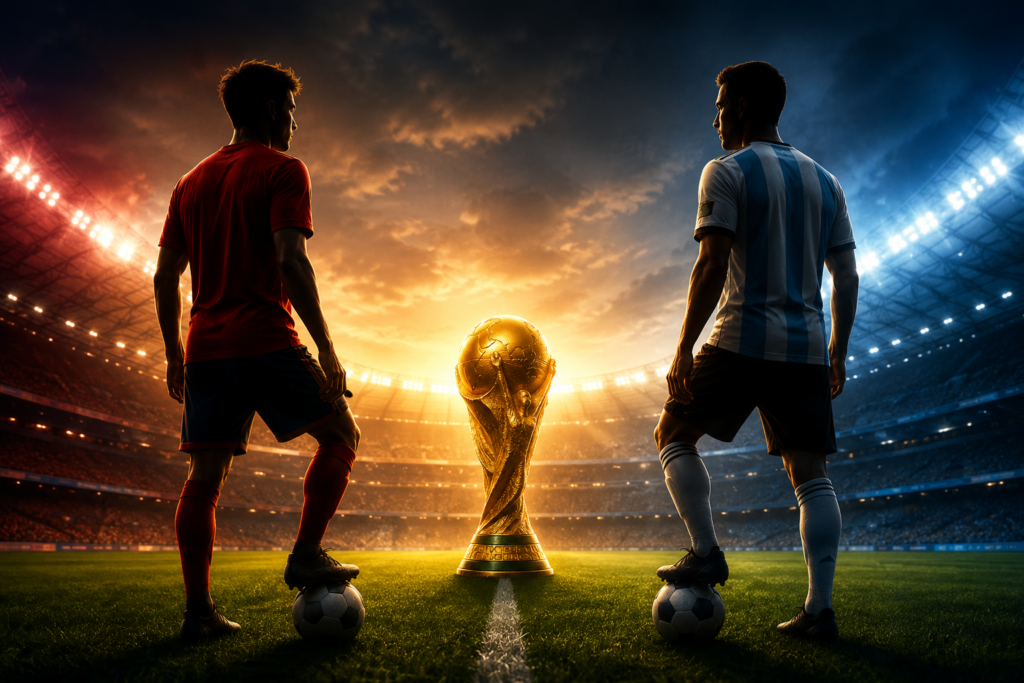
Messi vs Yamal: World Cup Final Brings Football’s Greatest Generation Clash

Introduction Lamine Yamal has already achieved what many footballers spend an entire career chasing. At just 18 years old, the Spanish sensation has become one of the biggest names in world football, earned the trust of millions of fans, and helped lead Spain to the FIFA World Cup final. Now, he stands on the sport’s biggest stage opposite a player whose legacy has inspired football fans for nearly two decades—Lionel Messi. This World Cup final is more than a championship match. It brings together two remarkable footballers from different generations. On one side is Messi, one of the greatest players in the history of the sport. On the other is Lamine Yamal, a fearless young talent who represents the future of international football. Although their careers are at very different stages, both players share one goal: lifting the FIFA World Cup trophy. That contrast has turned this final into one of the most anticipated football matches in recent memory. Why This World Cup Final Feels Different Every FIFA World Cup final attracts worldwide attention. However, some matches become larger than the competition itself because they tell a story that extends beyond ninety minutes. This final belongs in that category. Football supporters are not simply debating which nation has the stronger squad. Instead, conversations have focused on what this matchup represents for the sport’s future. One generation continues to demonstrate its greatness, while another begins writing its own history. That contrast has created extraordinary excitement. Several factors make this final unique: A legendary icon facing football’s newest superstar. Two nations known for attacking football and technical excellence. A clash between experience and youthful fearlessness. The possibility of witnessing a historic passing of the torch. Worldwide interest from both longtime supporters and younger fans discovering the sport. As a result, the match has attracted attention far beyond traditional football audiences. Casual viewers, former players, analysts, and sports media have all recognized the broader significance of this occasion. A Meeting Between Football’s Past, Present, and Future Football rarely offers perfect storylines. Great players often belong to different eras and never share the same stage during major international tournaments. This final changes that. Lionel Messi represents nearly twenty years of sustained excellence. Throughout his career, he has collected domestic titles, continental trophies, individual awards, and international success while maintaining extraordinary consistency. His influence stretches across multiple generations of football fans. By contrast, Lamine Yamal has emerged during a new era shaped by faster tactical systems, advanced analytics, and relentless global attention through social media. Despite the added pressure, he has displayed remarkable maturity both on and off the pitch. Their encounter reflects more than age differences. It highlights how football constantly reinvents itself. Every decade introduces new stars who learn from previous legends before developing their own identity. Today’s young players grew up watching Messi perform impossible feats. Now, many of them compete against him on football’s biggest stage. For Lamine Yamal, that reality becomes especially meaningful. Only a few years ago, he admired players like Messi from afar. Today, he prepares to challenge him in a World Cup final. Few athletes experience such a remarkable transition. How Lamine Yamal Became Spain’s Biggest Breakthrough Spain has produced world-class footballers for generations. From elegant midfielders to clinical forwards, the nation’s football culture emphasizes intelligence, creativity, and technical precision. Even within that tradition, Lamine Yamal has stood out. His rise has been remarkably rapid. Instead of requiring several seasons to establish himself, he adapted almost immediately to elite competition. Coaches quickly recognized his ability to make smart decisions under pressure. Defenders discovered how difficult it was to predict his movement. Fans embraced his fearless approach against experienced opponents. Several qualities explain his rapid development: Attribute Why It Matters Close ball control Allows him to escape tight defensive pressure. Quick acceleration Creates separation in one-on-one situations. Vision Helps identify passing lanes before defenders react. Creativity Produces unpredictable attacking opportunities. Composure Maintains confidence during high-pressure moments. Rather than relying solely on speed, Lamine Yamal combines technical skill with intelligent positioning. Consequently, he influences matches even when opponents focus heavily on limiting his space. That complete attacking profile has made him one of Spain’s most valuable players throughout the tournament. Messi Continues to Inspire Football’s Greatest Stage While Lamine Yamal represents football’s future, Lionel Messi remains its enduring symbol of excellence. Many athletes struggle to maintain elite performance after years of intense competition. Messi, however, continues to demonstrate exceptional vision, technical quality, and leadership whenever Argentina needs him most. His role has naturally evolved. Earlier in his career, he frequently dominated matches through explosive dribbling and constant attacking runs. Today, he combines experience with intelligence, choosing the right moments to influence the game rather than relying solely on physical attributes. That evolution has made him even more dangerous. Opponents understand his strengths. Yet stopping him remains one of football’s most difficult challenges. Argentina’s younger players also benefit from his presence. His calm leadership helps teammates remain composed during tense situations, especially in knockout matches where every mistake carries enormous consequences. As another World Cup final approaches, Messi once again finds himself at the center of football’s biggest story. The stage is now set for one of the most anticipated World Cup finals in recent memory. While Lionel Messi seeks another defining achievement in an already legendary career, Lamine Yamal has the chance to announce himself as the new face of international football. Their meeting promises far more than a contest between two exceptional players—it offers a rare moment where football’s past and future collide under the brightest lights in the sport. Spain’s Road to the FIFA World Cup Final Spain entered the tournament carrying high expectations, but questions surrounded the team’s ability to balance youthful energy with international experience. Although the squad featured several established stars, much of the spotlight quickly shifted toward Lamine Yamal, whose performances became one of the defining stories of the competition. From the opening group-stage match, Spain displayed the qualities that have long

Messi vs Yamal: World Cup Final Brings Football’s Greatest Generation Clash Read More »

World Cup Halftime Show FIFA's Historic Move Could Redefine Football's Biggest Stage

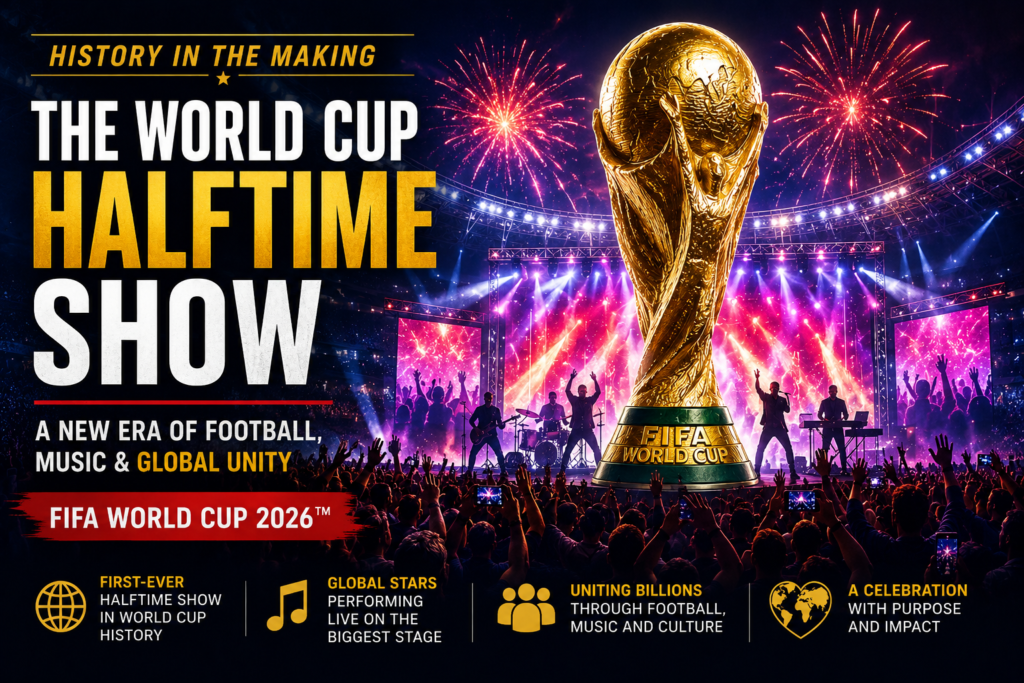
World Cup Halftime Show: FIFA’s Historic Move Could Redefine Football’s Biggest Stage

Introduction For generations, the FIFA World Cup final has followed a familiar rhythm. Forty-five minutes of football, a brief halftime interval for tactical adjustments, and another forty-five minutes that often decide sporting history. That routine has remained almost untouched despite decades of change across the game. Now, that tradition has entered a new era. The world cup halftime show has become one of the biggest talking points surrounding the 2026 FIFA World Cup final. Instead of a quiet intermission, fans are witnessing a large-scale live entertainment production featuring internationally recognized music stars. It marks the first time FIFA has introduced a Super Bowl-style halftime performance during the men’s World Cup final, signaling a major shift in how the organization presents its flagship event. While millions are excited about the spectacle, others are asking important questions. Will the added entertainment enhance the experience? Could it distract from football’s biggest match? And what does this change mean for future World Cups? This article explores the story behind FIFA’s historic decision, why the halftime show matters, and how it could reshape the future of global sports entertainment. A Historic First for the FIFA World Cup The FIFA World Cup has always celebrated football above everything else. Opening ceremonies, cultural performances, and pre-match entertainment have been part of previous tournaments, but once kickoff arrived, the focus stayed entirely on the action. Halftime traditionally lasted around 15 minutes. Players headed to the locker room, coaches adjusted tactics, broadcasters analyzed the first half, and fans caught their breath before the match resumed. That formula remained unchanged for nearly a century. The 2026 tournament breaks from that history by introducing an official halftime entertainment show during the final. FIFA announced the initiative months before the championship match, describing it as a landmark moment that combines football, music, and social impact on one of the world’s largest stages. The performance is produced alongside Global Citizen, while Coldplay’s Chris Martin helped curate the artistic lineup. Rather than replacing football, FIFA says the goal is to create an unforgettable celebration that reflects the tournament’s worldwide audience. Why FIFA Introduced a World Cup Halftime Show The decision did not happen overnight. Football has become more global than ever before. Every World Cup attracts billions of viewers across television, streaming platforms, mobile devices, and social media. At the same time, sports organizations increasingly compete for attention in an entertainment-driven media landscape. Several factors likely influenced FIFA’s decision. Creating a Global Entertainment Event Modern audiences expect more than just competition. They also want memorable moments that extend beyond the game itself. Major sporting events now include: Celebrity appearances Live concerts Interactive fan experiences Social media campaigns Behind-the-scenes digital content The World Cup already attracts enormous audiences. Adding premium entertainment creates another reason for viewers who may not usually watch football to tune in. Reaching Younger Audiences Generation Z and younger Millennials often consume sports differently than previous generations. Many fans discover sporting moments through: TikTok clips Instagram Reels YouTube Shorts Live reaction videos Streaming highlights A halftime performance featuring globally recognized artists creates additional viral moments that spread across multiple platforms within minutes. That broader digital reach helps introduce football to audiences who might otherwise overlook the event. Strengthening Football’s Cultural Influence Football is already the world’s most popular sport. Music is one of the world’s most universal languages. Combining both creates an event capable of reaching virtually every demographic regardless of language or nationality. Instead of limiting halftime to tactical discussions, FIFA has transformed it into another opportunity to celebrate culture, creativity, and global unity. The Inspiration Behind the New Format Whenever people discuss the world cup halftime show, another event quickly enters the conversation. The NFL’s Super Bowl. For decades, the Super Bowl halftime show has evolved into one of the most anticipated entertainment events anywhere in the world. Some viewers watch primarily for the musical performance rather than the football game itself. Legendary performers have used the Super Bowl stage to deliver career-defining performances, creating moments that remain part of pop culture years later. FIFA has clearly recognized that entertainment can amplify a sporting event without replacing its competitive significance. Still, there are important differences. FIFA World Cup Final Super Bowl Global football audience Primarily North American audience International national teams Professional club franchises Played every four years Played annually First halftime show in 2026 Halftime tradition spanning decades Football remains the central attraction Entertainment has long been part of the event Although comparisons are inevitable, FIFA is creating its own version rather than copying the NFL outright. The Star Power Behind the Event One reason the announcement generated worldwide attention is the scale of the performer lineup. FIFA confirmed that several internationally known artists would headline the historic performance, with Chris Martin serving as curator. Later announcements expanded the lineup even further, emphasizing the event’s global appeal and charitable mission. The combination represents multiple musical styles, generations, and fan communities. Instead of targeting one region, FIFA assembled performers with worldwide recognition. That strategy reflects the tournament itself. Every World Cup brings together nations from every continent. The halftime show follows the same philosophy by showcasing artists whose music resonates across different cultures. More Than Entertainment One important aspect often overlooked is that the halftime show is tied to a broader charitable initiative. According to FIFA, the event supports the FIFA Global Citizen Education Fund, which aims to expand educational opportunities and football access for children worldwide. FIFA has also pledged contributions connected to ticket sales for the tournament. This means the performance serves multiple purposes: Global entertainment International cultural celebration Fundraising awareness Educational advocacy Worldwide broadcast event That combination distinguishes it from many traditional sporting performances. Why the Announcement Sparked Debate Almost immediately after FIFA revealed its plans, opinions divided. Some supporters welcomed the innovation. Others questioned whether football should adopt traditions associated with American sports. The discussion quickly expanded beyond music. It became a conversation about football’s identity. Supporters of the idea argue that: Football continues evolving.

World Cup Halftime Show: FIFA’s Historic Move Could Redefine Football’s Biggest Stage Read More »

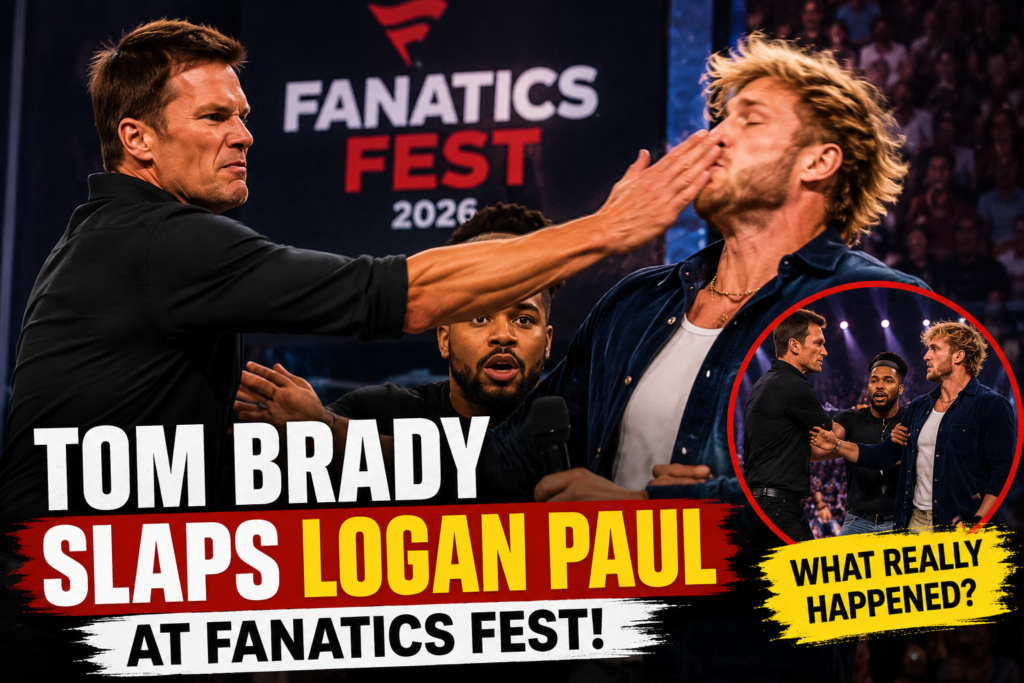
Tom Brady Slaps Logan Paul at Fanatics Fest What Really Happened

Tom Brady Slaps Logan Paul at Fanatics Fest: What Really Happened?

Introduction Tom Brady knows how to capture attention. During his legendary NFL career, he built a reputation for winning championships, breaking records, and performing under pressure. Even after retiring from football, he continues to make headlines through business ventures, media appearances, and major public events. Recently, however, Brady found himself in the spotlight for a completely different reason. During Fanatics Fest 2026, Tom Brady and WWE Superstar Logan Paul shared the stage for what appeared to be a lighthearted exchange. However, the atmosphere changed quickly. After a heated verbal back-and-forth, Brady slapped Paul in front of a live audience. The moment lasted only a few seconds, yet it immediately became one of the biggest viral sports stories of the year. Videos spread across social media within minutes, while fans debated exactly what had happened. Naturally, the incident raised several questions. Was the slap genuine? Was it connected to WWE entertainment? Had months of public trash talk finally reached a breaking point? Or was the entire moment created to entertain the crowd? Although the answers remain unclear, one fact is certain. Millions of people watched the clip, shared their opinions, and helped turn a brief on-stage exchange into a worldwide conversation. Why Everyone Is Talking About Tom Brady Tom Brady remains one of the most recognizable athletes in the world. Therefore, almost everything he does attracts public attention. At the same time, Logan Paul has become one of the biggest crossover stars in modern entertainment. Besides competing in WWE, he has built successful careers in podcasting, business, boxing, and digital media. When two famous personalities with massive fan bases meet on the same stage, public interest grows naturally. As a result, the Fanatics Fest confrontation reached several audiences at once. NFL fans WWE fans Sports collectors Podcast listeners YouTube viewers General entertainment audiences Because each group viewed the incident differently, discussions continued long after the event ended. What Happened at Fanatics Fest? Fanatics Fest has become one of the largest sports fan conventions in the United States. Every year, the event brings together legendary athletes, current stars, celebrities, brands, and thousands of fans. Visitors can attend autograph sessions, live interviews, interactive games, panel discussions, and exclusive experiences. Consequently, every appearance has the potential to create memorable moments. During one featured session, Tom Brady and Logan Paul appeared together before a packed audience. At first, both men exchanged playful comments. Soon afterward, the conversation became more intense. Then, according to widely shared videos, Brady reached forward and slapped Paul across the face during the exchange. NBA star Karl-Anthony Towns quickly stepped between them as people nearby reacted with surprise. Although the confrontation lasted only seconds, it immediately became the defining moment of the event. Within hours: Videos spread across social media. Sports networks replayed the footage. Entertainment websites covered the story. Fans created memes and reaction videos. Commentators debated what actually happened. Consequently, the clip became impossible to ignore. Timeline of the Viral Incident Event What Happened Stage Appearance Tom Brady and Logan Paul appeared together at Fanatics Fest. Verbal Exchange The conversation became increasingly heated. Viral Moment Brady slapped Logan Paul during the exchange. Immediate Response Karl-Anthony Towns stepped between both men. Online Reaction Videos quickly spread across social media. Public Debate Fans questioned whether the incident was real or planned. Why the Moment Went Viral So Quickly Many celebrity disagreements receive attention. However, very few dominate headlines around the world. Several factors helped this incident spread so quickly. Two Global Personalities First, Tom Brady is one of the greatest quarterbacks in NFL history. Because of his legendary career, every public appearance attracts enormous attention. Meanwhile, Logan Paul has built a worldwide audience through WWE, YouTube, podcasting, boxing, and business. Therefore, his involvement immediately expanded the story beyond traditional sports fans. The Unexpected Nature of the Incident Nobody expected the conversation to become physical. Instead, fans anticipated a fun discussion between two popular personalities. When the exchange suddenly changed direction, the audience reacted immediately. As a result, people rushed to share videos online before the event even ended. Social Media Accelerated the Story Today’s sports news spreads much faster than it did only a few years ago. Instead of waiting for television coverage, fans now upload videos directly from their phones. Consequently, millions of people can watch the same moment almost instantly. That rapid sharing played a major role in making the Brady-Paul confrontation one of the weekend’s biggest trending topics. Tom Brady’s Competitive Personality Throughout his NFL career, Tom Brady became known for his relentless competitive spirit. He rarely accepted defeat, and he consistently pushed himself to improve. Because of that mindset, many fans believe his competitive nature remains unchanged even after retirement. Today, Brady continues working in broadcasting, business, investments, and public appearances. Nevertheless, his passion for competition still shapes his public image. Therefore, some viewers believed the confrontation reflected Brady’s natural intensity. Others disagreed and suggested the exchange may have included entertainment elements. Either way, Brady’s reputation influenced how people interpreted the incident. Logan Paul Continues to Blend Sports and Entertainment Logan Paul has successfully transformed his career several times. Initially, he became famous as a digital creator. Later, he entered boxing, launched successful businesses, and joined WWE. Today, millions of fans recognize him as one of professional wrestling’s biggest crossover stars. Inside WWE, Paul often performs storylines that blur the line between reality and entertainment. Consequently, many wrestling fans immediately wondered whether the Fanatics Fest incident could connect to future WWE programming. However, no official announcement has confirmed such a connection. Was the Slap Real? This question quickly became the biggest topic online. Some viewers believed the confrontation looked completely genuine. Others argued that Logan Paul’s wrestling background made a planned segment seem equally possible. Reasons Some Fans Believed It Was Real Brady appeared emotionally invested. People around the stage reacted quickly. The confrontation happened without warning. Reasons Others Believed It Was Planned Logan Paul regularly performs realistic WWE storylines. Celebrity appearances often include entertainment elements.

Tom Brady Slaps Logan Paul at Fanatics Fest: What Really Happened? Read More »