
Music

Explore the latest Music news, new releases, artist updates, albums, songs and concert stories. Discover fresh trends and coverage from artists across the US and global industry on CLIMAX Magazine every day.

Cassandra Wilson performing as a Grammy-winning jazz singer

Cassandra Wilson Dies at 70: Life, Music Career, Grammy Wins and Legacy

Cassandra Wilson, the Grammy-winning jazz singer whose deep, distinctive voice helped reshape contemporary vocal jazz, has died at 70 in her hometown of Jackson, Mississippi. The news marks the loss of one of American jazz’s most influential vocalists, but Wilson’s career reached far beyond traditional jazz. She brought blues, folk, pop, R&B and country influences into her music while developing an unmistakable artistic identity. For decades, Cassandra Wilson built a reputation as an adventurous interpreter and recording artist. Her work earned four Grammy nominations and two wins, while albums such as Blue Light ’Til Dawn, New Moon Daughter and Loverly established important milestones in her career. Her influence also extended beyond awards. Wilson became a National Endowment for the Arts Jazz Master in 2022, joining an elite group recognized for major contributions to American jazz. Cassandra Wilson Dies at 70: What We Know Cassandra Wilson died at the age of 70 in Jackson, Mississippi, according to reporting published after her death. She was known professionally as a singer, songwriter and producer and spent several decades developing a sound that resisted easy classification. Her death closes a remarkable chapter in contemporary jazz. Wilson emerged from the New York jazz scene in the 1980s and eventually became one of the most recognizable voices associated with modern vocal jazz. Rather than limiting herself to established jazz standards, she regularly explored music from different American traditions. Blues, folk, R&B, country and pop became important parts of her musical vocabulary. That flexibility helped her connect with listeners who might not have considered themselves traditional jazz audiences. Wilson’s recording career also produced several critically important albums. Her 1993 Blue Note debut, Blue Light ’Til Dawn, represented a major artistic turning point and helped establish the direction that would define much of her later work. Her achievements included two Grammy victories. She won Best Jazz Vocal Album for New Moon Daughter in 1997 and again for Loverly in 2009. In addition, her recognition reached the highest levels of American jazz. The National Endowment for the Arts named Wilson a Jazz Master in 2022. Who Was Cassandra Wilson? Cassandra Wilson was an American jazz vocalist celebrated for her powerful contralto voice and adventurous approach to song interpretation. She developed a style that could move from intimate jazz performances to blues-rooted material without losing its distinctive character. Her musical journey started early. According to Blue Note Records, Wilson began playing piano and guitar at nine and was already working as a vocalist by the middle of the 1970s. Her early musical experiences exposed her to a wide range of material rather than one narrowly defined style. That broad foundation became important later. Wilson never treated genre boundaries as fixed rules. Instead, she approached songs as material that could be rearranged, reinterpreted and given a different emotional character. Her career eventually took her to New York, where she became involved with a younger generation of musicians pushing jazz in unconventional directions. That period helped expand her musical vocabulary before she developed the roots-oriented sound that brought her wider recognition. Wilson’s later success did not erase those experimental beginnings. Instead, she combined them with her interest in older American musical traditions. That balance became one of the defining qualities of her career: she could honor the past while still making the material sound personal and contemporary. Early Musical Beginnings Wilson grew up in Mississippi in a musical environment that encouraged her early development. Her first instruments included piano and clarinet, while she later developed as a vocalist and guitarist. Blue Note’s biography notes that she began playing piano and guitar at nine and was performing as a vocalist by the mid-1970s. Those early experiences gave Wilson a foundation that extended beyond vocal technique. She learned to approach music through rhythm, melody and instrumentation, which later helped her work comfortably with musicians from different jazz traditions. Her Mississippi background also remained an important part of the musical identity she carried into adulthood. Even after entering the New York jazz world, Wilson continued to draw from blues and other roots traditions. That connection became especially important when she eventually moved toward the acoustic, blues-oriented sound that defined her breakthrough period. Moving Into the New York Jazz Scene Wilson moved to New York in 1982 after spending a year in New Orleans. There, she began working with established musicians including Dave Holland and Abbey Lincoln. Her meeting with saxophonist and composer Steve Coleman became another important step. Wilson joined the M-Base Collective, a group associated with an experimental approach to rhythm, composition and contemporary jazz. The experience placed her in a demanding creative environment. The M-Base musicians explored complex structures and influences drawn from funk, soul and other musical traditions. Blue Note identifies Wilson among the musicians connected to the collective. Wilson also worked with the group New Air and recorded her first album as a leader in 1985. These early years mattered because they gave her experience outside conventional vocal-jazz settings. She was learning how to use her voice inside increasingly adventurous musical arrangements. That background would later help her create a sound that felt both rooted and experimental. Cassandra Wilson’s Breakthrough With Blue Note Records Cassandra Wilson’s career changed dramatically when she began exploring a more roots-oriented sound. After several earlier recordings, she turned toward acoustic arrangements and material connected to blues, folk and other American traditions. That shift produced Blue Light ’Til Dawn, her 1993 Blue Note debut. The album became a defining moment because Wilson no longer sounded confined to conventional vocal-jazz expectations. Instead, she built performances around atmosphere, rhythm and the emotional character of each song. The album included three original compositions alongside striking interpretations of songs associated with artists such as Robert Johnson, Joni Mitchell and Van Morrison. Wilson’s approach made those songs feel connected to jazz while retaining their blues, folk and popular-music identities. Blue Note later described the record as a landmark release that helped open another path for vocal jazz. Its influence reached younger

Cassandra Wilson Dies at 70: Life, Music Career, Grammy Wins and Legacy Read More »

Carly Pearce featured image highlighting her country music career, Grammy win, Grand Ole Opry membership, and latest album

Carly Pearce: Biography, Music, Career, Awards, and Latest Album

Carly Pearce has built her country music career around something increasingly rare: the ability to make traditional influences feel personal and current. From her Kentucky upbringing to the Grand Ole Opry stage, her story has been shaped by persistence, heartbreak, and a deep respect for country music’s roots. In 2026, that journey has entered another chapter with the release of her fifth studio album, Honest Woman. Pearce first drew national attention with “Every Little Thing,” a song that turned a long period of uncertainty into a breakthrough moment. Since then, she has earned major country music honors, a Grammy win, and a place in the Grand Ole Opry. Yet her rise did not happen overnight. Long before the awards and chart success, Pearce was a young performer from Kentucky who knew she wanted to make music her life. Her career offers a useful look at how an artist can remain connected to traditional country while continuing to evolve. That balance has become one of the defining features of Pearce’s music. Carly Pearce’s Early Life and Kentucky Roots Growing Up in Taylor Mill, Kentucky Carly Pearce was born and raised in Taylor Mill, Kentucky, where country and bluegrass music became an important part of her early life. The Grand Ole Opry identifies Taylor Mill as her hometown, and her connection to Kentucky remains central to the way she describes her musical identity. Pearce developed an interest in performing while she was still young. Rather than treating music as a distant ambition, she began working toward a professional career early. That decision eventually took her away from Kentucky and into one of the most influential environments for her development as an entertainer. Her musical influences also helped shape the sound she would later bring to country radio. Pearce has cited artists including Dolly Parton, The Chicks, Trisha Yearwood, Reba McEntire, and Patty Loveless among the performers who influenced her. Those influences help explain her comfort with traditional country storytelling, strong female perspectives, and emotionally direct songs. That foundation became especially important as Pearce developed a style that could fit contemporary country without losing its connection to the genre’s older traditions. Starting Her Professional Career Young At 16, Pearce left her Kentucky home and high school to take a job performing at Dollywood in Tennessee. That move marked one of the earliest major turning points in her career. How Dollywood Shaped Carly Pearce’s Career Working at Dollywood gave Pearce more than a place to perform. It put a young artist inside an environment closely connected to country music history and live entertainment. The experience also created an unexpected connection to Dolly Parton, whose influence would become significant later in Pearce’s career. Pearce’s path from performing at Dollywood to eventually becoming a Grand Ole Opry member gives her story a distinctive full-circle quality. At Dollywood, Pearce had to develop the practical skills that come with performing regularly for an audience. That kind of experience can teach an artist how to command a stage, communicate a song clearly, and connect with people beyond a recording studio. The environment also reinforced her relationship with classic country music. Pearce has continued to describe herself as deeply rooted in the genre’s traditions while embracing its modern direction. Years later, Dolly Parton would surprise Pearce with an invitation to join the Grand Ole Opry after Pearce had made more than 85 appearances there. The connection was especially meaningful because Parton represented both the tradition Pearce admired and the place where her own professional journey had begun. In that sense, Dollywood was not simply an early job. It became one of the foundations of Pearce’s identity as a country performer. Carly Pearce’s Breakthrough With Every Little Thing The Song That Changed Her Career Pearce’s national breakthrough arrived with “Every Little Thing,” the title track from her debut album. The song transformed her from a developing Nashville artist into a recognizable country name and became a defining moment in her early career. Her official biography describes the track as Platinum-certified and “history-making,” while the Grand Ole Opry credits it with helping launch her rise in country music. The appeal of “Every Little Thing” came from its emotional directness. Instead of relying on a complicated concept, the song centered on the lingering details of a relationship that had ended. Pearce delivered it with a vocal style that sounded intimate while still fitting comfortably within mainstream country. That combination helped the song stand out. It introduced listeners to an artist who could make traditional country heartbreak feel immediate rather than nostalgic. Her Debut Album and Rising Profile The success of “Every Little Thing” gave Pearce the platform she needed for her debut album, also titled Every Little Thing. The project established the musical identity that would guide much of her early career: contemporary country production supported by traditional storytelling and a strong emphasis on emotional honesty. From there, Pearce began building the résumé that would eventually lead to major awards, high-profile collaborations, and her Grand Ole Opry induction. The breakthrough mattered because it proved that her years of preparation had finally translated into a national audience. Her journey from Kentucky and Dollywood to country radio had entered a new stage. Carly Pearce and the Evolution of Her Music Carly Pearce’s career has developed through a steady balance between contemporary country and the traditional sounds that shaped her as a young performer. While her early breakthrough introduced her to mainstream country audiences, later projects gave her more room to explore personal storytelling and the classic country influences she had admired for years. That evolution became especially clear with 29: Written in Stone. Pearce has described the album as a project that allowed her to become more honest and more fully herself as a country artist. The record arrived after a difficult period in her personal life, but she approached the material as more than a collection of heartbreak songs. She used the experience to examine identity, relationships, resilience, and the process of moving

Carly Pearce: Biography, Music, Career, Awards, and Latest Album Read More »

Tim McGraw falls onstage during his Cincinnati concert while performing

Tim McGraw Falls Onstage During Cincinnati Concert, Quickly Gets Back Up

Tim McGraw had an unexpected moment during his Cincinnati concert on August 27 when he fell backward onstage while performing one of his biggest hits, “I Like It, I Love It.” The country star lost his footing in front of the crowd at Riverbend Music Center, but the mishap lasted only moments before he was back on his feet and continuing the performance. The fall quickly attracted attention after concertgoers shared videos of the moment online. McGraw appeared to take the incident in stride, smiling as he recovered instead of allowing the stumble to interrupt the show. For fans who watched the footage, the most notable part was not simply that the 59-year-old singer went down, but how quickly he returned to performing. The incident also came after an unusual start to McGraw’s Cincinnati appearance. Reports said the singer arrived roughly 40 minutes late because of travel and weather-related problems. Even with that delay, he eventually made his way onto the Riverbend stage and delivered the performance fans had come to see. Tim McGraw Falls Onstage During Cincinnati Concert McGraw was performing “I Like It, I Love It” when the unexpected fall happened. The 1995 hit remains one of the songs most closely associated with his high-energy country performances, making the mishap particularly noticeable as he moved around the stage. According to footage from the concert, McGraw stepped backward and suddenly lost his footing. He fell onto the stage, with his legs briefly lifting into the air before he sat back up. Rather than staying down or stopping the song, he quickly pushed himself to his feet and returned to the performance. The moment appeared more dramatic than its aftermath. McGraw smiled as he recovered, and he continued engaging with the audience. Reports from the show indicate that he also pointed out the problem with the stage after getting back up, helping turn an awkward moment into something closer to a joke between the performer and the crowd. For the audience, the quick recovery became part of the night’s entertainment. Concerts are unpredictable by nature, and even a veteran performer can encounter an unexpected obstacle. In McGraw’s case, the stumble did not derail the performance. Instead, he got back up and kept singing. What Happened When Tim McGraw Fell on Stage? The Fall Happened During “I Like It, I Love It” The incident occurred while McGraw performed “I Like It, I Love It” during his Cincinnati stop. Video from the show shows him moving across the stage before stepping backward and suddenly going down. Several reports described the fall as a result of his boot catching or interacting with a problem in the stage flooring. McGraw himself appeared to identify the area after he stood up, pointing out that there was a hole in the stage. That detail matters because the available footage does not suggest that McGraw simply collapsed without warning. Instead, the video shows a sudden loss of footing while he was moving backward. The singer was also performing in front of a large crowd at Riverbend Music Center, meaning the unexpected stumble happened in full view of thousands of fans. Phones were already recording the concert, allowing footage of the incident to spread quickly online afterward. Still, the moment itself lasted only a few seconds. McGraw did not remain on the floor for an extended period, and he quickly resumed the song. McGraw Quickly Got Back to Performing McGraw’s immediate response helped keep the incident from becoming a major interruption. After falling backward, he sat up, smiled and pulled himself back to his feet. He then continued performing instead of leaving the stage or ending the song. His reaction also reassured the audience. Although a fall like that can understandably make fans wonder whether a performer has been injured, McGraw’s actions immediately afterward showed that he was able to continue the concert. The singer even appeared to acknowledge the spot where he fell before moving on with the performance. That combination of recovery and humor gave the audience a chance to laugh with him rather than simply worry about what had happened. In a live concert, performers often have to react to unexpected technical problems, wardrobe issues, missed cues or physical mishaps without breaking the momentum of the show. McGraw’s Cincinnati performance offered another example of that reality. He fell. He got back up. Then he kept singing. Why Was Tim McGraw Late to the Cincinnati Show? Tim McGraw’s stage fall was not the only unexpected moment during his Cincinnati concert. The evening had already started differently than planned because the singer arrived well after his scheduled performance time. Travel and Weather Issues Delayed His Arrival McGraw was expected to begin his set at around 9 p.m. at Riverbend Music Center on August 27. Instead, he did not take the stage until roughly 9:40 p.m., according to reports from the concert. Travel and weather-related problems contributed to the delay. When McGraw finally appeared, he acknowledged the unusual start with a simple message to the Cincinnati crowd: “I made it!” The comment immediately addressed what many fans had been wondering as they waited. Rather than allowing the late arrival to dominate the evening, McGraw moved forward with the performance. The delay became part of the night’s story, but the singer still had a full set to deliver. That made the later fall even more unexpected. Despite the difficult start, McGraw appeared determined to settle into the show and give the audience the performance they had come to see. McGraw Addressed the Crowd After Arriving McGraw’s arrival gave him an opportunity to acknowledge the fans who had waited through the delay. Reports indicate that he apologized and explained that travel issues had held him up. The Cincinnati audience ultimately stayed with him, and the performance continued with songs from across his career. The singer also included “My Best Friend,” a song he had not performed in some time and which his wife, Faith Hill, had requested. That detail

Tim McGraw Falls Onstage During Cincinnati Concert, Quickly Gets Back Up Read More »

Malaysian drummer Raja Azreen Raja Talib performing with Meditasi before his death

Malaysian Drummer Raja Azreen Raja Talib Dies Onstage During Concert at 56

Malaysian drummer dies onstage after Raja Azreen Raja Talib collapsed during a Meditasi performance at the Teruntum Rock Festival in Kuantan, Malaysia. The 56-year-old musician suddenly fell over his drum kit during the band’s second song. Medics took him to Tengku Ampuan Afzan Hospital, where he later died. Raja Azreen had been playing with Meditasi when he suddenly slumped over his drum kit. The band had completed only two songs from a planned 10-song set when the drummer collapsed, leaving fellow musicians, festival staff and audience members alarmed. He was taken backstage and then transported to Tengku Ampuan Afzan Hospital, where he was later pronounced dead. The news has drawn attention well beyond Malaysia because of the circumstances surrounding the death. Raja Azreen was not simply a session musician appearing for a one-off performance. He was a longtime member of Meditasi, a Malaysian rock group with roots reaching back to the 1980s and a history connected to the country’s influential rock scene. His death therefore represents both a personal loss for his bandmates and another significant moment for fans of Malaysian rock music. Malaysian Drummer Dies Onstage During Meditasi Performance Raja Azreen Raja Talib’s death occurred in the middle of what was expected to be a regular festival appearance for Meditasi. The band was booked to perform a 10-song set at the Teruntum Rock Festival, but the performance stopped after only its second song when Azreen suddenly collapsed at his drum kit. The incident happened on July 18 in Kuantan, a city in Malaysia’s Pahang state. According to reports, the drummer lost consciousness while performing, prompting an immediate response from those around him. Meditasi frontman Bakaruddin Daud, known as Burn, rushed toward his bandmate after realizing something was seriously wrong. Festival personnel and members of the band then moved Raja Azreen from the stage area so he could receive medical attention. An ambulance arrived shortly afterward, and he was taken to Tengku Ampuan Afzan Hospital. Despite medical efforts, he did not recover. The sudden nature of the incident made the loss particularly shocking. Reports indicate that Azreen had appeared cheerful before the show and had not given his bandmates an obvious indication that he would be unable to perform. His collapse came only minutes into the band’s set, turning a routine rock festival appearance into the final performance of his career. For fans who witnessed the performance, the moment was especially difficult because Raja Azreen was doing what he had spent much of his life doing: playing drums onstage with a band he had remained connected to for decades. Who Was Raja Azreen Raja Talib? Raja Azreen Raja Talib was a veteran Malaysian musician best known for his work as the drummer of Meditasi. He was 56 when he died on July 18, 2026. His career was closely associated with the Malaysian rock scene, particularly through his long relationship with Meditasi. His Role as Meditasi’s Drummer Azreen’s importance to Meditasi extended beyond simply occupying the drummer’s seat. He was part of a band whose history stretches back to the early years of Malaysia’s rock movement. The group originally formed in 1983 under the name Metal Wizard before adopting the Meditasi name in 1989. The band later became known among fans during the prominent Malaysian rock era of the 1990s. After a period away from the active music scene, Meditasi reunited in 2015. That return allowed the group to reconnect with longtime listeners while introducing its music to newer audiences. Azreen remained part of that continuing chapter of the band’s story. His death consequently affects more than the immediate Meditasi lineup. For followers who had known the group for years, Raja Azreen represented continuity between different generations of Malaysian rock. His final appearance with the band also became an unexpectedly significant part of that history. The circumstances of his death have now brought renewed attention to both the drummer and the group he helped carry forward. What Happened When the Drummer Collapsed Onstage? The performance at Teruntum Rock Festival had barely begun when the situation changed. Meditasi was working through its planned set when Raja Azreen suddenly collapsed over his drum kit during the second song. Reports identify the performance date as July 18, 2026. Bandmates and Festival Staff Respond Burn, Meditasi’s frontman, noticed the drummer’s collapse and moved toward him. The incident immediately caused concern among people watching the performance. According to reporting from Malaysian outlets, Azreen did not respond when his bandmate attempted to get his attention. The band and festival crew then moved him backstage while waiting for emergency assistance. Medical personnel arrived and transported him to Tengku Ampuan Afzan Hospital for further treatment. He later died at the hospital. The sequence lasted only a short time, but its impact on the people at the festival was profound. A live music performance that had begun normally suddenly became an emergency, and the band lost a longtime member in front of an audience. Reports also say that Azreen had seemed healthy and in good spirits before going onstage. That detail helps explain why the collapse came as such a shock to those who knew him and had seen him shortly before the performance. The tragedy has since become the defining story surrounding what was meant to be another appearance by a veteran Malaysian rock band. What Was Reported About Raja Azreen’s Cause of Death? Reports link Raja Azreen Raja Talib’s death to heart complications. His older brother shared that information with Malaysian media after the drummer collapsed during Meditasi’s performance. Azreen also had recent health concerns. His family said doctors had diagnosed him with diabetes. They also said he had spent time in the hospital in June because of heart-related problems. Reports indicate that he had two hospital stays during that period. His health history also connects with the wider stories of musicians whose careers have been shaped by serious health challenges. Those details provide important context, but they do not establish every medical detail behind his death.

Malaysian Drummer Raja Azreen Raja Talib Dies Onstage During Concert at 56 Read More »

Ella Langley featured in a country music graphic celebrating “Choosin’ Texas” and its Billboard Hot 100 success

Ella Langley’s “Choosin’ Texas” Makes Country Music History in 2026: 19-Week Billboard No. 1 Run Explained

Ella Langley has become one of the biggest names in country music in 2026, and “Choosin’ Texas” sits at the center of that rise. The song has reached a remarkable 19 weeks at No. 1 on the Billboard Hot 100, tying the longest run for a non-holiday song. That achievement places Langley in rare company. “Choosin’ Texas” is no longer simply a successful country single. It has become a mainstream hit with enough staying power to compete with some of the most dominant songs of the modern chart era. The milestone also gives Langley’s career a larger meaning. Her rise shows how a country artist can build a strong genre identity while reaching listeners far beyond the traditional country audience. Her 2026 success combines country radio, mainstream chart performance, sales and widespread listener interest into one unusually sustained breakthrough. Why Ella Langley Is Making Country Music Headlines in 2026 The “Choosin’ Texas” milestone The biggest reason for Langley’s current headlines is the extraordinary performance of “Choosin’ Texas.” Billboard’s latest reporting places the song at No. 1 on the Hot 100 for a 19th week, tying the record for the longest reign by a non-holiday song. The accomplishment is especially notable because the Hot 100 measures success across genres. A country song must compete directly with pop, hip-hop, R&B, rock and other styles. “Choosin’ Texas” has managed to remain at the top despite that competition. Its continued performance shows that the song has moved well beyond the audience that first discovered Langley through country music. The milestone also changes the way the industry views the Alabama singer. Rather than simply being a promising new country artist, Langley now has one of the year’s most significant mainstream chart achievements. Why the 19-week Hot 100 run matters Reaching No. 1 is difficult. Staying there for nearly five months is considerably harder. A long Hot 100 run reflects sustained activity across the factors that determine chart performance, including streaming, sales and radio consumption. That longevity separates “Choosin’ Texas” from songs that experience a short burst of attention and then quickly fall down the rankings. Langley’s single has maintained enough audience interest to remain dominant week after week. For country music, the achievement carries another layer of importance. A country-centered song has become one of the most persistent all-genre hits of the year, reinforcing the genre’s growing influence on the wider American music market. “Choosin’ Texas” and Its Billboard Record-Breaking Run From country hit to No. 1 across genres “Choosin’ Texas” established itself as a major country record before reaching the highest level of the mainstream charts. Earlier Billboard reporting showed the song building momentum on country charts while simultaneously climbing the Hot 100. That progression is important because the Hot 100 does not reserve space for any particular genre. Country artists compete on equal terms with performers from every major area of popular music. Langley’s success therefore represents more than strong country-radio performance. It demonstrates that the song has developed an audience large enough to cross genre boundaries without losing its country identity. The result is a particularly notable kind of crossover: instead of a country artist temporarily moving toward pop, a country record has become a mainstream leader while remaining closely associated with the genre. The records connected to Lil Nas X and Shaboozey Langley’s 19-week run places “Choosin’ Texas” alongside two recent chart giants: Lil Nas X’s “Old Town Road” and Shaboozey’s “A Bar Song (Tipsy).” Billboard reports that Langley’s song has tied the non-holiday record for consecutive weeks at No. 1. That connection also highlights the increasingly fluid relationship between country music and mainstream popular music. Both earlier records crossed traditional genre boundaries, and Langley’s achievement continues that trend from a different direction. For country music, the comparison is particularly revealing. “Choosin’ Texas” demonstrates that a song can retain a recognizable country foundation while becoming powerful enough to dominate the broader national chart. How Ella Langley Became One of Country Music’s Biggest New Stars Her Alabama roots and early career Langley’s success did not begin with “Choosin’ Texas.” Her career developed through earlier releases, collaborations and growing recognition within country music. Billboard identifies Langley as an artist from Hope Hull, Alabama, and records her early Hot 100 history through her work with Riley Green. Her Alabama background has also become part of her artistic identity. Like many successful country performers, she draws on regional storytelling and personal experiences while presenting them in a contemporary format. One of the key early milestones in that process came through her collaboration with Riley Green. “You Look Like You Love Me” introduced Langley to a broader country audience and demonstrated that she could hold her own alongside an established name. That foundation mattered. When “Choosin’ Texas” began its explosive rise, Langley already had an audience familiar with her voice and style. The breakthrough before “Choosin’ Texas” Langley’s earlier work helped establish her as more than a one-song discovery. “You Look Like You Love Me” became a major career marker, while additional releases continued expanding her presence in the country market. Her progress on Country Airplay offered another important sign of momentum. “Choosin’ Texas” eventually became her first No. 1 on the chart, giving her a major country-radio achievement alongside the song’s much larger Hot 100 success. That progression helps explain why her 2026 breakthrough feels significant. Langley had already spent time building credibility within country music before the current record-setting run transformed her into a mainstream chart leader. In other words, “Choosin’ Texas” may have changed the scale of her career, but it did not create that career from nothing. Why “Choosin’ Texas” Has Connected With Country Music Fans The song’s Texas-centered identity “Choosin’ Texas” carries a strong sense of place, beginning with its title and extending into the song’s broader country identity. Texas has long occupied an important position in American country culture, giving the track an immediately recognizable setting. Yet its appeal does not depend entirely on geography. At its center, the

Ella Langley’s “Choosin’ Texas” Makes Country Music History in 2026: 19-Week Billboard No. 1 Run Explained Read More »

QC P hospitalized after a reported heart attack

QC P Hospitalized After Heart Attack: What We Know About Pierre “P” Thomas

QC P, also known as Pierre “P” Thomas, has been hospitalized after reportedly suffering a heart attack. The news has drawn widespread concern across the hip-hop community. Thomas is the co-founder and CEO of Quality Control Music. He has also helped build the careers of several major artists. Quality Control has confirmed that Thomas is alive and receiving medical care. Reports indicate that Thomas is being treated at a hospital in Las Vegas. However, his representatives have not released a detailed medical update. They have also not announced a recovery timeline. As a result, several claims circulating online remain unverified. The situation became more confusing after false reports about Thomas’ death spread across social media. Quality Control addressed those claims directly. The company also asked the public to respect Thomas and his family’s privacy while he receives treatment. For now, the most important confirmed QC P health update is straightforward. He is alive and receiving medical care. Further information about his condition will depend on updates from his representatives or Quality Control. QC P Is Hospitalized After a Reported Heart Attack Pierre “P” Thomas is currently hospitalized following a reported heart attack, according to multiple entertainment and news reports. The initial reports said the Quality Control executive was receiving treatment at a Las Vegas hospital, with some reports identifying the intensive care unit as his current location. Quality Control later issued a statement confirming that Thomas is alive and hospitalized. The company also asked supporters to keep Thomas and his family in their thoughts and prayers while giving them privacy during the medical situation. The statement provided an important clarification because unverified reports about Thomas’ death had circulated online. Those claims created confusion at a time when information about his health was still developing. At this stage, the public does not have a complete picture of Thomas’ condition. His representatives have not announced a prognosis, explained the severity of the heart attack in detail, or provided a timetable for his recovery. That distinction matters. A reported medical emergency can develop quickly, and early information often comes from sources with limited access to the patient’s medical details. Until Thomas’ representatives provide additional information, readers should treat claims about his condition beyond the confirmed hospitalization with caution. Thomas’ hospitalization is therefore a developing story. The confirmed information remains that he is alive, hospitalized, and receiving medical care. What Happened to QC P? The available reporting says Thomas suffered a heart attack before being hospitalized in Las Vegas. Sources cited by entertainment outlets reported that he was under doctors’ care and that members of his family were with him during the medical emergency. Beyond those details, however, relatively little has been made public about what happened medically. Neither Quality Control nor Thomas’ representatives have released a detailed account of the incident. That leaves an important gap between what has been reported and what has been officially disclosed. The heart attack has been widely reported, while information about Thomas’ exact condition, treatment and prognosis remains limited. What Quality Control Has Confirmed Quality Control has confirmed that Pierre “P” Thomas is alive and currently receiving medical care. The company also asked fans and members of the music industry to keep Thomas and his family in their thoughts and prayers. The statement also emphasized privacy. That request is particularly important because Thomas’ hospitalization quickly became a major topic online, leading to an influx of speculation and conflicting claims. The company’s clarification provides the clearest available update on Thomas’ status. It also counters false reports suggesting that he had died. For now, supporters can rely on that confirmation while waiting for additional information from Thomas’ representatives or Quality Control. What Has Not Been Publicly Confirmed Several details about Thomas’ health remain unknown. There is no publicly confirmed prognosis, recovery timeline or comprehensive medical report describing his condition. Reports have identified the heart attack as the reason for his hospitalization, but the public should not assume that additional claims about his health are accurate unless his representatives confirm them. That is especially important during a developing medical story. Social media posts can spread rapidly, even when the original information has not been verified. At present, the responsible approach is to separate the confirmed facts from speculation: Thomas is alive, he is hospitalized, and he is receiving medical care. Beyond that, more information is still awaited. Is QC P Alive? Yes. Pierre “P” Thomas is alive and currently receiving medical care. That clarification became necessary after false reports about his death circulated online following news of his hospitalization. Quality Control responded directly to the confusion and confirmed Thomas’ status while asking the public to respect his family’s privacy. The conflicting reports demonstrate how quickly misinformation can spread during a breaking entertainment story. A serious medical emergency can generate intense public interest, particularly when the person involved has longstanding relationships across the music industry. However, online speculation does not establish a person’s medical condition. For readers searching for the latest information about QC P, the key distinction is between the confirmed hospitalization and unverified claims about his health. Thomas has been reported as suffering a heart attack and remains under medical care, but his representatives have not publicly disclosed a detailed prognosis. That means questions about when he will leave the hospital, how serious his condition is, or when he will return to work cannot be answered reliably yet. Thomas’ family and Quality Control have asked for privacy during this period. Until another verified update becomes available, supporters should avoid sharing unconfirmed reports about his condition. The current status is therefore clear even though the full medical picture is not: QC P is alive, hospitalized and receiving treatment. Who Is Pierre “P” Thomas? Pierre “P” Thomas is a prominent music executive best known as the co-founder and CEO of Quality Control Music, the Atlanta-based entertainment company that became one of the most influential names in modern hip-hop. Thomas launched Quality Control with Kevin “Coach K” Lee in 2013. Their

QC P Hospitalized After Heart Attack: What We Know About Pierre “P” Thomas Read More »

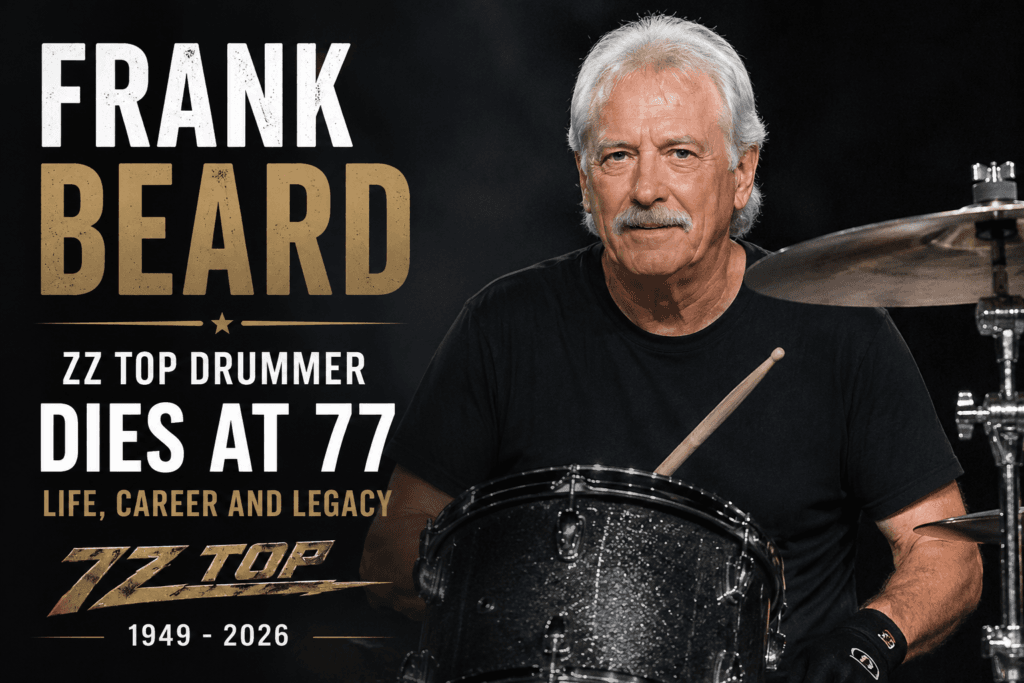
Frank Beard, ZZ Top drummer, pictured at his drum kit following his death at 77

Frank Beard, ZZ Top Drummer, Dies at 77: Life, Career and Legacy

Frank Beard, the longtime drummer whose steady, hard-driving rhythm helped define ZZ Top for more than five decades, has died at 77. Beard died on August 17, 2026, while receiving hospice care at his ranch in Richmond, Texas, with family members by his side. A specific cause of death has not been publicly disclosed. For many fans, Beard represented something essential about ZZ Top. While Billy Gibbons and Dusty Hill became instantly recognizable for their guitars, sunglasses and famously long beards, Beard stood behind the kit and supplied the groove that kept the band moving. His drumming became a crucial part of the Texas blues-rock sound that carried ZZ Top from small venues to international arenas. His death also closes another chapter in the story of one of rock music’s most distinctive lineups. Dusty Hill died in 2021, leaving Gibbons and Beard as the remaining members of the classic trio. Beard’s passing now marks another profound loss for ZZ Top and for generations of listeners who grew up with the band’s blues-heavy riffs and unmistakable rhythms. Frank Beard’s Death and What Is Known About His Final Days Beard’s death followed a period of health difficulties that had increasingly affected his ability to perform. Earlier in 2026, he was absent from ZZ Top’s touring lineup, with Michael Monahan taking over behind the drums. The band had also canceled its August 5 appearance at the Hollywood Bowl because of what it described at the time as unforeseen personnel matters. Reports following Beard’s death connected his recent absence from the road with his health. However, the precise medical circumstances surrounding his death remain undisclosed. That distinction matters because public reports have described health struggles without identifying a confirmed cause of death. ZZ Top confirmed the loss through a statement from Billy Gibbons, who described Beard as both a close friend and collaborator. Gibbons also emphasized the drummer’s musical importance, remembering the signature rhythmic approach that had helped keep the band at the center of rock culture for decades. The immediate impact was also felt on ZZ Top’s tour schedule. Shows in Salt Lake City and Colorado Springs were canceled following Beard’s death, while the band planned to continue its current tour with scheduled performances in Austin. Who Was Frank Beard? Frank Lee Beard was born June 11, 1949, in Frankston, Texas, and grew up in Irving. Long before ZZ Top became a global rock institution, Beard developed his musical career through the Texas club circuit and played in several groups, including the Cellar Dwellers, the Hustlers, the Warlocks and American Blues. His connection with Dusty Hill proved particularly important. The two musicians had already worked together before Beard joined ZZ Top, and Beard eventually helped bring Hill into the orbit of Billy Gibbons. That connection helped establish the three-piece lineup that would become one of the longest-running partnerships in rock history. Beard joined Gibbons in the developing ZZ Top lineup in 1969. Although the band’s earliest personnel changed during its formation, the combination of Gibbons, Hill and Beard quickly became the group’s defining identity. They built their sound around blues, boogie and hard rock, drawing heavily from their Texas roots while developing a style that could work equally well in clubs, on radio and in large arenas. There was also an enduring visual joke surrounding Beard’s name. While Gibbons and Hill became famous for their enormous beards, Beard himself did not wear the facial hair that his surname seemed to promise. Yet his lack of a giant beard never diminished his importance to the band’s identity. Behind the drums, his timing and rhythmic control supplied the foundation for ZZ Top’s sound. How Frank Beard Helped Build ZZ Top’s Signature Sound ZZ Top’s music depended on the chemistry between three musicians rather than on any one instrument. Gibbons supplied the distinctive guitar attack, Hill reinforced the low end and vocal presence, while Beard created the rhythmic framework that allowed the band’s blues-rock riffs to hit with unusual force. That combination helped the group develop a sound that remained recognizable across different eras of rock music. The band’s early records established its Texas blues and boogie foundation. Over time, however, ZZ Top expanded its approach. The group later incorporated more polished production, electronic elements and visual experimentation, particularly during its enormous 1980s breakthrough. Through those changes, Beard remained a consistent rhythmic presence. His contribution is especially significant because great drumming can sometimes disappear behind a band’s most visible personalities. Beard rarely needed the spotlight to make an impact. Instead, his playing gave ZZ Top’s riffs their momentum and helped create the relaxed but forceful groove that became central to the band’s identity. That consistency helped ZZ Top maintain its musical character through decades of changing trends. The band’s ability to move from raw blues-rock to MTV-era arena success without losing its core personality remains one of its greatest achievements, and Beard’s drumming was part of that continuity. ZZ Top’s story also belongs to a wider tradition of musicians whose work continued to shape rock music long after their earliest breakthrough years. That enduring connection between musicianship, history and legacy can also be seen in the story of Bruce Springsteen and Dave Marsh, whose collaboration helped document one of rock’s most influential careers. Frank Beard’s Early Musical Career Before ZZ Top became synonymous with Texas blues-rock, Frank Beard spent years developing his musicianship in regional bands. Born June 11, 1949, in Frankston, Texas, Beard grew up in Irving and became involved in the local music scene while rock and blues were rapidly gaining influence. His early work included groups such as the Cellar Dwellers, the Hustlers and the Warlocks. He later played with American Blues, a band that also featured Dusty Hill. Those experiences gave Beard a strong foundation in the blues-oriented style that would eventually become central to ZZ Top. The partnership between Beard and Hill became especially important. The two musicians had already developed a working relationship before ZZ Top took shape, and

Frank Beard, ZZ Top Drummer, Dies at 77: Life, Career and Legacy Read More »

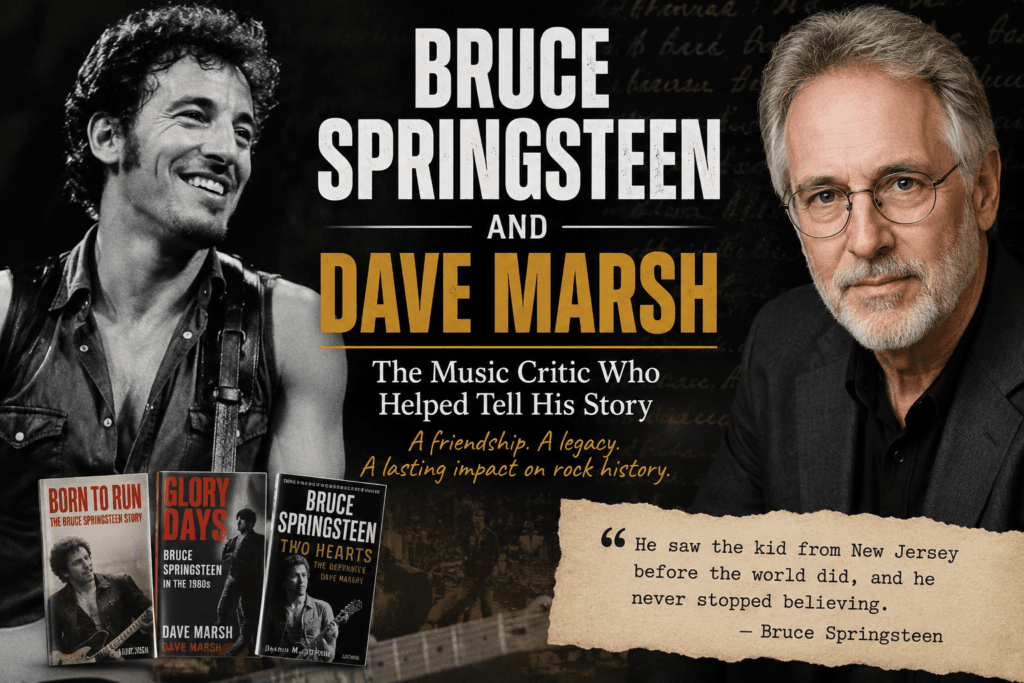
Bruce Springsteen and Dave Marsh featured together in a tribute to their decades-long connection and rock music legacy

Bruce Springsteen and Dave Marsh: The Music Critic Who Helped Tell His Story

The death of Dave Marsh has renewed attention on one of the most important writers ever to document Bruce Springsteen’s career. Marsh, the veteran rock critic and biographer, died August 14, 2026, at his home in Connecticut at age 76. His death brought an immediate response from Springsteen, who remembered Marsh as a longtime friend, fierce supporter and deeply committed rock-and-roll writer. For Springsteen fans, Marsh’s name carries unusual weight. He was not simply a journalist who occasionally covered the New Jersey songwriter. He followed Springsteen’s development from his early years, wrote the first major book about his career, and continued documenting his music across decades. His books Born to Run, Glory Days and Bruce Springsteen: Two Hearts became important reference points for understanding the artist’s rise, his changing public image and the cultural meaning of his music. Marsh’s connection to Springsteen also went beyond books. He championed the singer early in his career, wrote about him for Creem, and published Springsteen’s first Rolling Stone cover story in 1978. He also maintained a close relationship with people in Springsteen’s professional circle, including longtime manager and producer Jon Landau. That closeness helped make Marsh an unusually influential chronicler. At the same time, it made his work more personal and openly opinionated than conventional celebrity biography. His writing often reflected strong convictions about what mattered in rock music and why Springsteen deserved attention. Who Was Dave Marsh? Dave Marsh built a career around a simple but demanding idea: rock music deserved serious criticism. Born in Pontiac, Michigan, in 1950, he entered journalism through Detroit’s music scene and became an early editor of Creem. From there, his work reached major publications, including Rolling Stone, Newsday and The Village Voice. Over a career spanning several decades, he wrote more than 25 books about music and became one of the recognizable voices of American rock criticism. His interests stretched far beyond Springsteen. Marsh wrote about The Who, Elvis Presley, Aretha Franklin and other major artists while also producing books that examined rock history more broadly. His The Heart of Rock & Soul became one of his notable works of criticism, while his writing and broadcasting kept him connected to music audiences long after the peak years of traditional rock magazines. His broader interest in live music and its connection with audiences also reflects the continuing importance of concert culture, as seen in CLIMAX Magazine’s coverage of Daniel Caesar’s Barclays Center performance. Marsh also worked in radio and became closely associated with Springsteen-focused programming on SiriusXM. His later career showed that he had never treated music criticism as a temporary profession. He continued debating records, artists and the culture surrounding them. His style could be forceful, argumentative and intensely subjective. That quality attracted devoted readers but also drew criticism. Marsh did not try to sound detached when he believed an artist mattered. Instead, he wrote with the conviction of someone who considered music a serious cultural force. From Detroit Rock Journalism to National Recognition Marsh’s early years at Creem placed him inside the rapidly developing American rock press. The magazine’s Detroit roots gave him proximity to a scene that valued loud, direct and uncompromising music, while his later work expanded his reach nationally. Springsteen became one of the clearest examples of Marsh’s ability to identify artists he believed deserved greater attention. Long before Springsteen became a global superstar, Marsh wrote enthusiastically about his music. He also helped connect Springsteen with Jon Landau, who would eventually become a central figure in the singer’s career. That early advocacy matters because Marsh was documenting Springsteen while the artist’s story was still unfolding. He was not looking backward from the perspective of an established legend. He was writing while the future remained uncertain. That gave his early work a particular historical value. Marsh saw the potential in Springsteen’s music before the wider mainstream had fully accepted it, and he spent the rest of his career explaining why that music mattered. How Dave Marsh Became Closely Associated With Bruce Springsteen Marsh’s relationship with Bruce Springsteen developed during a crucial period in the singer’s career. Springsteen was building a reputation through relentless live performances and increasingly ambitious songwriting, but his eventual status as one of America’s defining rock artists had not yet become inevitable. Marsh became an early advocate. His writing for Creem helped introduce Springsteen to readers who were paying close attention to emerging rock musicians. In 1978, Marsh also wrote Springsteen’s first Rolling Stone cover story, placing the artist on a major national music publication at an important moment in his rise. The relationship became even more significant because Marsh was connected to people around Springsteen’s career. Reporting on his death has long associated him with Jon Landau’s introduction to Springsteen’s music. According to accounts of their history, Marsh brought Landau to a Springsteen performance in the 1970s, helping create a connection that would become enormously important to the singer’s professional future. Marsh therefore occupied an unusual position. He was a critic, but he was also someone who knew the people involved and had a personal investment in Springsteen’s success. That combination shaped his writing. His books were deeply informed by access and knowledge, yet they also reflected his strong opinions. For readers, that made Marsh’s Springsteen work both valuable and worth examining critically. The Importance of Marsh’s Access to the E Street World Marsh’s proximity to Springsteen’s professional circle gave him access that many outside observers did not have. His connection to Springsteen’s team and longtime relationships within the E Street world helped him place individual songs, performances and career decisions into a broader context. However, access can create complications for a biographer. A writer who knows the subject personally may understand details that outsiders miss, but that same closeness can make complete detachment difficult. That tension followed Marsh’s Springsteen writing. Critics sometimes viewed his admiration for Springsteen as excessive. A 1987 Washington Post review of Glory Days, for example, argued that Marsh’s enthusiasm sometimes overwhelmed his critical

Bruce Springsteen and Dave Marsh: The Music Critic Who Helped Tell His Story Read More »

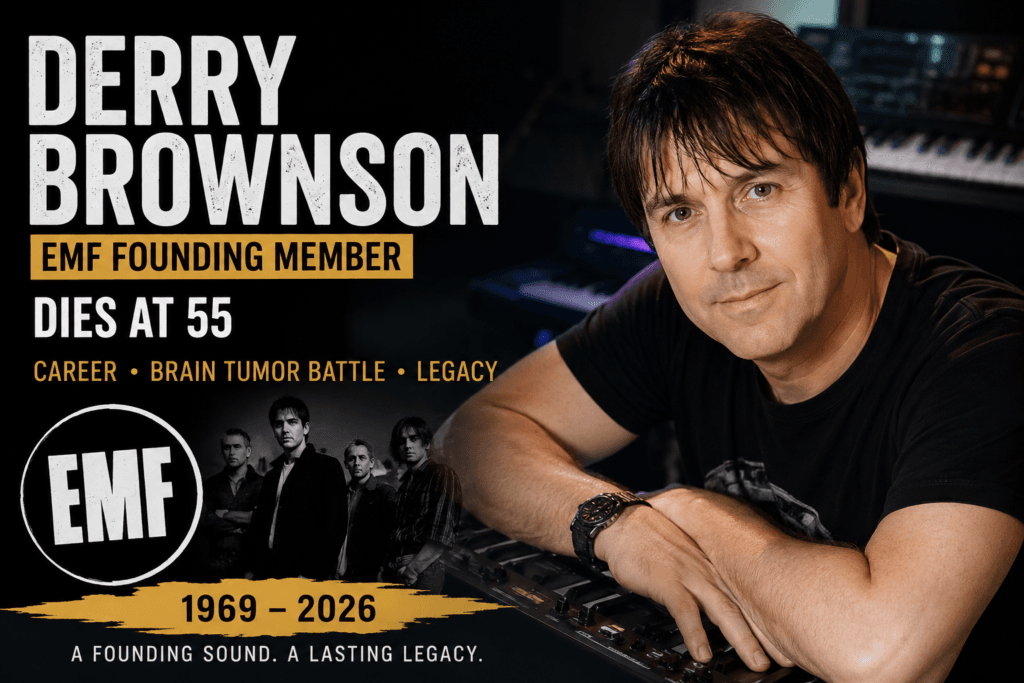
Derry Brownson, EMF founding member and keyboardist, featured in a tribute image

Derry Brownson: EMF Founding Member, Death, Brain Tumor Battle & Legacy

Derry Brownson, the founding member and keyboardist associated with British alternative rock band EMF, died at 55 on August 13, 2026, after a battle with a cancerous brain tumor. His death closes a chapter in the story of a band that helped bring guitar-driven alternative music together with electronic sounds in the early 1990s. Brownson remained connected to EMF long after its initial commercial breakthrough, making his contribution larger than the one song that first introduced the group to millions of listeners. For many American music fans, EMF is inseparable from “Unbelievable,” the explosive 1990 hit that reached No. 1 on the Billboard Hot 100. Brownson, however, was not simply a musician standing behind the band’s biggest record. He helped establish EMF from its earliest days and contributed to the group’s distinctive use of sampling, keyboards and electronic textures. His name also appears among the songwriters credited on “Unbelievable,” alongside the other core members of the original lineup. Brownson’s career therefore offers a broader look at EMF’s rise, its influence on 1990s alternative music and the musicians who built the band before its sudden international success. His later return to the stage also gave fans an opportunity to see him perform with EMF again during the final years of his life. Who Was Derry Brownson? Derran “Derry” Brownson was an English musician best known as a founding member and keyboardist associated with EMF. Born in Cinderford, Gloucestershire, he became part of the group that emerged from the Forest of Dean music scene in 1989. Brownson helped shape the band’s early identity alongside James Atkin, Zac Foley, Mark De Cloedt and other musicians who became central to EMF’s development. His musical role extended beyond traditional keyboard playing. Brownson worked with samples and electronic elements, helping EMF create the energetic combination of alternative rock, dance music and electronic experimentation that distinguished the group from many of its early-1990s peers. That contribution became especially important when EMF broke internationally with “Unbelievable.” Brownson received songwriting credit on the track and performed sampler duties, making him part of the creative foundation behind the band’s signature sound. Although “Unbelievable” eventually overshadowed much of EMF’s other work in the public imagination, Brownson’s connection to the group lasted far beyond that initial success. He remained part of its history through later reunions, recordings and live performances. His death in August 2026 brought renewed attention to the musician behind those electronic textures and to the original EMF lineup that helped define one of the most recognizable alternative hits of the 1990s. Derry Brownson and the Formation of EMF EMF grew out of the music community around Cinderford and the Forest of Dean in Gloucestershire. The group formed in 1989, bringing together musicians with different influences and a shared interest in creating something that did not fit neatly into one genre. Brownson was part of the band’s earliest creative group. Before EMF took shape, he had already been involved in local music, while bassist Zac Foley and other future members were also active around the same scene. James Atkin, Mark De Cloedt and DJ Milf became part of the developing lineup, with guitarist Ian Dench joining later and adding further songwriting experience. The group initially had little reason to expect worldwide success. Instead, the members experimented with different sounds and ideas while developing songs in their hometown. Their music drew from indie rock, dance music, electronic sounds and the energy of club culture. That combination eventually became one of EMF’s defining characteristics. Brownson’s presence was particularly valuable because he helped bring electronic elements into a lineup otherwise built around the familiar rock combination of vocals, guitar, bass and drums. His work with samples gave the band another layer of sound and helped separate EMF from more conventional guitar bands. Within a remarkably short period, the local group moved from small-scale performances to a recording deal and international attention. That rapid transformation became the beginning of EMF’s extraordinary early-1990s run. Derry Brownson’s Role in EMF’s Sound Brownson’s role in EMF becomes clearer when the band’s music is viewed as more than straightforward alternative rock. The group combined guitars, live drums and bass with samples, keyboards, rhythmic programming and dance-oriented influences. Brownson helped supply much of that electronic character. On “Unbelievable,” Brownson is credited as a sampler performer and songwriter. The track combines a forceful guitar part, infectious rhythm, electronic textures and memorable vocals. His contribution helped make the song sound different from a conventional rock single. EMF’s electronic approach also placed Brownson within a wider musical tradition that blurred the boundaries between rock, alternative music and electronic production. This crossover later became important to artists such as Kavinsky, whose work offers another example of these genres influencing one another. That distinction mattered because EMF arrived when genre boundaries were becoming increasingly flexible. British alternative acts could draw from house, techno, hip-hop and indie rock without treating those influences as separate worlds. EMF embraced that crossover rather than choosing one musical lane. Brownson therefore occupied an important creative position within the group. He helped turn experimental ideas into a sound capable of reaching mainstream audiences. His songwriting credit on “Unbelievable” further places him within the creative core of EMF rather than simply identifying him as a supporting musician. The band’s success showed how effectively its members could combine different influences. EMF’s “Unbelievable” and the Rise to Global Fame How “Unbelievable” Changed EMF’s Career “Unbelievable” transformed EMF from a young British band into an international act. The song emerged from the group’s early period and became the centerpiece of its breakthrough, eventually reaching No. 1 on the U.S. Billboard Hot 100. The record stood out because it did not sound like a conventional rock song. Its guitar-driven foundation sat alongside dance-oriented rhythms, electronic production and samples. That unusual combination helped it cross between alternative radio, mainstream pop audiences and the emerging crossover culture of the early 1990s. Brownson played a direct role in that sound. He was credited with sampler work on

Derry Brownson: EMF Founding Member, Death, Brain Tumor Battle & Legacy Read More »

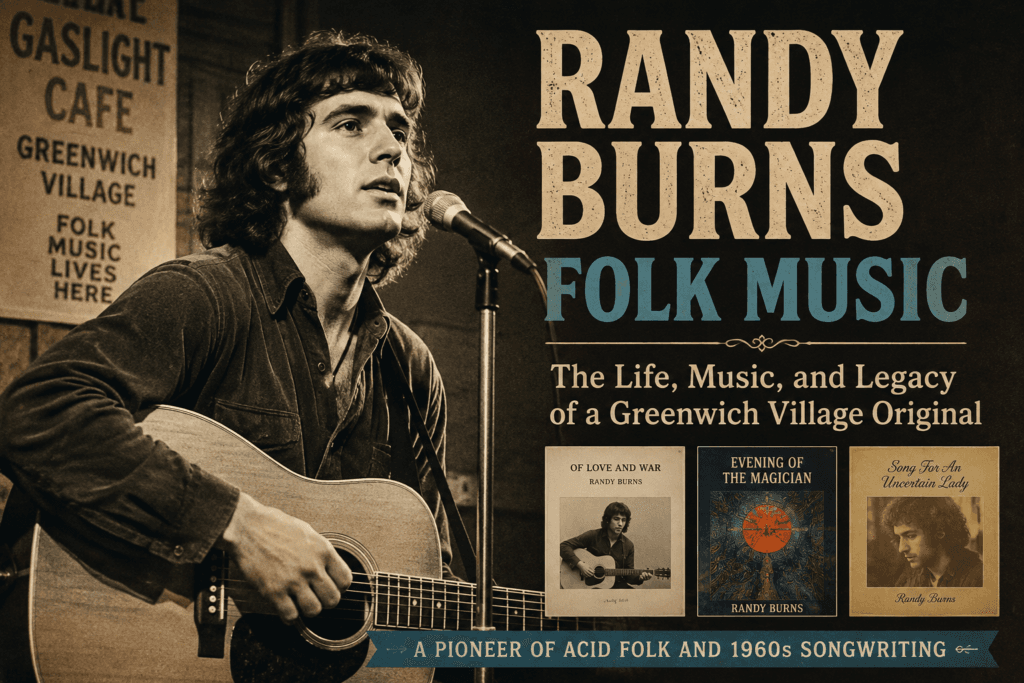
Randy Burns performing folk music with an acoustic guitar in Greenwich Village

Randy Burns: Folk Singer-Songwriter, Music, Career & Lasting Legacy

Randy Burns was an important voice in American folk music and a distinctive singer-songwriter whose career connected the Greenwich Village folk scene of the 1960s with the more experimental sounds that followed. He never became a household name like Bob Dylan or Joan Baez, yet his work offers a fascinating look at a period when American music was rapidly changing. Burns died on August 8, 2026, at age 78 in Melbourne, Florida. Recent reporting remembered him as an important figure in the 1960s folk revival and a longtime presence in Connecticut’s music community. His musical journey began in Connecticut before taking him to New York City’s Greenwich Village. There, he performed at influential folk venues and became part of a creative community that helped shape the evolving American singer-songwriter tradition. What makes randy burns folk music especially interesting is the way his sound developed. He began with a direct acoustic approach but gradually moved beyond traditional folk. His recordings incorporated folk-rock and psychedelic influences while retaining the personal character of his songwriting. During the 1960s, folk performers increasingly experimented with electric instruments, unconventional arrangements, rock influences, and more personal forms of songwriting. Burns participated in that transformation while maintaining the intimacy associated with folk music. His catalog therefore offers more than a collection of recordings for dedicated collectors. It provides a window into an era when American music was breaking down traditional genre boundaries and giving singer-songwriters new ways to express themselves. Randy Burns’ Early Life and Musical Beginnings Burns was born in Manchester, Connecticut, in 1948. According to recent reporting, he began teaching himself guitar at around 14 and was performing publicly only a few years later. His early performances took place at New Haven’s Exit Coffeehouse, a setting that helped introduce him to the local folk community. The coffeehouse circuit played an important role in the development of many young folk musicians. Unlike a large concert hall, a coffeehouse placed the performer close to the audience. A singer could perform an original song, hear the immediate response, change the arrangement, and return with a stronger version later. For a developing songwriter, that environment could be as valuable as formal musical training. Burns soon realized that New Haven alone would not provide the opportunities he wanted. In 1966, he left high school and headed for New York City. He arrived in Greenwich Village with little more than his guitar and an ambition to become a working musician. Accounts of his early period describe difficult living conditions, including inexpensive lodging and nights spent wherever he could find a place. However, the struggle came with an important advantage: access to one of America’s most active folk communities. For Burns, the Village became both a workplace and a musical education. He was surrounded by performers who treated songwriting as a serious craft. That environment helped shape the artistic identity that would later appear on his recordings. Randy Burns Folk Music and the Greenwich Village Scene Greenwich Village gave Burns the opportunity to develop his career at a remarkable moment in American music. During the 1960s, venues such as Gerdes Folk City, the Gaslight Café, and the Bitter End became important gathering places for singers, songwriters, musicians, and audiences searching for something outside mainstream pop. Burns performed at these venues during his early New York years. His regular appearances at the Gaslight were especially significant. The venue placed him alongside established performers from the folk scene, including figures such as Dave Van Ronk, Phil Ochs, Eric Andersen, and Sonny Terry & Brownie McGhee. That kind of exposure could change a young musician’s career. Burns was not simply watching the folk revival from the audience. He was participating in it, learning how professional performers constructed sets, introduced songs, handled audiences, and developed a recognizable artistic voice. The Village also exposed him to different approaches to songwriting. Traditional folk material remained important, but original compositions were becoming increasingly central to the scene. Artists were writing about relationships, politics, loneliness, identity, social change, and everyday life. Burns developed within that environment. His early work retained the stripped-down qualities associated with acoustic folk, but his later recordings showed that he was willing to experiment with broader arrangements. This makes the Greenwich Village period essential to understanding randy burns folk music. It was the foundation from which the rest of his musical career grew. From Acoustic Performer to Recording Artist Burns’ transition from local performer to recording artist came during the second half of the 1960s. His association with ESP-Disk became particularly important. The label had developed a reputation for releasing unconventional music, and its catalog crossed boundaries between folk, experimental music, jazz, rock, and psychedelic sounds. Burns’ first recordings for the label captured the acoustic side of his songwriting. His early album Of Love and War belongs to the formative stage of his recording career, before his arrangements became more expansive. The significance of these recordings goes beyond their individual songs. They document a musician working at the point where the traditional folk revival was beginning to collide with a rapidly changing rock culture. Burns was therefore positioned between two musical worlds. On one side stood the intimate coffeehouse performer with a guitar and a collection of original songs. On the other was the increasingly adventurous studio environment of the late 1960s. His later work would move further toward that second world. The change was gradual rather than sudden. Burns did not simply abandon acoustic folk for rock. Instead, he expanded the musical environment around his songwriting. That approach would become clearer when he began working with the Sky Dog Band. The result was a body of work that is now often discussed in connection with folk-rock and acid folk, although those labels only partly explain what makes his recordings distinctive. Randy Burns and the Sky Dog Band The Sky Dog Band represented an important change in Burns’ musical direction. Instead of relying primarily on the sparse instrumentation of a solo folk performance, Burns could now

Randy Burns: Folk Singer-Songwriter, Music, Career & Lasting Legacy Read More »