
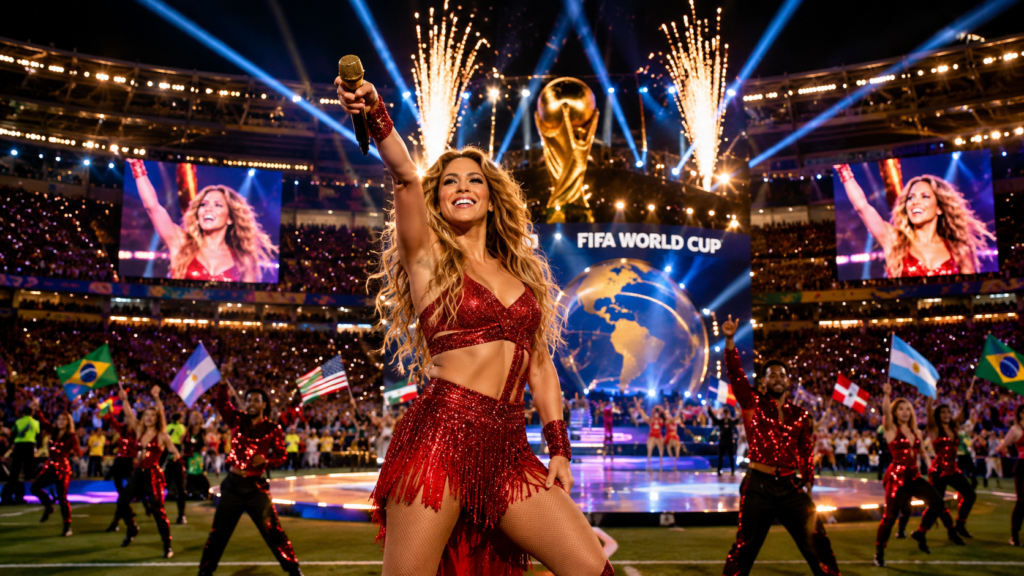
For nearly a century, the FIFA World Cup Final followed one simple formula. The biggest match in football belonged almost entirely to the players. Halftime lasted just long enough for tactical adjustments, hydration, and recovery before the second half determined the world champion.
That familiar routine changed in dramatic fashion.
For the first time in FIFA World Cup history, the tournament’s championship match featured a large-scale halftime entertainment show starring internationally recognized music artists. The decision marked one of the boldest changes ever introduced to football’s biggest stage and immediately became one of the most talked-about moments of the tournament. FIFA had announced plans to introduce a Super Bowl-style halftime spectacle for the 2026 final, with Global Citizen helping produce the event and Coldplay assisting with artist selection.
While football remained the centerpiece of the evening, the halftime performance sparked conversations that extended far beyond the pitch. Supporters praised the celebration of music and global culture. Critics questioned whether entertainment should reshape one of sport’s most respected traditions. The result was an event that generated headlines across sports, entertainment, and social media alike.
One artist, however, attracted exceptional attention throughout the buildup and the performance itself. Shakira became one of the biggest reasons many casual viewers tuned in, reinforcing her status as football’s most recognizable musical ambassador.
Shakira once again demonstrated why she remains one of the most recognizable musical figures associated with international football. Having performed at previous global football events during her career, her appearance naturally became one of the evening’s biggest talking points.
A Historic First for FIFA
Football has traditionally resisted adopting many entertainment elements that are common in North American sports.
Unlike the NFL’s Super Bowl, the FIFA World Cup Final has historically focused almost exclusively on the match itself. Fans around the world viewed the fifteen-minute halftime break as an essential part of the competition rather than an opportunity for elaborate performances.
That philosophy changed when FIFA announced plans to create the tournament’s first official halftime show.
Instead of keeping the interval limited to tactical discussions inside the locker room, organizers introduced a globally televised entertainment production featuring internationally recognized performers. The move represented a significant shift in how football’s governing body envisions the future of its biggest event.
Several factors likely influenced the decision:
| Traditional World Cup Final | New FIFA Entertainment Model |
|---|---|
| 15-minute halftime | Expanded entertainment window |
| Tactical focus | Music and global culture |
| Minimal stage production | Large-scale live production |
| Football-first presentation | Football combined with entertainment |
| Limited commercial activation | Expanded global sponsorship opportunities |
Rather than replacing football, FIFA appears to be broadening the overall viewing experience for an increasingly diverse worldwide audience.
Why FIFA Decided to Change Tradition
Modern sports compete for attention in an entertainment landscape filled with streaming platforms, social media, and digital creators.
Every major sporting organization is searching for new ways to engage younger audiences while increasing worldwide visibility.
Football already commands the largest global audience of any sport. Even so, FIFA has increasingly explored ways to make its showcase events feel larger than life.
Several motivations likely contributed to the decision.
1. Expanding Global Entertainment
Football and music often share the same worldwide audience, and artists like Shakira help bridge those two worlds on the biggest international stage.
Artists like Shakira have millions of fans across continents, making them natural ambassadors for events watched in virtually every country.
Combining both worlds allows FIFA to appeal simultaneously to sports fans and casual viewers.
2. Creating Cultural Moments
Major sporting events increasingly become cultural celebrations rather than simple competitions.
Opening ceremonies already demonstrate this approach.
Adding halftime entertainment extends that concept into the match itself.
3. Strengthening Global Broadcast Appeal
Television audiences continue evolving.
Many viewers now consume sporting events alongside social media conversations, live reactions, and digital content.
A halftime show creates another major moment capable of generating worldwide discussion long after the final whistle.
4. Commercial Opportunities
Large entertainment productions naturally attract advertisers, sponsors, and broadcast partners.
Although football remains the priority, expanded entertainment programming may create additional business opportunities surrounding the tournament. Analysts have noted that FIFA’s strategy reflects an effort to broaden the event’s commercial appeal while reaching wider audiences.
Why Shakira Was a Natural Choice
Among the performers, few artists possess a stronger connection to international football than Shakira.
Her music has accompanied football celebrations for years.
She has become closely associated with major tournaments, multicultural audiences, and energetic live performances.
Those qualities make her an ideal performer for an event intended to celebrate football’s global identity.
Several characteristics explain her enduring popularity at sporting events.
International Recognition
Shakira enjoys worldwide recognition across North America, South America, Europe, Asia, and the Middle East.
That international appeal aligns perfectly with FIFA’s global audience.
High-Energy Performances
Large stadium productions demand artists capable of maintaining excitement across enormous venues.
Shakira’s stage presence has consistently suited those environments.
Cross-Generational Appeal
Unlike artists whose popularity centers on one generation, Shakira attracts longtime fans while continuing to reach younger audiences through streaming platforms.
That broad appeal helps maximize worldwide engagement.
Football and Music Have Been Growing Closer
Although the World Cup had never featured an official halftime show before, football and music have shared an increasingly close relationship over the past two decades.
Fans already expect:
- Opening ceremonies
- Trophy celebrations
- Tournament anthems
- Fan festivals
- Concerts surrounding major matches
The addition of halftime entertainment represents another step in that evolution rather than a completely isolated idea.
International tournaments increasingly blend:
- Sport
- Entertainment
- Digital media
- Celebrity culture
- Fan experiences
As audiences evolve, organizers continue experimenting with new ways to celebrate football without losing the emotional importance of the competition itself.
Early Fan Reactions
The announcement alone generated significant debate across social media.
Many supporters welcomed the opportunity to see globally recognized performers share the stage during football’s biggest event.
Others remained cautious.
Common reactions included:
Positive Responses
- A celebration worthy of the world’s biggest sporting event.
- Greater cultural representation.
- Stronger global entertainment value.
- Exciting collaboration between music and football.
Critical Responses
- Concern over longer halftime breaks.
- Fear of copying the Super Bowl.
- Questions about player recovery.
- Worries that entertainment could overshadow football.
Reports following the final reflected these mixed reactions, with praise for the ambition of the production alongside criticism over the extended break and the show’s crowded format.
Key Facts at a Glance
| Topic | Details |
|---|---|
| Event | FIFA World Cup Final |
| Historic Achievement | First official FIFA World Cup Final halftime show |
| Primary Keyword | Shakira |
| Entertainment Style | Stadium concert during halftime |
| Purpose | Celebrate football through global entertainment |
| Worldwide Audience | Hundreds of millions of viewers across multiple continents |
| Main Discussion | Balancing football tradition with modern entertainment |
What Comes Next?
The debut halftime show has already sparked an important conversation about the future of football’s biggest event.
Will FIFA continue expanding entertainment around the World Cup Final?
Will future tournaments feature different musical styles and artists?
Can football preserve its traditions while embracing new global audiences?
Those questions are likely to shape discussions long after this tournament ends.
Shakira Takes Center Stage Once Again
Few artists have built a stronger connection with international football than Shakira. Long before the 2026 FIFA World Cup Final, her music had already become part of football’s global soundtrack. Because of that history, many fans viewed her appearance as a natural fit for a match watched by millions around the world.
Her performance combined high-energy choreography, recognizable hits, and stadium-ready visuals designed to reach both fans inside the venue and viewers watching from home. Rather than relying on elaborate storytelling, the show emphasized movement, celebration, and universal themes that could resonate across different cultures and languages.
Shakira’s return to football’s biggest stage also reflected her lasting popularity. She continues to attract audiences across multiple generations, making her one of the few artists capable of appealing to longtime football supporters and younger streaming-era fans alike.
Several qualities helped make her appearance one of the evening’s highlights:
- Global name recognition.
- Experience performing at large international events.
- Music that crosses language barriers.
- Strong stage presence in stadium environments.
- A long-standing association with football culture.
While every performer brought a unique style, Shakira’s football legacy gave her appearance additional significance.
A Lineup Designed for a Global Audience
One of FIFA’s biggest challenges was selecting artists who could represent the tournament’s worldwide reach.
Unlike regional sporting events, the FIFA World Cup attracts viewers from virtually every continent. That makes artist selection more complex than simply choosing today’s biggest chart-topping musicians.
Instead, the lineup reflected different musical backgrounds and fan communities.
The performers represented several entertainment genres, including:
| Music Style | Global Appeal |
|---|---|
| Latin Pop | Strong popularity across the Americas and Europe |
| Pop | Worldwide mainstream audience |
| K-Pop | Massive international fan base |
| Dance & Electronic Influences | Stadium-friendly performances |
| Classic Pop Icons | Multi-generational recognition |
This variety helped transform the halftime show into a celebration of international entertainment rather than focusing on a single musical style.
Why a Multi-Artist Format Makes Sense
Unlike a traditional solo concert, a World Cup halftime show has limited time to create maximum impact.
Featuring multiple internationally recognized performers allows organizers to:
- Reach different age groups.
- Represent multiple cultures.
- Maintain fast-paced energy.
- Increase worldwide social media engagement.
- Create memorable crossover moments.
Each performer contributes a different audience, expanding the event’s overall reach beyond football fans.
However, this approach also introduces challenges. Limited performance time means every artist receives only a brief segment, making smooth transitions and pacing especially important.
Stadium Production on a Massive Scale
Producing a halftime show inside one of the world’s largest sporting events is an enormous logistical challenge.
Unlike concerts, football matches cannot pause indefinitely. Everything must happen within strict operational timelines.
That requires months of preparation involving:
Stage Construction
A temporary performance stage must be installed and removed quickly without damaging the playing surface.
Engineers and production crews carefully coordinate every movement to minimize disruption before the second half begins.
Audio Systems
Sound quality must satisfy two very different audiences:
- Fans inside the stadium.
- Millions of television viewers worldwide.
Balancing those experiences requires advanced audio engineering and extensive testing.
Lighting Design
Lighting plays a crucial role in creating atmosphere.
Modern halftime productions often use:
- LED technology.
- Synchronized lighting effects.
- Digital graphics.
- Large video displays.
- Precision timing systems.
These elements help transform a football stadium into a live entertainment venue within minutes.
Camera Coordination
Television coverage involves dozens of cameras positioned throughout the stadium.
Directors must balance:
- Artist close-ups.
- Wide stadium shots.
- Crowd reactions.
- Special visual effects.
- Smooth transitions back to football coverage.
The Challenge of Timing
Perhaps the biggest challenge surrounding FIFA’s new halftime format was time.
Football traditionally operates with a relatively short halftime interval. Players use those minutes to:
- Recover physically.
- Receive tactical instructions.
- Make substitutions.
- Refocus mentally.
Expanding the entertainment portion naturally raised questions about maintaining competitive balance.
From an operational perspective, organizers had to ensure:
| Priority | Why It Matters |
|---|---|
| Player recovery | Maintain match quality |
| Pitch protection | Preserve playing conditions |
| Broadcast timing | Coordinate global television schedules |
| Fan engagement | Keep viewers entertained |
| Safety procedures | Manage performers and production crews efficiently |
Successfully balancing those priorities required detailed planning across sports operations and live entertainment teams.
Social Media Lights Up
Even before the halftime show began, anticipation spread rapidly across social media platforms.
Many of those conversations centered on Shakira, with fans predicting her opening song, stage entrance, and possible collaborations.
- Surprise guest appearances.
- Opening songs.
- Costume designs.
- Stage effects.
- Potential collaborations.
As the performance unfolded, conversation expanded even further.
Popular discussion topics included:
- Favorite musical moments.
- Performance energy.
- Visual production.
- Artist chemistry.
- Overall entertainment value.
The event demonstrated how modern sporting moments extend well beyond the stadium.
For many viewers, watching the show became only part of the experience. Simultaneously participating in online discussions, sharing reactions, and posting clips created a second layer of engagement that continued long after the match resumed.
Fans Remained Divided
Introducing a completely new tradition to one of the world’s most prestigious sporting events was always likely to produce mixed reactions.
Many supporters embraced the fresh approach.
They argued that:
- Football is already a global cultural event.
- Music enhances the celebration.
- Younger audiences enjoy entertainment-driven broadcasts.
- The halftime show attracts new viewers.
Others were less enthusiastic.
Some concerns focused on:
- Extending halftime beyond its traditional length.
- Preserving football’s identity.
- Avoiding unnecessary distractions.
- Protecting player preparation before the second half.
Neither perspective fully dominated the conversation.
Instead, the halftime show became one of the tournament’s most discussed talking points precisely because it challenged long-standing expectations.
Entertainment Meets Football
Modern sports increasingly exist at the intersection of competition and entertainment.
Around the world, fans now expect more than just the final score.
Major sporting events often include:
- Opening ceremonies.
- Fan festivals.
- Interactive digital experiences.
- Concerts.
- Behind-the-scenes content.
- Social media engagement.
The FIFA World Cup Final halftime show reflects that broader evolution.
Rather than replacing football, organizers appear to be expanding the overall event into a larger cultural experience that appeals to audiences with diverse interests.
Did the Halftime Show Overshadow the Match?
One question emerged almost immediately after the final whistle:
Did the entertainment become bigger than the football itself?
Opinions varied.
Many viewers believed the match remained the unquestioned centerpiece, with the halftime performance serving as a brief celebration during the interval.
Others argued that the extensive media coverage surrounding the performers shifted attention away from the players.
In reality, both elements generated significant interest for different reasons.
The football determined the champion.
The halftime show created a cultural moment that reached audiences beyond traditional sports coverage.
Together, they expanded the overall conversation surrounding the FIFA World Cup Final.
Shakira’s Lasting Football Legacy
Regardless of future halftime lineups, Shakira continues to occupy a unique place in football history.
Her connection with the sport extends beyond individual performances.
Over the years, she has become closely associated with football celebrations, international tournaments, and moments that unite fans from different countries.
That reputation explains why her appearance carried special significance.
For many viewers, she represented a familiar face during an event introducing an entirely new tradition.
Looking Ahead
The success—or perceived shortcomings—of this first halftime show will likely influence FIFA’s future decisions.
Questions remain about:
- Whether halftime entertainment becomes a permanent feature.
- How future artist lineups will be selected.
- Whether the format will evolve based on fan feedback.
- How organizers balance tradition with innovation.
Whatever direction FIFA chooses, one thing is clear: the 2026 World Cup Final opened a new chapter in the relationship between football and live entertainment.
The World Cup Enters a New Entertainment Era
The FIFA World Cup has always been more than a football tournament. It brings together nations, cultures, and stories in a way that few global events can. Every four years, billions of people tune in regardless of language, geography, or club loyalty.
The introduction of a halftime show suggests that FIFA is thinking beyond the traditional match-day experience. Instead of viewing the World Cup Final solely as a sporting contest, organizers are increasingly presenting it as a worldwide entertainment event.
This approach mirrors a broader trend across global sports. Fans today expect immersive experiences that combine competition, music, technology, and storytelling. Stadiums have become venues for unforgettable moments both on and off the field.
That doesn’t mean football is becoming secondary. Rather, entertainment is being used to enhance the occasion and create additional memories for viewers.
Shakira’s Global Influence Goes Beyond Music
When discussing artists who have influenced football culture, Shakira occupies a unique position.
Her relationship with the sport extends beyond chart success. Over the years, her performances have become closely linked with football celebrations, helping bridge the gap between sports and popular culture.
Several factors explain her lasting influence.
A Truly International Artist
Unlike performers who dominate only one region, Shakira enjoys widespread popularity across:
- North America
- Latin America
- Europe
- The Middle East
- Asia
This international appeal makes her especially valuable for events with worldwide audiences.
Cultural Representation
Football thrives because it connects people from different backgrounds.
Shakira’s multilingual career and diverse musical influences reflect that same international spirit. Her performances often combine Latin rhythms with global pop sounds, making her music accessible to fans from many cultures.
Stadium Experience
Performing in a packed stadium differs greatly from performing in a concert arena.
Artists must capture the attention of tens of thousands of spectators while also engaging television audiences around the world.
Shakira’s experience with large-scale live performances makes her particularly well suited for events of this magnitude.
How the Halftime Show Supports FIFA’s Global Vision
The World Cup is one of the most watched sporting events on the planet.
For FIFA, every decision surrounding the Final carries worldwide significance.
Introducing halftime entertainment supports several long-term objectives.
Reaching Younger Audiences
Today’s younger viewers often consume sports differently than previous generations.
Many fans:
- Watch highlights instead of full matches.
- Follow athletes on social media.
- Engage with short-form video content.
- Discover sporting moments through trending topics.
A halftime show naturally creates additional moments that are widely shared across digital platforms.
Expanding Cultural Appeal
Football already connects billions of supporters.
Music adds another universal language.
Together, they create opportunities to engage audiences who may not normally watch an entire football match.
Increasing Event Visibility
Major entertainment performances often generate headlines outside sports media.
As a result, the halftime show attracted attention from:
- Entertainment publications.
- Music journalists.
- Lifestyle media.
- Television programs.
- Social media creators.
That broader coverage extends the reach of the World Cup beyond traditional football audiences.
Comparing the World Cup and the Super Bowl
The introduction of a halftime show inevitably sparked comparisons with another iconic sporting event: the Super Bowl.
Although both championships now feature major musical performances, the two events remain fundamentally different.
| FIFA World Cup Final | Super Bowl |
|---|---|
| Global football championship | American football championship |
| International audience | Primarily North American audience with growing global reach |
| Represents national teams | Represents professional club franchises |
| Played every four years | Played annually |
| Deep international cultural significance | Strong connection to American sports culture |
| New halftime tradition | Long-established halftime entertainment |
The comparison is understandable because both events attract enormous television audiences. However, each retains its own identity, traditions, and cultural importance.
The World Cup Final continues to stand apart because it represents national pride, international competition, and decades of football history.
Commercial Opportunities Continue to Grow
Large-scale sporting events rely heavily on partnerships with broadcasters, sponsors, and advertisers.
Adding a globally recognized halftime show creates new opportunities for commercial growth without altering the game’s fundamental rules.
Potential benefits include:
Increased Sponsorship Value
The global popularity of performers such as Shakira also increases sponsor interest and worldwide media coverage.
A halftime performance provides another premium opportunity for global exposure.
Expanded Broadcast Programming
Broadcasters can now offer:
- Pre-show analysis.
- Behind-the-scenes coverage.
- Artist interviews.
- Halftime breakdowns.
- Post-show discussions.
This additional programming extends viewer engagement throughout the event.
Digital Engagement
Modern sports marketing extends well beyond television.
Clips, interviews, backstage content, and fan reactions continue circulating online long after the final whistle.
That ongoing conversation increases the event’s overall visibility.
The Role of Technology in Modern Stadium Shows
Today’s halftime productions rely on cutting-edge technology.
Even short performances require months of planning and advanced technical coordination.
Some of the technologies commonly used include:
- High-definition LED screens.
- Automated lighting systems.
- Wireless audio equipment.
- Drone camera support.
- Augmented reality graphics for television broadcasts.
- Precision stage mechanics.
These innovations help create a visually engaging experience for viewers both inside the stadium and around the world.
Balancing Innovation With Tradition
One of FIFA’s greatest challenges moving forward will be finding the right balance.
Football supporters value tradition.
Many of the sport’s customs have remained unchanged for decades.
At the same time, every generation introduces new expectations.
Future organizers will likely consider questions such as:
- Should every World Cup Final feature a halftime show?
- How long should the performance last?
- Should performances focus on global stars or local artists?
- How can football remain the central attraction?
Finding the right balance will be essential if halftime entertainment becomes a regular part of future tournaments.
What Fans Around the World Want
Supporters often have different expectations depending on their football culture.
Some prioritize tradition above all else.
Others welcome innovation that enhances the spectacle.
Based on public discussions surrounding the event, several common preferences emerged.
Fans Who Support the Halftime Show
Many viewers appreciate:
- Greater entertainment value.
- International music performances.
- Celebration of global culture.
- Memorable live moments.
- Increased excitement during halftime.
Fans Who Prefer Tradition
Others emphasize:
- Keeping halftime focused on player preparation.
- Preserving football history.
- Avoiding unnecessary distractions.
- Ensuring the match remains the primary attraction.
Neither perspective is inherently right or wrong.
Instead, they reflect the diversity of football’s worldwide fan base.
Lessons From the First Halftime Show
Every major innovation provides valuable lessons.
Whether viewed as a success or an experiment, FIFA’s first halftime show demonstrated several important points.
What Worked
- Worldwide media attention.
- Strong social media engagement.
- Increased crossover between sports and entertainment.
- Global discussion before, during, and after the Final.
Areas for Improvement
Future editions could focus on:
- Smoother pacing.
- Better integration with football traditions.
- Clearer balance between entertainment and competition.
- Continued emphasis on player welfare.
Constructive feedback will likely help shape future performances.
Could This Influence Other Football Competitions?
The World Cup often sets trends that influence the broader football landscape.
If halftime entertainment proves successful, other tournaments may explore similar ideas.
Potential candidates could include:
- Continental championship finals.
- International club competitions.
- Major exhibition matches.
- Charity football events.
However, not every competition shares the same audience or cultural expectations.
Each organizer would need to determine whether a halftime show aligns with its own traditions and supporters.
The Lasting Impact of Shakira’s Performance
Among all the performers, Shakira once again demonstrated why she remains one of football’s most recognizable musical ambassadors.
Her appearance reinforced several key themes:
- Football is a global language.
- Music connects diverse audiences.
- Stadium performances continue evolving.
- International artists play an important role in major sporting celebrations.
Whether fans watched primarily for the football or the music, Shakira’s participation added another memorable chapter to her long-standing relationship with the sport.
What Comes Next?
The debut FIFA World Cup Final halftime show has opened a new conversation about the future of football’s biggest event.
Some supporters hope the concept becomes a permanent tradition.
Others believe the focus should remain almost entirely on the match itself.
Only future tournaments will reveal how FIFA chooses to evolve this idea.
One thing is certain: the first halftime show ensured that the 2026 World Cup Final will be remembered not only for the football but also for its bold attempt to blend sport, music, and global culture on one of the world’s largest stages.
The Bigger Picture: A Defining Moment for FIFA
The first FIFA World Cup Final halftime show will likely be remembered as one of the tournament’s most significant off-the-field innovations. Whether fans loved the format or preferred the traditional approach, the event achieved something few sporting moments accomplish—it sparked a global conversation.
For FIFA, the challenge was never simply about staging a concert. The organization attempted to modernize its flagship event while protecting the prestige of the world’s biggest football match. That balancing act will continue to shape future tournaments.
History shows that many changes in sports initially divide opinion. Innovations such as goal-line technology, VAR, and expanded tournaments all generated debate before becoming part of football’s evolving landscape. A halftime entertainment show could follow a similar path, although its future will ultimately depend on fan feedback and FIFA’s long-term vision.
What This Means for Future World Cups
If the inaugural halftime show is considered a success, future World Cup Finals could continue experimenting with entertainment while refining the overall format.
Possible developments include:
More Diverse Artist Lineups
Future editions could feature performers representing different regions of the world, reflecting the truly international nature of the tournament.
Potential approaches include:
- Latin artists alongside African musicians.
- Asian pop stars performing with European acts.
- Collaborations between established legends and rising international talent.
- Local performers from the host nation sharing the stage with global icons.
Enhanced Technology
As stadium technology continues to improve, halftime productions may incorporate:
- Advanced LED displays.
- Drone light shows.
- Interactive audience experiences.
- Augmented reality graphics for television viewers.
- More immersive broadcast presentations.
Greater Fan Participation
Future productions could involve supporters in new ways through:
- Live voting.
- Interactive social media campaigns.
- Stadium light synchronization.
- Digital fan experiences.
These additions could strengthen the connection between viewers and the event without changing the football itself.
The Lasting Role of Shakira in Football Culture
When football fans think about music associated with the sport, Shakira remains one of the first names that comes to mind.
Her connection to international football has developed over many years, making her more than simply a guest performer.
She represents:
- Global entertainment.
- Cross-cultural appeal.
- Stadium-ready performances.
- Football celebrations that resonate worldwide.
That reputation explains why her appearance generated significant anticipation before the match and continued to dominate discussions afterward.
Regardless of future halftime lineups, Shakira’s association with football has already become an important part of modern sports culture.
Key Takeaways
Here are the biggest lessons from FIFA’s historic halftime experiment:
- FIFA introduced the first official halftime entertainment show during a World Cup Final.
- The decision marked a significant shift from decades of football tradition.
- Shakira emerged as one of the evening’s most recognizable performers due to her long-standing connection with international football.
- The event blended sport, music, and global culture on an unprecedented scale.
- Fans expressed both enthusiasm and concern, creating widespread discussion across sports and entertainment communities.
- The success of future halftime shows will likely depend on maintaining the right balance between innovation and football tradition.
Frequently Asked Questions
Why was the FIFA World Cup Final halftime show historic?
It was the first time FIFA introduced a large-scale halftime entertainment performance during the World Cup Final, marking a significant departure from the tournament’s traditional format.
Why was Shakira one of the biggest talking points?
Shakira has a long history of performing at major football-related events and enjoys worldwide popularity. Her strong association with the sport made her appearance especially meaningful for many fans.
Did the halftime show replace football as the main attraction?
No. The football match remained the centerpiece of the event. The halftime performance served as additional entertainment during the interval between the first and second halves.
Why did FIFA introduce a halftime show?
The move reflects FIFA’s broader effort to combine football with global entertainment, reach wider audiences, and create memorable cultural moments around the tournament.
Will future World Cup Finals include halftime shows?
FIFA has not confirmed the long-term format. Future decisions will likely depend on fan feedback, operational considerations, and the overall success of the inaugural event.
How is the World Cup halftime show different from the Super Bowl halftime show?
While both feature major musical performances, the World Cup Final represents international football and national teams, whereas the Super Bowl is the championship game of the National Football League (NFL). Each event has its own traditions and cultural identity.
Final Thoughts
The FIFA World Cup has always evolved while preserving the essence of football. From technological innovations to expanded tournaments, the competition has repeatedly adapted to changing times without losing its global appeal.
The introduction of a halftime show represents another step in that evolution.
For supporters, the football will always matter most. Goals, dramatic moments, tactical battles, and unforgettable victories define the World Cup’s legacy. Yet modern audiences also expect experiences that extend beyond the final score.
By combining elite football with internationally recognized performers such as Shakira, FIFA demonstrated its willingness to explore new ways of celebrating the world’s most popular sport.
Whether this becomes a lasting tradition or remains a unique experiment, one thing is certain: the 2026 FIFA World Cup Final will be remembered as the tournament that challenged convention and reimagined what football’s biggest stage could look like.
As future tournaments unfold, the debate between tradition and innovation will continue. However, if the first halftime show proved anything, it is that football remains capable of bringing together people from every corner of the globe—not only through the game itself but also through the universal language of music.