CLIMAX Magazine

CLIMAX Magazine is an independent digital publication dedicated to delivering accurate, original, and engaging coverage of entertainment, sports, celebrity news, movies, TV shows, music, and trending stories. We are committed to factual reporting, reliable information, and reader-first journalism, keeping our audience informed with trusted and engaging content.

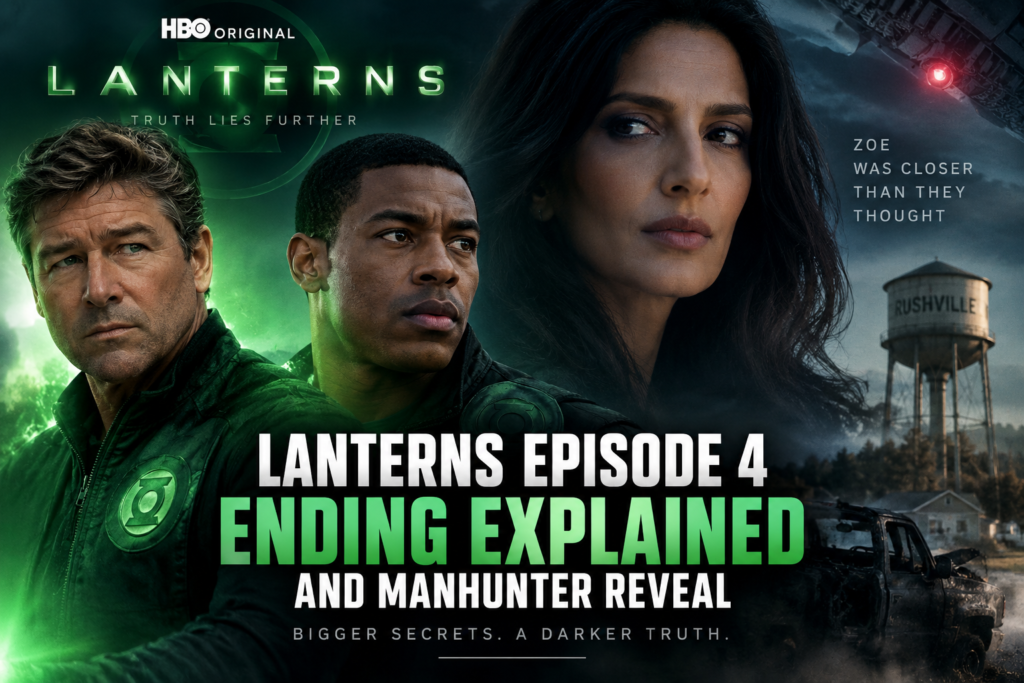
Lanterns Episode 4 ending explained with Hal Jordan, John Stewart, and the Manhunter reveal

Lanterns Episode 4: Ending Explained and Manhunter Reveal

Lanterns Episode 4, titled “The Weenie,” pushes the season’s central mystery into a much more dangerous phase. Hal Jordan and John Stewart are racing to identify the Manhunter hiding in Rushville, while an alien group threatens to destroy the town if they fail to deliver their target. At the same time, Hal’s meeting with his former mentor, Sinestro, creates another problem: Hal begins to question whether John can truly be trusted. The episode also deepens John’s role as a Lantern. He takes more control of the investigation, develops his own strategy and shows that he has prepared for this responsibility far longer than Hal realizes. However, that growing confidence also puts additional pressure on their already complicated partnership. Most importantly, “The Weenie” finally provides a major answer to the Manhunter mystery. The path to that revelation takes Hal and John through William Macon’s compound, a strange slaughterhouse operation and the apparent death of someone very close to John. Lanterns Episode 4: What Is “The Weenie” About? “The Weenie” follows Hal and John as they try to locate the Manhunter before the deadline imposed by Antaan and his group. The aliens have made their threat clear: if the Lanterns cannot identify and deliver the Manhunter, Rushville faces destruction. John believes William Macon’s heavily guarded property could hold the answer. Macon has built an unusual operation around his ranch, complete with security towers and a concealed central structure. John calls this central structure a “weenie,” an architectural term for a prominent feature that draws attention toward a larger property. That gives the episode its unusual title while also becoming a practical part of the investigation. Hal and John conclude that Macon’s mysterious benefactor could be the Manhunter. Their suspicion grows because Macon appears to have access to technology far beyond anything an ordinary rancher should possess. However, the investigation becomes complicated by the growing distrust between the two Lanterns. Hal has just spoken with Sinestro, who warns him about John. Meanwhile, John receives pressure from a Guardian who wants him to challenge Hal’s authority. The two men still need each other, but their relationship is becoming increasingly difficult to separate from the Manhunter investigation. Lanterns Episode 4 Recap John begins by observing William Macon’s property from a nearby water tower. He notices a helicopter arriving at the compound at a regular time and identifies what appears to be a concealed structure at the center of the estate. Hal joins him, and the two eventually decide that Macon’s mysterious benefactor could be the Manhunter. Their investigation becomes more urgent because the countdown to Rushville’s destruction continues. They also bring Sheriff Kerry Kane into the investigation, giving her a difficult choice: help the Lanterns or risk losing the entire town. Meanwhile, John faces pressure from the Guardians. A Guardian visits him and reveals that Hal has been reporting concerns about his performance. She also tells John that Hal’s actions have accelerated plans to replace him. Instead of backing down, John becomes more determined to prove himself. He later proposes a plan to enter Macon’s compound through a tunnel. Hal agrees, and John uses the Lantern ring to create a massive drilling construct. The pair eventually reaches a hidden structure containing advanced weapons and equipment. Their operation quickly falls apart when they trigger an alarm. Macon’s men use a strange black substance that disables their visibility and interferes with the ring. Hal and John are captured and brought directly to Macon. That encounter provides another major clue about the mysterious benefactor and sets up the much bigger revelation later in the episode. Hal Jordan Meets Sinestro Again Hal’s meeting with Sinestro is one of the episode’s most important scenes because it changes how he approaches John. Sinestro questions Hal about his relationship with his trainee and suggests that John could eventually become a threat. He even pushes Hal toward the possibility that John may need to be eliminated. Hal rejects that idea, but Sinestro still gives him information that becomes useful during the investigation. He explains that Manhunters can infiltrate communities, understand people’s vulnerabilities and manipulate those weaknesses to protect themselves. That information gives Hal a new way to interpret the events unfolding around Rushville. The warning also carries a personal dimension. Sinestro knows Hal well, and their history allows him to target Hal’s insecurities about leadership and succession. Hal has already struggled with the idea that John could eventually replace him. John, meanwhile, has his own frustrations. He believes he has spent years preparing for the Green Lantern role, while Hal inherited decades of experience without having to prove himself in the same way. That tension becomes increasingly important as the investigation progresses. Sinestro therefore serves two purposes in Episode 4: he provides useful information about the Manhunter and quietly drives a wedge between Hal and John. Hal and John’s Mission Goes Wrong Hal and John eventually enter Macon’s compound through the tunnel John planned. Their goal is straightforward: find evidence of the Manhunter and determine whether Macon’s mysterious benefactor is behind the alien killings. Instead, they discover a cache of sophisticated weapons. Before they can investigate further, Macon’s security team catches them. A disabling weapon leaves the two Lanterns vulnerable, and they are taken directly to Macon’s office. The encounter is deliberately strange. Macon appears more interested in controlling the situation than simply killing the Lanterns. He reveals that his mysterious benefactor cured his cancer and that he considers this figure both a savior and a powerful authority. Macon also explains that the benefactor has helped transform the community. His claims make the mysterious figure sound less like an ordinary criminal and more like someone who has built an entire system of influence around Rushville. Sheriff Kerry eventually arrives and arrests Hal and John for trespassing, preventing the situation from becoming even more dangerous. However, she also gives John a weapon because she expects Macon’s people to retaliate. The Lanterns leave with more questions than answers. Their suspicion of Macon remains, but

Lanterns Episode 4: Ending Explained and Manhunter Reveal Read More »
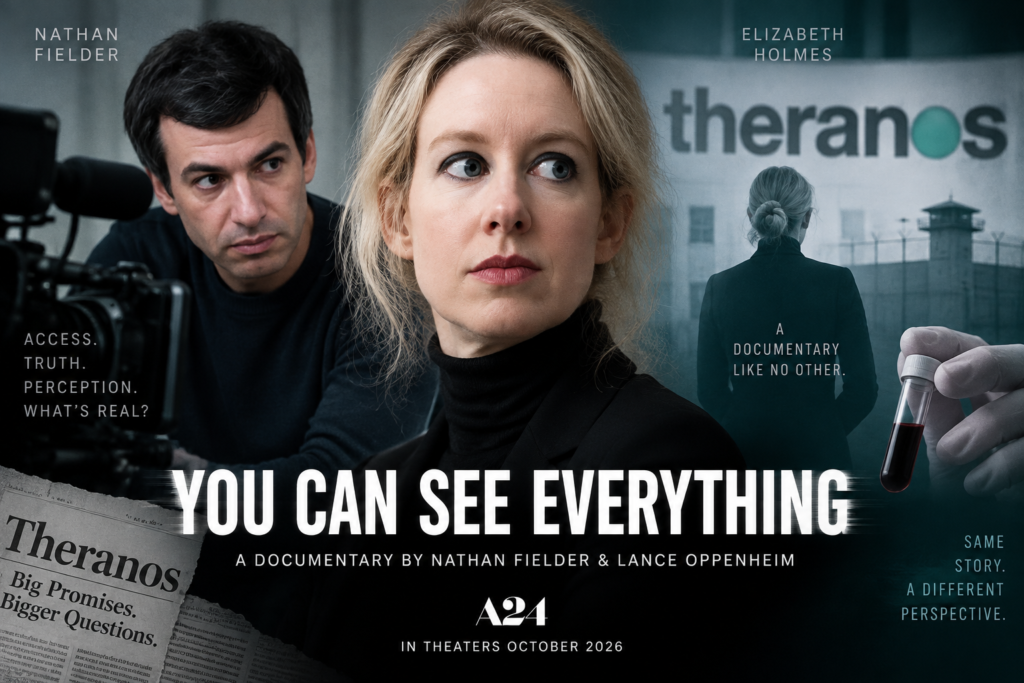
Elizabeth Holmes in You Can See Everything documentary featuring Nathan Fielder

Elizabeth Holmes Documentary: You Can See Everything Release Date, Trailer & What to Know

The Elizabeth Holmes documentary has taken an unexpected turn with You Can See Everything, a secret film from Nathan Fielder and Lance Oppenheim that suddenly emerged at the 2026 Telluride Film Festival. Instead of another conventional examination of the Theranos scandal, the documentary follows Holmes through an unusually intimate period of her life and then pushes into much stranger territory. The film begins 34 days before Holmes was due to report to federal prison. At that point, she invited a skeptical film crew to document her life with her partner, Billy Evans, and their young children. What started as an attempt to capture Holmes’s perspective developed into a three-year filmmaking project. Directed by Fielder and Oppenheim, You Can See Everything was kept largely secret until its surprise Telluride screening. A24 has announced a theatrical release in October 2026, while the studio’s teaser has now given audiences their first official glimpse at the film. That combination makes the documentary especially intriguing. Holmes’s story has already been explored through books, documentaries and scripted television. This time, however, the filmmakers had direct access to Holmes during a pivotal moment, while Fielder’s unconventional approach creates a much less predictable film. Elizabeth Holmes Documentary: What Is You Can See Everything? You Can See Everything is a documentary about Elizabeth Holmes, the former Theranos founder whose rise and collapse became one of Silicon Valley’s most closely scrutinized scandals. The film is directed by Nathan Fielder and Lance Oppenheim. Fielder initially questioned whether another project about Holmes was necessary. After meeting her, however, his uncertainty about her personality and presentation became part of the reason he wanted to continue. Oppenheim had learned that Holmes was looking for filmmakers to document her life, setting the project in motion.   The documentary begins with Holmes opening her home to the crew shortly before she entered federal prison. She and Evans presented the access as an opportunity to show what they believed the public had misunderstood about Holmes. That setup gives the movie a personal starting point rather than beginning with the familiar history of Theranos. However, You Can See Everything reportedly does not remain a straightforward observational documentary. As Fielder becomes increasingly involved in the story, questions about honesty, control and performance become central to the film. The filmmakers also use reenactments and increasingly unconventional sequences, turning the documentary into something considerably more experimental than a standard true-crime production. That approach is important because the film is not simply asking what happened at Theranos. It also examines how Holmes presents herself and how filmmakers decide what to believe. You Can See Everything Release Date and Theatrical Plans A24 has confirmed that You Can See Everything will arrive in theaters in October 2026. The film received its surprise world premiere at the Telluride Film Festival on September 6, where it occupied the festival’s previously secret screening slot. For now, October is the confirmed theatrical window. An exact nationwide release date has not been clearly established by the available official information, so readers should treat specific dates circulating online with caution. The film’s theatrical rollout is particularly notable because of its length and unusual festival debut. Reports from Telluride describe the documentary as running for approximately 174 minutes, or nearly three hours. When does You Can See Everything come out? The documentary is scheduled for a theatrical release in October 2026 through A24. The studio has not yet provided a complete public schedule for every market, so the exact date may vary as the theatrical rollout develops. Will You Can See Everything stream online? A streaming service and streaming release date have not been confirmed in the information currently available. For now, the confirmed plan is a theatrical release. That means audiences should not assume a specific streaming platform or digital date until A24 makes an official announcement. Elizabeth Holmes Documentary Trailer: What the Teaser Reveals The first official teaser for You Can See Everything immediately establishes the unusual relationship between Holmes and Fielder. Rather than presenting a conventional collection of archival footage and talking-head interviews, the teaser places the two in direct conversation. Fielder appears skeptical as he questions Holmes about whether she is genuinely being herself. Holmes, meanwhile, remains composed while caring for her newborn child. That simple setup creates the central tension of the documentary: how much can the audience trust what it sees? The teaser also avoids explaining the film’s biggest developments. That restraint appears intentional. Viewers who attended Telluride have described the documentary as moving far beyond its initial setup, with reenactments and major shifts in tone that are difficult to understand from the short promotional footage alone. That makes the teaser more of a mood-setter than a traditional plot preview. It introduces Holmes, Fielder and the central question of the filmmaker-subject relationship without giving away the film’s later surprises. For audiences already familiar with the Theranos story, that may be the most compelling part of the marketing. The documentary does not need to convince viewers that Holmes’s story is remarkable. Instead, it asks what happens when an unconventional filmmaker gets unusually close to the person at the center of it. Why Nathan Fielder Made an Elizabeth Holmes Documentary Nathan Fielder’s decision to make an Elizabeth Holmes documentary did not begin with a simple desire to revisit the Theranos scandal. He initially questioned whether audiences needed another project about Holmes after years of intense media coverage. That changed after he met Holmes. Instead of approaching her story only as a completed scandal, Fielder became interested in the gap between the public’s understanding of Holmes and the way Holmes understood herself. That uncertainty became a driving force behind the project. Fielder’s involvement also changes the documentary’s perspective. He is not simply observing Holmes from a distance. His skepticism becomes part of the filmmaking process, creating a relationship in which the subject and filmmaker continually test each other. The result is a documentary built around access and uncertainty. Holmes gets an opportunity to present her own perspective,

Elizabeth Holmes Documentary: You Can See Everything Release Date, Trailer & What to Know Read More »

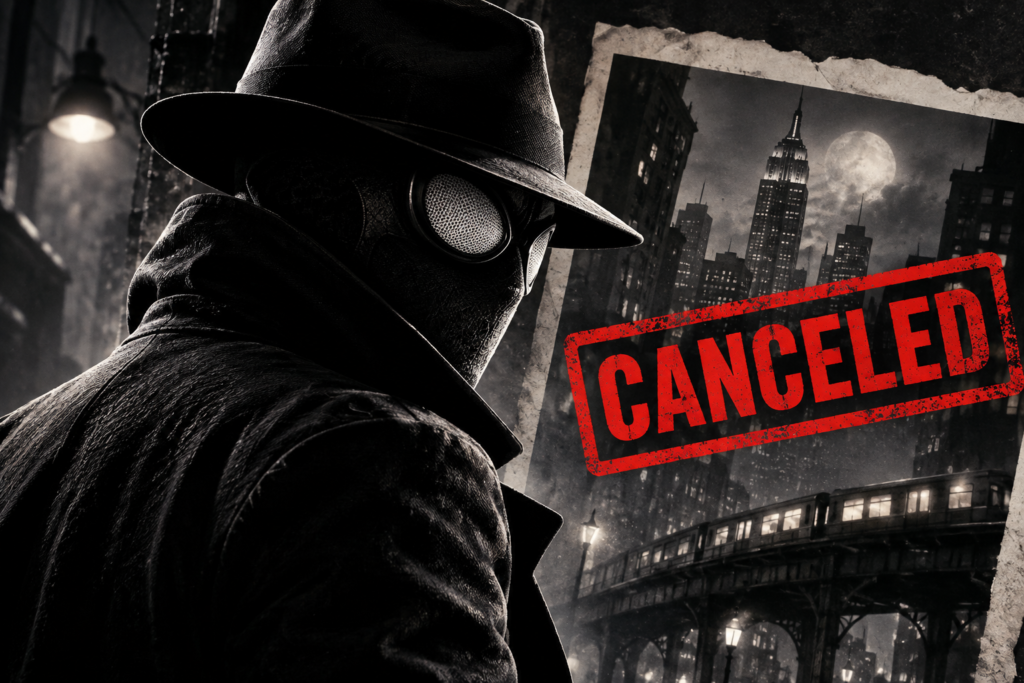
Spider-Noir canceled after Season 1 with a noir detective and city background

Spider-Noir Canceled After Season 1: What Happened to the Nicolas Cage Series?

Spider-Noir has officially come to an end after just one season. Prime Video has canceled the Nicolas Cage-led live-action series, ending its run after eight episodes. The decision is notable because the show had received generally positive reviews and earned 11 Emmy nominations, giving it one of the strongest awards profiles among Prime Video’s 2026 series. The cancellation also raises an obvious question for viewers: what happened to Spider-Noir Season 2? For now, there will be no second season at Prime Video. However, the cancellation does not affect access to the first season. All eight episodes remain available to stream on Prime Video. The series had a distinctive setup from the beginning. Set in 1930s New York, Spider-Noir followed Nicolas Cage as Ben Reilly, an aging and down-on-his-luck private investigator whose past as the city’s superhero, The Spider, comes back into his life. The show combined superhero mythology with a period detective story, giving it a visual and tonal identity that separated it from more conventional Spider-Man adaptations. Is Spider-Noir Canceled? Yes. Spider-Noir is canceled after one season. Prime Video has decided not to renew the series for a second season, according to reports from Variety, The Hollywood Reporter and Entertainment Weekly. The decision ends the first live-action television series built around this version of the Spider-Man Noir concept. The show’s first season consisted of eight episodes, all of which remain available to viewers on Prime Video. The timing makes the decision particularly surprising. Spider-Noir did not disappear without recognition. The series earned 11 Emmy nominations, making it the most-nominated Prime Video series for the 2026 awards cycle. Its nominations covered several technical and creative categories, reflecting the production’s distinctive visual and craft elements. The cancellation therefore does not mean the series failed to attract industry attention. Instead, it shows that awards recognition alone does not guarantee a renewal decision for a streaming series. For viewers, the immediate situation is straightforward: there is one completed season, there is no announced Season 2, and the existing episodes remain available to watch. Why Was Spider-Noir Canceled? The biggest unanswered question is why Spider-Noir was canceled despite its awards recognition. The current reports confirm Prime Video’s decision, but they do not provide a definitive official explanation from the streamer detailing the specific reason for ending the series. That distinction matters. It would be easy to assume that audience numbers, production costs or the show’s position on Prime Video’s charts caused the cancellation. However, without an official explanation, those factors should not be presented as established facts. What is clear is that Spider-Noir was a substantial production with an unusual creative approach. The series offered viewers a choice between color and black-and-white presentations, reinforcing its classic noir identity. It also carried the production scale associated with a major superhero property while telling a period detective story. The series also had meaningful industry recognition. Its 11 Emmy nominations demonstrate that the show connected with voters in several areas, even though that recognition did not translate into a second-season renewal. So, for now, the safest conclusion is simple: Prime Video canceled Spider-Noir, but the company has not publicly established one specific reason that explains the decision. Will There Be a Season 2? No. Spider-Noir Season 2 will not move forward at Prime Video. The streamer has ended the series after its eight-episode first season. What the Cancellation Means for Season 2 The cancellation means viewers should not expect a second season continuing Nicolas Cage’s portrayal of Ben Reilly on Prime Video. That is especially significant because the series had established a distinctive version of the character. Rather than presenting a conventional modern Spider-Man story, Spider-Noir placed Ben Reilly in an alternate 1930s setting and framed him as a private investigator confronting a past life as a superhero. The first season remains the complete released story. All eight episodes are still available, so viewers can watch the entire existing run even though the series will not continue. For more TV season updates, check our coverage of Silo Season 4. Could Spider-Noir Return Somewhere Else? At this point, there is no confirmed revival or move to another platform. Reports about the cancellation do note that the Sony Pictures Television and Amazon MGM Studios partnership behind Spider-Man-related projects continues, with another series under that collaboration still in development. However, that does not mean Spider-Noir itself will return. Any future revival would therefore be speculation unless the studios announce one. What Is Spider-Noir About? Spider-Noir takes Spider-Man mythology into a darker period setting, following Ben Reilly, a private investigator working in 1930s New York. Unlike a traditional superhero story, the series combines crime drama, mystery and supernatural elements with the familiar idea of a masked hero protecting the city. Ben has already experienced life as The Spider before the events of the series begin. He now works cases as a private investigator, trying to leave his superhero past behind. However, a new investigation pulls him back toward the world he thought he had escaped. Prime Video describes the story as beginning with Ben taking on seemingly straightforward cases before mobsters, monsters and a mysterious femme fatale connect him with his former life as New York’s only superhero. That setup gives Spider-Noir a different identity from the main Spider-Man stories familiar to movie audiences. The series leans into classic detective storytelling, period crime and a deliberately darker atmosphere. Its visual approach also reinforces that identity. Viewers can watch the series in either black-and-white or color, allowing the same story to work as a traditional noir experience or a more contemporary superhero drama. The result is a version of the Spider-Man concept built around an older, more experienced hero rather than a young character discovering his powers for the first time. Nicolas Cage’s Role in Spider-Noir Nicolas Cage leads Spider-Noir as Ben Reilly, also known as The Spider. The role gives Cage an opportunity to return to the Spider-Man Noir character after previously voicing the character in Spider-Man: Into the Spider-Verse.

Spider-Noir Canceled After Season 1: What Happened to the Nicolas Cage Series? Read More »

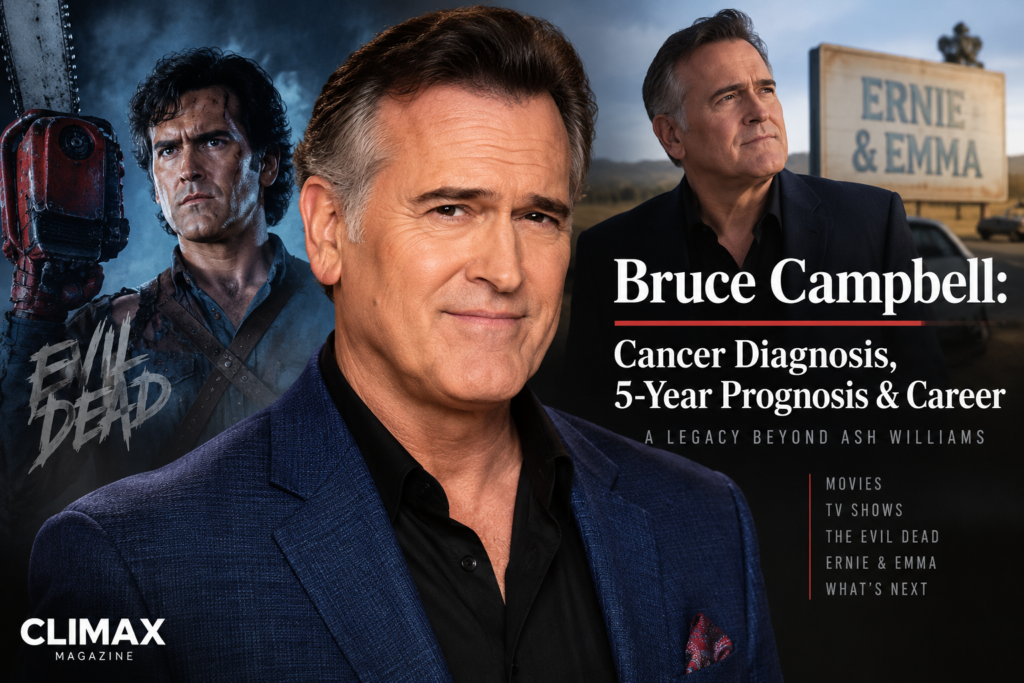
Bruce Campbell cancer diagnosis, 5-year prognosis and career

Bruce Campbell: Cancer Diagnosis, 5-Year Prognosis & Career

Bruce Campbell has spent decades building a career around memorable characters, cult movies, television, and independent filmmaking. For many fans, he remains best known as Ash Williams from The Evil Dead franchise. However, in 2026, attention has also turned to a more personal part of Bruce Campbell’s life: his cancer diagnosis and the prognosis he has shared publicly. Campbell first revealed his diagnosis in March 2026, describing the cancer as treatable but not curable. He also explained that some professional appearances would have to take a back seat while he focused on treatment. Then, during a September 3, 2026 appearance on The Adam Carolla Show, Bruce Campbell provided another update. He spoke about a prognosis of roughly five years, while making clear that the figure should not be viewed as an exact countdown. This article covers what is publicly known about Bruce Campbell’s cancer diagnosis and prognosis, along with his career, movies, television roles, The Evil Dead legacy, and what could come next. Bruce Campbell’s Cancer Diagnosis and 5-Year Prognosis Bruce Campbell revealed in March 2026 that he had been diagnosed with cancer. At the time, he described the condition as “treatable” but not “curable.” He did not publicly identify the specific type of cancer or provide detailed medical information about his treatment. That distinction matters. A cancer being treatable but not curable does not mean that a person has a fixed amount of time left. Treatment can sometimes control a disease for years, and individual outcomes vary widely. Campbell also indicated that his health would change how he approached professional commitments. Instead of maintaining the same schedule of conventions and appearances, treatment became a higher priority. What Bruce Campbell Said About His Prognosis Campbell provided a more direct update during his September 3, 2026 conversation with Adam Carolla. The discussion included his cancer diagnosis and the way he is approaching the future. The widely reported figure was about five years, give or take. That wording is important because a prognosis is an estimate, not a guaranteed deadline. In other words, Campbell was not announcing a specific date or saying that he knows exactly how long he has. Instead, he was sharing the medical outlook he had been given and explaining how he has chosen to live with that information. His approach also fits the way he has continued working in 2026. Rather than disappearing from public life, Campbell has remained involved with Ernie & Emma, an independent film that he wrote, directed, produced, and stars in. What Is Known About Bruce Campbell’s Cancer? The publicly available information remains limited. Campbell has confirmed the diagnosis and has described it as treatable but not curable. However, he has not publicly disclosed the specific cancer type in the sources covering his announcement. That means many details circulating online should be treated carefully. Unless Campbell himself or a reliable source confirms a medical claim, it should not be presented as fact. For fans, the key confirmed points are straightforward: Campbell has publicly confirmed a cancer diagnosis. He has described the disease as treatable but not curable. He has discussed a prognosis of roughly five years. He has kept specific medical details private. He continues to have professional plans, including the Ernie & Emma tour. This approach also respects Campbell’s decision to control what he shares about his health. Why the “Five Years” Figure Needs Context The phrase “five years to live” can sound much more definite than a medical prognosis actually is. Campbell’s reported comments should therefore be understood as an estimate rather than a fixed timeline. A prognosis reflects a doctor’s assessment based on available medical information, but it cannot predict the exact future of an individual patient. That distinction is especially important when discussing a public figure’s health. Headlines can easily turn an approximate medical outlook into a countdown, even when the person never described it that way. Campbell has continued making plans despite the diagnosis. His 2026 work on Ernie & Emma is one clear example. The film is being presented through a nationwide screening tour with Alamo Drafthouse, beginning September 4 and running through November 14, 2026. So, while the five-year figure is an important part of Campbell’s recent comments, it should not overshadow the broader picture. He is still working, promoting his film, and engaging with audiences. At the same time, his diagnosis has clearly changed how he approaches his career and future commitments. Who Is Bruce Campbell? Bruce Campbell is an American actor, filmmaker, writer, and producer whose career stretches across horror, television, comedy, action, and independent cinema. He became internationally recognized through his work in The Evil Dead, where he played Ash Williams. The character eventually became one of horror’s most recognizable cult heroes. But Campbell’s career extends far beyond Ash. His television work includes The Adventures of Brisco County, Jr., Xena: Warrior Princess, and Burn Notice. He also appeared in films such as Bubba Ho-Tep and became a familiar face to genre audiences through collaborations with filmmaker Sam Raimi. His official career site lists projects spanning several decades, including Burn Notice, Ash vs Evil Dead, and Ernie & Emma. Bruce Campbell’s Early Career Campbell’s filmmaking roots go back to Michigan, where he grew up and began making films with friends, including Sam Raimi. Their early collaboration eventually led to The Evil Dead, which became a defining project for both of them. The original film premiered in 1981 at Detroit’s Redford Theatre, marking an important early chapter in the history of a franchise that would later become a major part of Campbell’s identity. That early independent spirit has remained important throughout Campbell’s career. Even decades after The Evil Dead, he continues to work on projects where he has creative control. Ernie & Emma represents that side of his career especially well. The independent comedy-drama allowed Campbell to take on several roles at once, including writer, director, producer, and star. For Campbell, filmmaking has never been limited to acting. It has always been about creating the

Bruce Campbell: Cancer Diagnosis, 5-Year Prognosis & Career Read More »

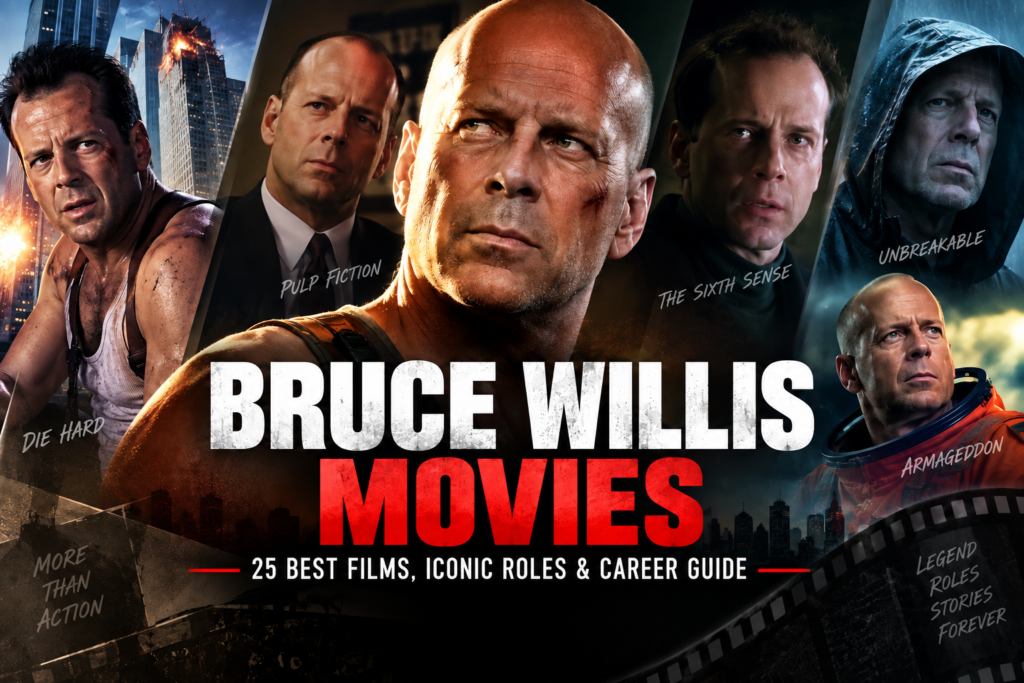
Bruce Willis movies featuring his iconic roles from Die Hard, Pulp Fiction, The Sixth Sense, and Armageddon

Bruce Willis Movies: 25 Best Films, Iconic Roles & Career Guide

When people talk about Bruce Willis movies, Die Hard usually comes up first. That makes sense: John McClane turned Willis into one of Hollywood’s defining action stars. However, his career reaches far beyond a single franchise. Over several decades, Willis moved between action, crime, science fiction, comedy, horror, drama, and ensemble films, often using the same dry humor and understated screen presence in very different ways. His filmography includes major hits such as Pulp Fiction, Armageddon, The Sixth Sense, The Fifth Element, Unbreakable, Red, and Looper. His strongest-reviewed movies also show how broad his career became. Rotten Tomatoes currently lists Die Hard, Looper, Moonrise Kingdom, Pulp Fiction, Nobody’s Fool, 12 Monkeys, and The Sixth Sense among his highest-rated films. So, where should you begin? If you want the essential Bruce Willis experience, start with Die Hard for action, Pulp Fiction for crime drama, 12 Monkeys for science fiction, and The Sixth Sense for a quieter dramatic performance. From there, his filmography opens into some surprisingly different territory. Bruce Willis Movies: Where to Start Why Bruce Willis Became a Movie-Star Name Before becoming a major film star, Willis gained widespread attention as David Addison on the television series Moonlighting. His combination of sarcasm, charm, physical comedy, and effortless confidence made him stand out on television. Then Die Hard arrived in 1988 and changed the scale of his career. Willis played John McClane, a New York police officer trapped inside a Los Angeles skyscraper during a terrorist takeover. Instead of presenting McClane as an invincible super-soldier, the film made him vulnerable, exhausted, frightened, and constantly improvising. That quality helped make the character feel different from many action heroes of the era. Rotten Tomatoes currently gives Die Hard a 94% Tomatometer score. That balance became central to Willis’ movie persona. He could deliver a tough line, but he could also look battered, confused, or genuinely vulnerable. As a result, audiences could connect with him even when his characters were caught in spectacular situations. The Essential Bruce Willis Movies at a Glance For a first-time viewer, these films provide a strong introduction to different sides of his career: Die Hard (1988) — the defining action performance. Pulp Fiction (1994) — a memorable crime-film role. 12 Monkeys (1995) — intense science fiction. The Fifth Element (1997) — futuristic action with comedy. The Sixth Sense (1999) — restrained supernatural drama. Unbreakable (2000) — a quieter take on the superhero genre. Looper (2012) — Willis returning to science fiction decades later. Moonrise Kingdom (2012) — an understated ensemble performance. These choices also reveal an important point: the best Bruce Willis movies are not necessarily the ones built around the biggest explosions. His strongest work often comes when directors give his familiar persona a new setting or emotional dimension. The 10 Best Bruce Willis Movies to Watch First Choosing the ten best is subjective, but a strong starter list should balance critical reputation, cultural impact, performance, genre variety, and rewatchability. Die Hard is the obvious starting point, while Pulp Fiction, 12 Monkeys, and The Sixth Sense demonstrate how effectively Willis could step outside conventional action roles. Rank Movie Year Why Watch It 1 Die Hard 1988 His defining action role 2 Pulp Fiction 1994 A sharp crime-film performance 3 12 Monkeys 1995 One of his most intense roles 4 The Sixth Sense 1999 Quiet, emotional dramatic work 5 The Fifth Element 1997 Stylish science-fiction action 6 Unbreakable 2000 A restrained superhero mystery 7 Looper 2012 A compelling later-career sci-fi role 8 Moonrise Kingdom 2012 A softer ensemble performance 9 Armageddon 1998 Large-scale blockbuster entertainment 10 Red 2010 Action mixed with veteran-star comedy The list is deliberately varied. Someone who only watches Die Hard sees the action icon, while someone who follows the list in order gets a much fuller picture of Willis as a performer. Bruce Willis Movies of the 1980s Moonlighting to Movie Stardom Willis entered movies after establishing himself on television, and his early film work showed that Hollywood saw commercial potential in his personality as well as his acting ability. He appeared in projects such as Blind Date, Sunset, and Die Hard during the latter half of the decade. The turning point was Die Hard. Released in 1988 and directed by John McTiernan, the movie placed Willis in a relatively unusual position for a major action film: its hero was not an unstoppable machine. John McClane gets hurt, runs out of options, and repeatedly has to think his way through danger. That vulnerability became part of the character’s appeal. McClane talks back to himself, makes mistakes, and reacts to extraordinary circumstances like an ordinary person might. Willis’ comic timing helped keep the character human without undermining the danger around him. The result was more than another successful action movie. Die Hard established a screen persona that Willis could revisit for years: the sarcastic, resilient everyman who survives because he refuses to quit. Die Hard Changes Everything The impact of Die Hard became especially clear as Willis moved into the 1990s. Hollywood now had an established action star who could also carry comedy and drama. That combination gave him opportunities beyond straightforward action vehicles. The first Die Hard remains the clearest representation of what made his movie-star persona work. It combined physical action with humor, tension, and a protagonist who could be vulnerable without becoming passive. Rotten Tomatoes currently lists it as Willis’ highest-rated film, with a 94% Tomatometer score. That foundation would become important because the next decade pushed Willis into considerably different territory. Instead of simply repeating the formula, some of his most interesting 1990s movies challenged audiences to see him in new ways. Bruce Willis Movies of the 1990s The 1990s turned Bruce Willis from a successful action star into a much more versatile Hollywood leading man. He returned as John McClane in Die Hard 2 and Die Hard with a Vengeance, but some of his most memorable work came from movies that moved well beyond the franchise. Pulp Fiction and a

Bruce Willis Movies: 25 Best Films, Iconic Roles & Career Guide Read More »

Silo Season 4 Release Date and Juliette Nichols in the final season

Silo Season 4 Release Date: Everything We Know About the Final Season

The Silo Season 4 Release Date is becoming clearer, but fans still have to wait a little longer for the final chapter of Apple TV’s dystopian sci-fi drama. Season 4 is officially scheduled to premiere in summer 2027. However, Apple has not announced the exact premiere day or month yet, so more specific dates circulating online should not be treated as confirmed. There is another major detail that makes the upcoming season especially important: Silo Season 4 will be the final season of the series. Apple previously confirmed that the fourth season would conclude the television adaptation of Hugh Howey’s Silo book trilogy. That means the next season will not simply continue Juliette Nichols’ story. It will also have to bring the show’s larger mysteries toward their conclusion, including the history of the silos, the truth about the outside world, and the forces that created the underground society. For now, viewers have a confirmed release window but not a specific premiere date. Here’s everything currently known about the Silo Season 4 Release Date, the final season, and what the next chapter could mean for the story. Silo Season 4 Release Date: When Will It Premiere? The Silo Season 4 Release Date is currently set for summer 2027. Apple has confirmed the release window, but the company has not yet revealed a specific day or month. That distinction matters. A summer 2027 release means viewers can expect the final season sometime during that period, but it does not confirm whether the premiere will arrive in June, July, or August. Until Apple announces an exact date, those individual months remain possibilities rather than confirmed information. The timing follows Season 3, which premiered on July 3, 2026, and runs for 10 episodes, with new episodes arriving weekly through September 4, 2026. For viewers tracking the return of the series, the current status is straightforward: Detail Current Status Season Season 4 Release year 2027 Release window Summer 2027 Exact premiere date Not announced Final season Yes Streaming platform Apple TV Episode count Not announced Season 4 trailer Not announced So, if you’re searching for the Silo Season 4 Release Date, the most accurate answer right now is summer 2027. The exact premiere date will need to wait for a future announcement from Apple. Is Silo Season 4 the Final Season? Yes. Silo Season 4 is officially the final season of the series. Apple confirmed the fourth season as the show’s concluding chapter when it renewed Silo for Seasons 3 and 4. The decision gives the creative team a defined endpoint for the television adaptation rather than leaving the story dependent on another renewal. The series comes from showrunner Graham Yost and stars Rebecca Ferguson as Juliette Nichols. It is based on Hugh Howey’s bestselling Silo trilogy, which provides the foundation for the show’s larger mythology. The final-season status is significant because Silo has spent multiple seasons expanding its central mystery. What initially appears to be a story about one underground community gradually becomes a much larger investigation into why these societies exist, how they operate, and what happened to the world outside. Season 4 therefore has a difficult task. It needs to continue the character-driven story while also providing meaningful answers to the questions that have kept viewers watching. For fans, this confirmation also removes one major uncertainty. There will not be an expected Season 5 waiting to continue the television story. Season 4 is designed to bring the series to its conclusion. Why Silo Season 4 Matters to the Story The importance of Silo Season 4 goes beyond its status as the show’s final installment. The series has steadily transformed from a mystery surrounding one isolated community into a much broader story about the origins and purpose of the silo system. Juliette Nichols remains central to that journey. Her determination to uncover the truth has repeatedly challenged the information that residents receive about their world. Her discoveries have also connected her personal story to mysteries that reach far beyond the boundaries of a single silo. Season 3 expands that mythology further. The season explores events connected to the origins of the underground society while continuing the present-day storyline. Juliette survives her forced cleaning but returns with memory loss, while the silo deals with the consequences of rebellion and a new threat. Those developments create a natural bridge toward the final season. Season 4 will need to address two broad areas. First, it must complete Juliette’s personal journey and show where her search for the truth ultimately leads. Second, it needs to bring the larger mythology closer to resolution. The show’s central questions have become increasingly interconnected. The history of the silos, the rules governing their residents, the outside world, and Juliette’s role in challenging the existing system all point toward the same final destination. That makes the upcoming season one of the most consequential chapters in the entire series. What Happened in Silo Season 3? Season 3 pushes Silo beyond the immediate conflict inside Silo 18 and expands the show’s mythology. The season follows Juliette Nichols after she survives her forced cleaning, while her return brings a new set of problems for the community. At the same time, the story moves between the present-day silo and events from the Before Times. Journalist Helen Drew and Congressman Daniel Keene investigate a conspiracy that connects the past to the larger history behind the underground societies. Apple describes this earlier timeline as an origin story that takes place centuries before the main events. The present-day storyline also deals with the consequences of rebellion. Juliette’s survival changes the balance inside the silo, while other characters continue investigating disappearances, technology and secrets that could reshape their understanding of their world. By the later episodes, the season increasingly connects its two timelines. That approach gives viewers more context for the system that controls life inside the silos while continuing to develop the characters caught inside it. This matters for Silo Season 4 because the final season will inherit

Silo Season 4 Release Date: Everything We Know About the Final Season Read More »

Cassandra Wilson performing as a Grammy-winning jazz singer

Cassandra Wilson Dies at 70: Life, Music Career, Grammy Wins and Legacy

Cassandra Wilson, the Grammy-winning jazz singer whose deep, distinctive voice helped reshape contemporary vocal jazz, has died at 70 in her hometown of Jackson, Mississippi. The news marks the loss of one of American jazz’s most influential vocalists, but Wilson’s career reached far beyond traditional jazz. She brought blues, folk, pop, R&B and country influences into her music while developing an unmistakable artistic identity. For decades, Cassandra Wilson built a reputation as an adventurous interpreter and recording artist. Her work earned four Grammy nominations and two wins, while albums such as Blue Light ’Til Dawn, New Moon Daughter and Loverly established important milestones in her career. Her influence also extended beyond awards. Wilson became a National Endowment for the Arts Jazz Master in 2022, joining an elite group recognized for major contributions to American jazz. Cassandra Wilson Dies at 70: What We Know Cassandra Wilson died at the age of 70 in Jackson, Mississippi, according to reporting published after her death. She was known professionally as a singer, songwriter and producer and spent several decades developing a sound that resisted easy classification. Her death closes a remarkable chapter in contemporary jazz. Wilson emerged from the New York jazz scene in the 1980s and eventually became one of the most recognizable voices associated with modern vocal jazz. Rather than limiting herself to established jazz standards, she regularly explored music from different American traditions. Blues, folk, R&B, country and pop became important parts of her musical vocabulary. That flexibility helped her connect with listeners who might not have considered themselves traditional jazz audiences. Wilson’s recording career also produced several critically important albums. Her 1993 Blue Note debut, Blue Light ’Til Dawn, represented a major artistic turning point and helped establish the direction that would define much of her later work. Her achievements included two Grammy victories. She won Best Jazz Vocal Album for New Moon Daughter in 1997 and again for Loverly in 2009. In addition, her recognition reached the highest levels of American jazz. The National Endowment for the Arts named Wilson a Jazz Master in 2022. Who Was Cassandra Wilson? Cassandra Wilson was an American jazz vocalist celebrated for her powerful contralto voice and adventurous approach to song interpretation. She developed a style that could move from intimate jazz performances to blues-rooted material without losing its distinctive character. Her musical journey started early. According to Blue Note Records, Wilson began playing piano and guitar at nine and was already working as a vocalist by the middle of the 1970s. Her early musical experiences exposed her to a wide range of material rather than one narrowly defined style. That broad foundation became important later. Wilson never treated genre boundaries as fixed rules. Instead, she approached songs as material that could be rearranged, reinterpreted and given a different emotional character. Her career eventually took her to New York, where she became involved with a younger generation of musicians pushing jazz in unconventional directions. That period helped expand her musical vocabulary before she developed the roots-oriented sound that brought her wider recognition. Wilson’s later success did not erase those experimental beginnings. Instead, she combined them with her interest in older American musical traditions. That balance became one of the defining qualities of her career: she could honor the past while still making the material sound personal and contemporary. Early Musical Beginnings Wilson grew up in Mississippi in a musical environment that encouraged her early development. Her first instruments included piano and clarinet, while she later developed as a vocalist and guitarist. Blue Note’s biography notes that she began playing piano and guitar at nine and was performing as a vocalist by the mid-1970s. Those early experiences gave Wilson a foundation that extended beyond vocal technique. She learned to approach music through rhythm, melody and instrumentation, which later helped her work comfortably with musicians from different jazz traditions. Her Mississippi background also remained an important part of the musical identity she carried into adulthood. Even after entering the New York jazz world, Wilson continued to draw from blues and other roots traditions. That connection became especially important when she eventually moved toward the acoustic, blues-oriented sound that defined her breakthrough period. Moving Into the New York Jazz Scene Wilson moved to New York in 1982 after spending a year in New Orleans. There, she began working with established musicians including Dave Holland and Abbey Lincoln. Her meeting with saxophonist and composer Steve Coleman became another important step. Wilson joined the M-Base Collective, a group associated with an experimental approach to rhythm, composition and contemporary jazz. The experience placed her in a demanding creative environment. The M-Base musicians explored complex structures and influences drawn from funk, soul and other musical traditions. Blue Note identifies Wilson among the musicians connected to the collective. Wilson also worked with the group New Air and recorded her first album as a leader in 1985. These early years mattered because they gave her experience outside conventional vocal-jazz settings. She was learning how to use her voice inside increasingly adventurous musical arrangements. That background would later help her create a sound that felt both rooted and experimental. Cassandra Wilson’s Breakthrough With Blue Note Records Cassandra Wilson’s career changed dramatically when she began exploring a more roots-oriented sound. After several earlier recordings, she turned toward acoustic arrangements and material connected to blues, folk and other American traditions. That shift produced Blue Light ’Til Dawn, her 1993 Blue Note debut. The album became a defining moment because Wilson no longer sounded confined to conventional vocal-jazz expectations. Instead, she built performances around atmosphere, rhythm and the emotional character of each song. The album included three original compositions alongside striking interpretations of songs associated with artists such as Robert Johnson, Joni Mitchell and Van Morrison. Wilson’s approach made those songs feel connected to jazz while retaining their blues, folk and popular-music identities. Blue Note later described the record as a landmark release that helped open another path for vocal jazz. Its influence reached younger

Cassandra Wilson Dies at 70: Life, Music Career, Grammy Wins and Legacy Read More »

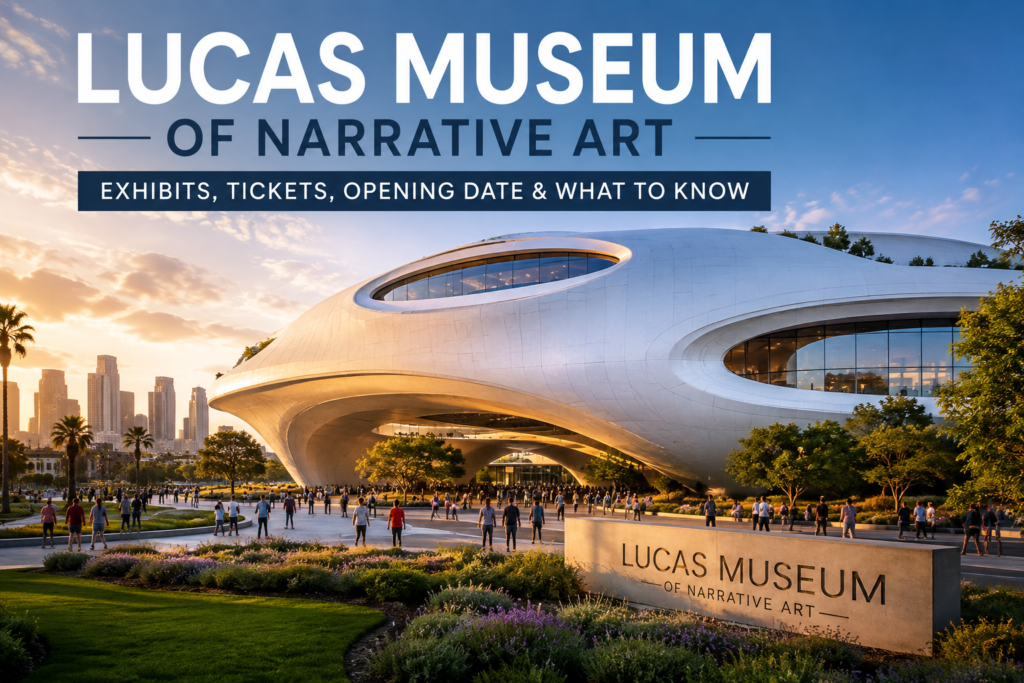
Lucas Museum of Narrative Art in Los Angeles with futuristic architecture

Lucas Museum of Narrative Art: Exhibits, Tickets, Opening Date & What to Know

Los Angeles is preparing to welcome one of its most ambitious new cultural attractions. The Lucas Museum of Narrative Art opens to the public on September 22, 2026, bringing together painting, illustration, comics, photography, film materials and other forms of visual storytelling at Exposition Park. Founded by George Lucas and Mellody Hobson, the museum explores how people use images to communicate stories, ideas and experiences across different cultures and generations. The name immediately connects the museum with Star Wars. However, the Lucas Museum is much broader than a celebration of George Lucas’s filmmaking career. Its collection examines narrative art across centuries and creative disciplines, creating connections between traditional fine art, illustration, popular culture and cinema. The building is equally distinctive. Designed by Ma Yansong of MAD Architects with Stantec, the structure rises above a new landscape in Exposition Park. The museum includes more than 100,000 square feet of gallery space, while the wider campus adds gardens, public areas and other visitor facilities. Together, they create a destination built around a simple idea: stories can take many visual forms. What Is the Lucas Museum of Narrative Art? The Lucas Museum of Narrative Art is a Los Angeles museum dedicated to visual storytelling. Instead of limiting its collection to one artistic medium, it brings together works that communicate stories, characters, ideas and cultural experiences through images. That approach sets the museum apart from many traditional art institutions. Paintings, illustrations, comics, photographs and cinematic materials can appear in the same broader conversation. The goal is to show how visual storytelling has developed across different periods and cultures. The inaugural presentation features more than 1,300 works across more than 30 galleries. The subjects range widely, including mythology, heroes, adventure, fantasy, childhood, sports, romance and community. Key Facts About the Lucas Museum Detail Information Official name Lucas Museum of Narrative Art Location Exposition Park, Los Angeles Founders George Lucas and Mellody Hobson Public opening September 22, 2026 Primary focus Narrative art and visual storytelling Gallery space More than 100,000 square feet Opening presentation 1,300+ works Opening galleries 30+ The collection includes artists and creators from different eras and traditions. Names associated with the inaugural presentation include Norman Rockwell, Artemisia Gentileschi, Frida Kahlo, Charles White, Frank Frazetta and Robert Crumb. As a result, visitors should expect a museum that moves between familiar and unexpected territory. A trip may involve classical painting, American illustration, comic art, photography and movie-related material within the same overall experience. The museum’s founders also emphasize accessibility. Rather than treating narrative art as a narrow academic category, the institution presents storytelling as something that connects with everyday audiences. Why Is the Lucas Museum Opening in Los Angeles? Los Angeles provides an especially fitting home for a museum centered on visual storytelling. The city has played a major role in film, television, animation, photography, illustration and other visual industries for generations. Its location in Exposition Park also places the museum within an established cultural district. The area already attracts visitors to major museums, educational institutions and public spaces, giving the Lucas Museum a broader environment in which to operate. The museum adds a major new architectural landmark to that setting. Its campus replaces a large area of asphalt with a combination of cultural space and landscaped public areas. According to the museum, the approximately 13-acre landscape includes hundreds of newly planted trees, gardens, an amphitheater, a meadow, a hanging garden and a fountain. The landscape therefore serves more than a decorative purpose. It creates additional public space around the museum itself. From an Ambitious Idea to Exposition Park The Lucas Museum’s arrival in Los Angeles represents the completion of a long-running effort by George Lucas and Mellody Hobson to establish a permanent institution dedicated to narrative art. The final concept goes well beyond material connected to Lucas’s own films. The museum’s permanent collection contains more than 40,000 works, while its opening exhibitions draw from a much wider history of visual storytelling. That distinction is important for visitors deciding what the museum actually offers. Someone may arrive because of Star Wars, but the experience extends into illustration, comics, fine art, photography, murals and cinema. The museum consequently occupies an unusual position in Los Angeles. It connects Hollywood’s storytelling tradition with artistic forms that existed long before modern filmmaking. Its purpose is not simply to preserve famous images. Instead, it asks visitors to consider why certain images become powerful stories and how artists use visual language to shape the way people understand the world. That broader mission is what gives the Lucas Museum its identity beyond the Lucas name. Inside the Lucas Museum: What Will Visitors See? The Lucas Museum experience goes far beyond a traditional collection of paintings. Its inaugural exhibitions use more than 1,300 works across more than 30 galleries to explore how artists have used images to tell stories, communicate beliefs and shape cultural memory. The galleries occupy more than 100,000 square feet of the museum. The journey begins with The History of Narrative Art: Heroes • Myths • The Sacred. This opening presentation looks at visual storytelling across thousands of years, connecting ancient religious imagery, mythology and monumental works with the broader development of narrative art. The museum has also created highly detailed reproductions of important works and archaeological sites that visitors might otherwise need to travel around the world to experience. These include material connected with the Vatican Museums, the Louvre, the Altamira cave paintings and Mexico’s Aztec Sun Stone. As visitors move through the building, the exhibitions shift toward themes, artistic genres and individual creators. This makes the collection feel less like a chronological art-history lesson and more like a series of interconnected stories. Major Themes and Gallery Experiences A major strength of the Lucas Museum is the way it organizes art around subjects that people already recognize from everyday life. Instead of relying only on traditional artistic categories, several galleries explore themes such as: Childhood and children’s stories Family and motherhood Love and romance Community School and work

Lucas Museum of Narrative Art: Exhibits, Tickets, Opening Date & What to Know Read More »

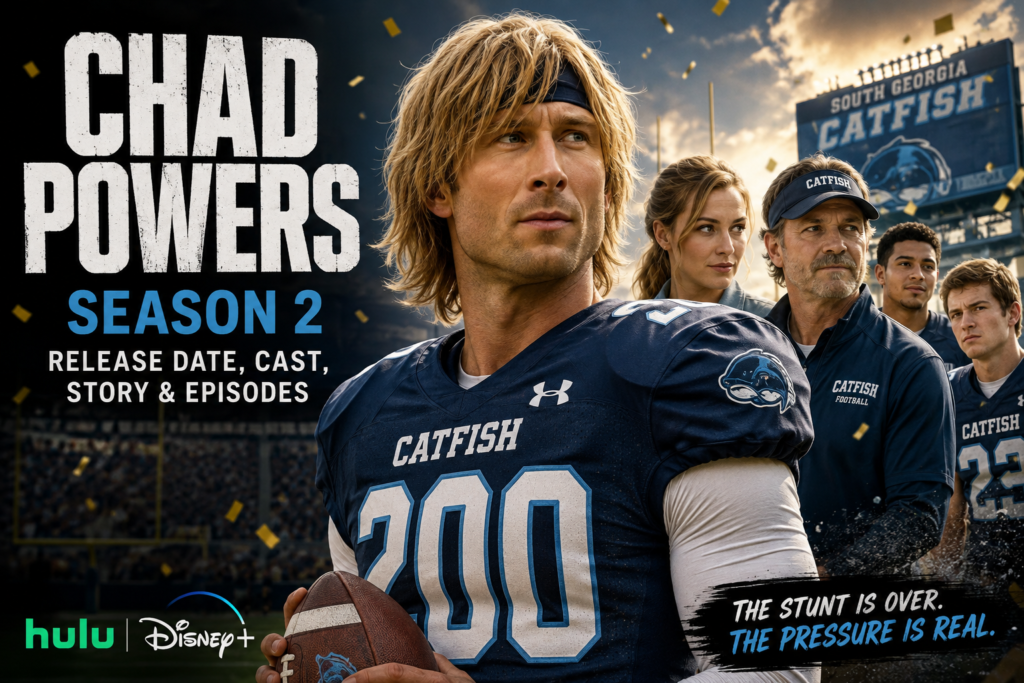
Chad Powers Season 2 featuring Glen Powell as Chad Powers in a Catfish football jersey

Chad Powers Season 2: Release Date, Cast, Story & Episodes

Glen Powell is back under the wig and prosthetics as Russ Holliday, the disgraced quarterback who rebuilt his football career by becoming someone else. Chad Powers Season 2 picks up after the first season’s major identity reveal and puts even more pressure on Russ to keep his secret alive. The new season arrives at a crucial point for the South Georgia Catfish. Chad has become a star on the field, but his growing reputation makes his fake identity increasingly difficult to protect. Coach Hudson and rival quarterback Gerry are both becoming more suspicious, while Ricky already knows the truth. That creates a different kind of challenge for Russ. In Season 1, he needed Chad Powers to get back onto a football field. Now, he needs Chad to survive the attention that comes with success. Season 2 also expands the show’s central idea beyond a simple disguise comedy. Russ must decide how long he can continue living as Chad without losing control of the life he is trying to rebuild. Chad Powers Season 2 Release Date and Streaming Details Chad Powers Season 2 premiered on September 3, 2026, giving fans the complete second season at once rather than making them wait for a traditional weekly rollout. The season contains six episodes, with all six available on premiere day. For viewers in the United States, Season 2 streams on Hulu. International viewers can watch the series through Disney+, depending on their market. Disney’s international announcement confirms that all six episodes arrived together on September 3. Detail Chad Powers Season 2 Premiere date September 3, 2026 U.S. streaming Hulu International streaming Disney+ Episodes 6 Release format All episodes at once The all-at-once approach makes Season 2 especially easy to binge. It also means viewers can move directly from the opening episode into the consequences of Season 1’s cliffhanger without waiting a week for the next chapter. Season 1 established Russ’s elaborate deception. Season 2 immediately raises the stakes by making that deception harder to maintain as Chad becomes more successful and recognizable. What Is Chad Powers Season 2 About? Season 2 follows Russ Holliday as he continues playing college football under the Chad Powers identity. The problem is that Chad is no longer just an obscure walk-on trying to prove himself. His success has made him a much bigger presence around the South Georgia Catfish, which brings additional attention to everything he does. That attention creates pressure from several directions. Coach Hudson has reasons to question Chad’s unusual behavior, while Gerry’s rivalry with him becomes increasingly intense. At the same time, Ricky knows that Chad is actually Russ, forcing her into a complicated position within the deception. Russ and Danny therefore have a much harder job than simply maintaining a convincing disguise. They have to protect Chad’s identity while helping the Catfish chase a place in the College Football Playoff. The central conflict becomes especially interesting because Russ’s biggest advantage is also becoming his biggest problem. The better Chad performs, the more people want to know about him. Season 2 uses that tension to explore identity, ambition and redemption while keeping the broad sports-comedy tone that defined the series. Current reviews have also highlighted the season’s stronger emotional dimension beneath its deliberately ridiculous premise. What Happened in Chad Powers Season 1? Russ Holliday Becomes Chad Powers Russ Holliday begins the series as a talented but disgraced former college quarterback whose football career has collapsed. Instead of accepting that his playing days are over, he creates a new identity: Chad Powers. With a wig, prosthetics and a completely different personality, Russ attempts to earn another opportunity on the football field. He eventually joins the South Georgia Catfish, giving himself a chance to prove that he can still play at a high level. The disguise works because Russ understands football, but his personality as Chad creates its own problems. He has to perform as an exaggerated version of himself while convincing teammates and coaches that Chad Powers is a completely different person. As the season progresses, however, the disguise becomes more than a gimmick. Russ develops genuine relationships with the people around him and begins finding a sense of purpose that he had lost. That emotional connection makes the eventual discovery of his secret far more consequential. By the end of Season 1, Russ is no longer simply hiding from his past. He is protecting a new life that he has started to value. Ricky Discovers the Truth One of the biggest developments in the Season 1 finale occurs when Ricky realizes that Chad is actually Russ. Ricky does not expose him immediately. Instead, she agrees to keep his secret, partly because revealing Russ’s identity could also damage her father, Jake Hudson, and the Catfish program. That decision fundamentally changes the situation heading into Season 2. Ricky is no longer simply interacting with Chad without knowing who he really is. She becomes one of the few people who understands the deception from the inside. Russ, meanwhile, has already reached a breaking point. He initially decides to abandon the team and leave town, believing that the Chad Powers experiment has gone too far. A conversation with his father changes his mind. Russ chooses to return for the Catfish’s huge game against the Georgia Bulldogs and asks Ricky to protect his identity. She agrees, but she does not simply forgive him. That unresolved tension becomes one of the important emotional threads carrying into Season 2. Where Season 1 Leaves the Catfish Season 1 ends with Russ back on the team and preparing for the Georgia Bulldogs game. The Catfish and Jake Hudson still believe Chad is exactly who he claims to be. However, not everyone is convinced. Gerry, the team’s rival quarterback, has developed strong resentment toward Chad and continues to suspect that something about his teammate does not add up. His suspicion creates another threat to Russ’s carefully constructed identity. The finale stops just before the opening kickoff of the Bulldogs game, leaving the outcome

Chad Powers Season 2: Release Date, Cast, Story & Episodes Read More »

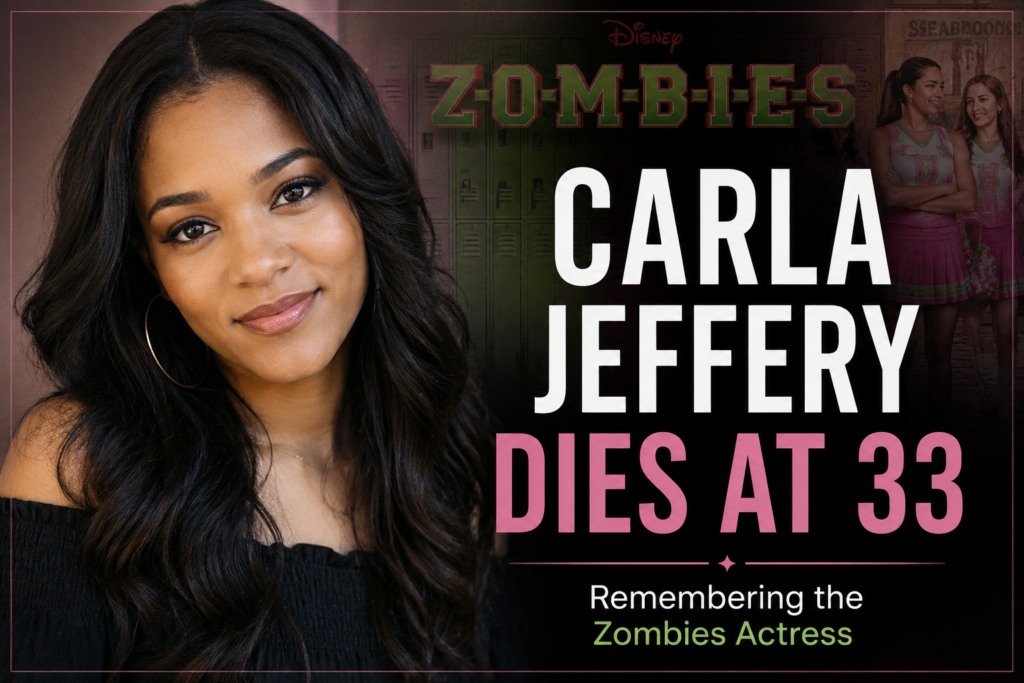
Carla Jeffery, Zombies actress who played Bree, dies at 33

Carla Jeffery Dies at 33: ‘Zombies’ Actress’ Life, Career and Legacy

Carla Jeffery, the actress best known for playing Bree in Disney’s Zombies franchise, has died at the age of 33. Her passing was confirmed by Alexanders Talent Management, ending a career that spanned more than two decades across film, television, and voice acting. For Disney fans, Jeffery will always be remembered as the loyal and energetic Bree. However, her story began long before Zombies, with a childhood acting career that steadily grew into one of the most recognizable supporting roles in modern Disney Channel musicals. Carla Jeffery Dies at 33: What We Know Carla Jeffery died on September 1, 2026, at the age of 33. Her longtime management company confirmed the news and asked for privacy as her family and loved ones mourn her passing. Key Facts Detail Information Full name Carla Jeffery Age 33 Date of death September 1, 2026 Best known for Bree in Zombies Cause of death Not publicly disclosed Jeffery became widely recognized through Disney’s Zombies franchise, where she portrayed Bree across multiple films before later returning to voice the character in the animated series. What Happened to Carla Jeffery? Following the announcement, many readers searched for answers about Carla Jeffery’s death. At this stage, only a limited amount of information has been officially confirmed. Has the Cause of Death Been Revealed? No. As of now, Carla Jeffery’s representatives have not publicly disclosed her cause of death. Several major news organizations have confirmed her passing while noting that the family has chosen not to share additional medical or personal details. Until official information is released, any online speculation should be treated as unverified. Who Was Carla Jeffery? Carla Jeffery was an American actress from Houston, Texas, who began acting professionally at just 12 years old. Her first major screen appearance came in the 2006 comedy Phat Girlz, launching a career that would eventually include Disney Channel, network television, and voice acting. She later appeared in popular series including: Curb Your Enthusiasm Southland iCarly Good Luck Charlie Shake It Up! Although Bree became her signature role, Jeffery had already established herself as a versatile performer years before joining the Zombies franchise. Carla Jeffery’s Career Before Zombies Before Disney introduced her to millions of young viewers, Jeffery quietly built an impressive résumé through guest and recurring television roles. Early Film and Television Roles Her early career showcased remarkable range, from comedy to drama: Phat Girlz — Feature film debut Curb Your Enthusiasm — Recurring television role Southland — Dramatic guest appearance American Vandal — Modern streaming comedy Shake It Up! & Good Luck Charlie — Disney Channel appearances Her early career also reflects the broader network of casting and talent professionals behind Hollywood’s performers. Andrea Eastman’s Hollywood career and legacy provide another look at the industry professionals who helped shape major film and television careers. These performances helped establish Jeffery as a dependable young actress long before Zombies became a cultural phenomenon. Her early start in entertainment also places her among performers who built careers from a young age. Christy Knowings’ career and legacy offer another example of a performer who became known to audiences through childhood television. Carla Jeffery as Bree in Zombies Everything changed in 2018 when Jeffery joined Disney’s Zombies as Bree. Bree served as Addison’s best friend and one of Seabrook High’s most recognizable cheerleaders. While she wasn’t the franchise’s central protagonist, her warmth, humor, and unwavering loyalty made her one of its most beloved supporting characters. Jeffery reprised the role in Zombies 2, Zombies 3, and later Zombies: The Re-Animated Series, ensuring Bree remained an important part of the franchise’s legacy. Her Work Across the Zombies Franchise Carla Jeffery’s connection to Disney’s Zombies franchise extended beyond the original 2018 film. She returned as Bree in the sequels, allowing the character to remain part of the story as Seabrook grew more complicated and new groups entered the community. For Jeffery, the franchise also represented an important chapter in a career that had already included film and television roles. Her work as Bree introduced her to a new generation of viewers while giving longtime Disney Channel audiences a recurring character they could recognize throughout the series. Zombies, Zombies 2 and Zombies 3 Jeffery first appeared as Bree in Zombies, which introduced audiences to Seabrook, a community dealing with the arrival of zombies and the tensions between different groups of students. Bree was closely connected to Addison, played by Meg Donnelly. As Addison’s best friend, Bree occupied an important place within the high-school storyline. Her character also belonged to the cheerleading world that became one of the franchise’s recurring visual and musical elements. Jeffery returned for ** Zombies 2 in 2020**, continuing Bree’s story as Seabrook encountered another supernatural community. The sequel expanded the franchise while retaining familiar characters from the first film. She appeared again in ** Zombies 3 in 2022**, the third live-action installment. By that point, Bree had become an established member of the franchise’s ensemble rather than simply a character from the original film. Jeffery’s repeated appearances helped create continuity across the movies. Fans who followed the franchise from its beginning could see familiar characters return as the fictional world became larger. For many viewers, that consistency became part of what made Bree recognizable. Although she was not the central protagonist, her friendship with Addison kept her connected to the franchise’s main emotional storyline. Zombies: The Re-Animated Series Jeffery’s association with Bree continued after the live-action trilogy. Disney’s Zombies: The Re-Animated Series expanded the franchise into animation and brought back several familiar characters. Jeffery returned as the voice of Bree, giving her another opportunity to portray the character. The animated format also showed that Bree had become more than a role tied exclusively to the original movies. Jeffery could carry the character into a different medium while maintaining the connection fans already had with her. The series continued the Zombies universe for Disney audiences and introduced the franchise to viewers who might encounter the characters through animation rather than the original

Carla Jeffery Dies at 33: ‘Zombies’ Actress’ Life, Career and Legacy Read More »