Celebrity Career

Explore the latest Celebrity Career news and updates. Discover new roles, projects and career milestones from stars. Get fresh stories from the US and global entertainment industry on CLIMAX Magazine today.

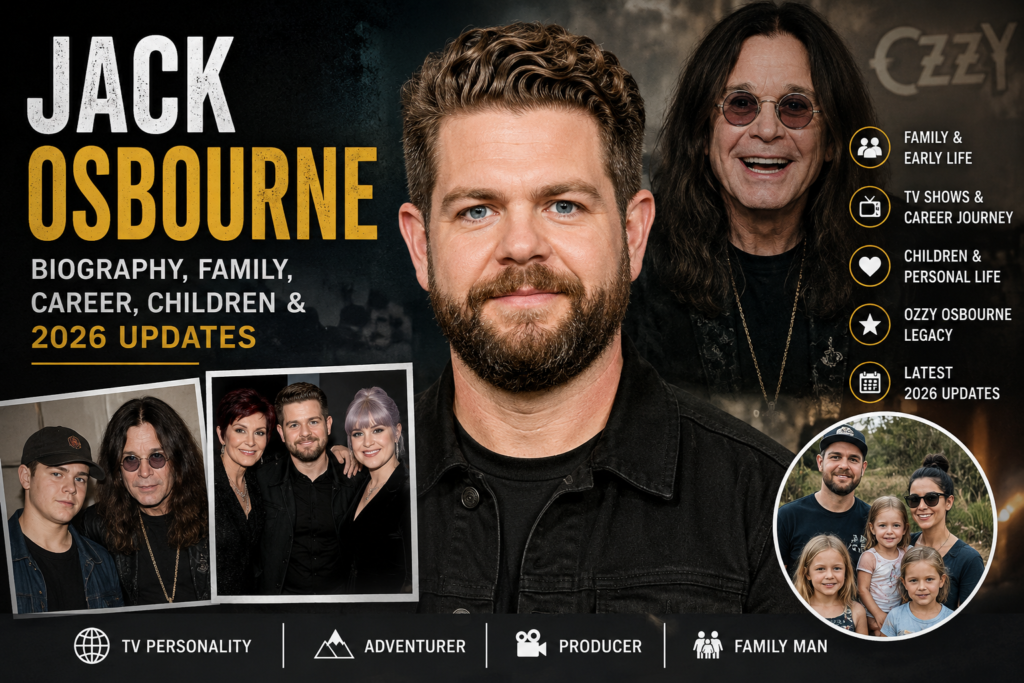
Jack Osbourne biography featuring his family, career, children and 2026 updates

Jack Osbourne: Biography, Family, Career, Children & 2026 Updates

Jack Osbourne has spent much of his life in the public eye, but his career has grown far beyond being known simply as Ozzy Osbourne’s son. Born in London in 1985, Jack became a familiar face to American television audiences when he appeared alongside Ozzy, Sharon and Kelly Osbourne on MTV’s The Osbournes. The reality series turned the Osbourne family into one of television’s most recognizable households in the early 2000s. Since then, Jack has developed his own career as a television personality, presenter and producer. He explored adventure and travel television with Jack Osbourne: Adrenaline Junkie, worked on environmental programming and later reunited with his father for Ozzy & Jack’s World Detour. His family connections continue to keep him in the entertainment spotlight. In 2026, Jack also attracted attention after discussing how his sister Kelly Osbourne was doing following her split from Slipknot musician Sid Wilson. At the same time, he has remained connected to projects surrounding his father Ozzy Osbourne’s legacy. For readers searching for Jack Osbourne, his story is therefore more than a celebrity-family biography. It is the story of a reality-TV teenager who gradually built an independent career while remaining closely connected to one of rock music’s most famous families. Who Is Jack Osbourne? Jack Joseph Osbourne is an English television personality, presenter and media figure. He was born on November 8, 1985, in London, England, to Ozzy Osbourne and Sharon Osbourne. His family background placed him in the entertainment world from an early age. His father became internationally famous as the lead vocalist of Black Sabbath and through his successful solo career, while his mother built a career in music management and television. Jack has two older sisters: Aimee Osbourne, the eldest sibling Kelly Osbourne, his younger sister Jack became internationally recognizable when he appeared with his parents and Kelly on The Osbournes. The MTV reality series gave viewers an unusually personal look at the Osbourne household and transformed the family into major television personalities. However, Jack did not rely on the reality show forever. After the series ended, he developed projects centered on adventure, travel, fitness and documentary-style television. Celebrity families often attract attention not only because of their careers but also because of how their personal lives evolve over time. Readers interested in another famous family’s changing personal and professional journey can also explore Nicole Kidman’s new chapter in Hollywood. Jack Osbourne at a Glance Detail Information Full name Jack Joseph Osbourne Born November 8, 1985 Birthplace London, England Parents Ozzy Osbourne and Sharon Osbourne Sisters Aimee Osbourne and Kelly Osbourne Profession Television personality, presenter and media figure Breakthrough The Osbournes Notable solo project Jack Osbourne: Adrenaline Junkie Father-son series Ozzy & Jack’s World Detour Known for Television, adventure programming and Osbourne family projects Jack Osbourne’s Early Life and Family Growing up as one of Ozzy and Sharon Osbourne’s children meant Jack experienced a very different childhood from most people. His father’s music career brought international fame, touring and constant media attention, while Sharon played an important role in managing Ozzy’s professional activities. Jack was the third child of Ozzy and Sharon. Aimee was born in 1983, followed by Kelly in 1984, and Jack in 1985. The siblings eventually took different approaches to public life. Aimee largely avoided the family’s reality-TV spotlight, while Jack and Kelly became central figures on The Osbournes. Growing Up in the Osbourne Household Before television turned the family into household names, Jack was already surrounded by the music and entertainment industries. His upbringing exposed him to: Rock music and touring culture Celebrity media attention Entertainment management Television production The pressures of living within a famous family That background later influenced his own career choices. Rather than pursuing a traditional music career like his father, Jack found a stronger professional identity in television and unscripted entertainment. His early exposure to the industry also helped him understand how entertainment works behind the scenes. He eventually explored several roles beyond simply appearing in front of a camera. From Famous Son to Television Personality Jack’s biggest opportunity arrived during his teenage years when MTV began filming The Osbournes. The program changed his public identity almost overnight. Instead of being known only as Ozzy Osbourne’s son, Jack became a recognizable television personality in his own right. That distinction became increasingly important after the series ended. His later career showed that he wanted to explore subjects and formats that reflected his own interests rather than simply reproduce the family reality-show formula. Jack Osbourne and The Osbournes The Osbournes premiered on MTV in 2002 and followed the everyday lives of Ozzy, Sharon, Jack and Kelly Osbourne. The series became a major reality-TV success and helped introduce the Osbourne family to a much wider American audience. For Jack, the show represented both his breakthrough and the beginning of a complicated relationship with fame. Viewers watched him as a teenager while cameras followed the family inside their home. Unlike a scripted television series, the program centered on family interactions and everyday situations. That format allowed audiences to see Jack’s personality develop alongside his relationships with his parents and sister. The series ran for four seasons before ending in 2005. Jack’s Role in the MTV Reality Series Jack became one of the recognizable younger faces of The Osbournes. His relationship with Ozzy and Sharon, along with his interactions with Kelly, formed an important part of the show’s family dynamic. The program helped establish several aspects of Jack’s public image: A member of a famous rock family A young television personality A recognizable reality-TV figure One of the younger faces of early-2000s celebrity television A public figure growing up in front of an audience However, the visibility came with an obvious challenge. Once The Osbournes ended, Jack needed to establish a career that did not depend entirely on cameras following his family. How The Osbournes Changed Jack’s Career The success of The Osbournes gave Jack an enormous platform, but it also created expectations about what his career would

Jack Osbourne: Biography, Family, Career, Children & 2026 Updates Read More »

Goldie Hawn in 2026 featuring her Hollywood career, family and legacy

Goldie Hawn in 2026: Family, Career, Legacy & Latest News

Goldie Hawn remains one of Hollywood’s most recognizable names, but in 2026, attention around her family has taken a more personal turn. Her son Oliver Hudson and his wife, Erinn Bartlett, recently experienced a major family milestone when their eldest son, Wilder Hudson, left home for college at 19. The transition brought an emotional reaction from both parents and highlighted how quickly the next generation of the Hawn-Hudson family is growing up. For Hawn, moments like this add another dimension to a career that has already lasted for decades. She is known not only for her Academy Award-winning performances and memorable comedies, but also for her role within a large Hollywood family that includes actors, filmmakers and a new generation growing up under an unusually famous family name. Her relationship with longtime partner Kurt Russell and her close connection with her children and grandchildren have remained important parts of her public story. At the same time, Hawn’s work extends well beyond entertainment. Through the Goldie Hawn Foundation and its MindUP program, she has spent years supporting children’s social and emotional development. That work has become a significant part of her legacy and gives her career a broader meaning beyond the screen. The current family milestone therefore offers a useful way to look at Goldie Hawn in 2026: not simply as a celebrated actress, but as a mother, grandmother, advocate and central figure in a multigenerational Hollywood family. Goldie Hawn in 2026: Why She Is Back in the Spotlight The latest attention surrounding Goldie Hawn comes from a familiar but emotional family experience: a child leaving home for college. Wilder Hudson, the 19-year-old eldest son of Oliver Hudson and Erinn Bartlett, recently moved into college, marking a major transition for the family. Erinn shared her feelings publicly, describing the moment as emotional while also expressing pride and excitement for her son. A Major Milestone for the Hudson Family Wilder is the oldest of Oliver and Erinn’s three children. His younger siblings are Bodhi, 16, and Rio, 13. With Wilder now beginning college, the family is entering a different stage of parenthood. Oliver and Erinn helped him settle into his dorm, turning what could have been a simple move into an emotional family milestone. The moment also carries a broader significance because the Hudson family sits within one of Hollywood’s best-known extended families. Oliver is Goldie Hawn’s son, making Wilder one of Hawn’s grandchildren. As a result, an ordinary rite of passage has drawn attention partly because of the family’s remarkable public history. For readers following Goldie Hawn, however, the story is less about celebrity and more about time passing. Hawn’s children have become parents themselves, and her grandchildren are now reaching adulthood. That shift shows how the actress’s Hollywood legacy has moved naturally into another generation. Where Goldie Hawn Fits Into the Story Goldie Hawn is part of a family whose entertainment history spans multiple generations. Her children include Oliver and Kate Hudson, while her long-term partnership with Kurt Russell also helped shape a blended family that includes Wyatt Russell and Boston Russell. MindUP identifies Hawn as a mother of four grown children and a grandmother, emphasizing the importance of family alongside her professional career. Wilder’s college milestone consequently places Hawn in a familiar family role: watching another generation grow into adulthood. It also helps explain why interest in Goldie Hawn continues even when the news is not centered on a new film or television project. Who Is Goldie Hawn? Goldie Hawn built her reputation through a combination of comedy, charm and screen presence that eventually made her one of Hollywood’s most successful leading actresses. Her career began in entertainment long before the family milestones now attracting attention, and she developed from a television performer into an Oscar-winning film star. Hawn became widely known through the television comedy series Rowan & Martin’s Laugh-In, where her energetic personality and comedic timing helped make her a standout performer. Her success on television opened the door to major film opportunities and allowed her to establish a career that would stretch across several decades. From Television to Hollywood Stardom Her early film work quickly demonstrated that she could move beyond television comedy. In Cactus Flower, Hawn delivered the performance that earned her the Academy Award for Actress in a Supporting Role. That victory established her as a serious film talent while preserving the warmth and humor that had helped make her popular. Hawn continued to build her reputation through films that combined comedy with strong female characters. Her later work included Private Benjamin, for which she received an Academy Award nomination for Actress in a Leading Role. The nomination confirmed that her appeal was not limited to supporting or purely comedic performances. Over time, her filmography expanded across romantic comedies, broad comedy and more unconventional roles. Movies such as Overboard, Death Becomes Her and The First Wives Club became closely associated with her screen persona. Her career ultimately became larger than any single performance. Hawn established herself as an actress who could carry major productions while maintaining a distinctive personality, and that combination helped keep her recognizable across generations. Goldie Hawn’s Hollywood Career and Biggest Achievements Goldie Hawn’s career stands out because she turned a distinctive comedic personality into lasting movie-star power. After gaining national attention on Rowan & Martin’s Laugh-In, she moved into films and quickly proved that her appeal extended beyond television. Her performances combined humor, warmth and a strong sense of individuality, qualities that became central to her screen identity. Her film career included a wide range of projects, from romantic comedies to dramas and ensemble productions. Among her best-known films are There’s a Girl in My Soup, Butterflies Are Free, The Sugarland Express, Foul Play, Private Benjamin, Overboard, Death Becomes Her and The First Wives Club. She later returned to the screen in projects including Snatched and The Christmas Chronicles films. The Academy Award That Changed Her Career Hawn reached an important career milestone with Cactus Flower. Her performance earned

Goldie Hawn in 2026: Family, Career, Legacy & Latest News Read More »

Sam Neill featured in a cinematic collage highlighting Jurassic Park, Event Horizon, In the Mouth of Madness, and Peaky Blinders

Sam Neill: Career, Movies, Horror Legacy, Event Horizon & Jurassic Park

Sam Neill built a career that could have easily been defined by one role. Instead, the New Zealand actor moved between intimate dramas, international thrillers, television, blockbuster adventures, and some of the most unsettling horror films of his era. For many viewers, he will always be Dr. Alan Grant from Jurassic Park. Others remember him as the troubled John Trent in In the Mouth of Madness or Dr. William Weir in Event Horizon. His work reached far beyond those recognizable performances. Neill died in Sydney on July 13, 2026, at age 78. His death closed a career that had stretched across five decades and included more than 50 films, along with extensive television work. Yet his screen legacy remains unusually broad. He could bring warmth and humor to one project, then create an intimidating or psychologically fragile character in the next. That range helps explain why audiences continue returning to his films. The renewed interest in his horror work also gives his career a fascinating modern angle. A forthcoming documentary, Beyond the Horizon of Madness: The Horrors of Sam Neill, is set to revisit two of his most distinctive genre performances, In the Mouth of Madness and Event Horizon. Together, those films show a different side of an actor best known to mainstream audiences as the rational scientist who faced dinosaurs. Who Was Sam Neill? Sam Neill was born Nigel John Dermot Neill on September 14, 1947, in Omagh, Northern Ireland. His family moved to New Zealand when he was a child, and the country became the foundation of both his personal identity and professional career. He studied at the University of Canterbury and later Victoria University of Wellington before developing his interest in acting and filmmaking. His path into cinema was not an instant rise to Hollywood fame. Neill worked with theater groups and the New Zealand National Film Unit, where he directed, edited, and wrote documentary material. That experience gave him an understanding of filmmaking beyond performance. He knew how productions worked from behind the camera as well as in front of it. His feature-film breakthrough came with Sleeping Dogs in 1977. The New Zealand thriller helped establish him as a serious screen performer and became an important early milestone in the country’s developing film industry. From there, Neill gradually built an international career rather than relying on a single breakthrough. That gradual progression became one of the defining features of his professional life. He worked across different genres and often accepted roles that allowed other performers or the story itself to take center stage. His understated approach could make him seem almost effortless on screen, but that restraint became a major part of his appeal. By the time Hollywood audiences discovered him through Jurassic Park, Neill had already spent years developing the qualities that would make Dr. Alan Grant convincing: intelligence, authority, dry humor, and a grounded sense of danger. Sam Neill’s Early Career and Rise to International Fame Neill’s early career developed primarily through New Zealand and Australian cinema before international productions began giving him wider exposure. After Sleeping Dogs, he appeared in projects that demonstrated how comfortable he was with dramatically different characters. My Brilliant Career, Omen III: The Final Conflict, Possession, Dead Calm, and A Cry in the Dark each added another dimension to his growing reputation. From New Zealand Cinema to International Roles The importance of this period goes beyond the number of films Neill made. He developed a screen presence that did not depend on conventional leading-man behavior. He could appear tough without becoming exaggerated, vulnerable without losing authority, and threatening without resorting to obvious theatricality. My Brilliant Career helped place him within the emerging international conversation around Australian and New Zealand filmmaking. Omen III, meanwhile, demonstrated that he could carry darker material. Later, Dead Calm placed him in a tense psychological thriller alongside Nicole Kidman, giving international audiences another reason to notice him. His work in the 1980s also showed that he was willing to move between art-house cinema and commercial productions. That flexibility became crucial later. Instead of being locked into one genre, Neill accumulated experience that allowed him to enter major Hollywood projects without losing the qualities that had defined his earlier work. The Breakthrough That Changed Sam Neill’s Career The decisive turning point arrived in 1993. Neill appeared in two very different films that year: Steven Spielberg’s Jurassic Park and Jane Campion’s The Piano. The contrast was remarkable. One became a global blockbuster built around dinosaurs and groundbreaking visual effects; the other became an acclaimed dramatic film. Jurassic Park transformed Neill’s public profile. As Dr. Alan Grant, he gave the enormous adventure film a believable human center. His performance did not depend on exaggerated heroics. Instead, Grant felt like a working scientist suddenly forced into an impossible survival situation. That combination of credibility and accessibility made Neill an ideal blockbuster lead. At the same time, The Piano confirmed that his abilities extended well beyond mainstream adventure cinema. The two films together captured something essential about his career: Sam Neill could move between completely different cinematic worlds while remaining unmistakably himself. His international reputation was now firmly established, but the most interesting chapter of his career was still ahead. Alongside major dramas and blockbusters, he would increasingly become associated with darker stories, including the horror films that later developed devoted cult audiences. Sam Neill and Jurassic Park For millions of moviegoers, Sam Neill became synonymous with Dr. Alan Grant. Steven Spielberg’s Jurassic Park gave him the role that would define his mainstream career, but the performance worked because Neill avoided turning Grant into a conventional action hero. He played him as a serious paleontologist who preferred fossils to people and felt far more comfortable studying prehistoric life than dealing with children. Dr. Alan Grant and the Original Jurassic Park Grant’s journey begins when he accepts an invitation to visit John Hammond’s dinosaur theme park. What initially looks like a scientific opportunity quickly becomes a fight for survival after

Sam Neill: Career, Movies, Horror Legacy, Event Horizon & Jurassic Park Read More »

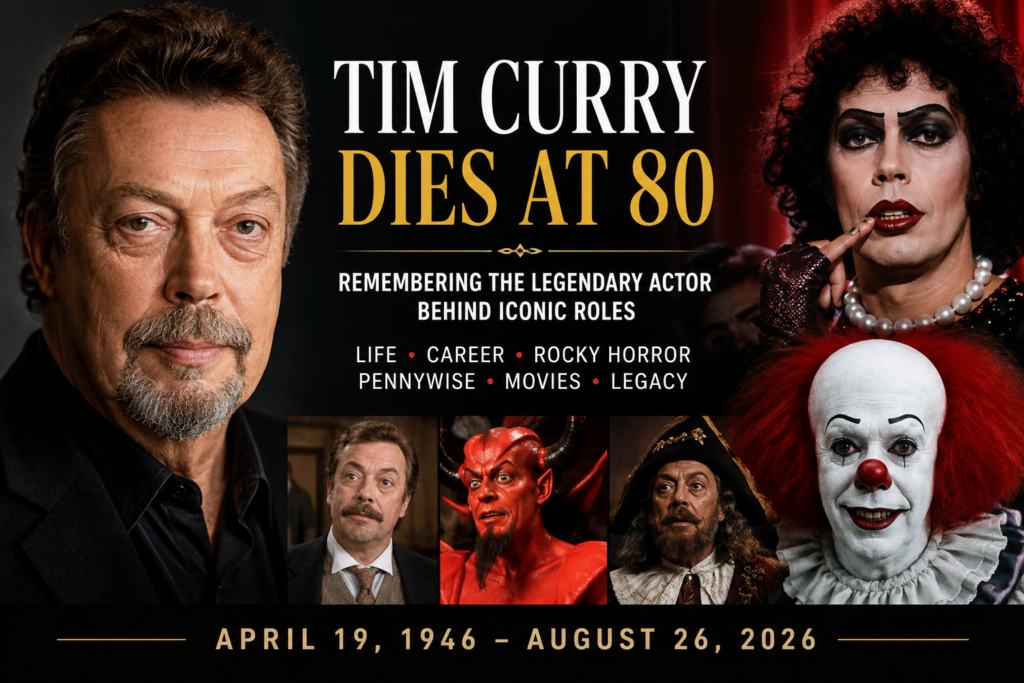
Tim Curry featured in a tribute image celebrating his life, career, Rocky Horror and Pennywise roles

Tim Curry Dies at 80: Life, Career, Rocky Horror, Pennywise and Lasting Legacy

Tim Curry, the British actor whose unforgettable performances helped define cult cinema, stage comedy, horror television, and animated entertainment, has died at 80. Curry died at his Los Angeles home in August 2026, according to his longtime manager and friend Marcia Hurwitz. His death marks the end of a career that stretched across more than five decades, from London’s theater scene to Hollywood films and major voice-acting roles. For many fans, Curry will always be Dr. Frank-N-Furter from The Rocky Horror Picture Show. Others remember him as Pennywise in the 1990 television adaptation of Stephen King’s It, Wadsworth in Clue, the Lord of Darkness in Legend, or Nigel Thornberry in The Wild Thornberrys. Yet those familiar roles represent only part of his work. Curry also earned three Tony Award nominations for Broadway performances and built a respected career as a singer and stage performer. His death also brings renewed attention to the breadth of his career. Curry could move from flamboyant musical theater to dark horror, broad comedy, children’s animation, and Shakespearean performance without losing the distinctive voice and presence that made him instantly recognizable. Tim Curry Dies at 80: What We Know When Tim Curry died Tim Curry died at his home in Los Angeles at the age of 80. His longtime manager, Marcia Hurwitz, confirmed the death, while major reports published on August 26, 2026, identified the actor as having died in Los Angeles. Some early reports differed over whether his death occurred late Tuesday or Wednesday, so the safest account is that Curry died in Los Angeles during the August 25–26 period. Curry was born Timothy James Curry in Cheshire, England, in 1946. Over the following decades, he became one of the most recognizable British performers to build a major career in American entertainment. His work crossed several generations, giving different audiences their own way into his filmography. For older moviegoers, he was the magnetic performer behind Frank-N-Furter. Horror fans knew him as Pennywise. Families encountered his voice work in animated productions, while theater audiences followed his performances on Broadway. That range helps explain why news of his death resonated far beyond a single genre or generation. What is known about the cause of death A cause of death has not been publicly disclosed. Reports from the Associated Press, Reuters and other major outlets have confirmed Curry’s death but have not identified a specific medical cause. Curry had experienced serious health problems during his later years. In 2012, he suffered a major stroke that affected his mobility and led him to use a wheelchair. The stroke also reduced his on-camera workload, although he continued working through voice performances, appearances and other projects. That history should not be confused with the cause of his death. At this time, there is no confirmed public information establishing that his earlier stroke caused his death. The responsible account is therefore simple: Curry died at 80, and no cause has been announced. Who Was Tim Curry? Early life and education Tim Curry was born in Cheshire, England, in 1946 and developed an interest in performance before establishing himself professionally. He studied drama and English at the University of Birmingham, graduating in 1968. Soon afterward, he joined the London production of Hair, beginning a professional theater career that would shape almost everything that followed. The stage gave Curry an ideal environment for the qualities that later became his trademarks: a commanding voice, strong physical presence, comic timing, and a willingness to embrace unusual characters. Rather than following a conventional path toward leading-man roles, he gravitated toward complicated, eccentric, and often theatrical personalities. That choice became central to his identity as a performer. Curry could dominate a scene without necessarily being its traditional hero. His characters often arrived with exaggerated confidence, strange mannerisms, or an unmistakable sense of danger. Those qualities eventually made him perfect for one of the most unconventional musical characters of the 1970s. From London’s stage to Rocky Horror Curry’s career changed dramatically when he originated Dr. Frank-N-Furter in The Rocky Horror Show on the London stage. The production premiered in 1973 and became a phenomenon, eventually leading to the 1975 film The Rocky Horror Picture Show. The role transformed Curry from a promising stage performer into an international cult figure. Frank-N-Furter demanded theatrical confidence, musical ability, comic precision, and a willingness to challenge conventional ideas about gender and performance. Curry brought all of those elements together in a character that audiences could not easily forget. The film initially had a difficult commercial journey, but its midnight screenings and highly participatory fan culture gradually turned it into one of cinema’s most enduring cult classics. Curry’s performance stood at the center of that transformation. For many viewers, Frank-N-Furter became the defining Tim Curry role. However, the success of Rocky Horror did not trap him in one character. Instead, it gave Curry the visibility to pursue increasingly varied work across film, television, theater, and music. Tim Curry and The Rocky Horror Picture Show Why Frank-N-Furter became his signature role Dr. Frank-N-Furter remains the role most closely associated with Tim Curry because the performance combined nearly every strength he had developed onstage. Curry played the character with theatrical swagger, sharp humor, musical confidence, and a deliberately provocative style. The result was not simply a memorable musical performance; it became part of the identity of the film itself. The Rocky Horror Picture Show also found a life beyond its original theatrical release. Midnight screenings encouraged audiences to dress as characters, respond aloud to the movie, and participate in rituals that turned ordinary viewing into a communal event. Over time, Curry’s Frank-N-Furter became one of the most recognizable figures in that tradition. The role also mattered culturally because it gave audiences an unconventional screen presence at a time when mainstream American entertainment offered far fewer openly transgressive characters. Curry approached Frank-N-Furter as a performer rather than reducing the character to a simple shock device. That distinction helped the role endure. Decades later, audiences still discover

Tim Curry Dies at 80: Life, Career, Rocky Horror, Pennywise and Lasting Legacy Read More »

Cher in 2026 featured in a magazine-style graphic celebrating her career, biggest hits, 80th birthday, legacy, and December tribute show.

Cher in 2026: Career, Biggest Hits, 80th Birthday & December Tribute Show

Cher remains one of the rare entertainers whose name alone can define an era. In 2026, that legacy feels especially significant as she celebrates her 80th birthday while continuing to stand as a major figure in music, film, television, fashion, and pop culture. Her career has crossed generations, musical styles, and entertainment formats without losing the distinctive identity that made her famous. The current interest in Cher also comes with a timely development. A December 2026 tribute event at Andiamo Celebrity Showroom in Warren, Michigan, has brought renewed attention to her songs, stage image, and decades-long influence. However, a tribute performance should not be confused with a concert by Cher herself. That distinction matters as fans look for details about the event. Long before tribute shows celebrated her work, Cher built a career through constant reinvention. She moved from a young singer working alongside Sonny Bono to a successful solo artist, television personality, Oscar-winning actress, fashion icon, and late-career pop phenomenon. Few performers have maintained that level of recognition for so long. Who Is Cher? Cher is an American singer, actress, television personality, and cultural icon whose professional career began in the early 1960s. Born Cherilyn Sarkisian on May 20, 1946, she developed a recognizable contralto voice and a striking public image that quickly separated her from many other performers of her generation. Her long career also places her among the classic Hollywood and entertainment figures whose work continues to attract renewed interest from modern audiences. Her breakthrough came through her partnership with Sonny Bono. Together, Sonny & Cher became a successful musical act, with their distinctive sound and television presence helping them reach a large national audience. Cher later established herself independently, proving that her identity did not depend on the partnership that first made her famous. What makes Cher unusual is the range of her career. She has recorded pop, rock, disco, dance, and other styles while also building a respected acting résumé. Her film work eventually earned her an Academy Award, while her television career helped make her a household name beyond music. Cher also became known for taking risks with fashion and presentation. Her dramatic costumes, powerful stage presence, and willingness to change her image helped turn her into more than a recording artist. She became a recognizable symbol of reinvention. By 2026, Cher’s career spans seven decades, giving her a rare position in popular entertainment. Cher’s Early Life and Rise to Fame Cher was born in El Centro, California, and grew up in a family with financial challenges. Her mother, Georgia Holt, worked in entertainment and encouraged her daughter’s creative ambitions. Cher eventually moved toward Los Angeles, where she hoped to establish herself in the music business. Her early path was not an instant success story. Instead, she entered the recording world through background work and studio opportunities before finding the partnership that would change her career. Her unusually deep voice became an important part of her identity. Even when she was not the featured performer, her vocal tone could stand out in a crowded studio. That distinctive quality later became one of the defining characteristics of her solo recordings. Cher’s early experiences also taught her how the entertainment industry worked behind the scenes. She learned to adapt, perform under pressure, and develop a public persona. Those lessons became important as she moved from supporting roles into the spotlight. Meeting Sonny Bono proved to be the major turning point. Their personal and professional relationship eventually created the platform from which Cher launched her first major period of fame. Sonny & Cher and the First Wave of Stardom Cher and Sonny Bono became one of the most recognizable entertainment partnerships of the 1960s. Their breakthrough recording, “I Got You Babe,” gave them a signature hit and established a sound that audiences immediately associated with the duo. Their appeal extended beyond music. Cher’s voice contrasted with Sonny’s, while their relaxed chemistry gave their performances a distinctive character. The partnership also opened the door to television, where their personalities became as important as their recordings. The success came with an important complication: Cher was developing into a star in her own right. While Sonny & Cher remained a major part of her early identity, Cher’s growing confidence and individual appeal suggested that she could sustain a career beyond the duo. Television played a major role in that transition. Their variety programming introduced Cher to audiences who might not have followed a young pop singer through records alone. Her appearance, humor, costumes, and unmistakable voice all contributed to a personality that audiences could recognize instantly. Eventually, the professional partnership ended, but Cher’s career did not. Instead, she entered one of the most important phases of her life as a solo performer. Cher’s Music Career Begins to Stand on Its Own Cher’s solo career developed alongside the success of Sonny & Cher, but she gradually demonstrated that she could command attention without the duo. Her recordings allowed her to experiment with different sounds while preserving the vocal character that had made her recognizable. Songs such as “Gypsys, Tramps & Thieves” helped establish her as a major solo recording artist. The track showcased her ability to turn a distinctive vocal performance into a commercially successful pop record while giving her a musical identity separate from her earlier partnership. That ability to change direction became a recurring theme throughout her career. Cher did not remain tied to the sound that first made her famous. Instead, she continued exploring new musical trends as the industry changed around her. Her career would later move through rock, disco, pop, dance music, and electronic sounds. Each period introduced a different version of Cher, yet the core remained recognizable: a powerful voice, an unmistakable presence, and a willingness to take creative risks. That pattern of reinvention would eventually become one of the strongest explanations for Cher’s remarkable longevity. Cher’s Music Career and Biggest Hits Cher’s solo career continued to grow as she moved beyond the Sonny

Cher in 2026: Career, Biggest Hits, 80th Birthday & December Tribute Show Read More »

Gilderoy Lockhart-inspired wizard professor in a magical classroom for Harry Potter Season 2

Gilderoy Lockhart in Harry Potter Season 2: Kit Harington Replaces Nicholas Hoult

Gilderoy Lockhart is getting a new face in HBO’s Harry Potter series. Kit Harington has taken over the role for Season 2, replacing Nicholas Hoult, whose departure came after scheduling conflicts. The change adds an unexpected twist to one of the most recognizable supporting characters in Harry Potter and the Chamber of Secrets. For fans, the casting news is interesting for another reason. Harington is not completely new to Gilderoy Lockhart. He previously voiced the character in the full-cast audiobook edition of Harry Potter and the Chamber of Secrets. That connection gives the actor an unusual head start as he moves from an audio performance to a live-action interpretation. The recasting also arrives as HBO expands its new television adaptation of J.K. Rowling’s Harry Potter novels. Season 2 will move into the story of Chamber of Secrets, bringing Hogwarts back to the screen with a new generation of actors. Lockhart’s arrival will be especially important because his larger-than-life personality makes him one of the season’s most distinctive characters. Gilderoy Lockhart Gets a New Face in Harry Potter Season 2 Kit Harington Is Now Playing Gilderoy Lockhart Kit Harington will portray Gilderoy Lockhart in the second season of HBO’s Harry Potter. The actor joins the growing cast as the story moves into its second Hogwarts adventure, where Lockhart becomes the new Defense Against the Dark Arts professor. The casting gives HBO an actor best known for dramatic roles a chance to explore a much more flamboyant character. Lockhart is confident, theatrical and deeply invested in his own celebrity. His public image depends on charm, polished appearances and an impressive list of supposed achievements. Harington’s involvement also carries an unusual connection to the Harry Potter franchise. Before HBO’s television adaptation, he had already performed as Lockhart for the full-cast audiobook of The Chamber of Secrets. That means the new live-action role is not his first experience with the character. For HBO, however, this will be Harington’s first opportunity to define Lockhart visually and physically for a major screen adaptation. His performance will need to balance the character’s humor and charm with the insecurity hiding beneath his carefully constructed reputation. Nicholas Hoult Has Left the Role Nicholas Hoult was originally attached to play Gilderoy Lockhart in HBO’s series, but he will no longer appear in the role. Current reporting attributes the change to scheduling conflicts. The transition happened relatively early in the production process, allowing HBO to recast the character before his appearance in Season 2 became a finished part of the series. Rather than removing Lockhart from the adaptation, the production has moved forward with Harington. That distinction matters because Lockhart remains an important part of the Chamber of Secrets storyline. The recasting does not indicate that HBO has abandoned the character or changed his basic function within the story. Instead, viewers will see a different interpretation of the same Hogwarts professor. Hoult’s version will never reach the screen, while Harington now becomes the actor audiences will associate with HBO’s Gilderoy Lockhart. Who Is Gilderoy Lockhart? The Famous Hogwarts Professor Gilderoy Lockhart enters the Harry Potter story as a celebrated wizard with an enormous public profile. He has written multiple books about his supposed encounters with dangerous magical creatures and difficult supernatural situations. His reputation makes him appear ideally qualified to teach Defense Against the Dark Arts at Hogwarts. However, Lockhart’s personality is almost as important as his résumé. He enjoys attention, expects admiration and rarely misses an opportunity to promote himself. He presents himself as a fearless expert, yet his confidence often feels more polished than genuine. That contrast makes him different from many of the series’ darker or more intimidating characters. Lockhart can appear ridiculous rather than immediately threatening, but his role still contributes meaningfully to the story. His popularity also creates an interesting dynamic at Hogwarts. Students know his name before they properly know him, and his fame gives him an authority that does not necessarily come from his actual abilities. The Reality Behind His Reputation Lockhart’s greatest strength is his ability to create an image. He understands how to make himself look impressive, and he has built his career around stories that present him as the hero of extraordinary magical adventures. The problem is that his public reputation does not tell the whole story. As Chamber of Secrets develops, the difference between Lockhart’s claims and his real capabilities becomes increasingly important. His character works because he is not simply a comic teacher. He represents the gap between appearance and substance. That idea fits naturally into the wider Harry Potter universe, where characters frequently discover that reputation can be misleading. Lockhart simply takes that concept to an exaggerated level. For the HBO adaptation, that creates plenty of room for a performer to make the character funny, irritating and memorable at the same time. Harington will have to sell both sides of Lockhart: the dazzling public persona and the much less impressive reality underneath it. Why Gilderoy Lockhart Matters in Harry Potter Season 2 Lockhart and the Defense Against the Dark Arts Class Lockhart becomes part of Hogwarts during a particularly difficult year. The second story introduces a new threat inside the school, while Harry and his friends begin uncovering clues that connect the danger to Hogwarts’ past. Against that backdrop, Lockhart arrives as the new Defense Against the Dark Arts teacher. His confidence immediately separates him from the other adults at the school. Unlike a quiet or mysterious professor, Lockhart actively seeks attention. He enjoys being recognized, talks freely about his accomplishments and presents himself as an authority on magical danger. That personality creates comedy, but it also serves a larger storytelling purpose. Lockhart’s exaggerated confidence becomes increasingly difficult to reconcile with the serious events surrounding Harry, Ron and Hermione. His classroom scenes can therefore provide lighter moments while still advancing the characters and the larger mystery. His Connection to Harry, Ron and Hermione Lockhart’s relationship with the young trio gives the character much of his dramatic value.

Gilderoy Lockhart in Harry Potter Season 2: Kit Harington Replaces Nicholas Hoult Read More »

Jill Wagner in 2026 as Bobby in Lioness, with career and family highlights

Jill Wagner in 2026: Lioness, Career, Husband, Military Connection & Life Beyond Hollywood

Jill Wagner has built a diverse career across television, film, hosting, and producing. In 2026, she is especially known for playing Bobby in Lioness. The role has introduced her to a wider audience through the series’ military-action storyline. Her connection to Lioness began before the show reached television. Wagner became interested in the real-world Lioness program through her husband, David Lemanowicz. His military background helped her understand the subject and encouraged her to explore the story further. Wagner later brought the concept to Taylor Sheridan. The project eventually developed into the fictional series audiences know today. Her involvement did not stop with acting, as she also became an executive producer on the show. Before Lioness, Wagner had already built a long entertainment career. She gained early recognition through television hosting, including Wipeout. Acting roles followed across action, drama, supernatural television, and made-for-TV movies. Her career also includes a strong connection to family and romantic television productions. That experience contrasts sharply with Bobby’s military-focused character. Away from Hollywood, Wagner has embraced family life and a quieter lifestyle in Tennessee. Today, Lioness represents an important new chapter for the actress. It combines her acting experience, interest in military stories, and growing work behind the camera. Who Is Jill Wagner? Jill Wagner is an American actress and television personality whose career has stretched across reality television, scripted series, television movies, and action drama. Born in Winston-Salem, North Carolina, Wagner attended North Carolina State University, where she earned a degree in business management. She later moved toward entertainment and began building a professional career in television. For many viewers, Wagner first became familiar as a television personality rather than as a dramatic actress. Her early television work helped establish her public profile, but she gradually expanded into scripted entertainment. Over time, she appeared in projects spanning several genres, including action, science fiction, drama, and family-oriented television. That range became one of the defining characteristics of her career. Wagner could move from hosting a large-scale reality competition to appearing in scripted dramas and then into television movies aimed at a completely different audience. Her role as Bobby in Lioness represents another step in that progression. The character demands a much more physically intense and militarized performance than many of Wagner’s earlier projects. More importantly, Wagner holds an executive-producer credit on the series, giving her a creative connection to the production as well as an acting role. As a result, understanding Jill Wagner in 2026 requires looking at the complete career path that led her to Lioness, rather than treating Bobby as an isolated role. Jill Wagner’s Early Life and Education Wagner was born January 13, 1979, in Winston-Salem, North Carolina. She grew up primarily in North Carolina and attended Ledford Senior High School before enrolling at North Carolina State University. She graduated in 2001 with a bachelor’s degree in business management. Her early background did not follow the traditional route associated with a future Hollywood star. Instead, Wagner developed an interest in modeling and acting while she was still young. That eventually led her toward professional entertainment work and, later, television. Her North Carolina upbringing also remained an important part of her identity. Even after establishing herself in the entertainment industry, she maintained a connection to a more rural lifestyle. That contrast became particularly visible later when she and her family built a life in Tennessee. Wagner’s early experiences also provide useful context for her later work. Her career was not built around one immediate breakthrough in scripted television. Instead, she gradually accumulated experience in front of the camera, first developing recognition as a television personality and then using that exposure to move into acting. That gradual progression helped her establish the versatility that would eventually become central to her career. Jill Wagner’s Career Before Lioness Before Bobby became her best-known current role, Wagner had already spent years moving between television hosting and acting. Her early career gave her an unusual combination of live television experience and scripted-performance training. From Punk’d to Wipeout Wagner’s television career gained momentum during the early 2000s, when she appeared in entertainment programming and began taking on acting opportunities. One of the projects associated with her early television visibility was MTV’s Punk’d, which introduced her to a broad young audience. Her biggest mainstream hosting breakthrough came with ABC’s Wipeout. Wagner became one of the recognizable faces of the obstacle-course competition series, hosting alongside John Henson and John Anderson during the show’s successful run. She worked on the program from 2008 to 2011 and returned for another stint from 2013 to 2014. The role gave Wagner something that became valuable throughout her later career: strong television presence. Wipeout required her to work in a fast-moving environment while communicating naturally with contestants and audiences. However, hosting was only one part of her ambitions. Wagner continued pursuing scripted roles and gradually developed a second identity as an actress. That transition mattered because it demonstrated that her television career was not limited to reality programming. She could also build characters, work within scripted stories, and adapt to very different production environments. Acting Roles That Expanded Her Range Wagner continued developing her acting career through projects across several genres. Her credits included work in television and film, with roles that allowed her to move beyond the energetic hosting persona audiences had seen on Wipeout. Her career path also reflects the way established Hollywood performers continue to take on new challenges as their careers develop. Among the projects associated with her acting career are Blade: The Series, Splinter, Teen Wolf, and Braven. These productions exposed her to darker, more dramatic, and more action-oriented material. Her work in Teen Wolf was particularly useful in establishing her within genre television, while her film appearances gave her opportunities to work in stories built around suspense and action. At the same time, Wagner did not abandon television movies. Instead, she developed another major part of her career through romantic, family, and holiday-focused productions. That combination is important when looking

Jill Wagner in 2026: Lioness, Career, Husband, Military Connection & Life Beyond Hollywood Read More »

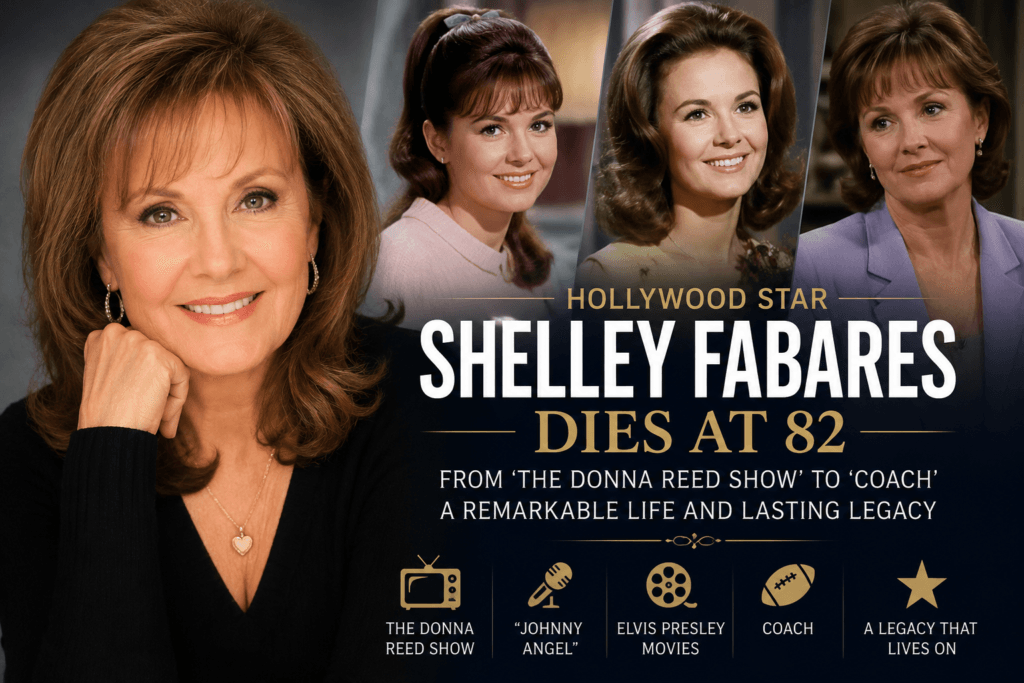
Shelley Fabares tribute featuring her career in The Donna Reed Show, Johnny Angel, Elvis Presley films, and Coach

Shelley Fabares Dies at 82: Career, ‘The Donna Reed Show,’ ‘Coach’ and Legacy

Shelley Fabares, the actress and singer whose career stretched from classic 1950s television to the long-running sitcom Coach, has died at 82. Her family confirmed that she died Saturday in Los Angeles. No cause of death was provided. For many viewers, Fabares remained closely associated with Mary Stone on The Donna Reed Show. However, her career reached far beyond that early television success. She recorded the hit song “Johnny Angel,” appeared alongside Elvis Presley in three films, took on dramatic roles, and later found another major television audience as Christine Armstrong on Coach. Her career also included One Day at a Time, Brian’s Song and numerous other television and film appearances. Across several decades, Fabares successfully moved from child performer to teen idol and then to an established adult actress. Shelley Fabares Dies at 82: What We Know Shelley Fabares died in Los Angeles at the age of 82, according to a statement from her family reported by The Associated Press. The family described her as a source of love, strength, laughter and comfort to the people around her. They did not disclose a cause of death. Her death also adds to a growing number of recent entertainment losses that have prompted renewed interest in the careers and legacies of longtime performers, including Christy Knowings. The news marks the end of a career that began when Fabares was still a child and continued for decades. She became widely known during the late 1950s as Mary Stone on The Donna Reed Show, one of television’s recognizable family sitcoms of that era. Her success did not remain limited to television. During her teenage years, she also established herself as a recording artist. Her version of “Johnny Angel” became a major pop hit, adding a music career to her growing reputation as a young star. Fabares later expanded her acting range. She worked with major performers, appeared in films with Elvis Presley and took on more mature television roles. By the 1980s and 1990s, she had built a second major chapter of her career through Coach, where she played Christine Armstrong opposite Craig T. Nelson. That longevity helps explain why news of her death resonates across different generations. Older viewers may remember her from The Donna Reed Show, while others know her primarily from Coach or her later television appearances. Her career was therefore not defined by a single role. Instead, Shelley Fabares became an example of a performer who successfully adapted as American television and popular culture changed. Who Was Shelley Fabares? Shelley Fabares was an American actress and singer who began performing professionally as a child. Born in Santa Monica, California, in 1944, she received her first television credit at age 10 with an appearance on The Loretta Young Show. That early opportunity opened the door to a steady stream of television and film work. Before reaching her best-known role, Fabares appeared in projects involving performers such as Paul Newman, Frank Sinatra, Eva Marie Saint, Rosalind Russell and Rock Hudson. Her early credits included The Girl Rush, Never Say Goodbye, Annette and an episode of The Twilight Zone. Her breakthrough came in 1958 when she joined The Donna Reed Show as Mary Stone. She remained part of the regular cast through 1963. The role made her a familiar face to American television audiences and established her as a major young star. Fabares then moved into music and film while continuing to act. Her recording of “Johnny Angel” became one of her signature achievements, while her appearances in three Elvis Presley movies expanded her profile beyond television. Later, she demonstrated that her early fame was not simply a product of teenage popularity. Roles in Brian’s Song, One Day at a Time and eventually Coach showed her ability to continue working successfully as she moved into different stages of adulthood. Her career ultimately covered more than five decades of American entertainment. Shelley Fabares and The Donna Reed Show The Donna Reed Show became the defining breakthrough of Shelley Fabares’ early career. She joined the series in 1958 as Mary Stone, the daughter of Donna Reed’s character, and remained with the show until 1963. The series placed Fabares in the middle of a television family that became familiar to audiences across the United States. As Mary, she represented the teenage perspective within the show’s family-centered stories. The role arrived during an important period in American television. Family sitcoms were becoming a major part of prime-time programming, and young performers on successful shows could quickly become household names. Fabares benefited from that environment while developing her own identity as a performer. Her years on the show also gave her valuable experience at a remarkably young age. In later comments, Fabares credited Donna Reed with having a profound influence on her. She viewed those teenage years as particularly important in shaping her personally and professionally. The show’s success also created opportunities outside acting. While she was still associated with The Donna Reed Show, Fabares began recording music and established herself as a pop singer. That combination of television exposure and music success made her one of the recognizable young entertainment personalities of the early 1960s. Yet The Donna Reed Show was only the first major stage of her career. After leaving the series, Fabares continued pursuing film, music and television rather than relying solely on the image she had created as Mary Stone. Shelley Fabares’ Music Career and “Johnny Angel” Shelley Fabares added another dimension to her young-star image when she entered the recording world during the height of her television popularity. Her biggest musical success came with “Johnny Angel,” a song that became closely associated with her name and helped turn her into a major teen idol of the early 1960s. Released while she was still appearing on The Donna Reed Show, the recording connected strongly with the show’s young audience. Its success showed that Fabares could attract attention beyond the television screen and gave her a second career path while she was still

Shelley Fabares Dies at 82: Career, ‘The Donna Reed Show,’ ‘Coach’ and Legacy Read More »

Jacob Elordi in The Dog Stars and his 2026 career

Jacob Elordi in 2026: The Dog Stars, Career, Movies, and What’s Next

Jacob Elordi has reached an important stage in his career, with each new role adding to his growing reputation. The Australian actor first gained widespread attention on television, but his film work has steadily broadened his range. In 2026, that progression leads him to The Dog Stars, Ridley Scott’s post-apocalyptic thriller, where he plays the lead role of Hig. The project represents a significant step up in scale. Rather than serving as one member of a young ensemble, Elordi anchors a major science-fiction film alongside Josh Brolin, Margaret Qualley, Guy Pearce, Benedict Wong, and Allison Janney. His character also faces challenges that require emotional resilience as well as physical strength. For that reason, The Dog Stars offers a useful snapshot of where Jacob Elordi stands today. His career has moved beyond the image established by his earliest breakout roles. Recent projects have also shown a growing interest in complex characters and ambitious filmmaking. With the movie heading toward its U.S. theatrical release, Elordi enters another important phase as one of Hollywood’s increasingly prominent young actors. Who Is Jacob Elordi? Jacob Elordi is an Australian actor who has developed an international career across television and film. Born in Brisbane, Queensland, he gained global recognition as Nate Jacobs in HBO’s Euphoria. The role introduced him to a large television audience and established him as one of the series’ most recognizable performers. His career soon expanded into feature films. Among his credits are The Kissing Booth series, 2 Hearts, The Very Excellent Mr. Dundee, The Sweet East, Priscilla, Saltburn, and He Went That Way. These projects allowed him to explore different genres and characters rather than remain associated with a single screen persona. Playing Elvis Presley in Sofia Coppola’s Priscilla marked another important step. The performance required Elordi to portray a globally recognizable figure while fitting into a story centered on Priscilla Presley. His role in Saltburn offered a different challenge, combining mystery, charisma, and psychological tension within a highly stylized drama. By 2026, Elordi has established himself as more than a breakout television star. His filmography now includes mainstream entertainment, independent cinema, literary adaptations, biographical drama, and major studio productions. The Dog Stars extends that progression by placing him at the center of a large-scale Ridley Scott production. How Jacob Elordi Became a Global Star Elordi’s rise happened relatively quickly. The Kissing Booth introduced him to a broad streaming audience, while Euphoria gave him a much more challenging dramatic role. Nate Jacobs allowed the actor to explore aggression, insecurity, vulnerability, and emotional instability within a complicated character. That visibility created opportunities, but Elordi’s subsequent career choices helped determine whether he could move beyond early fame. Instead of staying exclusively within familiar romantic or teen-oriented roles, he began taking on increasingly varied material. His work in Priscilla and Saltburn became particularly important in that transition. Both films placed him in projects driven by distinctive directors and strong ensembles, giving him opportunities to work within more mature dramatic environments. That evolution matters because young actors often become closely associated with the role that first makes them famous. Elordi has increasingly resisted that limitation. His filmography shows an actor testing different genres, characters, tones, and filmmaking styles. With The Dog Stars, that progression reaches another level. Playing Hig requires Elordi to carry a story set in a world defined by isolation, danger, loss, and uncertainty. It is a role that depends on presence and emotional control rather than simply charisma, making it a significant test of his development as a leading actor. Jacob Elordi’s Career From Euphoria to Major Film Roles The transition from Euphoria to major film projects has changed how audiences view Jacob Elordi. Television introduced him as Nate Jacobs, a deeply troubled character surrounded by conflict. His film roles have since allowed him to explore very different personalities. Priscilla and Saltburn Priscilla became an important step in that evolution. Elordi portrayed Elvis Presley in Sofia Coppola’s drama, which focuses primarily on Priscilla Presley’s perspective. The role required restraint, physical transformation, and a different approach to a globally recognized figure. His transition from television recognition to major film roles reflects a broader shift seen among actors building long-term careers in Hollywood. Saltburn presented another challenge. Its mix of psychological drama, dark comedy, class tension, and social discomfort gave Elordi the role of Felix Catton. His performance relied heavily on controlled charisma and an enigmatic screen presence. His growing film career also places him among a wider group of established Hollywood actors whose work continues to attract attention. Together, these films helped broaden his identity as an actor. Rather than being defined only by Euphoria, he began building a film career across prestige dramas, independent productions, thrillers, and larger studio projects. The Dog Stars and His Leading-Man Evolution That wider range now leads into The Dog Stars. Elordi plays Hig, the central character in a story adapted from Peter Heller’s novel. The post-apocalyptic setting is far removed from his earlier projects. More importantly, the film gives him greater responsibility as a leading actor. Hig’s journey combines survival with loneliness, uncertainty, and hope. Elordi must therefore carry both the physical demands of the story and its emotional perspective. For his career, the significance goes beyond adding another movie credit. The Dog Stars places him at the center of a major science-fiction production directed by Ridley Scott. The role gives audiences another opportunity to see how his performance style has developed beyond his initial breakout. The Roles That Changed Jacob Elordi’s Career Several roles have played distinct parts in Elordi’s development. The Kissing Booth helped establish his name with a large streaming audience, while Euphoria gave him a character capable of demonstrating greater dramatic range. His later film choices changed the conversation around him. Priscilla positioned him within a serious biographical drama, while Saltburn connected him with a highly discussed contemporary film and an ensemble of established performers. These projects also showed that Elordi could work effectively across different filmmaking environments. That flexibility is increasingly

Jacob Elordi in 2026: The Dog Stars, Career, Movies, and What’s Next Read More »

Dean Butler as Almanzo Wilder from Little House on the Prairie and his career today

Dean Butler: Almanzo Wilder, Little House on the Prairie and His Life Today

Dean Butler became a familiar face to television audiences when he stepped into the role of Almanzo Wilder on Little House on the Prairie. Joining the NBC drama in 1979, he entered a series that already had a devoted audience and an established cast. His character soon became central to one of the show’s most important storylines: Laura Ingalls’ journey from adolescence into adulthood and her relationship with the man she would eventually marry. Yet Butler’s career did not end when Little House on the Prairie left the air. He continued working in television and film, appeared on stage, and eventually developed a substantial career as a producer of sports, documentary and entertainment programming. He also returned to the world of Little House through documentaries, bonus material, reunions and his 2024 memoir, Prairie Man: My Little House Life & Beyond. That broader career makes Dean Butler more than a former television heartthrob remembered for one role. Almanzo Wilder remains the part most closely associated with his name, but his professional life has taken several different directions since his years in Walnut Grove. Who Is Dean Butler? Dean Butler is a Canadian-American actor and producer whose career has stretched across television, film, theater and nonfiction programming. He is best known for playing Almanzo Wilder on Little House on the Prairie, a role that placed him alongside Melissa Gilbert’s Laura Ingalls during the show’s later seasons. Butler was born on May 20, 1956, in Prince George, British Columbia, Canada. Although he was born in Canada, he grew up in Northern California and later studied communication arts at the University of the Pacific in Stockton, California. That educational background would prove useful beyond acting, particularly as his career eventually expanded into production. His path into entertainment began with relatively small opportunities rather than an immediate starring role. Butler first worked as an extra on The Streets of San Francisco and subsequently appeared in commercial work while pursuing larger acting opportunities. His first major movie role came in Forever, the 1978 television adaptation of Judy Blume’s novel. Only a year later, Butler landed the role that would define the first major chapter of his career. In 1979, he joined Little House on the Prairie as Almanzo Wilder. His arrival gave the series a new romantic storyline while introducing Butler to millions of viewers. Dean Butler’s Early Life and Education Before television made him recognizable, Dean Butler was building a career from the ground up. His early years included both education and practical work as he pursued acting opportunities. According to his official Little House biography, Butler studied communication arts at the University of the Pacific after growing up in Northern California. That background is worth noting because Butler’s later professional life extended well beyond performing. Communication skills became particularly valuable when he moved into producing documentaries and other television programming. His first acting experience came through a small appearance on The Streets of San Francisco. Rather than immediately becoming a leading actor, he spent time auditioning, appearing in commercials and taking other work while trying to establish himself. The official Little House biography notes that he even worked in a furniture shop while developing his acting career. Butler’s first significant screen opportunity arrived in 1978 with Forever. The television movie, adapted from Judy Blume’s novel, gave him a larger acting credit before his career-changing opportunity appeared the following year. The timing proved important. Little House on the Prairie was already an established television drama when Butler auditioned for a role connected to the Ingalls family’s expanding story. He had also previously auditioned for the role of Adam Kendall, Mary Ingalls’ husband, before ultimately being cast as Almanzo Wilder. That second opportunity transformed his career. How Dean Butler Entered Acting Butler’s early career shows that his rise to Little House on the Prairie was not an overnight success. He started with minor screen work and gradually moved toward more substantial roles. His appearance on The Streets of San Francisco gave him an initial introduction to television production. Commercial work followed, providing additional experience while he continued auditioning. Then came Forever in 1978, his first major movie role. By this point, Butler had already experienced the uncertainty that often comes with an emerging acting career. He was taking practical work to support himself while looking for opportunities that could move his career forward. The furniture-shop job mentioned in his Little House biography illustrates how different his professional circumstances were before becoming a familiar television actor. His earlier audition for Adam Kendall also demonstrates how close his career came to taking a very different path. Instead, the next major casting opportunity placed him in the role of Almanzo Wilder. The sixth season of Little House on the Prairie opened with Butler’s character entering Walnut Grove. The September 17, 1979, episode “Back to School” introduced Almanzo as the brother of Eliza Jane Wilder, immediately establishing him as a new figure in the community and as a potential romantic interest within Laura’s storyline. For Butler, that introduction marked the beginning of the role that would define his public identity for decades. How Dean Butler Became Almanzo Wilder When Dean Butler joined Little House on the Prairie, he was stepping into a series that had already built a strong emotional connection with its audience. The show had followed the Ingalls family for years, so introducing a new character required more than simply adding another face to the cast. Almanzo Wilder served a specific purpose in the show’s evolving story. He became connected to Laura Ingalls as she matured, giving the series a long-running romantic storyline that developed over multiple seasons. Butler’s performance therefore had to support a character who would gradually become much more important to Laura and to the series itself. Butler’s Almanzo first appeared in the season-six premiere, “Back to School.” The episode introduced him alongside his sister Eliza Jane Wilder and immediately positioned him within the social world of Walnut Grove. The storyline also established Laura’s

Dean Butler: Almanzo Wilder, Little House on the Prairie and His Life Today Read More »