
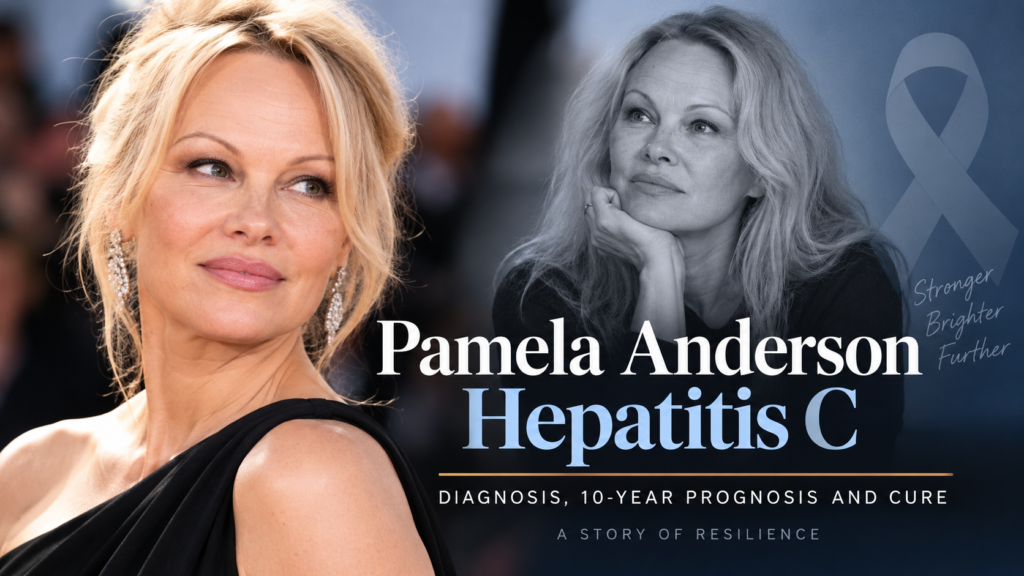
Pamela Anderson Hepatitis C: Diagnosis, 10-Year Prognosis and Cure
Pamela Anderson Hepatitis C has become a major topic again in 2026, more than two decades after she first revealed her diagnosis. While accepting amfAR’s Award of Courage in Venice, Anderson reflected on one of the most frightening periods of her life. She recalled being told that she might have only about 10 years to live. For Anderson, those words changed how she viewed the future. She was raising her two sons, Brandon and Dylan, and suddenly had to face the possibility that she might not see them grow up. The diagnosis affected more than her health. It shaped her choices, relationships and outlook on life. Her story, however, did not end with that prognosis. As hepatitis C treatment improved, Anderson eventually found an effective path forward. In 2015, she publicly announced that she had been cured. Her experience now reflects two very different eras of hepatitis C: the fear surrounding the disease when she was diagnosed and the major treatment advances that later changed her outlook. Pamela Anderson Hepatitis C Diagnosis: What Happened? Anderson publicly revealed her hepatitis C diagnosis in 2002. At the time, she said she believed she had contracted the virus after sharing a tattoo needle with her then-husband, Tommy Lee. The circumstances later became disputed. Lee rejected Anderson’s account and denied having hepatitis C. Therefore, the specific route of transmission is best presented as Anderson’s account rather than an independently confirmed fact. The diagnosis itself, however, became a major turning point in Anderson’s life. She was dealing with a viral infection that could affect the liver and potentially cause serious complications if it became chronic and remained untreated. The medical landscape also looked very different from today. Treatment options were more difficult, and Anderson understood her diagnosis as a potentially life-threatening condition. That fear quickly became personal. She was thinking about mortality, her children and how much time she might have left. With Brandon and Dylan still young, the possibility of not being there for them became one of the hardest parts of the experience. The fear did not disappear quickly. It remained part of Anderson’s story for years, even as new treatments began changing what hepatitis C could mean for patients. Why Pamela Anderson Was Told She Had 10 Years to Live In 2026, Anderson revisited that period while speaking at an amfAR event in Venice. She recalled a doctor telling her that she had roughly 10 years to live. Anderson remembered the prognosis as feeling like a death sentence. Hearing a specific number attached to her future made the diagnosis feel frighteningly real. Her sons were central to that fear. Anderson was raising two young children, so the possibility of dying early was not only about her own future. She also worried about what her absence would mean for them. There is an important distinction, though. Anderson’s reported 10-year prognosis should not be treated as a standard life expectancy for people with hepatitis C. The infection can progress differently from person to person, and treatment has changed dramatically since her diagnosis. The significance of the statement lies in its impact on Anderson. She believed she had limited time, and that belief influenced how she approached important decisions. Today, she can look back from a very different place. More than two decades have passed since that frightening prediction, and she eventually received treatment that cleared the infection. What once felt like a countdown became something else entirely: a chapter of her life that she survived. How Hepatitis C Changed Pamela Anderson’s Life The impact of Anderson’s diagnosis went beyond her physical health. It changed how she thought about family, relationships and the future. She has also described the emotional burden that came with the diagnosis. In her recent reflections, Anderson spoke about shame and feelings of being damaged after learning she had hepatitis C. Those emotions help explain why the experience still matters to her today. A successful treatment can clear an infection, but it cannot instantly erase the fear surrounding a serious diagnosis. Motherhood made that fear even more powerful. Anderson had two young sons and had to confront the possibility that they might grow up without her. Yet her life continued far beyond the future she once feared. She remained active professionally, raised her children and gradually built a life that extended well beyond the public image associated with her early career. Her perspective changed with time, too. Hepatitis C became something she had lived through rather than something that defined her. That shift gives her 2026 reflections particular weight. Anderson is not simply talking about an illness from her past. She is looking back at a moment when she feared her life might end early — and at the treatment advances that eventually changed that outcome. The next chapter of her story begins with that medical turning point: how treatment evolved, what options became available to her and how she ultimately reached the point of announcing that she was cured. Pamela Anderson’s Hepatitis C Treatment Journey When Anderson was first diagnosed, hepatitis C treatment did not offer the simple path that many patients have today. Earlier therapies could involve lengthy treatment courses and significant side effects, making the decision to undergo treatment difficult. For Anderson, the situation became even more complicated because of the uncertainty surrounding her long-term health. She knew the virus could damage her liver, yet the available options did not provide the same level of effectiveness and convenience that modern treatments offer. As the years passed, hepatitis C medicine changed rapidly. Researchers developed direct-acting antiviral drugs that could target the virus more effectively. These medicines eventually transformed hepatitis C from an infection that could be difficult to treat into one that doctors can often cure. That medical progress became especially important for Anderson. Instead of remaining trapped by the prognosis she had received years earlier, she eventually had access to a treatment capable of clearing the virus. Her journey also shows why timing matters in medicine. A diagnosis
Pamela Anderson Hepatitis C: Diagnosis, 10-Year Prognosis and Cure Read More »