
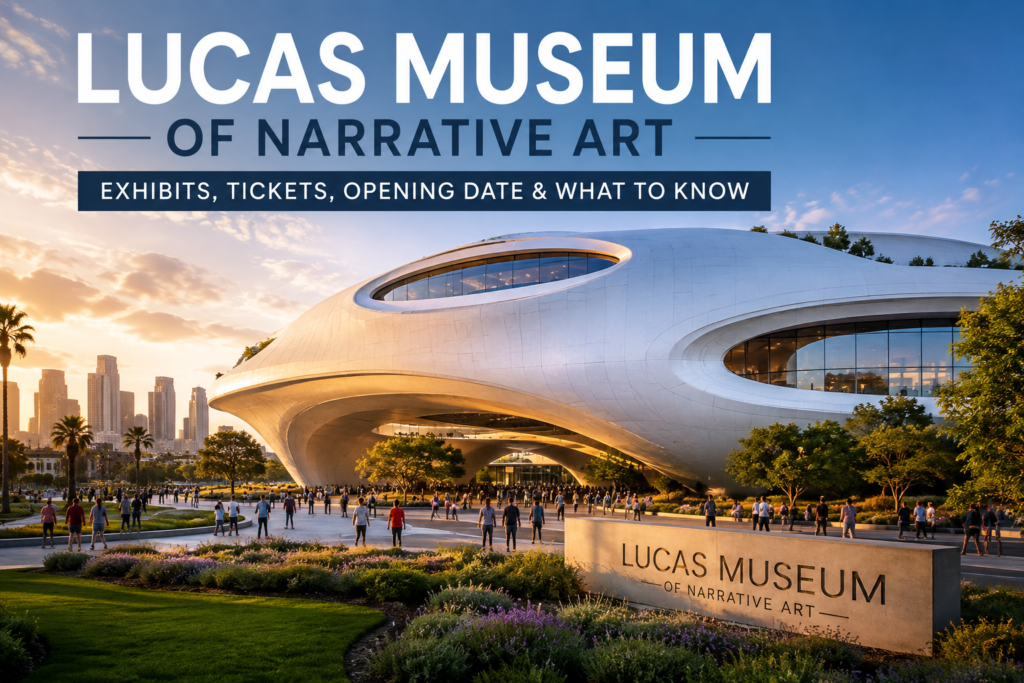
Lucas Museum of Narrative Art: Exhibits, Tickets, Opening Date & What to Know
Los Angeles is preparing to welcome one of its most ambitious new cultural attractions. The Lucas Museum of Narrative Art opens to the public on September 22, 2026, bringing together painting, illustration, comics, photography, film materials and other forms of visual storytelling at Exposition Park. Founded by George Lucas and Mellody Hobson, the museum explores how people use images to communicate stories, ideas and experiences across different cultures and generations. The name immediately connects the museum with Star Wars. However, the Lucas Museum is much broader than a celebration of George Lucas’s filmmaking career. Its collection examines narrative art across centuries and creative disciplines, creating connections between traditional fine art, illustration, popular culture and cinema. The building is equally distinctive. Designed by Ma Yansong of MAD Architects with Stantec, the structure rises above a new landscape in Exposition Park. The museum includes more than 100,000 square feet of gallery space, while the wider campus adds gardens, public areas and other visitor facilities. Together, they create a destination built around a simple idea: stories can take many visual forms. What Is the Lucas Museum of Narrative Art? The Lucas Museum of Narrative Art is a Los Angeles museum dedicated to visual storytelling. Instead of limiting its collection to one artistic medium, it brings together works that communicate stories, characters, ideas and cultural experiences through images. That approach sets the museum apart from many traditional art institutions. Paintings, illustrations, comics, photographs and cinematic materials can appear in the same broader conversation. The goal is to show how visual storytelling has developed across different periods and cultures. The inaugural presentation features more than 1,300 works across more than 30 galleries. The subjects range widely, including mythology, heroes, adventure, fantasy, childhood, sports, romance and community. Key Facts About the Lucas Museum Detail Information Official name Lucas Museum of Narrative Art Location Exposition Park, Los Angeles Founders George Lucas and Mellody Hobson Public opening September 22, 2026 Primary focus Narrative art and visual storytelling Gallery space More than 100,000 square feet Opening presentation 1,300+ works Opening galleries 30+ The collection includes artists and creators from different eras and traditions. Names associated with the inaugural presentation include Norman Rockwell, Artemisia Gentileschi, Frida Kahlo, Charles White, Frank Frazetta and Robert Crumb. As a result, visitors should expect a museum that moves between familiar and unexpected territory. A trip may involve classical painting, American illustration, comic art, photography and movie-related material within the same overall experience. The museum’s founders also emphasize accessibility. Rather than treating narrative art as a narrow academic category, the institution presents storytelling as something that connects with everyday audiences. Why Is the Lucas Museum Opening in Los Angeles? Los Angeles provides an especially fitting home for a museum centered on visual storytelling. The city has played a major role in film, television, animation, photography, illustration and other visual industries for generations. Its location in Exposition Park also places the museum within an established cultural district. The area already attracts visitors to major museums, educational institutions and public spaces, giving the Lucas Museum a broader environment in which to operate. The museum adds a major new architectural landmark to that setting. Its campus replaces a large area of asphalt with a combination of cultural space and landscaped public areas. According to the museum, the approximately 13-acre landscape includes hundreds of newly planted trees, gardens, an amphitheater, a meadow, a hanging garden and a fountain. The landscape therefore serves more than a decorative purpose. It creates additional public space around the museum itself. From an Ambitious Idea to Exposition Park The Lucas Museum’s arrival in Los Angeles represents the completion of a long-running effort by George Lucas and Mellody Hobson to establish a permanent institution dedicated to narrative art. The final concept goes well beyond material connected to Lucas’s own films. The museum’s permanent collection contains more than 40,000 works, while its opening exhibitions draw from a much wider history of visual storytelling. That distinction is important for visitors deciding what the museum actually offers. Someone may arrive because of Star Wars, but the experience extends into illustration, comics, fine art, photography, murals and cinema. The museum consequently occupies an unusual position in Los Angeles. It connects Hollywood’s storytelling tradition with artistic forms that existed long before modern filmmaking. Its purpose is not simply to preserve famous images. Instead, it asks visitors to consider why certain images become powerful stories and how artists use visual language to shape the way people understand the world. That broader mission is what gives the Lucas Museum its identity beyond the Lucas name. Inside the Lucas Museum: What Will Visitors See? The Lucas Museum experience goes far beyond a traditional collection of paintings. Its inaugural exhibitions use more than 1,300 works across more than 30 galleries to explore how artists have used images to tell stories, communicate beliefs and shape cultural memory. The galleries occupy more than 100,000 square feet of the museum. The journey begins with The History of Narrative Art: Heroes • Myths • The Sacred. This opening presentation looks at visual storytelling across thousands of years, connecting ancient religious imagery, mythology and monumental works with the broader development of narrative art. The museum has also created highly detailed reproductions of important works and archaeological sites that visitors might otherwise need to travel around the world to experience. These include material connected with the Vatican Museums, the Louvre, the Altamira cave paintings and Mexico’s Aztec Sun Stone. As visitors move through the building, the exhibitions shift toward themes, artistic genres and individual creators. This makes the collection feel less like a chronological art-history lesson and more like a series of interconnected stories. Major Themes and Gallery Experiences A major strength of the Lucas Museum is the way it organizes art around subjects that people already recognize from everyday life. Instead of relying only on traditional artistic categories, several galleries explore themes such as: Childhood and children’s stories Family and motherhood Love and romance Community School and work
Lucas Museum of Narrative Art: Exhibits, Tickets, Opening Date & What to Know Read More »