CLIMAX Magazine

CLIMAX Magazine is an independent digital publication dedicated to delivering accurate, original, and engaging coverage of entertainment, sports, celebrity news, movies, TV shows, music, and trending stories. We are committed to factual reporting, reliable information, and reader-first journalism, keeping our audience informed with trusted and engaging content.

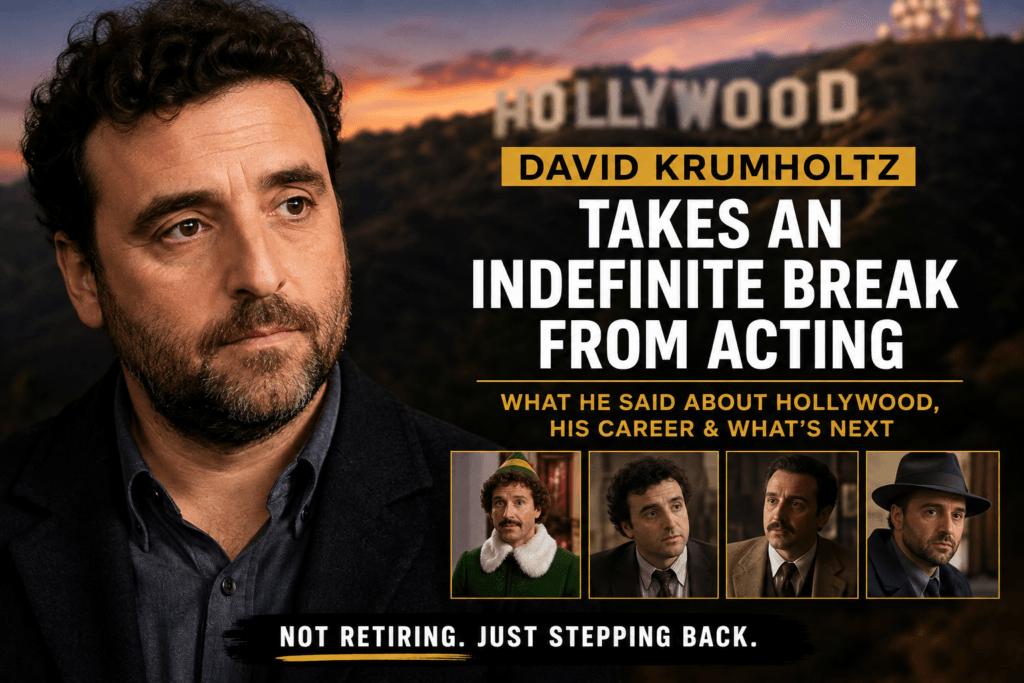
David Krumholtz takes an indefinite break from acting and discusses his future in Hollywood

David Krumholtz Takes an Indefinite Break From Acting: What He Said About Hollywood

David Krumholtz is stepping back from acting after more than three decades in Hollywood, saying he has reached a point where the pressures and uncertainty of the business have become too heavy to ignore. The 48-year-old actor recently described putting his career on hold as a decision he had feared making for years, largely because of the possibility of financial instability. The announcement quickly drew attention because Krumholtz is far from an unknown performer. Audiences have seen him in films and television series including The Santa Clause, 10 Things I Hate About You, Numb3rs and Oppenheimer. More recently, he appeared in projects connected to Supergirl and The Studio, keeping him active during a period when Hollywood itself has been undergoing major changes. However, calling the development a permanent retirement would go too far. Krumholtz’s own follow-up comments indicate that he has not completely closed the door on acting. Instead, he is taking an indefinite break and reconsidering what he wants from his career. What David Krumholtz Said About Stepping Away Krumholtz announced the decision in a Threads post that was later deleted. He explained that putting his acting career on hold had been something he had considered for years, but fear kept him from making the move. His biggest concern involved money and the possibility that leaving the industry could leave him without a dependable source of income. That fear appears to have competed with another feeling: relief. After sending what he described as the decisive email that put his career on pause, Krumholtz said he immediately felt a significant weight lift from him. The contrast is revealing. The decision created uncertainty about what he would do next, yet it also removed a burden he had apparently carried for a long time. His comments suggest that the issue is not simply a lack of acting opportunities. Instead, Krumholtz has become increasingly dissatisfied with the way he believes professional actors are expected to navigate the modern entertainment business. He questioned whether continuing to chase roles under those conditions still made sense for him. That makes the announcement more complicated than a conventional celebrity retirement. Krumholtz is not presenting acting as something he suddenly stopped loving. Rather, he appears to be questioning whether the current system allows him to pursue the profession in a way that feels financially and personally sustainable. Why Krumholtz Said He Felt Relief The emotional response to his decision may be one of the most significant parts of the story. For years, Krumholtz had apparently associated stepping away from acting with a frightening financial consequence. That fear made remaining in the industry feel safer, even as dissatisfaction continued to build. Once he finally made the decision, however, he experienced the opposite reaction. He described a powerful sense of relief after removing what he considered a major burden. At the same time, he acknowledged that he does not yet have a complete financial or professional roadmap for what comes next. That uncertainty matters. Krumholtz is not announcing a neatly packaged second career with a confirmed start date. He is creating space to figure out what comes next. For an actor who has spent most of his adult life working in film and television, that represents a major personal shift. His decision appears less about walking away from his past and more about refusing to let fear alone determine his future. Is David Krumholtz Retiring From Acting? No clear evidence currently supports describing David Krumholtz as permanently retired from acting. The initial Threads announcement sounded final enough to trigger widespread reports that the actor was quitting Hollywood. Yet subsequent comments provided important context. Krumholtz indicated that he was not saying his acting career was completely over. Instead, he was redefining the terms under which he might work in the future. That distinction is especially important for readers searching for the latest David Krumholtz news. “Retirement” suggests a definitive end point. “Indefinite break” leaves the future open. Krumholtz’s position appears to be that he no longer wants to pursue acting simply because he feels obligated to remain in the business. He wants time to consider whether another path could provide a stronger sense of purpose. He has also discussed the possibility of doing motivational speaking and connecting with students. That idea fits with his broader comments about wanting to find work that allows him to be useful and have a meaningful impact. However, there is no indication that he has formally abandoned acting forever. For now, the most accurate description is straightforward: David Krumholtz has put his acting career on hold and is taking an indefinite break. Why His Deleted Threads Posts Caused Confusion The deleted Threads post helped create much of the confusion surrounding the story. Krumholtz’s original message was emotional and direct, making his decision sound like a major departure from the profession. Because the post disappeared, later readers had to rely on reports and screenshots to understand what he had originally written. That combination—an unusually candid announcement followed by deletion—naturally encouraged headlines describing the move as retirement or quitting Hollywood. Some coverage used stronger language than Krumholtz’s later clarification supported. His follow-up response changed the picture. Rather than declaring that he would never act again, he suggested that his relationship with the profession was being redefined. That is why the wording matters. Krumholtz has clearly expressed serious frustration with the industry, but frustration is not the same thing as a permanent career-ending decision. For now, his break should be understood as an open-ended pause. Whether that eventually becomes a full retirement, a temporary reset or a return under different conditions remains unknown. Why David Krumholtz Is Frustrated With Hollywood Krumholtz’s decision goes beyond the normal frustrations that come with auditions, rejection and unpredictable employment. In his now-deleted Threads post, he described a deeper dissatisfaction with how the entertainment business treats experienced character actors. He argued that decades of professional experience no longer guarantee the stability or respect that once came with a long career. One issue appears

David Krumholtz Takes an Indefinite Break From Acting: What He Said About Hollywood Read More »

GTA 6 leaks featured image showing Vice City, Jason and Lucia, leaked gameplay imagery, and information about real and fake leaks

GTA 6 Leaks: What’s Real, What’s Fake, and What We Know So Far

GTA 6 leaks have become almost as big a part of the conversation around Grand Theft Auto VI as the official game itself. Years of rumors, leaked development footage, alleged screenshots, anonymous claims, and recycled social-media posts have created a huge amount of information for fans to sort through. The challenge is knowing which material reflects genuine development information and which posts simply turn speculation into headlines. That distinction matters even more now. Rockstar Games has officially confirmed that Grand Theft Auto VI will launch on November 19, 2026, for PlayStation 5 and Xbox Series X|S. The company has also announced an extended look scheduled for August 27, giving fans another official source of information to compare against the many claims circulating online. The current GTA 6 leak discussion therefore needs more than another list of rumors. It needs context. Some information comes from a documented security breach during development, while other claims have little evidence behind them. Understanding that difference can help fans avoid treating an early development build, an anonymous post, or a manipulated screenshot as proof of what the finished game will contain. GTA 6 Leaks Are Still Shaping the Conversation The fascination with GTA 6 leaks comes partly from Rockstar’s unusually controlled marketing strategy. The studio has revealed information gradually, while fans have spent years searching for clues between official trailers and announcements. That environment creates fertile ground for speculation, particularly whenever an image, video, or supposed insider claim appears online. However, not every leak has the same evidentiary value. A genuine development video can demonstrate that a particular feature existed at one point, but it cannot automatically prove that Rockstar kept that feature in the final release. Development builds often contain temporary assets, unfinished systems, debugging tools, placeholder animations, and content that developers later remove. That is why the word “leak” can be misleading. It may describe material obtained through a major security breach, a supposedly new recording from an unknown source, an old clip reposted without context, or simply a rumor presented as fact. For readers following GTA 6 in 2026, the safest approach is to separate three categories: confirmed information, documented leaked material, and unverified claims. Rockstar’s official website remains the strongest source for current release information, characters, setting details, trailers, screenshots, and other announcements. Why GTA 6 Leak Claims Spread So Quickly GTA 6 has an enormous global fan base, so even a vague claim can travel rapidly across X, YouTube, Reddit, TikTok, and gaming forums. A short video can also lose its original context after being reposted several times. Old footage creates another problem. A development clip from years ago may look like new evidence when an account uploads it without the original date. Screenshots face the same issue, especially when users crop out identifying information or combine genuine game assets with fabricated details. Consequently, popularity does not equal reliability. A post with millions of views can still contain an unsupported claim, while a less dramatic report may provide much stronger evidence. What We Actually Know About GTA 6 Unlike many circulating rumors, several major details about Grand Theft Auto VI come directly from Rockstar. The game is set in the fictional state of Leonida and includes a return to Vice City. Rockstar has introduced Jason Duval and Lucia Caminos as the central characters and describes their story as one involving a criminal conspiracy extending across Leonida. Rockstar has also moved the game from its earlier 2025 window to November 19, 2026. The company said the additional development time would allow the team to finish the game with the level of polish it expects. That official timeline provides an important reference point when evaluating leak claims. Any supposed announcement that contradicts the company’s current release information needs strong evidence before it deserves serious attention. Rockstar has also entered the pre-release phase more directly. Pre-orders began in June 2026, while the official GTA VI site now provides access to a growing collection of trailers, videos, screenshots, character material, and artwork. For fans, this creates a useful hierarchy. Official trailers and Rockstar announcements establish what the company is willing to confirm publicly. Leaked development material can offer historical insight into production. Rumors sit below both categories and should remain labeled as uncertain until stronger evidence emerges. GTA 6 Release Date and Official Status As of August 2026, Rockstar’s official release date for GTA 6 is November 19, 2026. The game is listed for PlayStation 5 and Xbox Series X|S, and Rockstar is currently accepting pre-orders. The next major official information drop is also clearly scheduled. Rockstar announced Grand Theft Auto VI: An Extended Look, which will premiere on Netflix on August 27 at 3 p.m. ET and will also appear on the official Rockstar Games YouTube channel and the GTA VI website later that day. That announcement is particularly important for the leak conversation. Instead of relying on anonymous claims about what Rockstar might show, fans will soon have another direct presentation from the developer. Until then, leaked material should be treated according to its evidence rather than its excitement. A genuine leak can reveal something about development history, but it does not automatically override the information Rockstar has officially published. The Major GTA 6 Leak That Changed Everything The modern GTA 6 leak story cannot be understood without the major security breach that exposed development material years before the game’s release. The incident transformed speculation about Rockstar’s next Grand Theft Auto into a much more concrete discussion because unfinished gameplay footage and development information appeared publicly while the game remained deep in production. The material offered fans an unusually early glimpse at the project, but it also created confusion that continues today. Many people encountered footage showing unfinished systems and immediately began treating those elements as predictions of the final game. That approach ignores how much a large game can change during development. The distinction between “this appeared in a leaked build” and “this will be in the finished game” is

GTA 6 Leaks: What’s Real, What’s Fake, and What We Know So Far Read More »

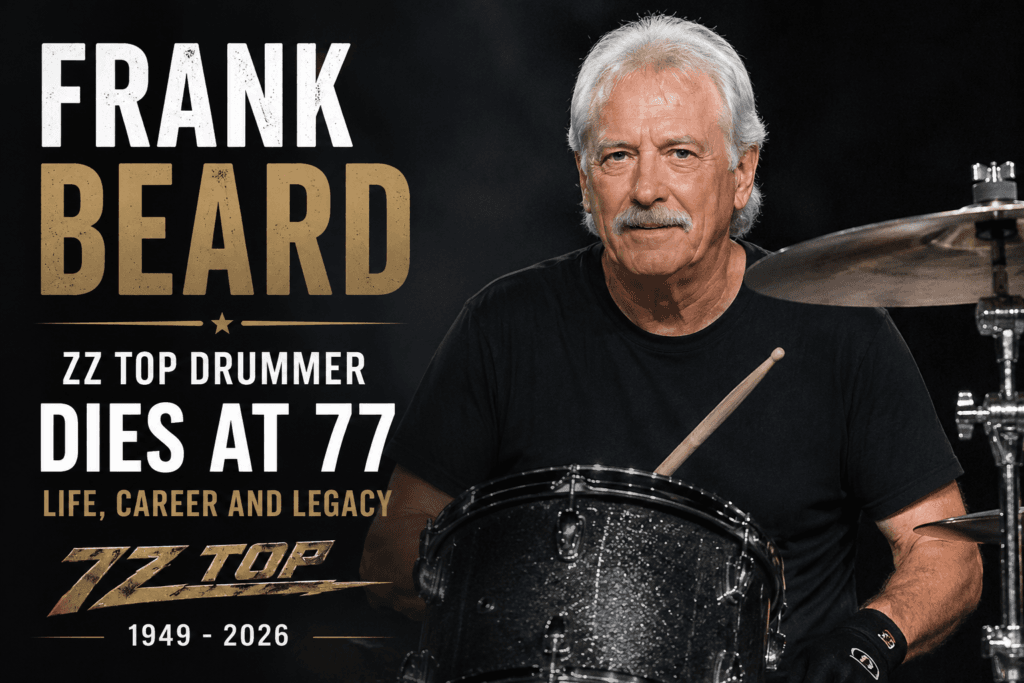
Frank Beard, ZZ Top drummer, pictured at his drum kit following his death at 77

Frank Beard, ZZ Top Drummer, Dies at 77: Life, Career and Legacy

Frank Beard, the longtime drummer whose steady, hard-driving rhythm helped define ZZ Top for more than five decades, has died at 77. Beard died on August 17, 2026, while receiving hospice care at his ranch in Richmond, Texas, with family members by his side. A specific cause of death has not been publicly disclosed. For many fans, Beard represented something essential about ZZ Top. While Billy Gibbons and Dusty Hill became instantly recognizable for their guitars, sunglasses and famously long beards, Beard stood behind the kit and supplied the groove that kept the band moving. His drumming became a crucial part of the Texas blues-rock sound that carried ZZ Top from small venues to international arenas. His death also closes another chapter in the story of one of rock music’s most distinctive lineups. Dusty Hill died in 2021, leaving Gibbons and Beard as the remaining members of the classic trio. Beard’s passing now marks another profound loss for ZZ Top and for generations of listeners who grew up with the band’s blues-heavy riffs and unmistakable rhythms. Frank Beard’s Death and What Is Known About His Final Days Beard’s death followed a period of health difficulties that had increasingly affected his ability to perform. Earlier in 2026, he was absent from ZZ Top’s touring lineup, with Michael Monahan taking over behind the drums. The band had also canceled its August 5 appearance at the Hollywood Bowl because of what it described at the time as unforeseen personnel matters. Reports following Beard’s death connected his recent absence from the road with his health. However, the precise medical circumstances surrounding his death remain undisclosed. That distinction matters because public reports have described health struggles without identifying a confirmed cause of death. ZZ Top confirmed the loss through a statement from Billy Gibbons, who described Beard as both a close friend and collaborator. Gibbons also emphasized the drummer’s musical importance, remembering the signature rhythmic approach that had helped keep the band at the center of rock culture for decades. The immediate impact was also felt on ZZ Top’s tour schedule. Shows in Salt Lake City and Colorado Springs were canceled following Beard’s death, while the band planned to continue its current tour with scheduled performances in Austin. Who Was Frank Beard? Frank Lee Beard was born June 11, 1949, in Frankston, Texas, and grew up in Irving. Long before ZZ Top became a global rock institution, Beard developed his musical career through the Texas club circuit and played in several groups, including the Cellar Dwellers, the Hustlers, the Warlocks and American Blues. His connection with Dusty Hill proved particularly important. The two musicians had already worked together before Beard joined ZZ Top, and Beard eventually helped bring Hill into the orbit of Billy Gibbons. That connection helped establish the three-piece lineup that would become one of the longest-running partnerships in rock history. Beard joined Gibbons in the developing ZZ Top lineup in 1969. Although the band’s earliest personnel changed during its formation, the combination of Gibbons, Hill and Beard quickly became the group’s defining identity. They built their sound around blues, boogie and hard rock, drawing heavily from their Texas roots while developing a style that could work equally well in clubs, on radio and in large arenas. There was also an enduring visual joke surrounding Beard’s name. While Gibbons and Hill became famous for their enormous beards, Beard himself did not wear the facial hair that his surname seemed to promise. Yet his lack of a giant beard never diminished his importance to the band’s identity. Behind the drums, his timing and rhythmic control supplied the foundation for ZZ Top’s sound. How Frank Beard Helped Build ZZ Top’s Signature Sound ZZ Top’s music depended on the chemistry between three musicians rather than on any one instrument. Gibbons supplied the distinctive guitar attack, Hill reinforced the low end and vocal presence, while Beard created the rhythmic framework that allowed the band’s blues-rock riffs to hit with unusual force. That combination helped the group develop a sound that remained recognizable across different eras of rock music. The band’s early records established its Texas blues and boogie foundation. Over time, however, ZZ Top expanded its approach. The group later incorporated more polished production, electronic elements and visual experimentation, particularly during its enormous 1980s breakthrough. Through those changes, Beard remained a consistent rhythmic presence. His contribution is especially significant because great drumming can sometimes disappear behind a band’s most visible personalities. Beard rarely needed the spotlight to make an impact. Instead, his playing gave ZZ Top’s riffs their momentum and helped create the relaxed but forceful groove that became central to the band’s identity. That consistency helped ZZ Top maintain its musical character through decades of changing trends. The band’s ability to move from raw blues-rock to MTV-era arena success without losing its core personality remains one of its greatest achievements, and Beard’s drumming was part of that continuity. ZZ Top’s story also belongs to a wider tradition of musicians whose work continued to shape rock music long after their earliest breakthrough years. That enduring connection between musicianship, history and legacy can also be seen in the story of Bruce Springsteen and Dave Marsh, whose collaboration helped document one of rock’s most influential careers. Frank Beard’s Early Musical Career Before ZZ Top became synonymous with Texas blues-rock, Frank Beard spent years developing his musicianship in regional bands. Born June 11, 1949, in Frankston, Texas, Beard grew up in Irving and became involved in the local music scene while rock and blues were rapidly gaining influence. His early work included groups such as the Cellar Dwellers, the Hustlers and the Warlocks. He later played with American Blues, a band that also featured Dusty Hill. Those experiences gave Beard a strong foundation in the blues-oriented style that would eventually become central to ZZ Top. The partnership between Beard and Hill became especially important. The two musicians had already developed a working relationship before ZZ Top took shape, and

Frank Beard, ZZ Top Drummer, Dies at 77: Life, Career and Legacy Read More »

Lewis Hamilton and Kim Kardashian fictional silhouettes walking on a Hawaii beach at sunset

Lewis Hamilton and Kim Kardashian’s Hawaii Vacation: Romance, Family and Their Latest Photos

Lewis Hamilton and Kim Kardashian are giving fans another glimpse into their increasingly public relationship. The pair recently spent time together on a tropical family vacation in Hawaii, where Kardashian shared a series of beach photos and videos featuring Hamilton, her children and members of her extended family. The posts offered something more revealing than another celebrity sighting: a look at how naturally the Formula 1 star now fits into Kardashian’s family life. The vacation comes after months of growing attention around the couple. Their relationship first attracted widespread speculation earlier in 2026, but their public appearances and social-media posts have gradually made the connection harder to dismiss as a casual friendship. By August, Kardashian and Hamilton were openly appearing together in vacation content, while Hamilton also shared his own photographs from the break. For Lewis Hamilton, the timing also matters professionally. The seven-time Formula 1 world champion is using the sport’s summer break to step away from the racing circuit before returning to Ferrari duties. His own vacation post described the break as a chance to recharge before heading back to the track. Lewis Hamilton and Kim Kardashian’s Hawaii Vacation Kardashian’s latest vacation carousel puts Hamilton near the center of the story. The images mix romantic moments between the couple with ordinary family activities, including beach outings, surfing and time spent with Kardashian’s children. One photograph shows Hamilton embracing Kardashian, while other pictures capture the relaxed atmosphere surrounding the larger group. The setting is significant because this was not simply a private-looking getaway for two celebrities. Kardashian traveled with family members, and Hamilton appeared comfortable participating in that broader vacation environment. Photos also showed Kardashian enjoying activities with her children and relatives, giving the trip a distinctly family-oriented feel. Hamilton separately shared photographs from his summer break, providing another indication that the vacation was part of his own downtime rather than simply a Kardashian social-media appearance. His post showed selected moments from the trip and emphasized how much he valued the opportunity to step away from his demanding racing schedule. That combination of romance, family time and public visibility has made the Hawaii trip one of the clearest snapshots yet of where their relationship stands. What the Latest Photos Reveal About the Couple The most notable element of the Hawaii photos is their comfort around each other. Kardashian and Hamilton appear affectionate and relaxed rather than staged for a formal event. Their body language and repeated appearances together have naturally drawn attention, although photographs alone cannot reveal everything about a private relationship. The social-media posts do, however, establish something important: Hamilton is no longer appearing only at isolated public events with Kardashian. He is now part of moments involving her family and children as well. Earlier in the year, the pair were also photographed with Kardashian’s children and both of their mothers during a Malibu outing, adding to the picture of a relationship becoming increasingly integrated into family life. That distinction matters. Celebrity dating rumors often begin with a dinner, a vacation sighting or a photograph taken by paparazzi. In Hamilton and Kardashian’s case, the public record has developed into something broader, with repeated appearances and social posts over several months. Still, readers should separate what the photographs demonstrate from what anonymous sources claim about the couple’s future. Their public moments show growing closeness, but private intentions remain theirs to define. A More Public Side of Their Relationship For much of the early speculation surrounding Lewis Hamilton and Kim Kardashian, neither celebrity offered a detailed public explanation of their personal lives. Instead, fans pieced together sightings from travel, sporting events and social gatherings. That approach has changed. By the summer of 2026, Kardashian had begun sharing more visible moments involving Hamilton, while he also posted personal vacation content that included her. Their increased social-media presence has shifted the conversation from whether they spend time together to how serious the relationship might be. Recent entertainment reports have described the relationship as serious and committed, although those assessments come from sources close to the couple rather than direct statements from Hamilton or Kardashian. The Hawaii vacation therefore stands out because it combines several elements at once: public affection, shared travel, family involvement and social-media visibility. None of those details alone proves what happens behind closed doors. Together, however, they show that Lewis Hamilton and Kim Kardashian have become considerably more comfortable allowing the public to see pieces of their relationship. Lewis Hamilton and Kim Kardashian’s Relationship Timeline The story of Lewis Hamilton and Kim Kardashian did not begin with their 2026 romance rumors. The two had reportedly known each other for years and were photographed together at the GQ Men of the Year Awards in 2014. Their longstanding connection became an important part of the later relationship story. The shift came around the start of 2026. Kardashian and Hamilton attended the same New Year’s Eve gathering in Aspen, Colorado, before February reports linked them romantically. Their reported European trip, including time in the Cotswolds and Paris, pushed the speculation into wider entertainment coverage. At that stage, reports differed over whether they were dating or simply exploring their connection. Their story also fits into the wider 2026 celebrity dating landscape, where high-profile relationships involving major entertainment figures have attracted significant attention. The uncertainty gradually faded as Hamilton and Kardashian appeared together more often. The Super Bowl became an early major public moment, followed by appearances around Los Angeles and Coachella. By June, Hamilton publicly referred to Kardashian as his girlfriend while discussing her support at the Monaco Grand Prix. Their social-media activity later made the relationship even more visible. By August, their Hawaii family vacation had become the latest public chapter in their increasingly high-profile relationship. Early 2026 Dating Rumors The first major wave of romance speculation arrived in February 2026, when reports connected Kardashian and Hamilton during a European getaway. According to coverage at the time, the two traveled together and spent time in Paris after their stay in England.

Lewis Hamilton and Kim Kardashian’s Hawaii Vacation: Romance, Family and Their Latest Photos Read More »

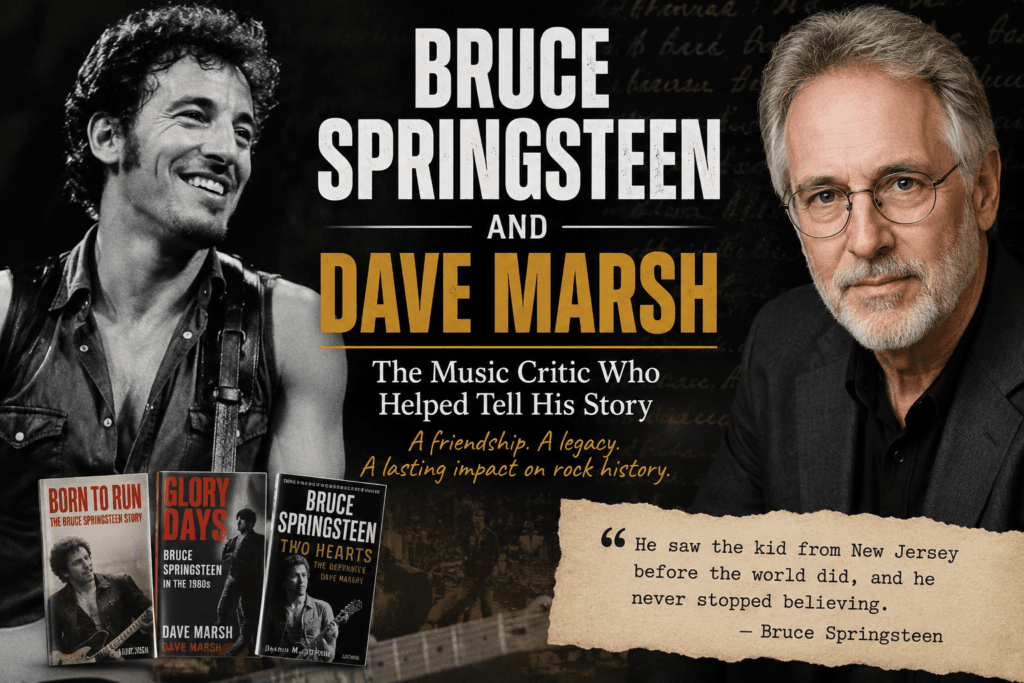
Bruce Springsteen and Dave Marsh featured together in a tribute to their decades-long connection and rock music legacy

Bruce Springsteen and Dave Marsh: The Music Critic Who Helped Tell His Story

The death of Dave Marsh has renewed attention on one of the most important writers ever to document Bruce Springsteen’s career. Marsh, the veteran rock critic and biographer, died August 14, 2026, at his home in Connecticut at age 76. His death brought an immediate response from Springsteen, who remembered Marsh as a longtime friend, fierce supporter and deeply committed rock-and-roll writer. For Springsteen fans, Marsh’s name carries unusual weight. He was not simply a journalist who occasionally covered the New Jersey songwriter. He followed Springsteen’s development from his early years, wrote the first major book about his career, and continued documenting his music across decades. His books Born to Run, Glory Days and Bruce Springsteen: Two Hearts became important reference points for understanding the artist’s rise, his changing public image and the cultural meaning of his music. Marsh’s connection to Springsteen also went beyond books. He championed the singer early in his career, wrote about him for Creem, and published Springsteen’s first Rolling Stone cover story in 1978. He also maintained a close relationship with people in Springsteen’s professional circle, including longtime manager and producer Jon Landau. That closeness helped make Marsh an unusually influential chronicler. At the same time, it made his work more personal and openly opinionated than conventional celebrity biography. His writing often reflected strong convictions about what mattered in rock music and why Springsteen deserved attention. Who Was Dave Marsh? Dave Marsh built a career around a simple but demanding idea: rock music deserved serious criticism. Born in Pontiac, Michigan, in 1950, he entered journalism through Detroit’s music scene and became an early editor of Creem. From there, his work reached major publications, including Rolling Stone, Newsday and The Village Voice. Over a career spanning several decades, he wrote more than 25 books about music and became one of the recognizable voices of American rock criticism. His interests stretched far beyond Springsteen. Marsh wrote about The Who, Elvis Presley, Aretha Franklin and other major artists while also producing books that examined rock history more broadly. His The Heart of Rock & Soul became one of his notable works of criticism, while his writing and broadcasting kept him connected to music audiences long after the peak years of traditional rock magazines. His broader interest in live music and its connection with audiences also reflects the continuing importance of concert culture, as seen in CLIMAX Magazine’s coverage of Daniel Caesar’s Barclays Center performance. Marsh also worked in radio and became closely associated with Springsteen-focused programming on SiriusXM. His later career showed that he had never treated music criticism as a temporary profession. He continued debating records, artists and the culture surrounding them. His style could be forceful, argumentative and intensely subjective. That quality attracted devoted readers but also drew criticism. Marsh did not try to sound detached when he believed an artist mattered. Instead, he wrote with the conviction of someone who considered music a serious cultural force. From Detroit Rock Journalism to National Recognition Marsh’s early years at Creem placed him inside the rapidly developing American rock press. The magazine’s Detroit roots gave him proximity to a scene that valued loud, direct and uncompromising music, while his later work expanded his reach nationally. Springsteen became one of the clearest examples of Marsh’s ability to identify artists he believed deserved greater attention. Long before Springsteen became a global superstar, Marsh wrote enthusiastically about his music. He also helped connect Springsteen with Jon Landau, who would eventually become a central figure in the singer’s career. That early advocacy matters because Marsh was documenting Springsteen while the artist’s story was still unfolding. He was not looking backward from the perspective of an established legend. He was writing while the future remained uncertain. That gave his early work a particular historical value. Marsh saw the potential in Springsteen’s music before the wider mainstream had fully accepted it, and he spent the rest of his career explaining why that music mattered. How Dave Marsh Became Closely Associated With Bruce Springsteen Marsh’s relationship with Bruce Springsteen developed during a crucial period in the singer’s career. Springsteen was building a reputation through relentless live performances and increasingly ambitious songwriting, but his eventual status as one of America’s defining rock artists had not yet become inevitable. Marsh became an early advocate. His writing for Creem helped introduce Springsteen to readers who were paying close attention to emerging rock musicians. In 1978, Marsh also wrote Springsteen’s first Rolling Stone cover story, placing the artist on a major national music publication at an important moment in his rise. The relationship became even more significant because Marsh was connected to people around Springsteen’s career. Reporting on his death has long associated him with Jon Landau’s introduction to Springsteen’s music. According to accounts of their history, Marsh brought Landau to a Springsteen performance in the 1970s, helping create a connection that would become enormously important to the singer’s professional future. Marsh therefore occupied an unusual position. He was a critic, but he was also someone who knew the people involved and had a personal investment in Springsteen’s success. That combination shaped his writing. His books were deeply informed by access and knowledge, yet they also reflected his strong opinions. For readers, that made Marsh’s Springsteen work both valuable and worth examining critically. The Importance of Marsh’s Access to the E Street World Marsh’s proximity to Springsteen’s professional circle gave him access that many outside observers did not have. His connection to Springsteen’s team and longtime relationships within the E Street world helped him place individual songs, performances and career decisions into a broader context. However, access can create complications for a biographer. A writer who knows the subject personally may understand details that outsiders miss, but that same closeness can make complete detachment difficult. That tension followed Marsh’s Springsteen writing. Critics sometimes viewed his admiration for Springsteen as excessive. A 1987 Washington Post review of Glory Days, for example, argued that Marsh’s enthusiasm sometimes overwhelmed his critical

Bruce Springsteen and Dave Marsh: The Music Critic Who Helped Tell His Story Read More »

Malcolm-Jamal Warner estate dispute, lawsuit and reported settlement

Malcolm-Jamal Warner Estate Dispute Explained: Lawsuit, Family Battle and Settlement

The legal dispute over Malcolm-Jamal Warner’s estate has become a major story after his death. Warner died at 54 in July 2025. His death left behind his wife, Tenisha Warner, their daughter, and his mother, Pamela Warner. The Malcolm-Jamal Warner estate later became the subject of legal action. Tenisha Warner says Malcolm owed her money under their prenuptial agreement. She also says he planned to update his estate documents before his death. Those changes never became part of a completed estate plan, according to her claims. The dispute has since taken a new turn. Pamela Warner and representatives for her granddaughter reportedly reached a settlement. The agreement would give the majority of Malcolm-Jamal Warner’s estate to his daughter. However, the court must still approve the agreement. The case involves more than a family disagreement. It includes a prenuptial agreement, life insurance, retirement contributions, estate documents, and claims about unpaid compensation. Understanding those separate issues helps explain why the dispute became complicated. Malcolm-Jamal Warner Estate Dispute: What Happened? Malcolm-Jamal Warner’s estate became the focus of a legal dispute after his death in July 2025. Warner died during a family vacation in Costa Rica after an accidental drowning. He was 54. About a year later, Tenisha Warner filed legal claims involving Malcolm’s estate. She also sued Pamela Warner, who served as the successor trustee connected to the Warner Family Trust. Tenisha says Malcolm failed to meet several financial obligations from their prenuptial agreement. Her lawsuit seeks more than $1.2 million. The reported amount includes a $1 million life-insurance obligation, unpaid anniversary payments, Roth IRA contributions, and compensation for work she performed for Malcolm. The estate dispute also involves Malcolm’s daughter. Tenisha says Malcolm planned to change his older estate arrangements. She claims he wanted to provide greater financial protection for his wife and daughter. However, he died before completing those changes. Pamela Warner has offered a different perspective on the family’s financial plans. She has said Malcolm wanted to provide for his daughter and had made plans for her future. Recent reports indicate that representatives for Malcolm’s daughter reached a settlement with Pamela Warner. The agreement would give the daughter most of the estate. The court must approve the agreement before it becomes final. Why the Estate Became a Legal Issue The dispute grew from a gap between Malcolm’s existing estate documents and the changes Tenisha says he planned to make. Reports say Malcolm had an estate plan dating back to 1996. Tenisha claims he later intended to update that plan. She says the new plan would give her and their daughter greater protection. However, Malcolm died before he completed those changes. That left the older estate arrangements in place. The existing documents then became important in the dispute. This issue also differs from Tenisha’s claims under the prenuptial agreement. The prenup involved specific financial commitments between Malcolm and Tenisha. Those commitments included insurance, retirement savings, annual payments, and compensation. The estate documents raised a different question. They determined how Malcolm’s assets and trust interests would pass after his death. That distinction matters in estate disputes. A person’s plans or private statements do not always change a legally executed estate document. Courts often must examine the documents that existed when the person died. Pamela Warner has also defended her position. She has said her son made plans for his family. She has stressed that his daughter remained an important part of those plans. The reported settlement now shifts attention toward Malcolm’s daughter and the final distribution of his estate. Who Was Malcolm-Jamal Warner? Malcolm-Jamal Warner was an actor, director, musician, and poet. He became famous as Theo Huxtable on The Cosby Show. The NBC sitcom ran from 1984 to 1992. The role made Warner a familiar face to American television audiences. It also earned him a Primetime Emmy nomination. Warner later expanded his career beyond acting. He directed episodes of The Cosby Show and worked on several other television productions. His credits included Malcolm & Eddie, The Fresh Prince of Bel-Air, Kenan & Kel, and All That. Malcolm-Jamal Warner also built a career in music and poetry. His later acting work included Reed Between the Lines and The Resident. On The Resident, he played Dr. AJ Austin. Warner also earned a Grammy Award in 2015. He shared the award with the Robert Glasper Experiment and Lalah Hathaway for their work on “Jesus Children.” Malcolm-Jamal Warner career therefore extended far beyond his best-known childhood television role. Warner continued working in entertainment for decades. Malcolm-Jamal Warner private family life received less public attention. That changed after his death and the legal dispute involving his estate. Malcolm-Jamal Warner’s Family and Personal Life Malcolm-Jamal Warner was married to Tenisha Warner. The couple had a daughter and kept much of their family life private. Celebrity marriages often attract public attention, especially when family life remains private. Anna Osceola’s relationship with Jon Hamm offers another example of a celebrity couple whose personal life has drawn interest from fans and media. After Malcolm’s death, Tenisha faced the loss of her husband while caring for their daughter. She also became involved in the financial and legal issues surrounding his estate. A later fundraising campaign highlighted some of those financial concerns. Tenisha’s friend, Destiny Rael, launched a GoFundMe campaign for Tenisha and her daughter. The campaign came amid the estate dispute. The legal proceedings also brought Pamela Warner into the public spotlight. Pamela is Malcolm’s mother and served as the successor trustee connected to his estate arrangements. Malcolm had a long relationship with his mother. His parents divorced when he was young, and Pamela raised him in Los Angeles. Still, family history does not decide the legal issues in the estate case. The key questions involve the documents, financial agreements, and claims made by the parties. The Malcolm-Jamal Warner estate later became the subject of legal action. Representatives for the child reportedly reached a settlement with Pamela Warner. The agreement would give the daughter the majority of the estate. The court must still approve that

Malcolm-Jamal Warner Estate Dispute Explained: Lawsuit, Family Battle and Settlement Read More »

Sarah J. Maas ACOTAR 6 and 7 titles, release dates and covers

Sarah J. Maas: ACOTAR 6 & 7 Titles, Release Dates, Covers and What We Know

Sarah J. Maas has opened the next chapter of A Court of Thorns and Roses with two major book announcements. Fans now know the titles, covers, and release dates for the next two ACOTAR installments. The sixth book is A Court of Splintered Harmony. The seventh is A Court of Forgotten Melody. A Court of Splintered Harmony will arrive on October 27, 2026. A Court of Forgotten Melody will follow on January 12, 2027. Maas has also introduced the books as part of a larger story cycle called the Valkyrie Cycle. The announcement gives ACOTAR readers concrete information after years of anticipation. It also raises new questions about the future of Prythian, the characters who will lead the story, and the threats that remain unresolved. Sarah J. Maas Has Revealed the Next ACOTAR Books The new announcement gives readers much more than a simple confirmation of another ACOTAR sequel. Maas revealed two titles, two covers, and a release schedule for the next stage of the series. A Court of Splintered Harmony will start the new cycle on October 27, 2026. A Court of Forgotten Melody will continue the story on January 12, 2027. The two books will arrive only a few months apart, which creates a closely connected reading experience. The new releases also introduce the Valkyrie Cycle. According to the supplied reporting, Maas developed the story into four movements and plans to publish those movements across three books. The first book covers Movement I. The second covers Movements II and III. A third book will complete Movement IV. That structure makes the new ACOTAR era different from a standard sequel series. Maas treats the material as one larger narrative instead of several unrelated stories. The announcement also creates a clear distinction between confirmed information and fan theories. Readers now know the titles, release dates, and basic structure. However, many character and plot details remain unknown. What Are the New Sarah J. Maas ACOTAR Books Called? The two new titles continue the naming style that readers associate with the ACOTAR franchise. Both begin with “A Court of,” but each title adds a new thematic phrase. A Court of Splintered Harmony A Court of Splintered Harmony is the sixth ACOTAR book. Maas plans to release it on October 27, 2026. It opens the Valkyrie Cycle and covers Movement I of the larger story. The title immediately invites questions about what “splintered harmony” means. The phrase could suggest conflict, division, damaged relationships, or changes within Prythian. However, the title alone cannot confirm any specific plot detail. The available promotional material gives readers a thematic clue without revealing the full story. That approach allows Maas to create anticipation while keeping the major narrative developments private. For now, the most important confirmed detail remains its role in the new cycle. ACOTAR 6 will introduce the next major storyline after the events of the existing books. A Court of Forgotten Melody A Court of Forgotten Melody is the seventh ACOTAR book. It will arrive on January 12, 2027, only a few months after ACOTAR 6. The book covers Movements II and III of the Valkyrie Cycle. The phrase “forgotten melody” creates its own set of questions. It may suggest something lost from Prythian’s history or something that characters must recover. Yet Maas has not publicly explained the exact meaning of the title. The book’s position within the cycle provides a stronger clue. ACOTAR 7 will not simply start another unrelated adventure. Instead, it will continue the larger story that begins with A Court of Splintered Harmony. ACOTAR 6 and 7 Release Dates Readers finally have confirmed dates for both upcoming books. A Court of Splintered Harmony will release on October 27, 2026. A Court of Forgotten Melody will arrive on January 12, 2027. The short gap between the two releases stands out. Readers will wait years for the next chapter, but they will not have to wait long between these two books. That schedule should help maintain the momentum of the Valkyrie Cycle. The publication plan also reflects the unusual size of the story. Maas divided the narrative into four movements and will spread those movements across three physical books. ACOTAR 6 contains the first movement. ACOTAR 7 contains the second and third. A future third book will complete the fourth movement. The third book does not yet have a confirmed title or release date in the supplied material. Readers should therefore avoid treating rumored dates or titles as official information. For anyone planning an ACOTAR reread, the existing five books provide the foundation for the new cycle. Once readers finish that sequence, they can move into A Court of Splintered Harmony in October 2026 and continue with A Court of Forgotten Melody in January 2027. The new schedule gives the series a clear path forward. It also confirms that Maas plans to tell a much larger story rather than deliver only one additional sequel Sarah J. Maas and the Valkyrie Cycle The biggest surprise about the new ACOTAR books involves their structure. Sarah J. Maas is not simply releasing two separate sequels. Instead, A Court of Splintered Harmony and A Court of Forgotten Melody form part of a larger story called the Valkyrie Cycle. The story contains four movements and will eventually span three physical books. The first book, A Court of Splintered Harmony, covers Movement I. A Court of Forgotten Melody covers Movements II and III. A third ACOTAR book will complete Movement IV. Maas has not announced its title or release date yet. This structure gives the upcoming ACOTAR era a different shape. Maas is treating the new material as one large story instead of a series of unrelated adventures. She chose to divide that story into several books so she could preserve its full scope. The Valkyrie name also connects with A Court of Silver Flames. That novel introduced Nesta Archeron, Gwyn Berdara, and Emerie as a close group of female warriors. Their training and friendship made the Valkyrie concept

Sarah J. Maas: ACOTAR 6 & 7 Titles, Release Dates, Covers and What We Know Read More »

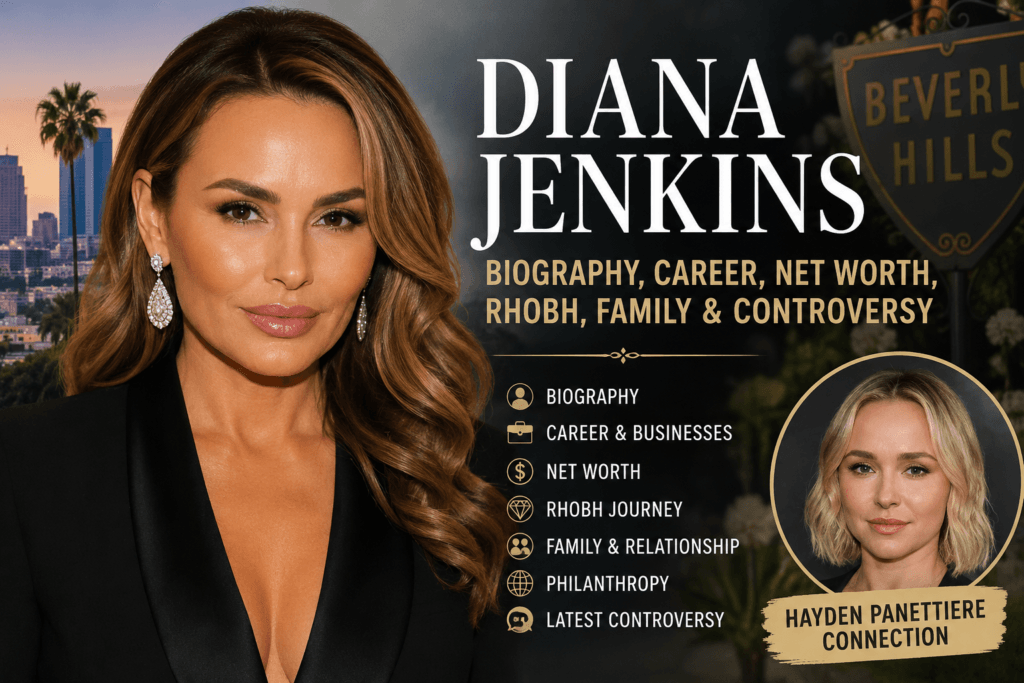
Diana Jenkins biography, career, RHOBH, family and latest controversy

Diana Jenkins: Biography, Career, Net Worth, RHOBH, Family & Latest Controversy

Diana Jenkins, also known as Sanela Diana Jenkins, has built a public career that reaches well beyond reality television. She is an entrepreneur, philanthropist, human-rights advocate and former cast member of The Real Housewives of Beverly Hills. Yet her story began far from Beverly Hills. Jenkins grew up in Sarajevo and experienced the Bosnian War as a young woman before eventually rebuilding her life in London. Her early experiences shaped much of her later work. The loss and displacement she experienced during the conflict influenced her interest in humanitarian causes, while her years in London laid the foundation for her education and business career. She later became involved in consumer brands, entertainment and philanthropic projects. American television audiences became more familiar with Jenkins after she joined RHOBH. However, reality television represents only one part of her broader public profile. Her background includes entrepreneurship, international philanthropy and a personal history closely connected to Bosnia. More recently, Jenkins’ name has appeared in online discussions surrounding claims connected to Hayden Panettiere. Jenkins has denied those claims. Because the person described by Panettiere was not publicly identified, the allegations should be treated separately from Jenkins’ documented biography. Who Is Diana Jenkins? Diana Jenkins is a Bosnian-born entrepreneur and philanthropist whose career spans business, entertainment, humanitarian work and reality television. Her full name is Sanela Diana Jenkins. She was born in Sarajevo and grew up with her younger brother, Irnis. Jenkins became a refugee during the Bosnian War. She left Sarajevo as the conflict intensified and eventually moved to London. The transition forced her to build a new life in an unfamiliar country. She had to learn English, find work and continue her education while adapting to a completely different environment. Her professional life later expanded into entrepreneurship. Jenkins became associated with Neuro Brands and D Empire Entertainment, developing interests in consumer products and entertainment. Her philanthropic work also grew over time, particularly around human rights, education and Bosnia-related causes. For many American viewers, Jenkins is best known for her appearance on The Real Housewives of Beverly Hills. She joined the Bravo series during its 12th season and quickly became a prominent figure within the cast. Still, her television career does not define her entire biography. Her journey from Sarajevo to London and eventually to American celebrity culture provides the larger context behind her public image. Diana Jenkins’ Early Life and Bosnian Background Jenkins grew up in Sarajevo during the period when Bosnia was part of Yugoslavia. Her childhood changed dramatically when war broke out in the region in the early 1990s. The conflict forced Jenkins to leave her home. She eventually reached Croatia as a refugee before moving to London. Her younger brother, Irnis, later died during the Bosnian War. That loss became one of the most painful experiences of her life and eventually influenced her humanitarian work. Jenkins was only 19 when she left Sarajevo. Her move to Britain marked a major turning point. She had to leave behind her familiar surroundings and start again in a country where she did not initially speak English. The experience also shaped the way Jenkins later discussed her success. Her public biography often contrasts her early years as a refugee with the business and philanthropic career she eventually built. Bosnia remained important to Jenkins even after she established herself abroad. Her later charitable activities repeatedly returned to humanitarian concerns connected with the region. That connection between personal history and philanthropy is one of the most important themes in Jenkins’ life. Her charitable work did not emerge separately from her past. Instead, it developed partly from experiences she carried with her after leaving Sarajevo. Diana Jenkins as a Refugee in London London gave Jenkins an opportunity to rebuild, but the transition was difficult. She arrived without the resources and familiarity she had known in Sarajevo. Language presented another major challenge because she did not initially speak English. To support herself, Jenkins took various jobs, including restaurant and cleaning work. At the same time, she worked toward improving her English and continuing her education. Her determination to study became an important part of her transition. Jenkins eventually attended City University London and developed an academic background that has been described in different ways across public biographies, including areas such as mathematics, science, computer science and economics. The exact description of her qualifications varies between accounts, but the larger story remains consistent. Jenkins combined work and education while building a new life in Britain. Those years helped establish the foundation for her later entrepreneurial career. They also shaped the personal story she eventually brought to American television. For Jenkins, becoming successful was not an overnight transformation. Her career developed after years of adapting to a new country, learning a new language and pursuing education while supporting herself. Diana Jenkins’ Education and Rise as an Entrepreneur Education played a major role in Jenkins’ move toward professional independence. After settling in London, she continued studying while working and learning English. Her education eventually led to a broader professional career. Jenkins moved into entrepreneurship and developed interests across several industries. Over time, her business activities became an important part of her identity. Her personal life also attracted public attention during this period. Jenkins married financier Roger Jenkins, and the couple had two children before later divorcing. Her marriage placed her within influential financial and social circles, but her own entrepreneurial activities continued to develop alongside that chapter of her life. Jenkins later became involved with Neuro Brands, a company focused on functional beverages. She also established D Empire Entertainment, expanding her professional interests into entertainment. These ventures helped create an identity beyond her relationships and social connections. By the time Jenkins entered reality television, she already had a substantial history in business and philanthropy. That distinction matters when looking at her RHOBH career. Jenkins did not become an entrepreneur because of reality television. Instead, television introduced an established businesswoman and philanthropist to a much wider audience. Her journey from refugee to

Diana Jenkins: Biography, Career, Net Worth, RHOBH, Family & Latest Controversy Read More »

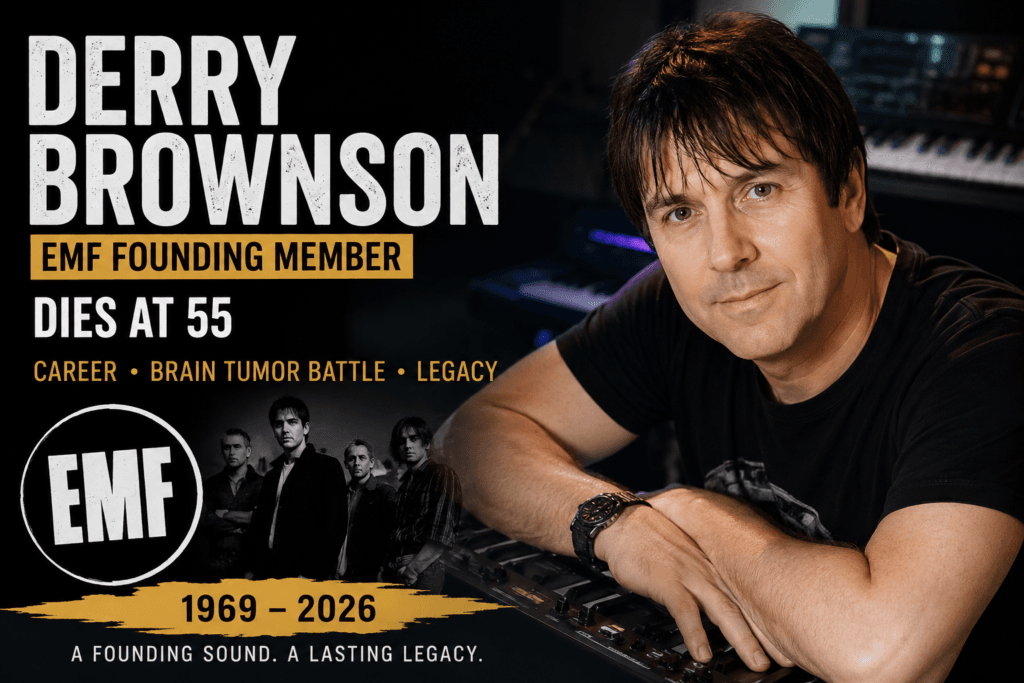
Derry Brownson, EMF founding member and keyboardist, featured in a tribute image

Derry Brownson: EMF Founding Member, Death, Brain Tumor Battle & Legacy

Derry Brownson, the founding member and keyboardist associated with British alternative rock band EMF, died at 55 on August 13, 2026, after a battle with a cancerous brain tumor. His death closes a chapter in the story of a band that helped bring guitar-driven alternative music together with electronic sounds in the early 1990s. Brownson remained connected to EMF long after its initial commercial breakthrough, making his contribution larger than the one song that first introduced the group to millions of listeners. For many American music fans, EMF is inseparable from “Unbelievable,” the explosive 1990 hit that reached No. 1 on the Billboard Hot 100. Brownson, however, was not simply a musician standing behind the band’s biggest record. He helped establish EMF from its earliest days and contributed to the group’s distinctive use of sampling, keyboards and electronic textures. His name also appears among the songwriters credited on “Unbelievable,” alongside the other core members of the original lineup. Brownson’s career therefore offers a broader look at EMF’s rise, its influence on 1990s alternative music and the musicians who built the band before its sudden international success. His later return to the stage also gave fans an opportunity to see him perform with EMF again during the final years of his life. Who Was Derry Brownson? Derran “Derry” Brownson was an English musician best known as a founding member and keyboardist associated with EMF. Born in Cinderford, Gloucestershire, he became part of the group that emerged from the Forest of Dean music scene in 1989. Brownson helped shape the band’s early identity alongside James Atkin, Zac Foley, Mark De Cloedt and other musicians who became central to EMF’s development. His musical role extended beyond traditional keyboard playing. Brownson worked with samples and electronic elements, helping EMF create the energetic combination of alternative rock, dance music and electronic experimentation that distinguished the group from many of its early-1990s peers. That contribution became especially important when EMF broke internationally with “Unbelievable.” Brownson received songwriting credit on the track and performed sampler duties, making him part of the creative foundation behind the band’s signature sound. Although “Unbelievable” eventually overshadowed much of EMF’s other work in the public imagination, Brownson’s connection to the group lasted far beyond that initial success. He remained part of its history through later reunions, recordings and live performances. His death in August 2026 brought renewed attention to the musician behind those electronic textures and to the original EMF lineup that helped define one of the most recognizable alternative hits of the 1990s. Derry Brownson and the Formation of EMF EMF grew out of the music community around Cinderford and the Forest of Dean in Gloucestershire. The group formed in 1989, bringing together musicians with different influences and a shared interest in creating something that did not fit neatly into one genre. Brownson was part of the band’s earliest creative group. Before EMF took shape, he had already been involved in local music, while bassist Zac Foley and other future members were also active around the same scene. James Atkin, Mark De Cloedt and DJ Milf became part of the developing lineup, with guitarist Ian Dench joining later and adding further songwriting experience. The group initially had little reason to expect worldwide success. Instead, the members experimented with different sounds and ideas while developing songs in their hometown. Their music drew from indie rock, dance music, electronic sounds and the energy of club culture. That combination eventually became one of EMF’s defining characteristics. Brownson’s presence was particularly valuable because he helped bring electronic elements into a lineup otherwise built around the familiar rock combination of vocals, guitar, bass and drums. His work with samples gave the band another layer of sound and helped separate EMF from more conventional guitar bands. Within a remarkably short period, the local group moved from small-scale performances to a recording deal and international attention. That rapid transformation became the beginning of EMF’s extraordinary early-1990s run. Derry Brownson’s Role in EMF’s Sound Brownson’s role in EMF becomes clearer when the band’s music is viewed as more than straightforward alternative rock. The group combined guitars, live drums and bass with samples, keyboards, rhythmic programming and dance-oriented influences. Brownson helped supply much of that electronic character. On “Unbelievable,” Brownson is credited as a sampler performer and songwriter. The track combines a forceful guitar part, infectious rhythm, electronic textures and memorable vocals. His contribution helped make the song sound different from a conventional rock single. EMF’s electronic approach also placed Brownson within a wider musical tradition that blurred the boundaries between rock, alternative music and electronic production. This crossover later became important to artists such as Kavinsky, whose work offers another example of these genres influencing one another. That distinction mattered because EMF arrived when genre boundaries were becoming increasingly flexible. British alternative acts could draw from house, techno, hip-hop and indie rock without treating those influences as separate worlds. EMF embraced that crossover rather than choosing one musical lane. Brownson therefore occupied an important creative position within the group. He helped turn experimental ideas into a sound capable of reaching mainstream audiences. His songwriting credit on “Unbelievable” further places him within the creative core of EMF rather than simply identifying him as a supporting musician. The band’s success showed how effectively its members could combine different influences. EMF’s “Unbelievable” and the Rise to Global Fame How “Unbelievable” Changed EMF’s Career “Unbelievable” transformed EMF from a young British band into an international act. The song emerged from the group’s early period and became the centerpiece of its breakthrough, eventually reaching No. 1 on the U.S. Billboard Hot 100. The record stood out because it did not sound like a conventional rock song. Its guitar-driven foundation sat alongside dance-oriented rhythms, electronic production and samples. That unusual combination helped it cross between alternative radio, mainstream pop audiences and the emerging crossover culture of the early 1990s. Brownson played a direct role in that sound. He was credited with sampler work on

Derry Brownson: EMF Founding Member, Death, Brain Tumor Battle & Legacy Read More »

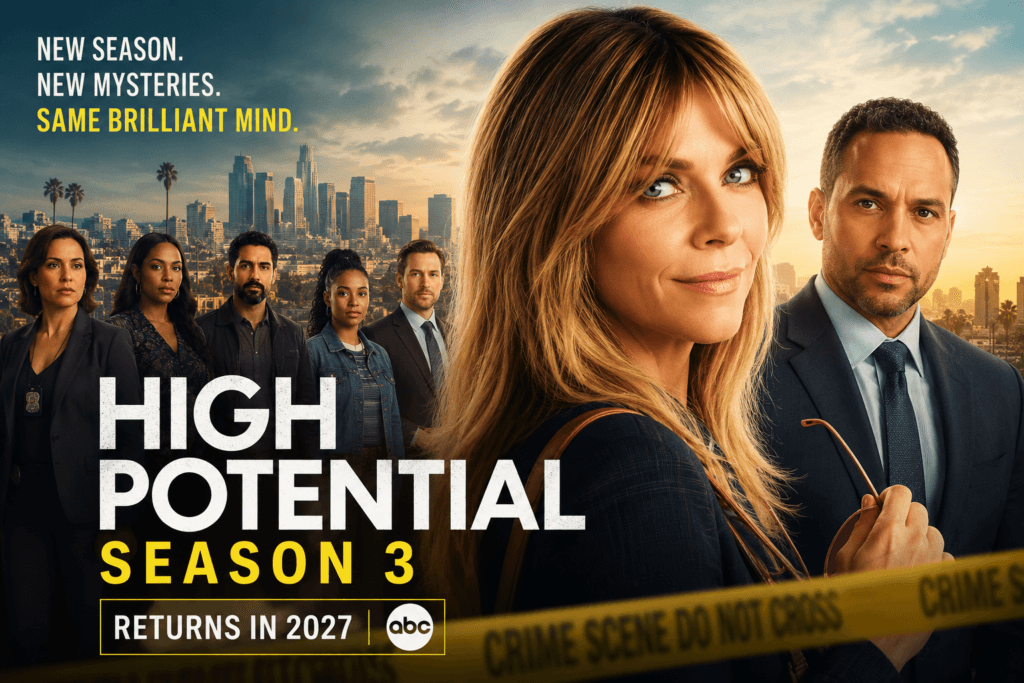
High Potential Season 3 promotional image featuring Kaitlin Olson and the returning cast

High Potential Season 3: Release Date, Cast, Story & Everything We Know

High Potential Season 3 is officially happening, but fans will have to wait until 2027 to see Morgan Gillory back at work. ABC has renewed the Kaitlin Olson-led crime drama and placed its third season on the network’s 2027 schedule. However, ABC has not announced an exact premiere date yet. The wait should not signal trouble for the series. Instead, ABC has moved High Potential to its midseason lineup, a scheduling approach the network has used for returning dramas that it wants to run with fewer interruptions. The change means viewers will not see Season 3 during ABC’s fall 2026 lineup, but the series remains firmly part of the network’s plans. There is also encouraging news behind the scenes. Production has moved forward, with Daniel Sunjata sharing an update about the cast’s first Season 3 table read in August. Kaitlin Olson has also begun filming, confirming that the new season has progressed beyond early development. At the same time, Season 3 will introduce an important creative change. Nora and Lilla Zuckerman are taking over as showrunners and executive producers after Todd Harthan’s departure. The sisters previously served as showrunners on the first season of Poker Face, giving the new season a creative team with experience in character-driven mysteries. High Potential Season 3: What We Know So Far The biggest confirmed news is simple: High Potential has a third season. ABC renewed the series in March 2026, shortly before Season 2 concluded. The renewal gives Morgan Gillory’s story another chapter while leaving plenty of room for the show’s central mysteries to develop. Season 3 will continue to center on Morgan, the unusually perceptive crime-solving consultant played by Kaitlin Olson. Her ability to notice connections that others miss remains one of the show’s defining strengths. Daniel Sunjata is also expected to remain an important part of the series as Detective Adam Karadec, whose partnership with Morgan has become one of the drama’s most closely followed relationships. The new season also arrives after several major developments in Season 2. Morgan’s complicated personal history remains important, while the finale left viewers with questions involving Roman and Nick Wagner. Steve Howey, who played Wagner, will not return as a series regular for Season 3, although reports indicate that a guest appearance could still happen to address his storyline. For now, ABC has confirmed the 2027 return but has not provided a specific premiere date. That leaves the exact launch day, episode schedule and several casting details open for future announcements. High Potential Season 3 Release Date ABC has confirmed that High Potential Season 3 will premiere in 2027, but the network has not announced the exact date. More specifically, the season is planned for ABC’s midseason 2027 lineup. That timing represents a change from the show’s earlier scheduling pattern. Season 2 finished in April 2026, and many viewers expected the series to return during the fall television season. Instead, ABC left High Potential off its fall 2026 primetime schedule and moved its third season to the following year’s midseason lineup. ABC’s scheduling strategy offers some context. Network executives have said they want certain returning shows to air with fewer interruptions, pointing to the success of other dramas that returned during midseason. The delay therefore does not mean ABC canceled, paused or lost confidence in the series. The network has already committed to another season and continues to include High Potential among its returning programs. For viewers tracking other major returning crime and action series, our Reacher Season 4 coverage also follows its release plans, cast developments and story updates. For viewers, the main takeaway is straightforward: Season 3 is coming, but not in fall 2026. Until ABC announces the official premiere date, claims about a specific day should be treated as unconfirmed. Why Is High Potential Season 3 Delayed? The move to 2027 appears to be primarily a scheduling decision rather than a production problem. ABC’s fall 2026 lineup places other programming in the show’s former schedule, while High Potential joins several returning series planned for 2027. ABC has specifically described its midseason strategy as a way to give returning shows more consistent runs. That approach can help a serialized or character-driven drama maintain momentum instead of facing repeated breaks during a traditional fall season. The timing also gives the production team additional room to prepare the new season under its incoming showrunners, Nora and Lilla Zuckerman. At the same time, recent production updates show that work on Season 3 is already moving ahead. So while the wait may feel long for fans, the available information points toward a planned 2027 return rather than an uncertain future for the series. High Potential Season 3 Cast The High Potential Season 3 cast will continue to revolve around Kaitlin Olson as Morgan Gillory, the brilliant crime-solving consultant whose unusual way of seeing patterns drives the series. Daniel Sunjata is also returning as Detective Adam Karadec, Morgan’s partner in the LAPD’s Major Crimes division. Their professional partnership remains one of the show’s central relationships, while Season 2 added even more personal tension between them. The returning ensemble also includes Judy Reyes as Lieutenant Selena Soto, Javicia Leslie as Daphne Forrester, Deniz Akdeniz as Lev “Oz” Özdil, Matthew Lamb as Elliot Radovic and Amirah J as Ava Sinquerra. ABC’s official cast listing continues to identify these performers with their respective characters. Taran Killam, who plays Ludo Radovic, is also expected to remain part of the ensemble. However, not every Season 3 appearance has received the same level of formal confirmation, so it is important to distinguish established returning stars from characters whose involvement could depend on the story. The larger cast picture should become clearer as ABC releases additional Season 3 details. For now, Morgan and Karadec remain the two most important pieces of the returning lineup, while the supporting Major Crimes team gives the show its familiar workplace dynamic. That balance should matter in Season 3. The series can continue its weekly murder investigations while also developing

High Potential Season 3: Release Date, Cast, Story & Everything We Know Read More »