

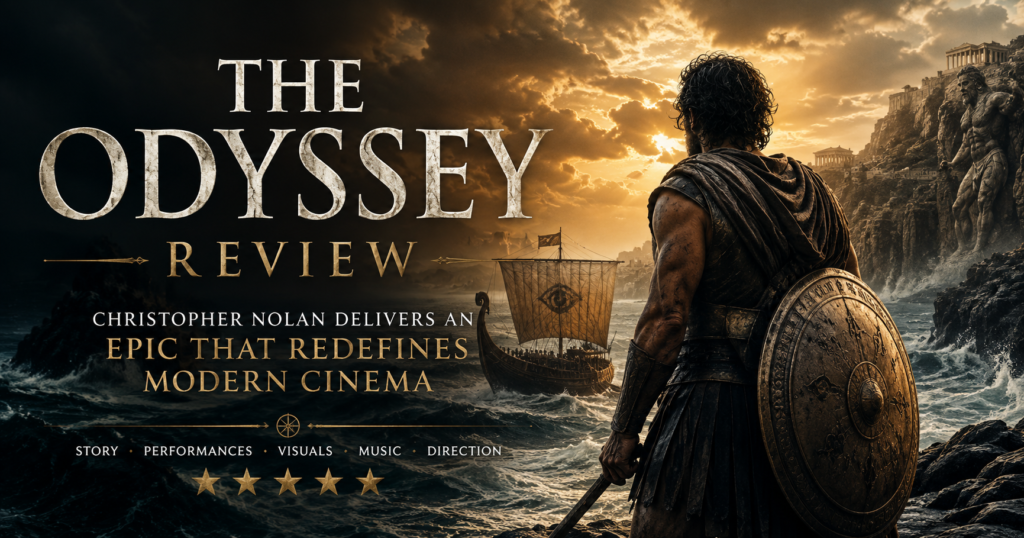
The Odyssey Review: Christopher Nolan Delivers an Epic Worth the Journey
Ancient stories have a unique ability to transcend generations, speaking to audiences across cultures and centuries. Among them, The Odyssey stands as one of the greatest adventure tales ever written, influencing literature, film, television, and modern storytelling in countless ways. Adapting such a legendary work for today’s audiences is an enormous creative challenge, requiring a careful balance between honoring its origins and delivering a fresh cinematic experience. The Odyssey Review begins with one simple observation: Christopher Nolan doesn’t merely recreate Homer’s epic—he reimagines it through the lens of modern filmmaking while preserving the emotional heart that has made the story timeless. Rather than relying solely on spectacle, the film emphasizes character, resilience, sacrifice, and the universal desire to find one’s way home. From its opening moments, the movie establishes an atmosphere that feels both grand and deeply personal. Massive landscapes, dangerous seas, and legendary encounters create the scale expected from an epic, yet the narrative never loses sight of the people experiencing these extraordinary events. That balance between visual ambition and emotional storytelling becomes one of the film’s defining strengths. This The Odyssey Review explores the film’s storytelling, direction, performances, technical achievements, themes, and overall impact while remaining spoiler-free for readers planning to experience the journey themselves. Christopher Nolan Reimagines a Timeless Epic Adapting a literary masterpiece that has inspired generations is never easy. Expectations are high, comparisons are unavoidable, and every creative decision invites scrutiny. Christopher Nolan approaches this challenge with confidence, crafting a film that respects its classical roots while embracing the possibilities of modern cinema. Unlike many mythological adaptations that focus primarily on action and fantasy, this version places equal emphasis on emotional realism. The legendary journey becomes more than an adventure across distant lands—it evolves into a deeply personal exploration of identity, responsibility, and perseverance. One of the strongest points highlighted throughout The Odyssey Review is how naturally the film connects ancient themes with contemporary audiences. Although the setting belongs to another era, the emotions driving the characters remain familiar and relatable. The Journey Matters More Than the Destination Many adventure films focus almost entirely on reaching a final goal. The Odyssey takes a different approach by treating every stage of the journey as equally meaningful. Each destination introduces new challenges. Each encounter reveals another layer of the protagonist’s character. Each obstacle changes the people involved. Rather than feeling like separate adventures connected only by geography, every chapter contributes to one larger emotional narrative. This structure keeps the audience invested not simply in where Odysseus is going but in who he becomes along the way. Mythology Is Grounded in Human Emotion Although mythical creatures, powerful gods, and extraordinary events play important roles, they never overshadow the human story. Fear, hope, determination, regret, love, and resilience remain at the center of every major decision. Instead of treating mythology as an excuse for endless spectacle, the film uses these legendary elements to deepen the emotional stakes. As The Odyssey Review demonstrates, the mythical world becomes a reflection of the internal struggles faced by its characters. More Than a Survival Story At its core, the narrative is about transformation. Every hardship teaches a lesson. Every sacrifice carries emotional weight. Every victory demands a personal cost. The story asks timeless questions that remain relevant today: What defines true leadership? Can people ever return unchanged after years of struggle? Is home a destination or a feeling? What gives someone the strength to continue when hope begins to fade? These questions elevate the film beyond a traditional action-adventure epic. Storytelling That Balances Epic Scale With Emotional Depth Large-scale blockbusters often struggle to maintain emotional intimacy. Spectacular visuals can easily overshadow meaningful character development. Fortunately, that isn’t the case here. One reason The Odyssey Review remains so positive about the film is its commitment to balancing spectacle with sincere human drama. The screenplay consistently reminds audiences that emotional investment matters more than visual excess. Every Decision Shapes the Story Characters rarely face simple choices. Leadership requires sacrifice. Trust must be earned. Pride often leads to consequences. Compassion can become both a strength and a weakness. These moral dilemmas create genuine tension because there are no easy answers. Every important decision influences not only the immediate situation but also the emotional journey of the characters. Time Becomes an Invisible Character One of the film’s most effective storytelling devices is its treatment of time. Years pass naturally. Relationships evolve. Families change. Kingdoms continue without those who left. Instead of presenting time merely as a backdrop, the narrative uses it to highlight the emotional cost of prolonged absence. The Odyssey Review recognizes this as one of the film’s most mature and emotionally resonant qualities. Home Represents More Than a Place Throughout the story, home symbolizes far more than a physical location. It represents belonging. It represents memory. It represents hope. The longer the journey continues, the more uncertain the meaning of home becomes. This emotional uncertainty adds depth to nearly every major scene and encourages viewers to reflect on the importance of family, identity, and personal growth. Christopher Nolan’s Direction Reflects Remarkable Confidence Christopher Nolan has built a reputation for creating ambitious films that challenge audiences while delivering unforgettable cinematic experiences. With The Odyssey, he applies that same philosophy to one of history’s most celebrated literary works. Rather than modernizing the story through unnecessary changes, he allows its timeless themes to remain the driving force behind the narrative. The Odyssey Review praises this restrained approach because it demonstrates confidence in the strength of the original story while still offering a distinctly cinematic interpretation. Spectacle Always Supports the Narrative The film contains breathtaking moments of action and visual grandeur, but those sequences never exist purely for excitement. Every storm carries emotional significance. Every battle changes the characters. Every confrontation moves the story forward. This careful balance prevents the spectacle from overshadowing the narrative. Practical Filmmaking Creates Authenticity One of Nolan’s defining strengths has always been his preference for realism whenever possible. Ancient ships feel functional. Coastal
The Odyssey Review: Christopher Nolan Delivers an Epic Worth the Journey Read More »