CLIMAX Magazine

CLIMAX Magazine is an independent digital publication dedicated to delivering accurate, original, and engaging coverage of entertainment, sports, celebrity news, movies, TV shows, music, and trending stories. We are committed to factual reporting, reliable information, and reader-first journalism, keeping our audience informed with trusted and engaging content.

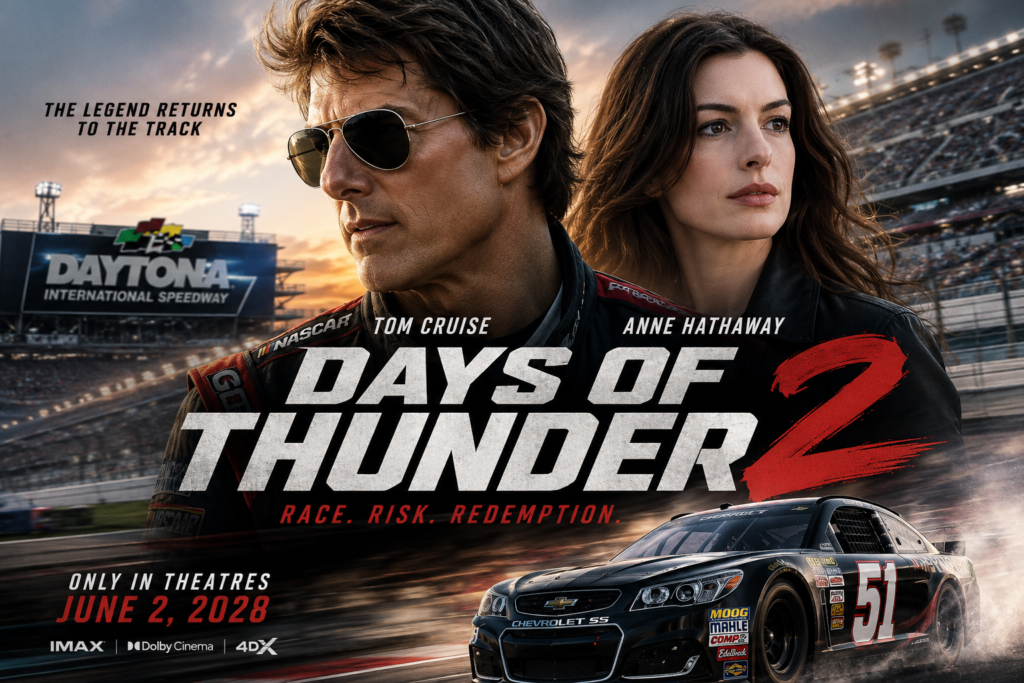
Days of Thunder 2 featuring Tom Cruise as Cole Trickle and Anne Hathaway

Days of Thunder 2: Tom Cruise, Anne Hathaway, Release Date and Everything We Know

Days of Thunder 2 is no longer just a long-running possibility. Tom Cruise has officially announced a follow-up to the 1990 NASCAR drama, confirming his return as Cole Trickle and Anne Hathaway’s addition to the cast. Paramount has set the sequel for June 2, 2028, giving the project a firm theatrical destination after years of discussion around a possible return to the racetrack. The announcement also positions the movie as a major theatrical production. It is planned for IMAX, with Dolby Cinema and 4DX releases also announced. That premium presentation fits a franchise built around speed and physical spectacle. However, the story remains largely under wraps, so many questions about Cole’s next chapter are still unanswered. Days of Thunder 2 Is Officially Happening Tom Cruise Returns as Cole Trickle The biggest piece of news is simple: Cruise is coming back as Cole Trickle. The character was at the center of Tony Scott’s 1990 film, which followed a talented but volatile driver entering the NASCAR world and facing intense competition on and off the track. Cruise’s return makes the new movie a continuation rather than a straightforward reboot. The project also arrives almost four decades after the original, creating a rare chance to revisit a character who has been absent from the big screen for decades. The sequel’s announcement came from Daytona International Speedway during NASCAR’s regular-season finale, giving the project an immediate connection to the racing community it depicts. Anne Hathaway Joins the NASCAR World Anne Hathaway will co-star opposite Cruise as a racecar team owner and engineer. That gives the sequel a central character with a different position within the racing world. The role creates an immediate contrast with Cole Trickle. Cole was introduced as a driver whose competitiveness and instincts shaped the original movie. Hathaway’s character, by comparison, works on the technical and organizational side of racing. Exactly how their professional relationship develops remains unknown because the filmmakers have not revealed the full story. Their pairing gives the sequel a fresh dynamic while allowing Cruise to retain the character audiences associate with the original film. Days of Thunder 2 Release Date and Theatrical Plans When Will Days of Thunder 2 Be Released? Paramount has scheduled Days of Thunder 2 for June 2, 2028. The date places the movie in the early summer theatrical corridor, where large-scale action films can benefit from audiences looking for a major cinema experience. There is still a long production period ahead. The studio has announced the creative team and release plan, but it has not revealed the complete supporting cast or a full production schedule. Details such as filming dates, the first trailer, and additional character announcements should therefore be treated as future developments. Will Days of Thunder 2 Be in IMAX? Yes. The sequel is being planned for IMAX, with Paramount also announcing premium theatrical formats including Dolby Cinema and 4DX. That choice makes sense for a racing movie built around movement, engines, speed, and track sequences. IMAX can emphasize the physical scale of the sport, while other premium formats can add another layer to the theatrical experience. Specific shooting locations and production details have not yet been revealed. Days of Thunder 2 Cast and Characters Tom Cruise as Cole Trickle Cruise’s return is the sequel’s main connection to the 1990 story. Cole Trickle was a young NASCAR driver in the original, and the character became one of the recognizable racing roles of Cruise’s early career. The new film does not yet explain where Cole has been or what has happened to him between movies. That gap could become part of the sequel’s setup, but it would be premature to assume a specific backstory before the filmmakers reveal one. What is confirmed is that Cole remains central to the franchise. Bringing him back gives the sequel a direct link to the original instead of relying only on the Days of Thunder name. Anne Hathaway’s Role Hathaway will play a racecar team owner and engineer. Although the studio has not released extensive character information, the role suggests that the sequel will give its female lead meaningful involvement in the technical and competitive side of racing. Beyond that, the filmmakers have kept details quiet. Her character’s name, history, team, relationship with Cole, and role in the main conflict have not been fully disclosed. For now, the most reliable description remains the studio’s: she is a team owner and engineer. Who Is Directing and Writing Days of Thunder 2? Jonathan Levine Directs Jonathan Levine will direct the sequel, giving the project a different filmmaking voice from the original, which Tony Scott directed in 1990. Levine has worked across comedy, drama, romance, and action, with credits including 50/50, Warm Bodies, and Long Shot. His involvement means the sequel will bring a new directorial perspective while retaining its racing-focused identity. Will Staples Writes the Sequel Will Staples is writing the screenplay. His previous work includes the action film Without Remorse, giving him experience with large-scale action storytelling. The script’s full story remains confidential. That matters because limited casting information can easily lead to assumptions about the plot. For now, the confirmed setup is straightforward: Staples writes, Levine directs, Cruise returns as Cole Trickle, and Hathaway enters the franchise as a team owner and engineer. What Will Days of Thunder 2 Be About? At this stage, the story of Days of Thunder 2 remains largely under wraps. The confirmed details establish the returning Cole Trickle, played by Tom Cruise, alongside Anne Hathaway as a racecar team owner and engineer. However, the filmmakers have not released a full synopsis explaining the central conflict, the racing championship involved, or how the two characters’ paths will intersect. That limited information creates an important distinction between what audiences know and what they can reasonably expect. The sequel clearly returns to the world of professional racing, but specific story developments remain unconfirmed. Rather than filling those gaps with speculation, it is better to wait for official production updates, interviews, or promotional material.

Days of Thunder 2: Tom Cruise, Anne Hathaway, Release Date and Everything We Know Read More »
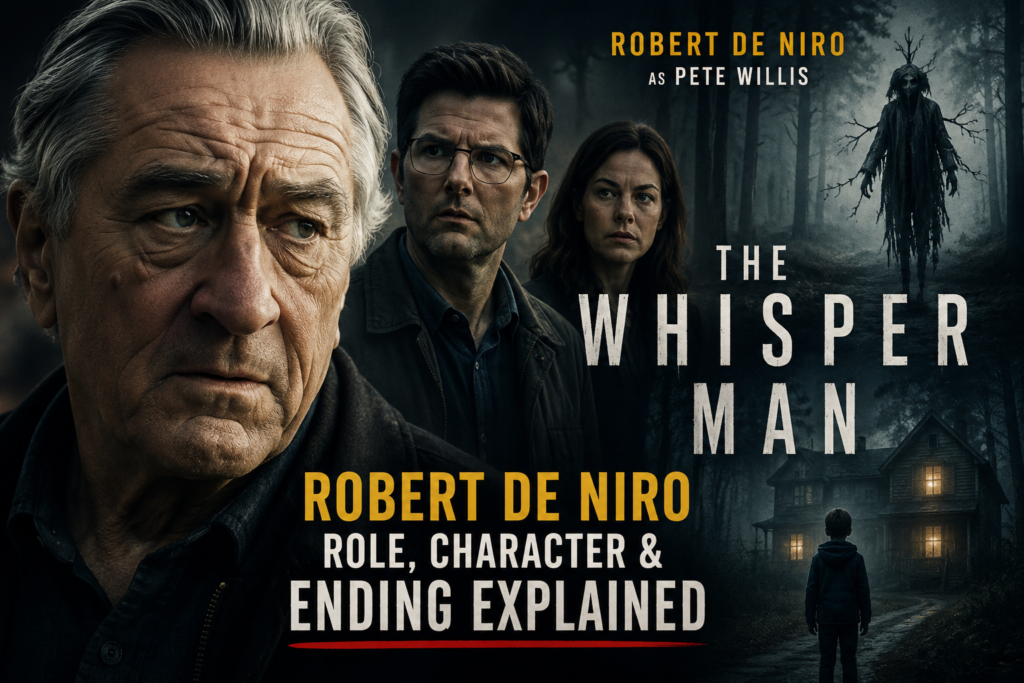
Robert De Niro as Pete Willis in The Whisper Man with the Whisper Man figure and a dark forest backdrop

Robert De Niro in The Whisper Man: Role, Character & Ending Explained

Robert De Niro takes on a very different kind of role in Netflix’s The Whisper Man. He plays Pete Willis, a retired detective whose career remains tied to one of the most disturbing serial-killer cases in his town’s history. When a new child disappears under circumstances that resemble the old crimes, Pete finds himself pulled back into an investigation he thought he had left behind. The case becomes even more personal when Pete learns that the missing child is his grandson, Jake. His estranged son, Tom Kennedy, has returned to the town with Jake following the death of his wife. That reunion forces Pete to confront two unfinished parts of his past: the Whisper Man case and his fractured relationship with his son. Directed by James Ashcroft and adapted from Alex North’s novel, The Whisper Man combines a serial-killer mystery with a family drama. That combination gives De Niro’s character more to do than simply provide the veteran-detective perspective. Pete becomes one of the story’s main links between its past crimes and its present-day threat. Robert De Niro in The Whisper Man: Who Does He Play? Robert De Niro plays Pete Willis, a retired detective who previously investigated the serial killer known as the Whisper Man. Years before the main events of the movie, Pete helped put Frank Carter behind bars after a series of child murders. However, the case never completely left him. Pete continued to believe that something about the investigation remained unresolved. Pete Willis and His History With the Case Pete’s connection to the original Whisper Man investigation gives him knowledge that the younger detectives do not have. When a new series of crimes begins to resemble the old killings, authorities turn toward the retired investigator for answers. The similarities are unsettling. The original Whisper Man abducted children, and the new crimes suggest that someone may be copying his methods. Pete therefore becomes an important source of historical context while the police try to determine whether they are dealing with a copycat, an accomplice, or a continuation of the original killer’s influence. Yet Pete’s involvement is not simply professional. The case also brings him back into the life of Tom, his estranged son. That connection changes the emotional stakes of the investigation. Why Pete Returns to the Investigation At first, Pete does not appear eager to return to police work. He has already spent years carrying the weight of the original case. However, Jake’s disappearance gives him a reason he cannot ignore. Jake is not just another missing child. He is Pete’s grandson, a boy Pete has never properly known because of his damaged relationship with Tom. Once Jake becomes the target, Pete has both a professional reason and a deeply personal one to find him. That combination drives his return and makes his role central to the film’s mystery. What Is Robert De Niro’s Role in The Whisper Man? Pete Willis serves as the film’s connection between the original Whisper Man murders and the new investigation. As the detective who helped capture Frank Carter, he understands the killer’s behavior in a way that Tom and the current investigators cannot easily replicate. Pete as a Retired Detective Pete’s experience becomes particularly valuable because the new crimes appear to echo the methods associated with Frank Carter. His knowledge allows the investigation to look beyond the surface similarities and consider whether the person responsible has a direct connection to the original case. However, the movie does not portray Pete as an infallible crime-solving machine. His history with the case has left emotional scars, and those scars affect how he approaches the new investigation. He is still searching for answers connected to the old crimes, including questions that remained unresolved after Carter’s arrest. That history also gives Pete a reason to take the threat seriously before everyone else understands how personal it will become. Pete as Tom Kennedy’s Estranged Father Pete’s second role is even more important to the emotional story. He is Tom’s father, but the two men have been separated for years. Their relationship has suffered because Pete devoted so much of himself to his career and the Whisper Man investigation. When Tom needs help finding Jake, the old resentment cannot simply disappear. Instead, the investigation forces both men to confront their shared history while racing against time. This makes Pete’s character more complicated than a conventional retired detective. He is simultaneously trying to solve a crime, protect his grandson, and repair a relationship that has been broken for years. De Niro’s restrained approach allows those tensions to remain largely beneath the surface rather than turning Pete into an overly dramatic character. Robert De Niro and Adam Scott’s Father-Son Dynamic The relationship between Pete Willis and Tom Kennedy gives The Whisper Man much of its emotional weight. Tom is a grieving father trying to protect his young son, while Pete is a former detective who has spent years living with the consequences of his choices. Why Tom and Pete Are Estranged Tom’s relationship with Pete has deteriorated long before Jake disappears. The film deliberately avoids turning their history into a long exposition dump. Instead, their strained interactions reveal that Pete’s commitment to his police work came at a significant personal cost. That approach also makes their reunion uncomfortable. Tom does not suddenly forget years of resentment simply because Pete has investigative experience. At the same time, Pete clearly wants another opportunity to connect with his son. The result is a relationship built around things neither man easily says. Their shared crisis becomes the pressure point that brings those unresolved emotions back to the surface. Pete’s Chance to Reconnect With Tom and Jake Jake’s kidnapping gives Pete something he never had before: a direct opportunity to act as a grandfather rather than remain a distant figure in Tom’s life. For Tom, however, Pete’s help carries mixed emotions. He needs the retired detective’s expertise, but accepting that help also means confronting the father he believes failed him. That tension

Robert De Niro in The Whisper Man: Role, Character & Ending Explained Read More »

Silo Season 3 Episode 9 ending explained featuring Juliette, Bernard, the Pact, and the nuclear blast

Silo Season 3 Episode 9 Ending Explained: The Pact, Bernard’s Fate and the Nuclear Blast

Silo Season 3 Episode 9, titled “Farewell,” brings the present and the Before Times closer together than ever. The episode moves between Silo 18 and the world that existed before humanity disappeared underground, revealing how the two timelines are connected by fear, control and survival. At the same time, Juliette and her allies race to stop the Safeguard while Bernard makes a decision that could change the future of everyone inside the silo. The episode also delivers one of the season’s most important historical developments. Daniel and Helen attend the unveiling of the completed silo project, only to witness a catastrophe that changes everything. Meanwhile, Bernard faces the consequences of his choices and turns himself over to Camille in an attempt to protect Silo 18. With only the season finale remaining, “Farewell” answers several major questions while creating even bigger ones. Here is what happens in Silo Season 3 Episode 9 and why its revelations matter. Silo Season 3 Episode 9 Recap: What Happens in “Farewell” “Farewell” begins with Silo 18 already under extreme pressure. Juliette has been captured and placed in custody with Robert Sims, while Camille continues to follow the system’s instructions. The immediate danger is the Safeguard, which could potentially destroy the silo’s population if the resistance cannot find a way to stop it. The resistance has learned from Silo 17 that the Safeguard can be disrupted. However, Juliette cannot simply walk back into the operation. Her capture changes the plan, forcing the remaining members of the resistance to work around Camille’s surveillance and authority. Bernard Turns Himself In Bernard decides that the best way to create an opening is to surrender himself. His decision is not simply an attempt to save his own life. He understands that his position inside the silo gives the resistance an opportunity to move while everyone’s attention remains focused on him. Bernard hopes that speaking directly to the intelligence controlling the silo might give him a chance to prevent a wider disaster. Instead, the system orders him outside to clean. For Bernard, the order carries a meaning that every resident understands. Cleaning is effectively a death sentence. Yet he accepts it, knowing that his final moments can give Juliette and the resistance the distraction they need. Juliette and the Resistance Make Their Move While Bernard prepares to go outside, the resistance continues working against the Safeguard. The plan depends on timing because Camille cannot discover what is happening before the necessary work is completed. Bernard’s sacrifice therefore becomes part of a larger operation. His public punishment draws attention toward him while Juliette’s allies continue their efforts elsewhere inside Silo 18. That connection gives the episode its emotional weight: Bernard is not simply accepting his punishment. He is deliberately turning his death into one final act of resistance. What Happens to Bernard in Silo Season 3? Bernard’s story reaches its apparent endpoint in Episode 9. After surrendering, he is ordered to clean outside Silo 18. Unlike the traditional cleaning ritual, however, Bernard does not even receive the protection normally associated with the task. He walks outside knowing exactly what will happen. The poisoned atmosphere quickly overwhelms him, and he eventually collapses beneath the familiar tree. His final moments bring a strange sense of peace as he imagines the world beyond the toxic landscape. Why Bernard Agrees to Clean Bernard understands that the system has already decided his fate. Rather than fight an unwinnable battle, he uses the situation to help the resistance. His surrender also represents a major change from the Bernard viewers knew earlier in the series. He once defended the silo’s rules because he believed obedience protected its people. By Episode 9, he recognizes that blindly following those rules could destroy the very population he once believed he was protecting. That realization allows Bernard to make a final choice based on people rather than the system. Bernard’s Final Moments Explained Bernard’s death is important because it completes his transformation from authoritarian leader to reluctant resistance figure. His final conversation with Juliette also reinforces his belief that she can unite people who have spent generations divided by the silo’s rules. His apparent death therefore serves two purposes. It closes one of the show’s longest character arcs, while also creating the distraction necessary for the resistance’s operation against the Safeguard. Tim Robbins has also confirmed that Bernard’s story ends with Season 3, making the scene more significant than a temporary cliffhanger. The Pact Mystery in Silo Season 3 Explained One of the biggest revelations in Silo Season 3 Episode 9 concerns the document that has governed life underground for generations: the Pact. For residents, the Pact is more than a collection of rules. It defines what they can do, what they can know and how their society should function. Yet the circumstances behind its creation are far less sacred than later generations might imagine. During the Before Times storyline, Daniel learns that Victor and Anna were responsible for creating the Pact, with artificial intelligence doing much of the initial writing and the humans shaping the result. The revelation matters because it changes the document from an ancient mystery into a deliberately engineered system designed for people who would have to survive underground for centuries. That also explains why the Pact focuses so heavily on controlling behavior, technology and information. Its creators were preparing for a society emerging from enormous trauma. The rules were meant to prevent people from destroying themselves after the catastrophe. Who Wrote the Pact? Victor explains that the Pact was largely produced with AI assistance rather than written entirely by him and Anna from scratch. They supplied the human judgment and edits, while the technology helped construct the framework. That detail gives the Pact an unexpected connection to the same technological forces that later become central to the silo system. It also raises an uncomfortable question: if an artificial intelligence helped establish the rules governing humanity for hundreds of years, how much of the society’s behavior was actually

Silo Season 3 Episode 9 Ending Explained: The Pact, Bernard’s Fate and the Nuclear Blast Read More »

Andrea Eastman, The Godfather casting director and Hollywood agent, dies at 86

Andrea Eastman Dies at 86: The Godfather Casting Director and Hollywood Agent

Andrea Eastman, the Hollywood casting executive and longtime talent agent whose career helped shape some of the industry’s most recognizable names, has died at 86. Eastman died at her home in Santa Barbara, California, with a career that stretched from Paramount Pictures’ casting department to the upper ranks of International Creative Management. For many movie fans, Andrea Eastman is closely associated with The Godfather. She was part of the casting team behind Francis Ford Coppola’s 1972 classic, a film that introduced or elevated several performers who would become major Hollywood figures. Her work, however, went well beyond one celebrated movie. Eastman also played an important role in bringing Ali MacGraw to Goodbye, Columbus and later built a formidable career representing actors and entertainers. At ICM, she became one of Hollywood’s pioneering female superagents and worked with stars including Barbra Streisand, Dustin Hoffman, Burt Reynolds and Sylvester Stallone. Her professional story is therefore larger than a single casting credit. Eastman’s career crossed several influential areas of the entertainment business, giving her a rare perspective on how Hollywood discovered talent, built careers and turned performers into lasting stars. Andrea Eastman Dies at 86 Andrea Eastman’s death closes a remarkable Hollywood career that lasted for decades and crossed several different eras of the entertainment industry. What Happened to Andrea Eastman Eastman died Wednesday at her Santa Barbara home at the age of 86, according to a family spokesperson. Reports described her as having died in her sleep. Her death was reported in late August 2026, prompting tributes from former colleagues, friends and people whose careers she had helped shape. The news quickly drew attention because of the unusual range of her professional accomplishments. Eastman was not simply a casting executive or an agent. She moved between both sides of the talent business and developed a reputation for recognizing performers with unusual potential. Her work on The Godfather remains one of her most widely remembered contributions. Yet her career also included major casting decisions at Paramount and years of representation work at leading Hollywood agencies. Why Her Death Matters to Hollywood Eastman’s importance comes from the influence she exercised behind the scenes. She helped connect performers with roles, guided established stars and became a powerful advocate for talent at a time when senior positions in Hollywood were overwhelmingly controlled by men. That combination made her career distinctive. She could recognize an unknown performer, understand the commercial value of established stars and negotiate within a rapidly changing entertainment industry. Her legacy consequently reaches beyond the credits attached to individual movies. Who Was Andrea Eastman? Andrea Eastman built a reputation as one of Hollywood’s most influential behind-the-scenes figures, although audiences rarely saw her name on screen. Her Early Hollywood Career Eastman emerged as a casting executive at Paramount during the period often associated with the rise of New Hollywood. The late 1960s and early 1970s brought major changes to American filmmaking, with younger directors, unconventional stories and new performers challenging the established studio system. Eastman proved particularly skilled at identifying talent before audiences knew their names. One early example came with Goodbye, Columbus, the 1969 film adaptation of Philip Roth’s novella. Eastman encountered Ali MacGraw when the future star was still working as a model and helped bring her into the film as Brenda Patimkin. That decision became an early example of Eastman’s eye for performers who could make an immediate impression. MacGraw would soon become one of Hollywood’s most recognizable leading women. Eastman’s casting work also brought her into the orbit of major filmmakers and producers. Those relationships eventually led to her involvement with The Godfather, where her judgment became part of one of cinema’s most consequential casting processes. From Casting to Industry Powerhouse Eastman eventually moved beyond casting and entered talent representation. That transition gave her a different kind of influence. Instead of helping decide who would appear in a production, she began advocating for performers after they entered the industry. She worked at several agencies before rising at International Creative Management, better known as ICM. Her advancement marked an important moment for women in Hollywood. Eastman became one of the industry’s first female superagents, reaching the senior ranks of an agency world that had historically been dominated by men. Her career would soon include representation of some of the biggest names in American entertainment. Andrea Eastman and The Godfather Andrea Eastman’s connection to The Godfather represents the most recognizable chapter of her casting career. Helping Shape the Film’s Central Cast Released in 1972, The Godfather became a landmark of American cinema and established a cast that included Marlon Brando, Al Pacino, James Caan, Robert Duvall and Diane Keaton. Paramount’s official history credits the film with career-making performances, while the movie’s production records list Eastman among its casting personnel. Eastman worked with producer Fred Roos and director Francis Ford Coppola during the casting process. Her contribution became particularly important as the production assembled the actors who would define the Corleone family. Al Pacino’s casting as Michael Corleone became one of the film’s most consequential decisions. Pacino was relatively unestablished at the time, and the choice faced resistance within the studio. Coppola nevertheless continued to push for him. Eastman’s work also connected directly to James Caan’s casting as Sonny Corleone. Caan had impressed during his screen test, and Eastman later took responsibility for securing him for the role. The finished film demonstrated how important those choices were. Pacino’s Michael became the emotional center of the story, while Caan’s Sonny emerged as one of its most memorable supporting characters. Why Her Casting Work Still Matters Casting rarely receives the same public attention as directing, acting or writing. Yet The Godfather illustrates how strongly an actor’s presence can shape a film’s identity. Eastman’s contribution was part of a larger collaborative effort involving Coppola, Roos and other casting professionals. Still, her role gives her an important place in the history of a movie whose performances became cultural touchstones. The Academy Museum’s archival recognition of Eastman’s casting work

Andrea Eastman Dies at 86: The Godfather Casting Director and Hollywood Agent Read More »

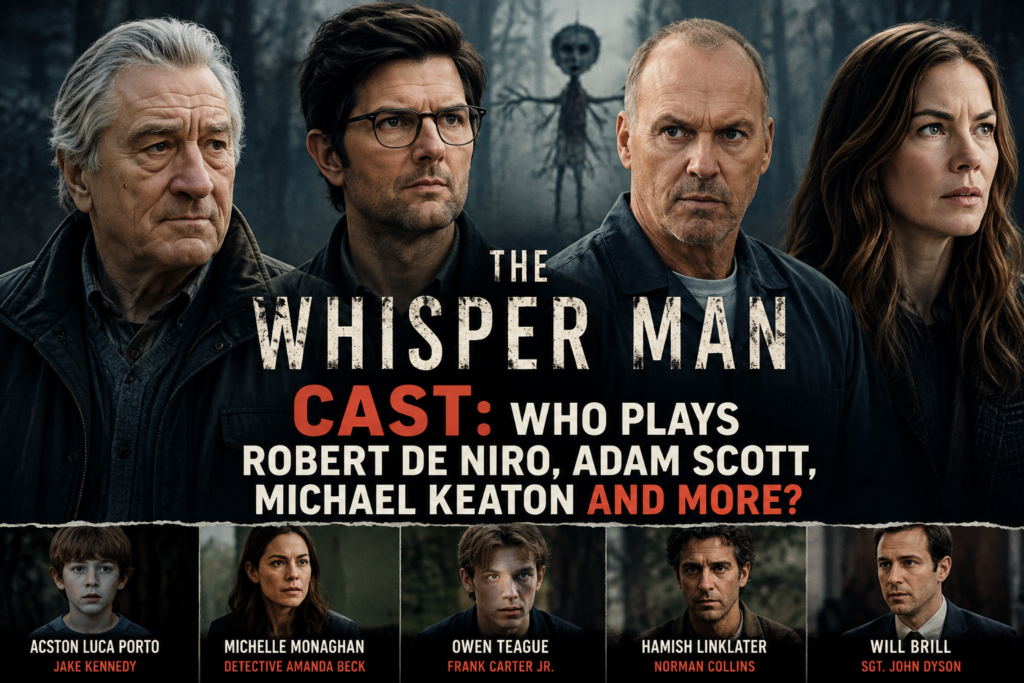
The Whisper Man cast featuring Robert De Niro, Adam Scott, Michael Keaton and Michelle Monaghan

The Whisper Man Cast: Who Plays Robert De Niro, Adam Scott, Michael Keaton and More?

The Whisper Man cast brings together Robert De Niro, Adam Scott, Michelle Monaghan, Michael Keaton, Owen Teague, and several other performers for Netflix’s 2026 psychological thriller. The film follows Tom Kennedy, a widowed crime writer whose eight-year-old son Jake disappears. His search leads him back to his estranged father, Pete Willis, a retired detective who once arrested the serial killer known as the Whisper Man. Directed by James Ashcroft and adapted from Alex North’s bestselling novel, the movie combines a child-abduction mystery with a story about damaged family relationships. That makes the cast important beyond the names attached to the project. Each major performer plays a character connected to the investigation, while the relationships between parents and children drive much of the emotional tension. For viewers searching for The Whisper Man cast, the key names are Robert De Niro as Pete Willis, Adam Scott as Tom Kennedy, and Michelle Monaghan as Detective Amanda Beck. Michael Keaton also has a major role as Frank Carter, the imprisoned killer whose past becomes central to the new case. The Whisper Man Cast at a Glance The main ensemble combines veteran stars with performers known for television, film, and genre projects. Netflix officially lists Robert De Niro, Michelle Monaghan, Adam Scott, Hamish Linklater, Owen Teague, Acston Luca Porto, and Will Brill among the principal cast. Main Cast and Characters Actor Character Role in the Story Robert De Niro Pete Willis Retired detective and Tom’s estranged father Adam Scott Tom Kennedy Crime writer and Jake’s father Michelle Monaghan Amanda Beck Detective investigating the disappearance Michael Keaton Frank Carter Imprisoned serial killer known as the Whisper Man Owen Teague Frank Carter Jr. Frank Carter’s son Hamish Linklater Norman Collins A figure connected to the old killer’s story Acston Luca Porto Jake Kennedy Tom’s eight-year-old son Will Brill Sgt. John Dyson Police officer connected to the investigation The central trio is De Niro, Scott, and Monaghan, while Keaton’s Frank Carter gives the mystery its connection to the earlier crimes. The younger characters also matter because the movie repeatedly connects the investigation to family history and parent-child relationships. Robert De Niro as Pete Willis Robert De Niro plays Pete Willis, a retired police detective whose past becomes impossible to leave behind when his grandson disappears. Pete once investigated the serial killer connected to the case, giving him knowledge that the current investigation cannot easily replace. Who Is Pete Willis? Pete is Tom Kennedy’s estranged father and Jake’s grandfather. His relationship with Tom adds another layer to what could otherwise be a straightforward kidnapping investigation. Tom needs his father’s experience, but their damaged relationship makes that reunion complicated. Pete also carries the history of the original Whisper Man case. Because he previously put the killer behind bars, he understands the patterns surrounding the crimes better than most people involved in the new investigation. That history pulls him back toward a case he might otherwise have left in the past. The character gives De Niro a role that combines detective experience with family conflict. Instead of simply functioning as an older investigator who supplies clues, Pete becomes part of the emotional story between three generations. Why Robert De Niro Fits the Role De Niro brings decades of crime and thriller experience to the movie. His filmography includes Goodfellas, Heat, Raging Bull, The Irishman, and Killers of the Flower Moon, giving audiences an immediate sense of credibility when he appears as a retired detective. His casting also reinforces the film’s connection to classic crime thrillers while keeping the focus on Pete’s complicated relationship with his son. Adam Scott as Tom Kennedy Adam Scott plays Tom Kennedy, a widowed crime writer whose eight-year-old son, Jake, becomes the center of the film’s mystery. Tom’s personal loss and his difficult relationship with Pete make the investigation as much an emotional journey as a search for a missing child. Tom Kennedy’s Role in the Story Tom moves forward after the death of his wife while raising Jake, but his attempt to build a new life collapses when his son disappears. The case quickly becomes connected to the crimes associated with the original Whisper Man, forcing Tom to seek help from the father he has remained distant from. That decision creates one of the film’s strongest conflicts. Tom needs Pete’s knowledge, yet accepting his father’s help means confronting years of unresolved tension. Their relationship therefore develops alongside the investigation rather than sitting separately from it. Scott is best known for projects such as Severance and Big Little Lies, but The Whisper Man places him in a darker thriller built around fear, grief, and family pressure. Tom ultimately serves as the audience’s emotional entry point into the story. Jake’s disappearance gives him an immediate goal, while his relationship with Pete gives the mystery a deeper personal stake. Michelle Monaghan as Amanda Beck Michelle Monaghan plays Amanda Beck, the detective involved in the investigation into Jake’s disappearance. Her character provides the professional investigative perspective as Tom and Pete become increasingly connected to the case. Why Amanda Beck Matters to the Investigation Amanda’s role helps balance the family drama surrounding Tom and Pete. While the two men bring personal history and knowledge of the original case, Amanda approaches the disappearance from the perspective of an active investigator. That distinction matters because the movie does not rely only on Pete’s memories of the past. Amanda becomes part of the effort to determine what happened to Jake and whether the current crime truly connects to the earlier Whisper Man case. Monaghan brings previous thriller experience to the role, with credits including Gone Baby Gone and The White Lotus. Her presence also strengthens the film’s central investigative team alongside Scott and De Niro. Together, Amanda, Tom, and Pete form the core group searching for answers. Their different connections to the case allow the movie to explore the mystery from personal, investigative, and historical perspectives. Michael Keaton as Frank Carter, the Original Whisper Man Michael Keaton plays Frank Carter, the convicted serial killer

The Whisper Man Cast: Who Plays Robert De Niro, Adam Scott, Michael Keaton and More? Read More »

Barbara Walters and Dolly Parton during their memorable television interview

Barbara Walters and Dolly Parton: The Interview That Still Resonates

Barbara Walters built her reputation by asking questions that other television journalists sometimes avoided. She could be warm and conversational, yet she could also become direct when a guest gave a carefully prepared answer. That combination made her one of the most recognizable interviewers in American television. Her conversation with Dolly Parton remains one of the more memorable examples of that approach. The late-1970s interview brought together two women with very different ways of communicating. Walters wanted to look beyond Parton’s polished celebrity image and examine the person behind it. Parton, meanwhile, understood how quickly an interviewer could shape public perception. She responded with humor, confidence and a strong sense of who she was. The discussion eventually touched on Parton’s rural upbringing and the word “hillbilly.” That language can sound particularly uncomfortable to modern audiences because the term has often carried class-based stereotypes. However, the exchange becomes more interesting when viewed through Parton’s response rather than through the controversial wording alone. Instead of rejecting her roots, Parton separated her actual background from the assumptions attached to it. She did not need to deny where she came from to establish her success. That approach helps explain why the interview continues to attract attention. It was not simply a difficult celebrity interview. The conversation became a revealing moment about identity, class, appearance and the power of controlling your own story. Why Barbara Walters Was Such a Formidable Interviewer Barbara Walters developed a style that made even familiar celebrities feel less predictable. Her interviews often moved beyond career achievements and promotional talking points. She wanted to understand what motivated a person, what worried them and how they viewed their own public image. The Interview Style That Made Walters Famous Direct questions formed a major part of Walters’ approach. She could challenge a guest’s explanation, return to an uncomfortable subject or ask about something that another interviewer might avoid. That method sometimes created tension. Yet tension could make a conversation more revealing. Walters understood that celebrities arrived with polished answers, especially when they were promoting a new project. Her job was to discover what remained after those prepared responses. This approach became especially noticeable when she interviewed entertainers. Rather than treating fame as a reason to avoid difficult subjects, Walters often treated celebrity status as a reason to examine those subjects more closely. The technique could produce emotional, surprising or uncomfortable moments. It also helped distinguish Walters from interviewers who focused primarily on friendly promotion. Her conversation with Parton followed that philosophy. Walters did not simply ask about music. She explored the singer’s upbringing, appearance and carefully developed public persona. That choice created the tension that eventually made the interview memorable. Barbara Walters’ Place in Television History Walters’ importance extends far beyond individual interviews. She joined ABC News in 1976 and became the first woman to anchor an evening news program. Her career later included 20/20, where she became known for major interviews, and The View, the daytime program she helped create. Those achievements placed her among the most influential women in American television. Her rise also happened during a period when women faced significant barriers in broadcast journalism. Walters had to establish credibility in an industry that often treated serious news reporting as a male-dominated field. She eventually built a career that crossed several television formats. Political leaders, entertainers and other major public figures all became subjects of her interviews. That range is important when considering her conversation with Dolly Parton. Walters did not necessarily separate entertainment interviews from serious journalism. She approached a famous singer with the same instinct that shaped much of her work: ask the question that might reveal something audiences had not heard before. Her legacy therefore rests not only on the people she interviewed but also on the interviewing culture she helped create. What Happened When Barbara Walters Interviewed Dolly Parton? The conversation occurred during an important stage of Dolly Parton’s rise as a national celebrity. Her success in country music had already established her name, while her distinctive appearance and personality were becoming central to her public image. Parton’s Career Before the Interview Parton’s story differed from the glamorous image she eventually developed. She grew up in rural Tennessee in a large family with limited financial resources. Those early experiences later became important sources for her songwriting and storytelling. Rather than hiding that background after becoming successful, Parton continued to discuss it openly. Her childhood remained connected to the themes of family, poverty, ambition and resilience that appeared throughout her work. That history gave Walters plenty of material to explore. Parton was no longer simply a country singer from Tennessee. She had become a recognizable entertainment personality whose appearance, accent and humor were inseparable from the way audiences perceived her. Walters wanted to understand how much of that image represented the real woman. Parton’s answer, however, showed that she did not see a conflict between her public persona and her personal identity. The glamorous presentation was something she understood and controlled. That distinction became increasingly important as the interview moved toward questions about her background. The Question About Her Background One of the most discussed parts of the conversation involved the word “hillbilly.” The term connected Parton to her rural Appalachian background, but it also carried negative class associations. That created an uncomfortable tension. Parton did not respond as though her upbringing were something shameful. Instead, she acknowledged her origins while resisting the idea that those origins made her less intelligent, ambitious or successful. Her response reflected a pattern that would remain visible throughout her career. Parton could joke about her background without allowing other people to define its value. The distinction is subtle but important. Someone can acknowledge a stereotype without accepting the judgment attached to it. Parton demonstrated that difference during the conversation by treating her roots as part of her identity rather than as an obstacle she needed to erase. The exchange therefore became larger than a single label. Walters was examining how

Barbara Walters and Dolly Parton: The Interview That Still Resonates Read More »

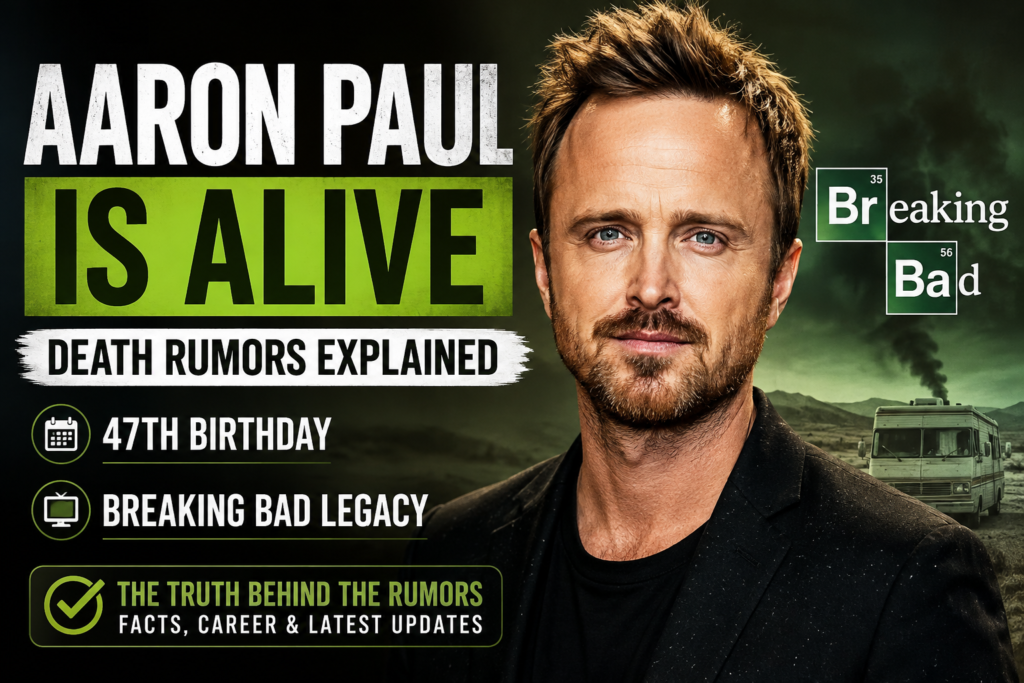
Aaron Paul is alive, 47th birthday and Breaking Bad death rumors explained

Aaron Paul Is Alive: Death Rumors Explained, 47th Birthday & Breaking Bad Legacy

Aaron Paul is alive. The Breaking Bad star recently turned 47 on August 27, 2026, but what should have been a routine birthday celebration instead triggered a wave of confusion online. Some social media users briefly believed that the actor had died after seeing birthday posts that looked surprisingly similar to celebrity memorial tributes. The rumors spread quickly because Paul has maintained a relatively quiet social-media presence in 2026. That absence made some fans more likely to believe alarming posts before checking whether the claim came from a reliable source. However, there is no credible indication that Aaron Paul has died. The actor remains alive, and the viral claims were unfounded. The confusion also arrived during a period when several genuine celebrity deaths had dominated entertainment news. That broader atmosphere made seemingly serious posts about another familiar Hollywood name easier to misread. Here is what actually happened, why Aaron Paul’s name began trending for the wrong reason, and what fans should know about the actor in 2026. Is Aaron Paul Dead or Alive? Aaron Paul Is Alive in 2026 Aaron Paul is alive and recently celebrated his 47th birthday. The actor’s birthday fell on August 27, 2026, and current reports about the viral death claims confirm that the rumors were false. The confusion did not come from a verified announcement of his death. Instead, it developed through social-media posts that some users interpreted incorrectly. That distinction matters because celebrity death rumors can spread far faster than the facts needed to correct them. For fans searching “Is Aaron Paul dead?” or “Is Aaron Paul alive?”, the answer is straightforward: Aaron Paul is alive. Paul remains widely recognized for playing Jesse Pinkman in Breaking Bad, the role that turned him into one of television’s most recognizable supporting actors. His career has continued beyond the AMC drama, including film and television work after the series ended. The current rumor should therefore be treated as a false online claim, not as a confirmed entertainment-news development. Where the Death Rumor Came From The apparent trigger was the design and wording of birthday messages circulating online. Some posts used visual styles that resembled the tribute graphics commonly shared after a celebrity dies. For viewers who saw the posts without their full context, the messages could initially look like memorial announcements rather than birthday wishes. Once people began questioning whether Paul had died, the claim gained additional visibility through reactions and reposts. That created a familiar social-media cycle: a misleading impression generates concern, concern generates more posts, and the growing number of posts can make an unverified rumor appear credible. There was no confirmed death announcement supporting the claim. Instead, the available reporting identified the posts themselves as the source of the confusion. That makes the Aaron Paul story a useful reminder to check the original context of a viral post before accepting its headline or visual presentation as fact. Why Did Aaron Paul Death Rumors Spread Online? Birthday Posts Looked Like Memorial Tributes The unusual rumor surrounding Aaron Paul’s 47th birthday appears to have started with birthday graphics that did not immediately look like conventional celebration posts. Some of the designs used solemn imagery and presentation styles that audiences often associate with remembrance or memorial messages. As those posts circulated, users who encountered them quickly could interpret them as evidence that something had happened to Paul. The problem was not simply the wording. Social media relies heavily on visual signals, and an image can communicate an entirely different impression when someone encounters it without the original caption or surrounding context. That appears to be what happened here. Birthday messages were mistaken for tributes, and the misunderstanding then became a topic of discussion among fans. Importantly, the rumor itself did not establish that anything had happened to Paul. It demonstrated how quickly an ambiguous social-media graphic can create a false narrative when thousands of people encounter it independently. By the time the rumor gained attention, multiple reports had already clarified that Aaron Paul was alive and that the posts were intended to celebrate his birthday. Paul’s Social-Media Break Added to the Confusion Aaron Paul’s limited online presence made the situation more confusing for some fans. In February 2026, Paul announced that he was stepping away from social media because he wanted to spend less time on his phone and focus more on finding inspiration offline. That decision meant fans could not simply rely on frequent posts from Paul himself to settle every rumor. His absence created a gap that social-media speculation could easily fill. However, taking a break from social platforms is not evidence of a health emergency. Paul’s decision was presented as a personal choice to disconnect from his phone and pursue a more offline routine. When the birthday confusion appeared months later, that earlier social-media break became another piece of the rumor’s surrounding context. Together, the unusual birthday graphics and Paul’s reduced online activity created an impression that was far more alarming than the actual situation. The key fact remains unchanged: there was no credible confirmation of Aaron Paul’s death. Aaron Paul Turned 47 on August 27, 2026 Aaron Paul celebrated his 47th birthday on August 27, 2026. Instead of becoming known simply as another birthday milestone, however, the date became connected to an unexpected wave of online speculation about his well-being. That timing helps explain why the rumor gained attention so quickly. Birthday posts appeared across social platforms while Paul himself remained relatively quiet online. Some of those posts looked more like solemn tributes than conventional birthday greetings, creating a confusing contrast between what the posters intended and what some viewers initially believed. Paul’s age also became part of the false claims. Posts suggesting that he had “died at 47” began circulating despite the lack of credible evidence supporting such a statement. For long-time fans, the situation was particularly jarring because Paul remains strongly associated with Jesse Pinkman, one of television’s most memorable characters. His continued popularity means even an ambiguous social-media post

Aaron Paul Is Alive: Death Rumors Explained, 47th Birthday & Breaking Bad Legacy Read More »

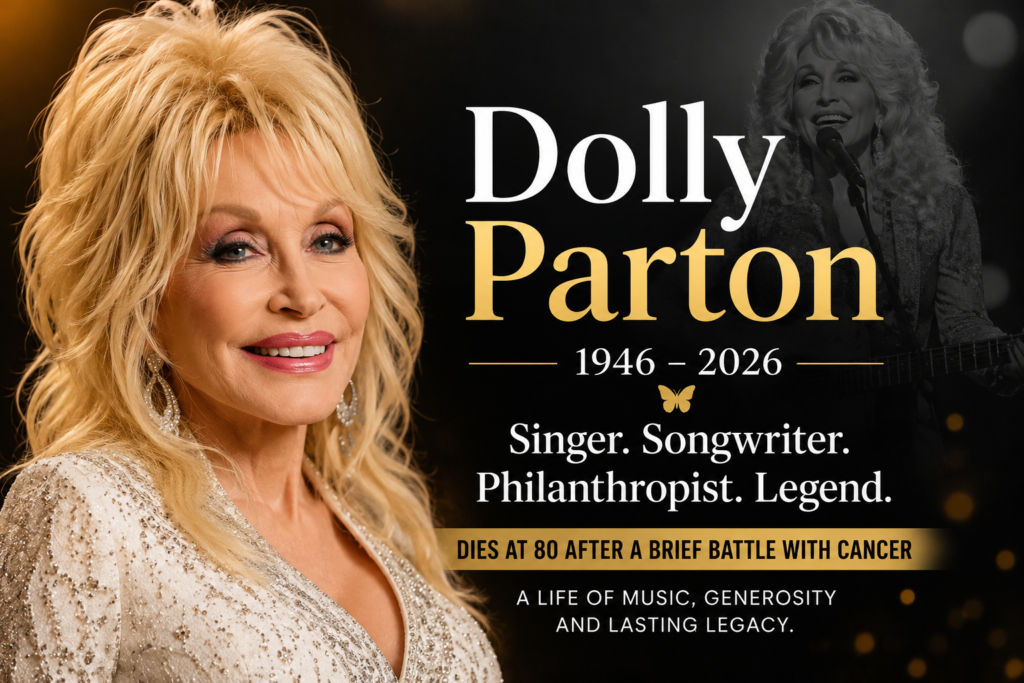
Dolly Parton dies at 80 after a brief battle with cancer

Dolly Parton Dies at 80: Final Act of Generosity, Health, Career and Lasting Legacy

Dolly Parton, the legendary country singer, songwriter and entertainer whose career reached far beyond music, has died at 80. Parton died on August 25, 2026, after what her representatives described as a brief battle with cancer. Her death marked the end of one of the most recognizable careers in American entertainment, but it also brought renewed attention to the generosity, resilience and warmth that defined her public life. For millions of fans, Parton was much more than the voice behind songs such as “Jolene,” “9 to 5” and “I Will Always Love You.” She became an actress, businesswoman, philanthropist and cultural figure whose influence crossed generations. Her work reached country music, Hollywood, theme parks, children’s literacy and medical research. She also maintained a remarkable ability to connect with audiences without losing the personality that made her famous. The circumstances surrounding her final months have now added another dimension to that legacy. In a tribute following her death, her sister Stella Parton revealed that Dolly had been willing to allow doctors to try experimental drugs if there was no hope for her recovery, with the hope that what doctors learned could help other people in the future. That revelation captures something central to the Dolly Parton story. Even while confronting her own mortality, she was reportedly thinking about what her experience might mean for someone else. Dolly Parton, Legendary Singer, Dies at 80 Dolly Parton’s death came after a career that lasted nearly six decades and transformed her from a Tennessee songwriter into an international entertainment icon. Her representatives confirmed that she died at the Vanderbilt-Ingram Cancer Center surrounded by loved ones after a brief battle with cancer. Her family did not initially disclose the specific type of cancer. The announcement came through her family, with nephew Bryan Seaver sharing the news publicly. The tone of the announcement reflected the complicated emotions surrounding the loss: profound sadness for those left behind, alongside pride in a life that had touched an extraordinary number of people. Parton’s achievements were equally extraordinary. She sold more than 100 million records, earned numerous major awards and wrote thousands of songs during a career that included country hits, crossover successes and film performances. Her songs became part of the American musical vocabulary, while her distinctive personality helped her remain relevant long after her earliest recordings. Yet statistics only explain part of Parton’s significance. Her appeal came from the combination of talent and accessibility. She could occupy the biggest stages in entertainment while continuing to present herself as someone who understood ordinary struggles, family ties, hard work and the value of helping others. What Is Confirmed About Dolly Parton’s Death The confirmed information is straightforward: Dolly Parton died on August 25, 2026, at age 80, following a brief battle with cancer. Her representatives confirmed the cancer diagnosis only after her death, meaning much of the public had not known the seriousness of her condition beforehand. That distinction matters because Parton had spoken publicly about health problems in the weeks before her death without revealing the full picture. She had stepped back from some appearances and acknowledged that she was dealing with health issues while continuing to work. Reports about other medical problems circulated around her final days, but they should not be confused with the confirmed cause of death. The cancer diagnosis is the key fact established by her representatives. Her death therefore came as a shock to many fans. Parton had spent decades projecting energy, humor and determination, and she continued discussing work even while facing serious health challenges. Why the News Has Resonated So Widely Parton’s death represents the loss of an unusually broad American cultural figure. She was simultaneously a country singer, songwriter, actress, entrepreneur and philanthropist. Her music reached audiences far outside traditional country circles. Her films introduced her personality to movie audiences, while Dollywood became a major part of her business legacy. Her Imagination Library transformed her name into a symbol of childhood literacy and giving. That breadth helps explain the scale of the reaction. Fans did not simply lose a successful recording artist. They lost a figure whose work appeared in many parts of American life. Her legacy also feels personal to many listeners. Parton’s songs often dealt with love, poverty, family, ambition, heartbreak and perseverance. Those themes helped make her music durable across generations. For that reason, the conversation following her death has quickly moved beyond the circumstances of her passing. The larger question is what Dolly Parton meant to American culture—and why her influence is likely to remain powerful long after her final performance. What Dolly Parton’s Final Health Chapter Revealed Parton’s final health chapter became clearer only after her death. In the days before she died, she had acknowledged that she was dealing with health problems and described herself as still recovering while remaining committed to work. She had also canceled or postponed appearances because of health concerns. Those comments now carry a different weight. At the time, fans could reasonably interpret them as another setback in a long career. The later confirmation of cancer showed that the situation was more serious than many people realized. Parton’s approach also reflected a pattern familiar to those who followed her closely. She often emphasized optimism and work rather than dwelling publicly on personal difficulties. That approach helped protect her privacy, but it also meant that the full extent of her illness remained unknown to much of the public. Her health story cannot be separated completely from the years immediately before her death. Parton had spoken about putting her own well-being aside while caring for her husband, Carl Dean, during his illness. Dean died in March 2025 after nearly six decades of marriage. The combination of caregiving, grief and her own health struggles offers important context for understanding her final years. Her Health Struggles After Caring for Carl Dean Parton previously acknowledged that she had not always taken sufficient care of herself while focusing on Dean. After his death, she faced

Dolly Parton Dies at 80: Final Act of Generosity, Health, Career and Lasting Legacy Read More »

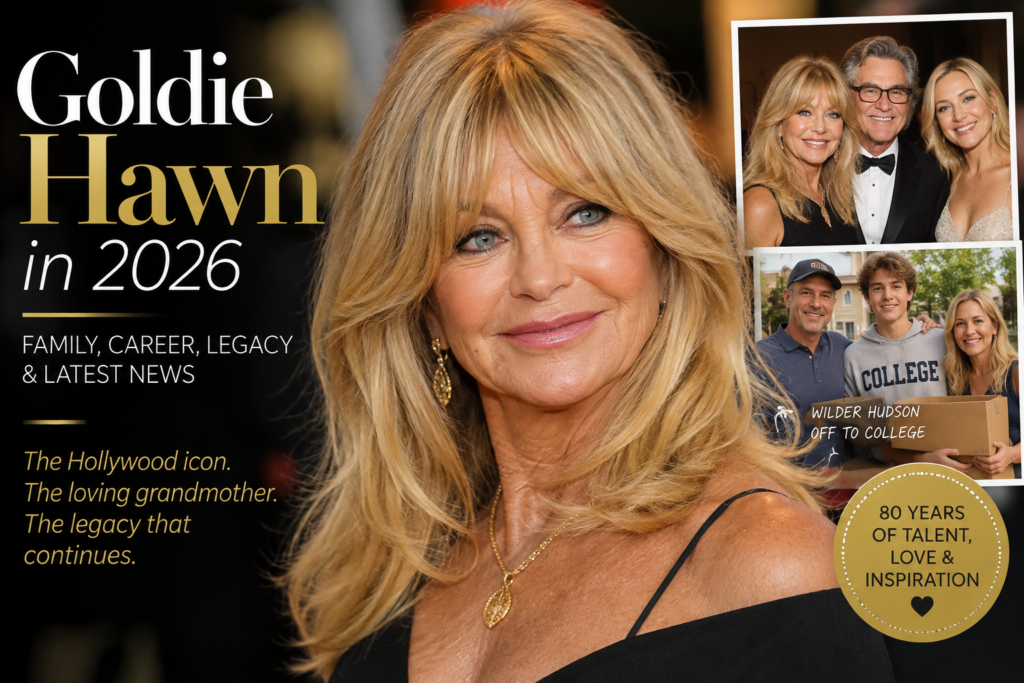
Goldie Hawn in 2026 featuring her Hollywood career, family and legacy

Goldie Hawn in 2026: Family, Career, Legacy & Latest News

Goldie Hawn remains one of Hollywood’s most recognizable names, but in 2026, attention around her family has taken a more personal turn. Her son Oliver Hudson and his wife, Erinn Bartlett, recently experienced a major family milestone when their eldest son, Wilder Hudson, left home for college at 19. The transition brought an emotional reaction from both parents and highlighted how quickly the next generation of the Hawn-Hudson family is growing up. For Hawn, moments like this add another dimension to a career that has already lasted for decades. She is known not only for her Academy Award-winning performances and memorable comedies, but also for her role within a large Hollywood family that includes actors, filmmakers and a new generation growing up under an unusually famous family name. Her relationship with longtime partner Kurt Russell and her close connection with her children and grandchildren have remained important parts of her public story. At the same time, Hawn’s work extends well beyond entertainment. Through the Goldie Hawn Foundation and its MindUP program, she has spent years supporting children’s social and emotional development. That work has become a significant part of her legacy and gives her career a broader meaning beyond the screen. The current family milestone therefore offers a useful way to look at Goldie Hawn in 2026: not simply as a celebrated actress, but as a mother, grandmother, advocate and central figure in a multigenerational Hollywood family. Goldie Hawn in 2026: Why She Is Back in the Spotlight The latest attention surrounding Goldie Hawn comes from a familiar but emotional family experience: a child leaving home for college. Wilder Hudson, the 19-year-old eldest son of Oliver Hudson and Erinn Bartlett, recently moved into college, marking a major transition for the family. Erinn shared her feelings publicly, describing the moment as emotional while also expressing pride and excitement for her son. A Major Milestone for the Hudson Family Wilder is the oldest of Oliver and Erinn’s three children. His younger siblings are Bodhi, 16, and Rio, 13. With Wilder now beginning college, the family is entering a different stage of parenthood. Oliver and Erinn helped him settle into his dorm, turning what could have been a simple move into an emotional family milestone. The moment also carries a broader significance because the Hudson family sits within one of Hollywood’s best-known extended families. Oliver is Goldie Hawn’s son, making Wilder one of Hawn’s grandchildren. As a result, an ordinary rite of passage has drawn attention partly because of the family’s remarkable public history. For readers following Goldie Hawn, however, the story is less about celebrity and more about time passing. Hawn’s children have become parents themselves, and her grandchildren are now reaching adulthood. That shift shows how the actress’s Hollywood legacy has moved naturally into another generation. Where Goldie Hawn Fits Into the Story Goldie Hawn is part of a family whose entertainment history spans multiple generations. Her children include Oliver and Kate Hudson, while her long-term partnership with Kurt Russell also helped shape a blended family that includes Wyatt Russell and Boston Russell. MindUP identifies Hawn as a mother of four grown children and a grandmother, emphasizing the importance of family alongside her professional career. Wilder’s college milestone consequently places Hawn in a familiar family role: watching another generation grow into adulthood. It also helps explain why interest in Goldie Hawn continues even when the news is not centered on a new film or television project. Who Is Goldie Hawn? Goldie Hawn built her reputation through a combination of comedy, charm and screen presence that eventually made her one of Hollywood’s most successful leading actresses. Her career began in entertainment long before the family milestones now attracting attention, and she developed from a television performer into an Oscar-winning film star. Hawn became widely known through the television comedy series Rowan & Martin’s Laugh-In, where her energetic personality and comedic timing helped make her a standout performer. Her success on television opened the door to major film opportunities and allowed her to establish a career that would stretch across several decades. From Television to Hollywood Stardom Her early film work quickly demonstrated that she could move beyond television comedy. In Cactus Flower, Hawn delivered the performance that earned her the Academy Award for Actress in a Supporting Role. That victory established her as a serious film talent while preserving the warmth and humor that had helped make her popular. Hawn continued to build her reputation through films that combined comedy with strong female characters. Her later work included Private Benjamin, for which she received an Academy Award nomination for Actress in a Leading Role. The nomination confirmed that her appeal was not limited to supporting or purely comedic performances. Over time, her filmography expanded across romantic comedies, broad comedy and more unconventional roles. Movies such as Overboard, Death Becomes Her and The First Wives Club became closely associated with her screen persona. Her career ultimately became larger than any single performance. Hawn established herself as an actress who could carry major productions while maintaining a distinctive personality, and that combination helped keep her recognizable across generations. Goldie Hawn’s Hollywood Career and Biggest Achievements Goldie Hawn’s career stands out because she turned a distinctive comedic personality into lasting movie-star power. After gaining national attention on Rowan & Martin’s Laugh-In, she moved into films and quickly proved that her appeal extended beyond television. Her performances combined humor, warmth and a strong sense of individuality, qualities that became central to her screen identity. Her film career included a wide range of projects, from romantic comedies to dramas and ensemble productions. Among her best-known films are There’s a Girl in My Soup, Butterflies Are Free, The Sugarland Express, Foul Play, Private Benjamin, Overboard, Death Becomes Her and The First Wives Club. She later returned to the screen in projects including Snatched and The Christmas Chronicles films. The Academy Award That Changed Her Career Hawn reached an important career milestone with Cactus Flower. Her performance earned

Goldie Hawn in 2026: Family, Career, Legacy & Latest News Read More »

Kehlani hospitalized in 2026 during world tour, with health update and postponed shows

Kehlani Hospitalized in 2026: Health Update, Tour Status, Postponed Shows & What We Know

Kehlani has paused part of their 2026 world tour after a sudden health problem sent them to the hospital. The singer said they woke up in severe pain and could not swallow. Doctors then advised them not to perform at the next two shows. The health scare affected Kehlani’s scheduled performances in Camden, New Jersey, and Columbia, Maryland. Both shows have now moved into the postponed category. Kehlani has not shared a specific diagnosis, so readers should avoid online claims about the cause. The singer also told fans that the tour would continue in Virginia. The Richmond show remains the next major date on the schedule. However, Kehlani’s recovery and medical clearance will determine whether that performance goes ahead. Kehlani Hospitalized After a Sudden Health Problem What Kehlani Told Fans Kehlani shared the health update on August 26, 2026. The singer said they had spent two days away from the stage and felt completely normal. Their condition then changed quickly. Kehlani said they spent the night in severe pain and could not swallow. They went to the hospital for treatment and later told fans that doctors had not cleared them to sing at the next two shows. The announcement came shortly before the Camden and Columbia performances. Kehlani apologized to fans and said the team was working on a solution for those dates. The situation shows how quickly a live tour can change. An artist may feel healthy one day and need medical care the next. Kehlani chose to follow medical advice rather than perform while dealing with severe symptoms. The singer also made it clear that the cancellations did not represent a decision to end the tour. Kehlani said they planned to continue in Virginia after the two affected dates. What Is Known About the Illness Kehlani has not publicly revealed a diagnosis for the current health problem. The confirmed details remain limited to the symptoms, hospital visit and medical restriction on performing. The singer described severe pain and difficulty swallowing. Those symptoms alone cannot identify a specific illness. Therefore, readers should not treat social media theories as medical facts. Some reports may use broad terms such as a vocal illness or throat problem. Those descriptions do not establish a formal diagnosis. Kehlani has not publicly named one. For now, the safest summary is simple. Kehlani experienced a sudden physical problem, sought hospital care and could not perform the next two shows. That information explains the tour disruption. It does not explain the exact medical cause. Why Kehlani Canceled Two Concerts Camden, New Jersey, Show Kehlani had a Camden, New Jersey, performance scheduled for August 26. The concert could not go ahead after the singer’s hospital visit and lack of medical clearance. Kehlani’s announcement named Camden among the two affected stops. The singer also said the team was working on a solution for fans who held tickets. The decision came directly from the health situation. Kehlani had spent the night in severe pain and could not swallow. Doctors then advised the singer not to perform. The show now sits among the postponed dates rather than the normal tour schedule. Fans should wait for official information about a replacement date or ticket instructions. The Camden postponement also shows why artists sometimes need to change a tour plan without much notice. Health can take priority over a fixed performance calendar. For fans, the most important point is the reason behind the change. Kehlani did not postpone the show because of a routine scheduling issue. The singer needed medical care and could not safely perform. Columbia, Maryland, Show The second affected performance was scheduled for August 27 at Merriweather Post Pavilion in Columbia, Maryland. Kehlani grouped the Maryland stop with the Camden date when announcing the cancellations. The same medical restriction applied to both performances. Kehlani had not received clearance to sing after the hospital visit. Ticketmaster currently lists the Columbia event as postponed. The listing does not provide a new performance date at this time. Fans should therefore rely on the artist, promoter and official ticketing channels for future updates. Social media posts can spread quickly, but they may not contain the latest ticket information. The Columbia postponement also does not mean that Kehlani has canceled the entire world tour. Current reporting describes the situation as a pause involving two performances. Kehlani’s Current Health Status Recovery and Medical Clearance Kehlani has indicated that they want to return to the stage after the hospital visit. The singer pointed fans toward Virginia as the next point in the tour schedule. That plan still depends on recovery. Kehlani previously said doctors had not cleared them to sing at the two affected shows. The singer therefore needs appropriate medical clearance before resuming a demanding live performance schedule. A concert requires more than simply appearing on stage. Kehlani must sing for an extended period, travel between cities and maintain enough energy for each performance. The recent symptoms make that decision especially important. Difficulty swallowing and severe pain can interfere with normal performance demands. At this stage, fans know that Kehlani wants to continue the tour. They do not yet have a full medical update from the singer. That difference matters. A planned return does not automatically mean the health issue has completely resolved. What Has Not Been Confirmed Kehlani has not publicly identified the illness behind the hospitalization. The singer has described the symptoms but has not announced a formal diagnosis. That leaves several questions unanswered. Fans may want to know what caused the pain, why swallowing became difficult and whether the problem could affect future performances. However, the available information cannot answer those questions with certainty. Readers should also avoid connecting the current episode to unrelated health information from the past. Kehlani has discussed personal wellness in recent interviews, but those comments do not explain this hospital visit. The same rule applies to social media speculation. Repeated claims do not become confirmed medical information. For now, the confirmed story remains focused on the immediate

Kehlani Hospitalized in 2026: Health Update, Tour Status, Postponed Shows & What We Know Read More »