Entertainment

Explore the latest entertainment news and stories from movies, TV shows, music, pop culture, gaming and celebrity culture. Get fresh updates, insights and original coverage from CLIMAX Magazine every day.

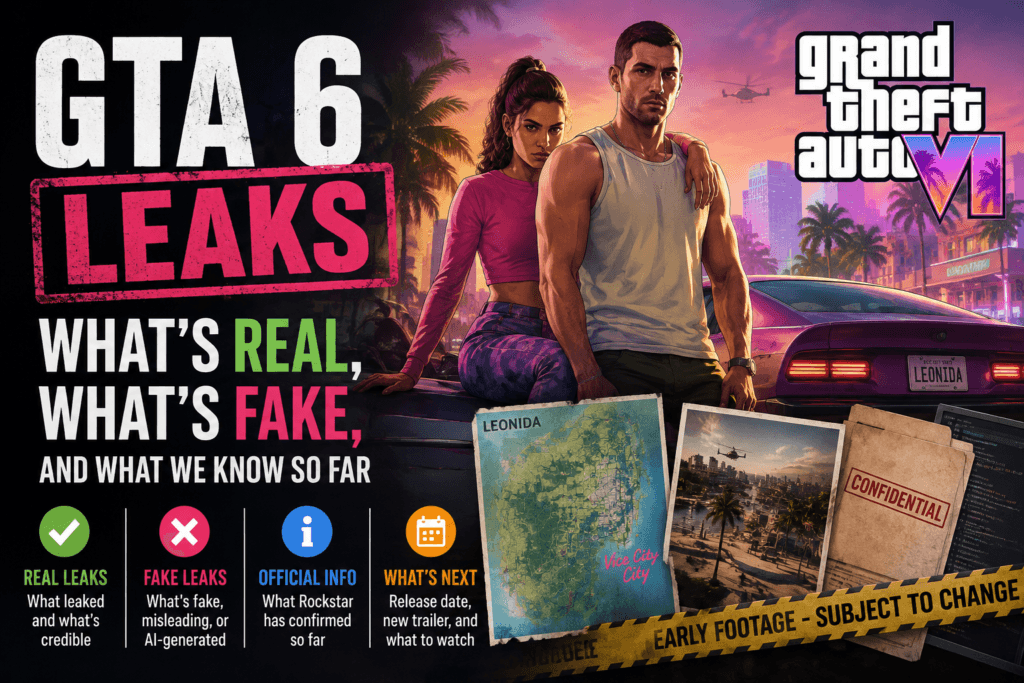
GTA 6 leaks featured image showing Vice City, Jason and Lucia, leaked gameplay imagery, and information about real and fake leaks

GTA 6 Leaks: What’s Real, What’s Fake, and What We Know So Far

GTA 6 leaks have become almost as big a part of the conversation around Grand Theft Auto VI as the official game itself. Years of rumors, leaked development footage, alleged screenshots, anonymous claims, and recycled social-media posts have created a huge amount of information for fans to sort through. The challenge is knowing which material reflects genuine development information and which posts simply turn speculation into headlines. That distinction matters even more now. Rockstar Games has officially confirmed that Grand Theft Auto VI will launch on November 19, 2026, for PlayStation 5 and Xbox Series X|S. The company has also announced an extended look scheduled for August 27, giving fans another official source of information to compare against the many claims circulating online. The current GTA 6 leak discussion therefore needs more than another list of rumors. It needs context. Some information comes from a documented security breach during development, while other claims have little evidence behind them. Understanding that difference can help fans avoid treating an early development build, an anonymous post, or a manipulated screenshot as proof of what the finished game will contain. GTA 6 Leaks Are Still Shaping the Conversation The fascination with GTA 6 leaks comes partly from Rockstar’s unusually controlled marketing strategy. The studio has revealed information gradually, while fans have spent years searching for clues between official trailers and announcements. That environment creates fertile ground for speculation, particularly whenever an image, video, or supposed insider claim appears online. However, not every leak has the same evidentiary value. A genuine development video can demonstrate that a particular feature existed at one point, but it cannot automatically prove that Rockstar kept that feature in the final release. Development builds often contain temporary assets, unfinished systems, debugging tools, placeholder animations, and content that developers later remove. That is why the word “leak” can be misleading. It may describe material obtained through a major security breach, a supposedly new recording from an unknown source, an old clip reposted without context, or simply a rumor presented as fact. For readers following GTA 6 in 2026, the safest approach is to separate three categories: confirmed information, documented leaked material, and unverified claims. Rockstar’s official website remains the strongest source for current release information, characters, setting details, trailers, screenshots, and other announcements. Why GTA 6 Leak Claims Spread So Quickly GTA 6 has an enormous global fan base, so even a vague claim can travel rapidly across X, YouTube, Reddit, TikTok, and gaming forums. A short video can also lose its original context after being reposted several times. Old footage creates another problem. A development clip from years ago may look like new evidence when an account uploads it without the original date. Screenshots face the same issue, especially when users crop out identifying information or combine genuine game assets with fabricated details. Consequently, popularity does not equal reliability. A post with millions of views can still contain an unsupported claim, while a less dramatic report may provide much stronger evidence. What We Actually Know About GTA 6 Unlike many circulating rumors, several major details about Grand Theft Auto VI come directly from Rockstar. The game is set in the fictional state of Leonida and includes a return to Vice City. Rockstar has introduced Jason Duval and Lucia Caminos as the central characters and describes their story as one involving a criminal conspiracy extending across Leonida. Rockstar has also moved the game from its earlier 2025 window to November 19, 2026. The company said the additional development time would allow the team to finish the game with the level of polish it expects. That official timeline provides an important reference point when evaluating leak claims. Any supposed announcement that contradicts the company’s current release information needs strong evidence before it deserves serious attention. Rockstar has also entered the pre-release phase more directly. Pre-orders began in June 2026, while the official GTA VI site now provides access to a growing collection of trailers, videos, screenshots, character material, and artwork. For fans, this creates a useful hierarchy. Official trailers and Rockstar announcements establish what the company is willing to confirm publicly. Leaked development material can offer historical insight into production. Rumors sit below both categories and should remain labeled as uncertain until stronger evidence emerges. GTA 6 Release Date and Official Status As of August 2026, Rockstar’s official release date for GTA 6 is November 19, 2026. The game is listed for PlayStation 5 and Xbox Series X|S, and Rockstar is currently accepting pre-orders. The next major official information drop is also clearly scheduled. Rockstar announced Grand Theft Auto VI: An Extended Look, which will premiere on Netflix on August 27 at 3 p.m. ET and will also appear on the official Rockstar Games YouTube channel and the GTA VI website later that day. That announcement is particularly important for the leak conversation. Instead of relying on anonymous claims about what Rockstar might show, fans will soon have another direct presentation from the developer. Until then, leaked material should be treated according to its evidence rather than its excitement. A genuine leak can reveal something about development history, but it does not automatically override the information Rockstar has officially published. The Major GTA 6 Leak That Changed Everything The modern GTA 6 leak story cannot be understood without the major security breach that exposed development material years before the game’s release. The incident transformed speculation about Rockstar’s next Grand Theft Auto into a much more concrete discussion because unfinished gameplay footage and development information appeared publicly while the game remained deep in production. The material offered fans an unusually early glimpse at the project, but it also created confusion that continues today. Many people encountered footage showing unfinished systems and immediately began treating those elements as predictions of the final game. That approach ignores how much a large game can change during development. The distinction between “this appeared in a leaked build” and “this will be in the finished game” is

GTA 6 Leaks: What’s Real, What’s Fake, and What We Know So Far Read More »
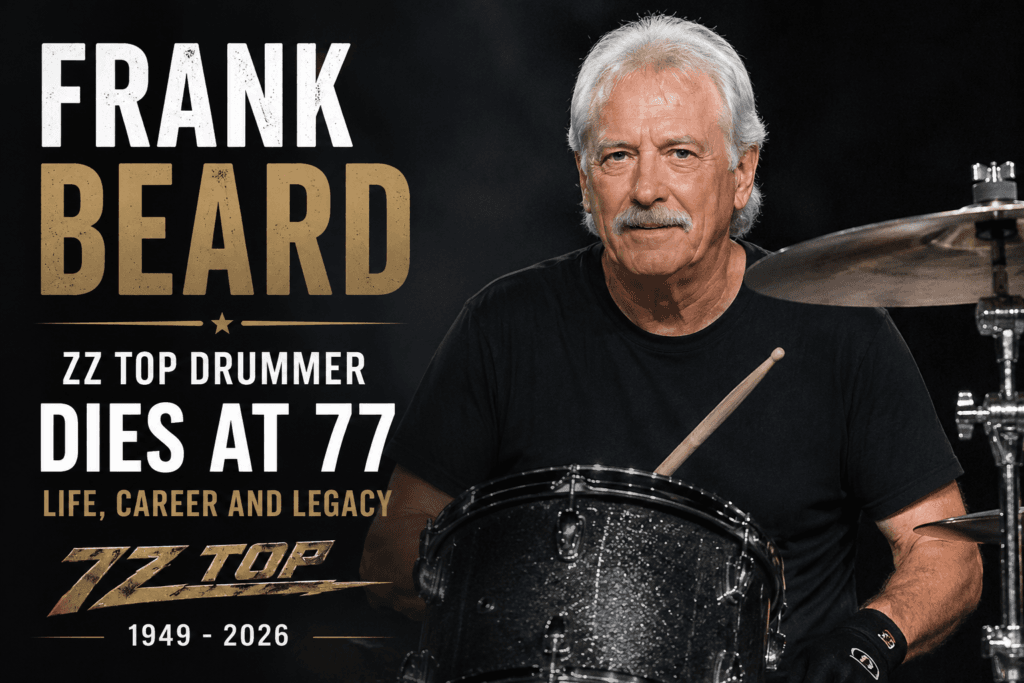
Frank Beard, ZZ Top drummer, pictured at his drum kit following his death at 77

Frank Beard, ZZ Top Drummer, Dies at 77: Life, Career and Legacy

Frank Beard, the longtime drummer whose steady, hard-driving rhythm helped define ZZ Top for more than five decades, has died at 77. Beard died on August 17, 2026, while receiving hospice care at his ranch in Richmond, Texas, with family members by his side. A specific cause of death has not been publicly disclosed. For many fans, Beard represented something essential about ZZ Top. While Billy Gibbons and Dusty Hill became instantly recognizable for their guitars, sunglasses and famously long beards, Beard stood behind the kit and supplied the groove that kept the band moving. His drumming became a crucial part of the Texas blues-rock sound that carried ZZ Top from small venues to international arenas. His death also closes another chapter in the story of one of rock music’s most distinctive lineups. Dusty Hill died in 2021, leaving Gibbons and Beard as the remaining members of the classic trio. Beard’s passing now marks another profound loss for ZZ Top and for generations of listeners who grew up with the band’s blues-heavy riffs and unmistakable rhythms. Frank Beard’s Death and What Is Known About His Final Days Beard’s death followed a period of health difficulties that had increasingly affected his ability to perform. Earlier in 2026, he was absent from ZZ Top’s touring lineup, with Michael Monahan taking over behind the drums. The band had also canceled its August 5 appearance at the Hollywood Bowl because of what it described at the time as unforeseen personnel matters. Reports following Beard’s death connected his recent absence from the road with his health. However, the precise medical circumstances surrounding his death remain undisclosed. That distinction matters because public reports have described health struggles without identifying a confirmed cause of death. ZZ Top confirmed the loss through a statement from Billy Gibbons, who described Beard as both a close friend and collaborator. Gibbons also emphasized the drummer’s musical importance, remembering the signature rhythmic approach that had helped keep the band at the center of rock culture for decades. The immediate impact was also felt on ZZ Top’s tour schedule. Shows in Salt Lake City and Colorado Springs were canceled following Beard’s death, while the band planned to continue its current tour with scheduled performances in Austin. Who Was Frank Beard? Frank Lee Beard was born June 11, 1949, in Frankston, Texas, and grew up in Irving. Long before ZZ Top became a global rock institution, Beard developed his musical career through the Texas club circuit and played in several groups, including the Cellar Dwellers, the Hustlers, the Warlocks and American Blues. His connection with Dusty Hill proved particularly important. The two musicians had already worked together before Beard joined ZZ Top, and Beard eventually helped bring Hill into the orbit of Billy Gibbons. That connection helped establish the three-piece lineup that would become one of the longest-running partnerships in rock history. Beard joined Gibbons in the developing ZZ Top lineup in 1969. Although the band’s earliest personnel changed during its formation, the combination of Gibbons, Hill and Beard quickly became the group’s defining identity. They built their sound around blues, boogie and hard rock, drawing heavily from their Texas roots while developing a style that could work equally well in clubs, on radio and in large arenas. There was also an enduring visual joke surrounding Beard’s name. While Gibbons and Hill became famous for their enormous beards, Beard himself did not wear the facial hair that his surname seemed to promise. Yet his lack of a giant beard never diminished his importance to the band’s identity. Behind the drums, his timing and rhythmic control supplied the foundation for ZZ Top’s sound. How Frank Beard Helped Build ZZ Top’s Signature Sound ZZ Top’s music depended on the chemistry between three musicians rather than on any one instrument. Gibbons supplied the distinctive guitar attack, Hill reinforced the low end and vocal presence, while Beard created the rhythmic framework that allowed the band’s blues-rock riffs to hit with unusual force. That combination helped the group develop a sound that remained recognizable across different eras of rock music. The band’s early records established its Texas blues and boogie foundation. Over time, however, ZZ Top expanded its approach. The group later incorporated more polished production, electronic elements and visual experimentation, particularly during its enormous 1980s breakthrough. Through those changes, Beard remained a consistent rhythmic presence. His contribution is especially significant because great drumming can sometimes disappear behind a band’s most visible personalities. Beard rarely needed the spotlight to make an impact. Instead, his playing gave ZZ Top’s riffs their momentum and helped create the relaxed but forceful groove that became central to the band’s identity. That consistency helped ZZ Top maintain its musical character through decades of changing trends. The band’s ability to move from raw blues-rock to MTV-era arena success without losing its core personality remains one of its greatest achievements, and Beard’s drumming was part of that continuity. ZZ Top’s story also belongs to a wider tradition of musicians whose work continued to shape rock music long after their earliest breakthrough years. That enduring connection between musicianship, history and legacy can also be seen in the story of Bruce Springsteen and Dave Marsh, whose collaboration helped document one of rock’s most influential careers. Frank Beard’s Early Musical Career Before ZZ Top became synonymous with Texas blues-rock, Frank Beard spent years developing his musicianship in regional bands. Born June 11, 1949, in Frankston, Texas, Beard grew up in Irving and became involved in the local music scene while rock and blues were rapidly gaining influence. His early work included groups such as the Cellar Dwellers, the Hustlers and the Warlocks. He later played with American Blues, a band that also featured Dusty Hill. Those experiences gave Beard a strong foundation in the blues-oriented style that would eventually become central to ZZ Top. The partnership between Beard and Hill became especially important. The two musicians had already developed a working relationship before ZZ Top took shape, and

Frank Beard, ZZ Top Drummer, Dies at 77: Life, Career and Legacy Read More »

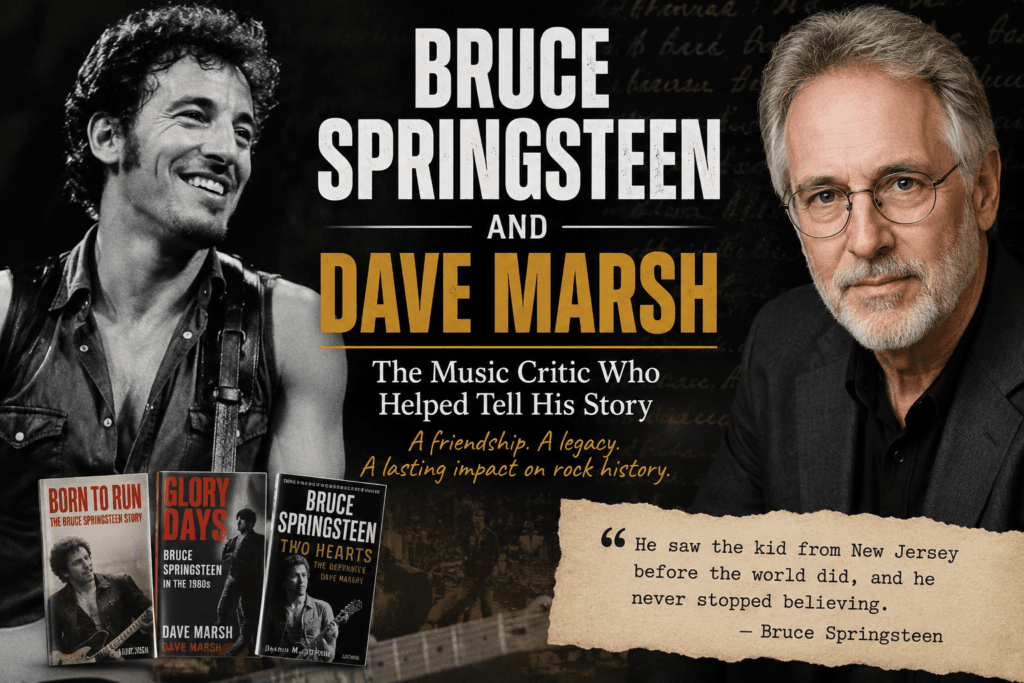
Bruce Springsteen and Dave Marsh featured together in a tribute to their decades-long connection and rock music legacy

Bruce Springsteen and Dave Marsh: The Music Critic Who Helped Tell His Story

The death of Dave Marsh has renewed attention on one of the most important writers ever to document Bruce Springsteen’s career. Marsh, the veteran rock critic and biographer, died August 14, 2026, at his home in Connecticut at age 76. His death brought an immediate response from Springsteen, who remembered Marsh as a longtime friend, fierce supporter and deeply committed rock-and-roll writer. For Springsteen fans, Marsh’s name carries unusual weight. He was not simply a journalist who occasionally covered the New Jersey songwriter. He followed Springsteen’s development from his early years, wrote the first major book about his career, and continued documenting his music across decades. His books Born to Run, Glory Days and Bruce Springsteen: Two Hearts became important reference points for understanding the artist’s rise, his changing public image and the cultural meaning of his music. Marsh’s connection to Springsteen also went beyond books. He championed the singer early in his career, wrote about him for Creem, and published Springsteen’s first Rolling Stone cover story in 1978. He also maintained a close relationship with people in Springsteen’s professional circle, including longtime manager and producer Jon Landau. That closeness helped make Marsh an unusually influential chronicler. At the same time, it made his work more personal and openly opinionated than conventional celebrity biography. His writing often reflected strong convictions about what mattered in rock music and why Springsteen deserved attention. Who Was Dave Marsh? Dave Marsh built a career around a simple but demanding idea: rock music deserved serious criticism. Born in Pontiac, Michigan, in 1950, he entered journalism through Detroit’s music scene and became an early editor of Creem. From there, his work reached major publications, including Rolling Stone, Newsday and The Village Voice. Over a career spanning several decades, he wrote more than 25 books about music and became one of the recognizable voices of American rock criticism. His interests stretched far beyond Springsteen. Marsh wrote about The Who, Elvis Presley, Aretha Franklin and other major artists while also producing books that examined rock history more broadly. His The Heart of Rock & Soul became one of his notable works of criticism, while his writing and broadcasting kept him connected to music audiences long after the peak years of traditional rock magazines. His broader interest in live music and its connection with audiences also reflects the continuing importance of concert culture, as seen in CLIMAX Magazine’s coverage of Daniel Caesar’s Barclays Center performance. Marsh also worked in radio and became closely associated with Springsteen-focused programming on SiriusXM. His later career showed that he had never treated music criticism as a temporary profession. He continued debating records, artists and the culture surrounding them. His style could be forceful, argumentative and intensely subjective. That quality attracted devoted readers but also drew criticism. Marsh did not try to sound detached when he believed an artist mattered. Instead, he wrote with the conviction of someone who considered music a serious cultural force. From Detroit Rock Journalism to National Recognition Marsh’s early years at Creem placed him inside the rapidly developing American rock press. The magazine’s Detroit roots gave him proximity to a scene that valued loud, direct and uncompromising music, while his later work expanded his reach nationally. Springsteen became one of the clearest examples of Marsh’s ability to identify artists he believed deserved greater attention. Long before Springsteen became a global superstar, Marsh wrote enthusiastically about his music. He also helped connect Springsteen with Jon Landau, who would eventually become a central figure in the singer’s career. That early advocacy matters because Marsh was documenting Springsteen while the artist’s story was still unfolding. He was not looking backward from the perspective of an established legend. He was writing while the future remained uncertain. That gave his early work a particular historical value. Marsh saw the potential in Springsteen’s music before the wider mainstream had fully accepted it, and he spent the rest of his career explaining why that music mattered. How Dave Marsh Became Closely Associated With Bruce Springsteen Marsh’s relationship with Bruce Springsteen developed during a crucial period in the singer’s career. Springsteen was building a reputation through relentless live performances and increasingly ambitious songwriting, but his eventual status as one of America’s defining rock artists had not yet become inevitable. Marsh became an early advocate. His writing for Creem helped introduce Springsteen to readers who were paying close attention to emerging rock musicians. In 1978, Marsh also wrote Springsteen’s first Rolling Stone cover story, placing the artist on a major national music publication at an important moment in his rise. The relationship became even more significant because Marsh was connected to people around Springsteen’s career. Reporting on his death has long associated him with Jon Landau’s introduction to Springsteen’s music. According to accounts of their history, Marsh brought Landau to a Springsteen performance in the 1970s, helping create a connection that would become enormously important to the singer’s professional future. Marsh therefore occupied an unusual position. He was a critic, but he was also someone who knew the people involved and had a personal investment in Springsteen’s success. That combination shaped his writing. His books were deeply informed by access and knowledge, yet they also reflected his strong opinions. For readers, that made Marsh’s Springsteen work both valuable and worth examining critically. The Importance of Marsh’s Access to the E Street World Marsh’s proximity to Springsteen’s professional circle gave him access that many outside observers did not have. His connection to Springsteen’s team and longtime relationships within the E Street world helped him place individual songs, performances and career decisions into a broader context. However, access can create complications for a biographer. A writer who knows the subject personally may understand details that outsiders miss, but that same closeness can make complete detachment difficult. That tension followed Marsh’s Springsteen writing. Critics sometimes viewed his admiration for Springsteen as excessive. A 1987 Washington Post review of Glory Days, for example, argued that Marsh’s enthusiasm sometimes overwhelmed his critical

Bruce Springsteen and Dave Marsh: The Music Critic Who Helped Tell His Story Read More »

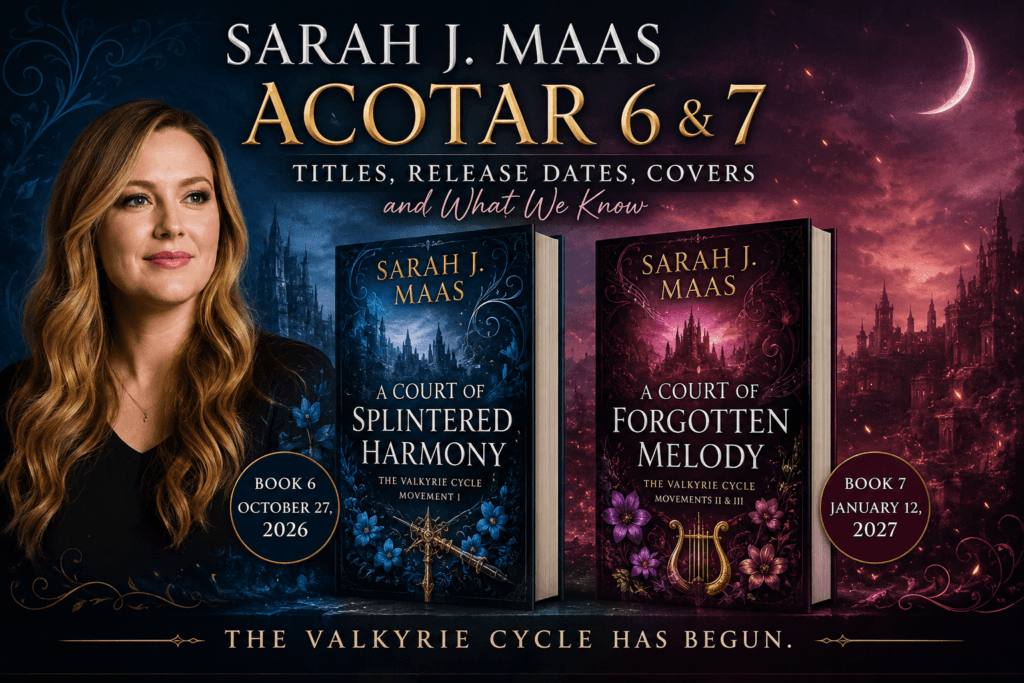
Sarah J. Maas ACOTAR 6 and 7 titles, release dates and covers

Sarah J. Maas: ACOTAR 6 & 7 Titles, Release Dates, Covers and What We Know

Sarah J. Maas has opened the next chapter of A Court of Thorns and Roses with two major book announcements. Fans now know the titles, covers, and release dates for the next two ACOTAR installments. The sixth book is A Court of Splintered Harmony. The seventh is A Court of Forgotten Melody. A Court of Splintered Harmony will arrive on October 27, 2026. A Court of Forgotten Melody will follow on January 12, 2027. Maas has also introduced the books as part of a larger story cycle called the Valkyrie Cycle. The announcement gives ACOTAR readers concrete information after years of anticipation. It also raises new questions about the future of Prythian, the characters who will lead the story, and the threats that remain unresolved. Sarah J. Maas Has Revealed the Next ACOTAR Books The new announcement gives readers much more than a simple confirmation of another ACOTAR sequel. Maas revealed two titles, two covers, and a release schedule for the next stage of the series. A Court of Splintered Harmony will start the new cycle on October 27, 2026. A Court of Forgotten Melody will continue the story on January 12, 2027. The two books will arrive only a few months apart, which creates a closely connected reading experience. The new releases also introduce the Valkyrie Cycle. According to the supplied reporting, Maas developed the story into four movements and plans to publish those movements across three books. The first book covers Movement I. The second covers Movements II and III. A third book will complete Movement IV. That structure makes the new ACOTAR era different from a standard sequel series. Maas treats the material as one larger narrative instead of several unrelated stories. The announcement also creates a clear distinction between confirmed information and fan theories. Readers now know the titles, release dates, and basic structure. However, many character and plot details remain unknown. What Are the New Sarah J. Maas ACOTAR Books Called? The two new titles continue the naming style that readers associate with the ACOTAR franchise. Both begin with “A Court of,” but each title adds a new thematic phrase. A Court of Splintered Harmony A Court of Splintered Harmony is the sixth ACOTAR book. Maas plans to release it on October 27, 2026. It opens the Valkyrie Cycle and covers Movement I of the larger story. The title immediately invites questions about what “splintered harmony” means. The phrase could suggest conflict, division, damaged relationships, or changes within Prythian. However, the title alone cannot confirm any specific plot detail. The available promotional material gives readers a thematic clue without revealing the full story. That approach allows Maas to create anticipation while keeping the major narrative developments private. For now, the most important confirmed detail remains its role in the new cycle. ACOTAR 6 will introduce the next major storyline after the events of the existing books. A Court of Forgotten Melody A Court of Forgotten Melody is the seventh ACOTAR book. It will arrive on January 12, 2027, only a few months after ACOTAR 6. The book covers Movements II and III of the Valkyrie Cycle. The phrase “forgotten melody” creates its own set of questions. It may suggest something lost from Prythian’s history or something that characters must recover. Yet Maas has not publicly explained the exact meaning of the title. The book’s position within the cycle provides a stronger clue. ACOTAR 7 will not simply start another unrelated adventure. Instead, it will continue the larger story that begins with A Court of Splintered Harmony. ACOTAR 6 and 7 Release Dates Readers finally have confirmed dates for both upcoming books. A Court of Splintered Harmony will release on October 27, 2026. A Court of Forgotten Melody will arrive on January 12, 2027. The short gap between the two releases stands out. Readers will wait years for the next chapter, but they will not have to wait long between these two books. That schedule should help maintain the momentum of the Valkyrie Cycle. The publication plan also reflects the unusual size of the story. Maas divided the narrative into four movements and will spread those movements across three physical books. ACOTAR 6 contains the first movement. ACOTAR 7 contains the second and third. A future third book will complete the fourth movement. The third book does not yet have a confirmed title or release date in the supplied material. Readers should therefore avoid treating rumored dates or titles as official information. For anyone planning an ACOTAR reread, the existing five books provide the foundation for the new cycle. Once readers finish that sequence, they can move into A Court of Splintered Harmony in October 2026 and continue with A Court of Forgotten Melody in January 2027. The new schedule gives the series a clear path forward. It also confirms that Maas plans to tell a much larger story rather than deliver only one additional sequel Sarah J. Maas and the Valkyrie Cycle The biggest surprise about the new ACOTAR books involves their structure. Sarah J. Maas is not simply releasing two separate sequels. Instead, A Court of Splintered Harmony and A Court of Forgotten Melody form part of a larger story called the Valkyrie Cycle. The story contains four movements and will eventually span three physical books. The first book, A Court of Splintered Harmony, covers Movement I. A Court of Forgotten Melody covers Movements II and III. A third ACOTAR book will complete Movement IV. Maas has not announced its title or release date yet. This structure gives the upcoming ACOTAR era a different shape. Maas is treating the new material as one large story instead of a series of unrelated adventures. She chose to divide that story into several books so she could preserve its full scope. The Valkyrie name also connects with A Court of Silver Flames. That novel introduced Nesta Archeron, Gwyn Berdara, and Emerie as a close group of female warriors. Their training and friendship made the Valkyrie concept

Sarah J. Maas: ACOTAR 6 & 7 Titles, Release Dates, Covers and What We Know Read More »

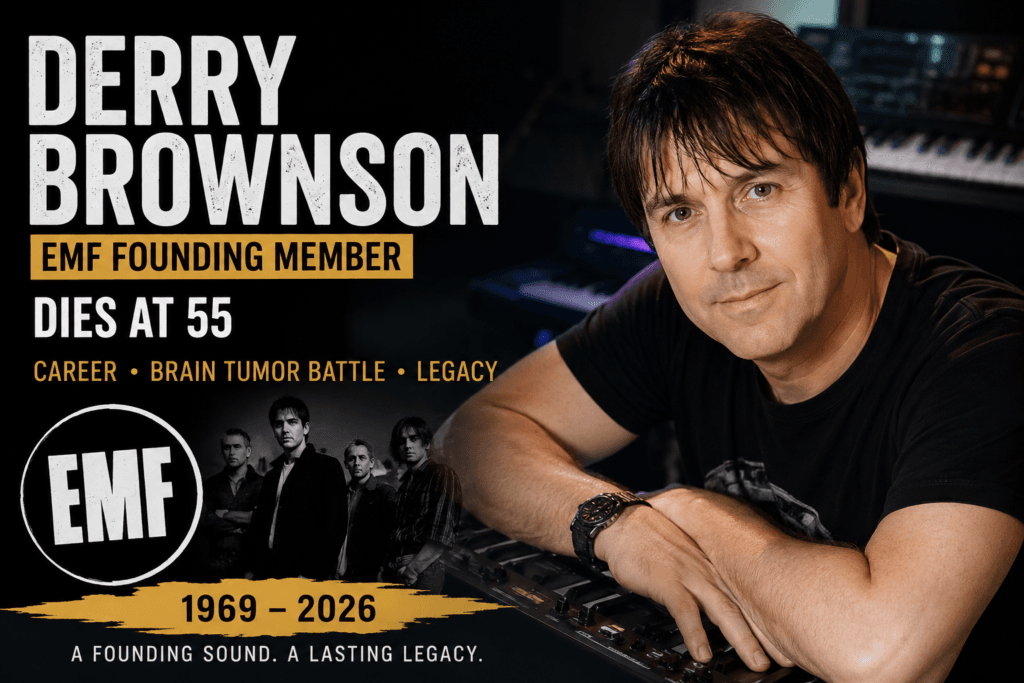
Derry Brownson, EMF founding member and keyboardist, featured in a tribute image

Derry Brownson: EMF Founding Member, Death, Brain Tumor Battle & Legacy

Derry Brownson, the founding member and keyboardist associated with British alternative rock band EMF, died at 55 on August 13, 2026, after a battle with a cancerous brain tumor. His death closes a chapter in the story of a band that helped bring guitar-driven alternative music together with electronic sounds in the early 1990s. Brownson remained connected to EMF long after its initial commercial breakthrough, making his contribution larger than the one song that first introduced the group to millions of listeners. For many American music fans, EMF is inseparable from “Unbelievable,” the explosive 1990 hit that reached No. 1 on the Billboard Hot 100. Brownson, however, was not simply a musician standing behind the band’s biggest record. He helped establish EMF from its earliest days and contributed to the group’s distinctive use of sampling, keyboards and electronic textures. His name also appears among the songwriters credited on “Unbelievable,” alongside the other core members of the original lineup. Brownson’s career therefore offers a broader look at EMF’s rise, its influence on 1990s alternative music and the musicians who built the band before its sudden international success. His later return to the stage also gave fans an opportunity to see him perform with EMF again during the final years of his life. Who Was Derry Brownson? Derran “Derry” Brownson was an English musician best known as a founding member and keyboardist associated with EMF. Born in Cinderford, Gloucestershire, he became part of the group that emerged from the Forest of Dean music scene in 1989. Brownson helped shape the band’s early identity alongside James Atkin, Zac Foley, Mark De Cloedt and other musicians who became central to EMF’s development. His musical role extended beyond traditional keyboard playing. Brownson worked with samples and electronic elements, helping EMF create the energetic combination of alternative rock, dance music and electronic experimentation that distinguished the group from many of its early-1990s peers. That contribution became especially important when EMF broke internationally with “Unbelievable.” Brownson received songwriting credit on the track and performed sampler duties, making him part of the creative foundation behind the band’s signature sound. Although “Unbelievable” eventually overshadowed much of EMF’s other work in the public imagination, Brownson’s connection to the group lasted far beyond that initial success. He remained part of its history through later reunions, recordings and live performances. His death in August 2026 brought renewed attention to the musician behind those electronic textures and to the original EMF lineup that helped define one of the most recognizable alternative hits of the 1990s. Derry Brownson and the Formation of EMF EMF grew out of the music community around Cinderford and the Forest of Dean in Gloucestershire. The group formed in 1989, bringing together musicians with different influences and a shared interest in creating something that did not fit neatly into one genre. Brownson was part of the band’s earliest creative group. Before EMF took shape, he had already been involved in local music, while bassist Zac Foley and other future members were also active around the same scene. James Atkin, Mark De Cloedt and DJ Milf became part of the developing lineup, with guitarist Ian Dench joining later and adding further songwriting experience. The group initially had little reason to expect worldwide success. Instead, the members experimented with different sounds and ideas while developing songs in their hometown. Their music drew from indie rock, dance music, electronic sounds and the energy of club culture. That combination eventually became one of EMF’s defining characteristics. Brownson’s presence was particularly valuable because he helped bring electronic elements into a lineup otherwise built around the familiar rock combination of vocals, guitar, bass and drums. His work with samples gave the band another layer of sound and helped separate EMF from more conventional guitar bands. Within a remarkably short period, the local group moved from small-scale performances to a recording deal and international attention. That rapid transformation became the beginning of EMF’s extraordinary early-1990s run. Derry Brownson’s Role in EMF’s Sound Brownson’s role in EMF becomes clearer when the band’s music is viewed as more than straightforward alternative rock. The group combined guitars, live drums and bass with samples, keyboards, rhythmic programming and dance-oriented influences. Brownson helped supply much of that electronic character. On “Unbelievable,” Brownson is credited as a sampler performer and songwriter. The track combines a forceful guitar part, infectious rhythm, electronic textures and memorable vocals. His contribution helped make the song sound different from a conventional rock single. EMF’s electronic approach also placed Brownson within a wider musical tradition that blurred the boundaries between rock, alternative music and electronic production. This crossover later became important to artists such as Kavinsky, whose work offers another example of these genres influencing one another. That distinction mattered because EMF arrived when genre boundaries were becoming increasingly flexible. British alternative acts could draw from house, techno, hip-hop and indie rock without treating those influences as separate worlds. EMF embraced that crossover rather than choosing one musical lane. Brownson therefore occupied an important creative position within the group. He helped turn experimental ideas into a sound capable of reaching mainstream audiences. His songwriting credit on “Unbelievable” further places him within the creative core of EMF rather than simply identifying him as a supporting musician. The band’s success showed how effectively its members could combine different influences. EMF’s “Unbelievable” and the Rise to Global Fame How “Unbelievable” Changed EMF’s Career “Unbelievable” transformed EMF from a young British band into an international act. The song emerged from the group’s early period and became the centerpiece of its breakthrough, eventually reaching No. 1 on the U.S. Billboard Hot 100. The record stood out because it did not sound like a conventional rock song. Its guitar-driven foundation sat alongside dance-oriented rhythms, electronic production and samples. That unusual combination helped it cross between alternative radio, mainstream pop audiences and the emerging crossover culture of the early 1990s. Brownson played a direct role in that sound. He was credited with sampler work on

Derry Brownson: EMF Founding Member, Death, Brain Tumor Battle & Legacy Read More »

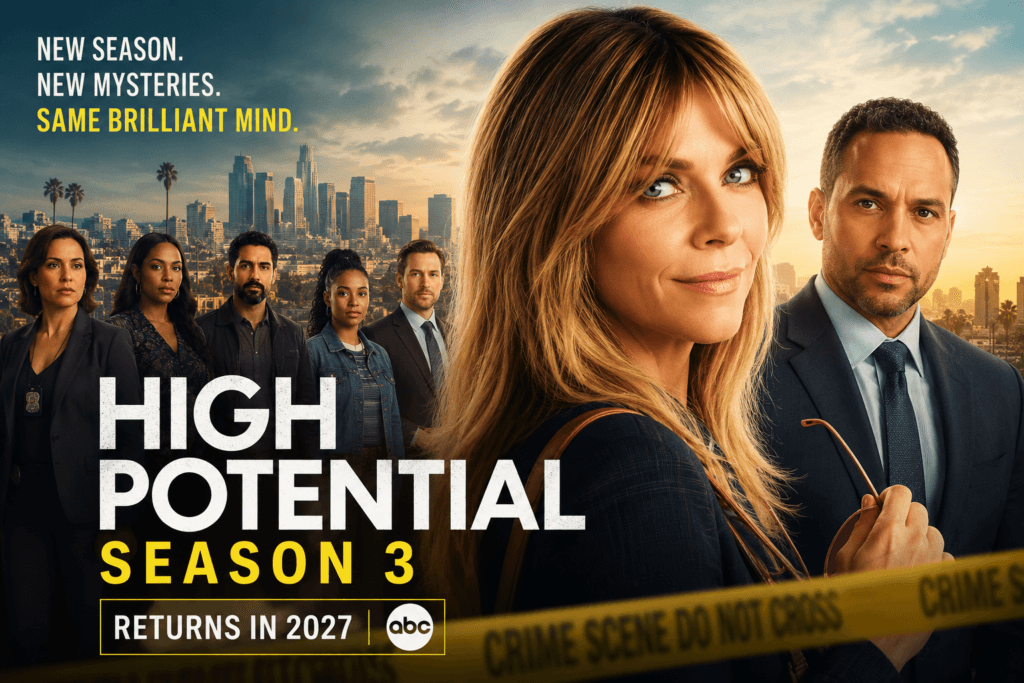
High Potential Season 3 promotional image featuring Kaitlin Olson and the returning cast

High Potential Season 3: Release Date, Cast, Story & Everything We Know

High Potential Season 3 is officially happening, but fans will have to wait until 2027 to see Morgan Gillory back at work. ABC has renewed the Kaitlin Olson-led crime drama and placed its third season on the network’s 2027 schedule. However, ABC has not announced an exact premiere date yet. The wait should not signal trouble for the series. Instead, ABC has moved High Potential to its midseason lineup, a scheduling approach the network has used for returning dramas that it wants to run with fewer interruptions. The change means viewers will not see Season 3 during ABC’s fall 2026 lineup, but the series remains firmly part of the network’s plans. There is also encouraging news behind the scenes. Production has moved forward, with Daniel Sunjata sharing an update about the cast’s first Season 3 table read in August. Kaitlin Olson has also begun filming, confirming that the new season has progressed beyond early development. At the same time, Season 3 will introduce an important creative change. Nora and Lilla Zuckerman are taking over as showrunners and executive producers after Todd Harthan’s departure. The sisters previously served as showrunners on the first season of Poker Face, giving the new season a creative team with experience in character-driven mysteries. High Potential Season 3: What We Know So Far The biggest confirmed news is simple: High Potential has a third season. ABC renewed the series in March 2026, shortly before Season 2 concluded. The renewal gives Morgan Gillory’s story another chapter while leaving plenty of room for the show’s central mysteries to develop. Season 3 will continue to center on Morgan, the unusually perceptive crime-solving consultant played by Kaitlin Olson. Her ability to notice connections that others miss remains one of the show’s defining strengths. Daniel Sunjata is also expected to remain an important part of the series as Detective Adam Karadec, whose partnership with Morgan has become one of the drama’s most closely followed relationships. The new season also arrives after several major developments in Season 2. Morgan’s complicated personal history remains important, while the finale left viewers with questions involving Roman and Nick Wagner. Steve Howey, who played Wagner, will not return as a series regular for Season 3, although reports indicate that a guest appearance could still happen to address his storyline. For now, ABC has confirmed the 2027 return but has not provided a specific premiere date. That leaves the exact launch day, episode schedule and several casting details open for future announcements. High Potential Season 3 Release Date ABC has confirmed that High Potential Season 3 will premiere in 2027, but the network has not announced the exact date. More specifically, the season is planned for ABC’s midseason 2027 lineup. That timing represents a change from the show’s earlier scheduling pattern. Season 2 finished in April 2026, and many viewers expected the series to return during the fall television season. Instead, ABC left High Potential off its fall 2026 primetime schedule and moved its third season to the following year’s midseason lineup. ABC’s scheduling strategy offers some context. Network executives have said they want certain returning shows to air with fewer interruptions, pointing to the success of other dramas that returned during midseason. The delay therefore does not mean ABC canceled, paused or lost confidence in the series. The network has already committed to another season and continues to include High Potential among its returning programs. For viewers tracking other major returning crime and action series, our Reacher Season 4 coverage also follows its release plans, cast developments and story updates. For viewers, the main takeaway is straightforward: Season 3 is coming, but not in fall 2026. Until ABC announces the official premiere date, claims about a specific day should be treated as unconfirmed. Why Is High Potential Season 3 Delayed? The move to 2027 appears to be primarily a scheduling decision rather than a production problem. ABC’s fall 2026 lineup places other programming in the show’s former schedule, while High Potential joins several returning series planned for 2027. ABC has specifically described its midseason strategy as a way to give returning shows more consistent runs. That approach can help a serialized or character-driven drama maintain momentum instead of facing repeated breaks during a traditional fall season. The timing also gives the production team additional room to prepare the new season under its incoming showrunners, Nora and Lilla Zuckerman. At the same time, recent production updates show that work on Season 3 is already moving ahead. So while the wait may feel long for fans, the available information points toward a planned 2027 return rather than an uncertain future for the series. High Potential Season 3 Cast The High Potential Season 3 cast will continue to revolve around Kaitlin Olson as Morgan Gillory, the brilliant crime-solving consultant whose unusual way of seeing patterns drives the series. Daniel Sunjata is also returning as Detective Adam Karadec, Morgan’s partner in the LAPD’s Major Crimes division. Their professional partnership remains one of the show’s central relationships, while Season 2 added even more personal tension between them. The returning ensemble also includes Judy Reyes as Lieutenant Selena Soto, Javicia Leslie as Daphne Forrester, Deniz Akdeniz as Lev “Oz” Özdil, Matthew Lamb as Elliot Radovic and Amirah J as Ava Sinquerra. ABC’s official cast listing continues to identify these performers with their respective characters. Taran Killam, who plays Ludo Radovic, is also expected to remain part of the ensemble. However, not every Season 3 appearance has received the same level of formal confirmation, so it is important to distinguish established returning stars from characters whose involvement could depend on the story. The larger cast picture should become clearer as ABC releases additional Season 3 details. For now, Morgan and Karadec remain the two most important pieces of the returning lineup, while the supporting Major Crimes team gives the show its familiar workplace dynamic. That balance should matter in Season 3. The series can continue its weekly murder investigations while also developing

High Potential Season 3: Release Date, Cast, Story & Everything We Know Read More »

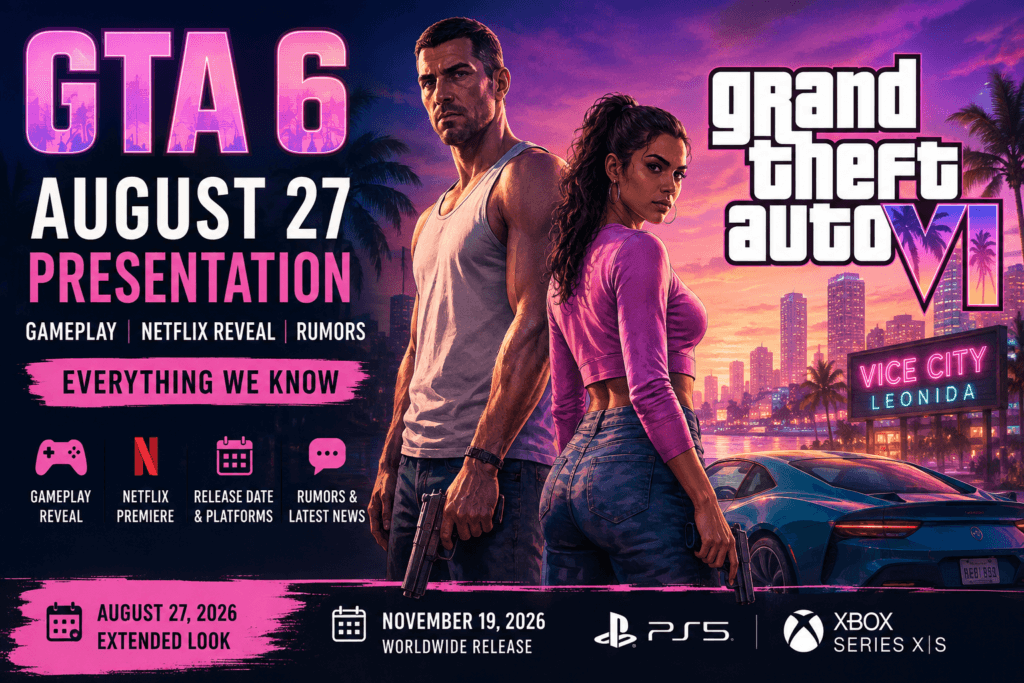
GTA 6 August 27 presentation featuring Jason and Lucia in Vice City

GTA 6 August 27 Presentation: Gameplay, Netflix Reveal, Rumors and Everything We Know

The wait for GTA 6 is entering one of its most important stages. Rockstar Games has announced an Extended Look for August 27, 2026, giving fans another major glimpse at the long-awaited sequel. The timing is significant because the game is currently scheduled to launch on November 19, 2026, for PlayStation 5 and Xbox Series X|S. Until now, Rockstar has revealed GTA 6 through carefully selected trailers, screenshots, character material, and promotional updates. Those releases introduced Jason and Lucia, brought players back to Vice City, and expanded the setting into the fictional state of Leonida. However, many questions about the actual gameplay experience remain unanswered. Players want to know how missions work, how vehicles handle, how police respond, and how active the world feels during ordinary exploration. The upcoming presentation could provide the clearest answers yet. At the same time, the event has generated plenty of speculation. Netflix’s early premiere, possible presentation length, rumored episode listings, and fan theories have all become part of the conversation. Separating confirmed information from online speculation will therefore be important as August 27 approaches. GTA 6 August 27 Presentation: What Rockstar Confirmed Rockstar has officially announced Grand Theft Auto VI: An Extended Look for August 27, 2026. The presentation will first appear on Netflix before reaching Rockstar’s official YouTube channel and GTA VI website later the same day. Rockstar’s decision to give the presentation a dedicated premiere also shows how major gaming reveals are increasingly becoming large-scale entertainment events. That broader shift can be seen across other major entertainment experiences, where presentation and audience engagement have become almost as important as the event itself. The announcement gives players a firm date to watch, but Rockstar has not revealed a complete breakdown of the footage. The confirmed details Several important points are already established: The Extended Look arrives on August 27, 2026. Netflix receives the first showing at 3 p.m. ET. Rockstar’s YouTube channel and GTA VI website receive it at 9 p.m. ET. GTA 6 is scheduled for November 19, 2026. PlayStation 5 and Xbox Series X|S are the confirmed launch platforms. The exact runtime remains unknown. Rockstar has also not confirmed which missions, characters, locations, or gameplay systems will appear. That distinction matters because GTA 6 speculation is already moving faster than official announcements. Why the GTA 6 August 27 Presentation Matters Another cinematic trailer would certainly create excitement, but fans are now looking for something different. Rockstar has already established the game’s visual style and introduced its central characters. The next major question concerns the experience behind those images. From cinematic footage to real gameplay A trailer can show a dramatic chase or crowded nightclub. Gameplay can reveal what happens before and after those moments. That difference is crucial. Players want to see how Jason and Lucia move through Leonida, how vehicles respond to the environment, and whether pedestrians and traffic continue behaving naturally during major events. Mission design is another major area of interest. A short gameplay sequence could demonstrate several systems simultaneously, including movement, driving, combat, dialogue, artificial intelligence, and police responses. The presentation does not need to reveal everything. Instead, Rockstar needs to show enough uninterrupted gameplay for viewers to understand why GTA 6 represents a major evolution of the series. GTA 6 Netflix Premiere Explained Netflix is receiving the first showing of the Extended Look, creating an unusual partnership for one of gaming’s biggest upcoming releases. The presentation will premiere for Netflix subscribers at 3 p.m. ET on August 27. Six hours later, Rockstar will release it through its own official channels at 9 p.m. ET. Do you need Netflix to watch GTA 6? A Netflix subscription is not necessary for the later Rockstar release. Fans who want the earliest access can watch through Netflix. Everyone else can wait for the official YouTube or GTA VI website release that evening. The six-hour difference could still become important because GTA 6 discussions are likely to explode as soon as the first footage appears. Screenshots, reactions, gameplay observations, and theories could spread across social media before the wider Rockstar release. For most viewers, however, the partnership is mainly about timing rather than permanent exclusivity. Why Rockstar Chose Netflix for the Early Reveal The Netflix collaboration also has a broader marketing purpose. GTA is already one of the biggest names in entertainment, but not everyone who recognizes the franchise follows gaming news closely. Netflix gives Rockstar access to a mainstream entertainment audience that extends beyond traditional gaming platforms. A wider audience for GTA 6 The partnership also fits the relationship between the two companies. Netflix previously worked with Rockstar to bring the classic GTA trilogy to mobile subscribers. Now the companies are taking that relationship into a much larger promotional event. For Rockstar, the strategy can create another layer of attention before launch. Meanwhile, Netflix gets to host an exclusive first window for one of the most anticipated game reveals of the year. That combination makes the August presentation unusual. Nevertheless, the later Rockstar release means fans do not have to rely on Netflix permanently to access the footage. GTA 6 August 27 Presentation: What Could Be Shown? Rockstar has not published a detailed content list for the Extended Look. Therefore, predictions about specific scenes should remain predictions. Gameplay is the most obvious possibility. Areas fans are likely to watch Viewers will probably pay close attention to: Jason and Lucia during active gameplay. Vehicle handling and traffic. Combat and movement. Police encounters. NPC behavior. Mission structure. Leonida’s different regions. Environmental interaction. A single mission could demonstrate several of these systems at once. For example, Rockstar could show the protagonists preparing for a criminal job, traveling through Vice City, dealing with an unexpected problem, and escaping afterward. Such a sequence would provide much more information than a collection of short cinematic shots. However, the studio may choose a different approach. It could combine gameplay clips with story scenes or focus on several smaller demonstrations. Until the presentation airs, the exact format

GTA 6 August 27 Presentation: Gameplay, Netflix Reveal, Rumors and Everything We Know Read More »

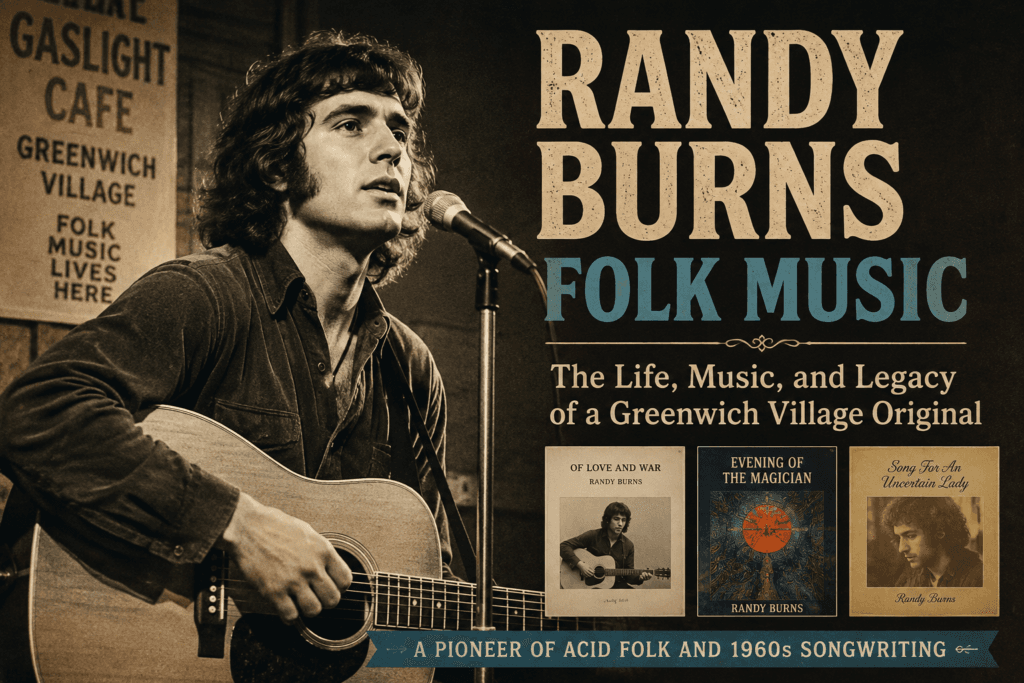
Randy Burns performing folk music with an acoustic guitar in Greenwich Village

Randy Burns: Folk Singer-Songwriter, Music, Career & Lasting Legacy

Randy Burns was an important voice in American folk music and a distinctive singer-songwriter whose career connected the Greenwich Village folk scene of the 1960s with the more experimental sounds that followed. He never became a household name like Bob Dylan or Joan Baez, yet his work offers a fascinating look at a period when American music was rapidly changing. Burns died on August 8, 2026, at age 78 in Melbourne, Florida. Recent reporting remembered him as an important figure in the 1960s folk revival and a longtime presence in Connecticut’s music community. His musical journey began in Connecticut before taking him to New York City’s Greenwich Village. There, he performed at influential folk venues and became part of a creative community that helped shape the evolving American singer-songwriter tradition. What makes randy burns folk music especially interesting is the way his sound developed. He began with a direct acoustic approach but gradually moved beyond traditional folk. His recordings incorporated folk-rock and psychedelic influences while retaining the personal character of his songwriting. During the 1960s, folk performers increasingly experimented with electric instruments, unconventional arrangements, rock influences, and more personal forms of songwriting. Burns participated in that transformation while maintaining the intimacy associated with folk music. His catalog therefore offers more than a collection of recordings for dedicated collectors. It provides a window into an era when American music was breaking down traditional genre boundaries and giving singer-songwriters new ways to express themselves. Randy Burns’ Early Life and Musical Beginnings Burns was born in Manchester, Connecticut, in 1948. According to recent reporting, he began teaching himself guitar at around 14 and was performing publicly only a few years later. His early performances took place at New Haven’s Exit Coffeehouse, a setting that helped introduce him to the local folk community. The coffeehouse circuit played an important role in the development of many young folk musicians. Unlike a large concert hall, a coffeehouse placed the performer close to the audience. A singer could perform an original song, hear the immediate response, change the arrangement, and return with a stronger version later. For a developing songwriter, that environment could be as valuable as formal musical training. Burns soon realized that New Haven alone would not provide the opportunities he wanted. In 1966, he left high school and headed for New York City. He arrived in Greenwich Village with little more than his guitar and an ambition to become a working musician. Accounts of his early period describe difficult living conditions, including inexpensive lodging and nights spent wherever he could find a place. However, the struggle came with an important advantage: access to one of America’s most active folk communities. For Burns, the Village became both a workplace and a musical education. He was surrounded by performers who treated songwriting as a serious craft. That environment helped shape the artistic identity that would later appear on his recordings. Randy Burns Folk Music and the Greenwich Village Scene Greenwich Village gave Burns the opportunity to develop his career at a remarkable moment in American music. During the 1960s, venues such as Gerdes Folk City, the Gaslight Café, and the Bitter End became important gathering places for singers, songwriters, musicians, and audiences searching for something outside mainstream pop. Burns performed at these venues during his early New York years. His regular appearances at the Gaslight were especially significant. The venue placed him alongside established performers from the folk scene, including figures such as Dave Van Ronk, Phil Ochs, Eric Andersen, and Sonny Terry & Brownie McGhee. That kind of exposure could change a young musician’s career. Burns was not simply watching the folk revival from the audience. He was participating in it, learning how professional performers constructed sets, introduced songs, handled audiences, and developed a recognizable artistic voice. The Village also exposed him to different approaches to songwriting. Traditional folk material remained important, but original compositions were becoming increasingly central to the scene. Artists were writing about relationships, politics, loneliness, identity, social change, and everyday life. Burns developed within that environment. His early work retained the stripped-down qualities associated with acoustic folk, but his later recordings showed that he was willing to experiment with broader arrangements. This makes the Greenwich Village period essential to understanding randy burns folk music. It was the foundation from which the rest of his musical career grew. From Acoustic Performer to Recording Artist Burns’ transition from local performer to recording artist came during the second half of the 1960s. His association with ESP-Disk became particularly important. The label had developed a reputation for releasing unconventional music, and its catalog crossed boundaries between folk, experimental music, jazz, rock, and psychedelic sounds. Burns’ first recordings for the label captured the acoustic side of his songwriting. His early album Of Love and War belongs to the formative stage of his recording career, before his arrangements became more expansive. The significance of these recordings goes beyond their individual songs. They document a musician working at the point where the traditional folk revival was beginning to collide with a rapidly changing rock culture. Burns was therefore positioned between two musical worlds. On one side stood the intimate coffeehouse performer with a guitar and a collection of original songs. On the other was the increasingly adventurous studio environment of the late 1960s. His later work would move further toward that second world. The change was gradual rather than sudden. Burns did not simply abandon acoustic folk for rock. Instead, he expanded the musical environment around his songwriting. That approach would become clearer when he began working with the Sky Dog Band. The result was a body of work that is now often discussed in connection with folk-rock and acid folk, although those labels only partly explain what makes his recordings distinctive. Randy Burns and the Sky Dog Band The Sky Dog Band represented an important change in Burns’ musical direction. Instead of relying primarily on the sparse instrumentation of a solo folk performance, Burns could now

Randy Burns: Folk Singer-Songwriter, Music, Career & Lasting Legacy Read More »

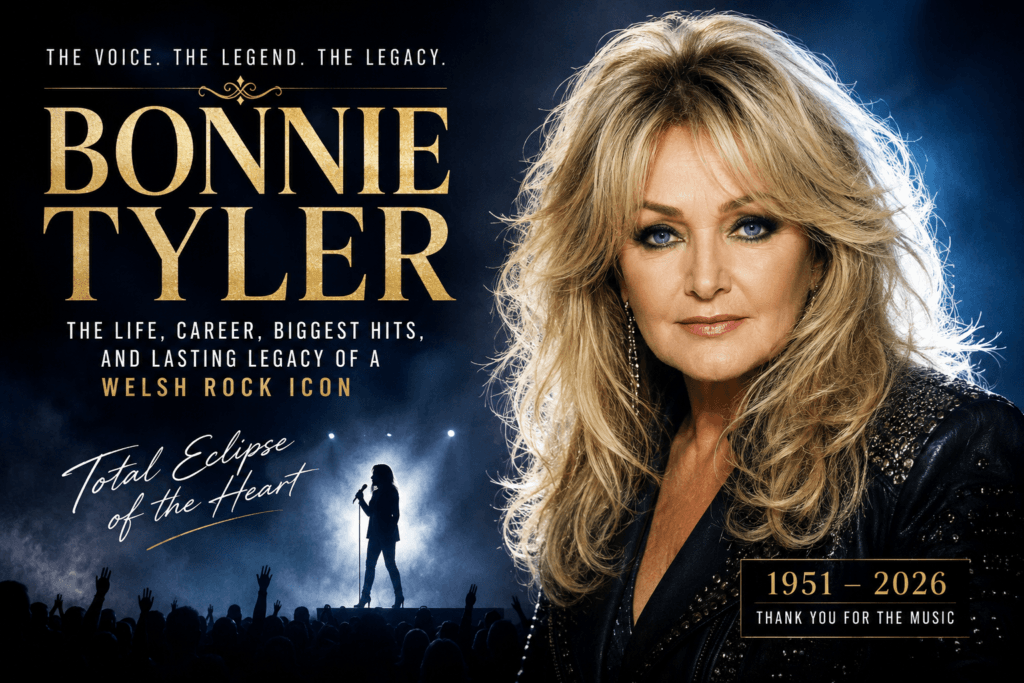
Bonnie Tyler portrait celebrating her life, career, biggest hits, and lasting musical legacy

Bonnie Tyler: The Life, Career, Biggest Hits, and Lasting Legacy of a Welsh Rock Icon

Few singers have a voice that audiences can recognize within seconds. Bonnie Tyler was one of those rare artists. Her unmistakable raspy delivery became one of pop-rock’s most distinctive sounds, helping her build a career that lasted for more than five decades. For many listeners, Tyler is forever connected with “Total Eclipse of the Heart.” However, her career goes far beyond one iconic song. Before becoming an international star, she performed around the clubs of South Wales, where she developed the powerful vocal style that would later define her recordings. Her breakthrough came with “Lost in France,” followed by the worldwide success of “It’s a Heartache.” Tyler reached another level in the 1980s through her creative partnership with songwriter and producer Jim Steinman. Together, they created “Total Eclipse of the Heart,” while Tyler also delivered another enduring anthem with “Holding Out for a Hero.” Her career continued well beyond that decade. She released new music, toured internationally, represented the United Kingdom at Eurovision, and remained closely connected to her Welsh roots. In July 2026, Tyler died at 75 while receiving treatment in Portugal. Her passing closed an extraordinary musical journey, but her songs continue to introduce her unmistakable voice to new generations. Bonnie Tyler’s Early Life and Welsh Roots Growing Up as Gaynor Hopkins Bonnie Tyler was born Gaynor Hopkins on June 8, 1951, in Skewen, Neath, Wales. Long before international fame, she grew up in South Wales and developed a strong connection to music. Her early path was far removed from the polished world of international pop. She performed around Welsh clubs, gaining experience in front of live audiences before the recording industry opened its doors to her. According to the Official Charts Company, Tyler’s career on the Welsh club circuit eventually led to her being noticed by a talent scout in 1975. That period helped shape an important part of her identity as a performer. Tyler did not begin with the carefully manufactured image of a major pop star. Instead, she learned how to hold an audience through live singing. From Local Singer to Recording Artist A move toward London and professional recording followed. Tyler initially recorded demos before being signed by RCA Records, releasing her debut single “My! My! Honeycomb” in 1976. Her next major breakthrough, “Lost in France,” changed the trajectory of her career. The contrast between her quiet beginnings and later international fame became an important part of her story. Tyler’s autobiography later revisited this journey, describing how a music-loving teenager from South Wales eventually became a worldwide star. Her Welsh background remained central to her identity even after she became famous around the world. Bonnie Tyler’s First Major Breakthrough The Success of “Lost in France” “Lost in France” gave Bonnie Tyler her first major taste of mainstream success. Released in 1976, the song moved her beyond the Welsh club circuit and introduced her distinctive voice to a much wider audience. The track was written by Ronnie Scott and Steve Wolfe, with production by David Mackay, who would become an important figure in Tyler’s early recording career. The song mattered because it demonstrated that Tyler’s unusual vocal character could work on commercial radio. Her voice was not smooth in the conventional pop sense. It had texture, grit, and a slightly weathered quality that immediately separated her from many singers of the period. That difference became an advantage. How “It’s a Heartache” Changed Everything Tyler followed “Lost in France” with “It’s a Heartache,” another Scott and Wolfe composition. The song became an international hit and established her as a major recording artist rather than a promising newcomer. However, Tyler’s early success did not immediately translate into album dominance. Her official biography notes that her first four albums failed to enter the UK album chart. That makes the scale of her later breakthrough even more striking. She had already proven that she could deliver hit singles. What remained was finding the musical partnership that would transform her career. That partnership arrived with Jim Steinman. Bonnie Tyler and Jim Steinman A Creative Partnership With a Bigger Sound The collaboration between Bonnie Tyler and Jim Steinman became one of the most important creative relationships of her career. Steinman favored enormous arrangements, dramatic songwriting, theatrical emotion, and productions that rarely sounded restrained. Tyler’s naturally raspy voice provided the perfect contrast to that grand musical approach. Instead of hiding the roughness in her voice, the productions made it central. Their partnership became especially important during the recording of Faster Than the Speed of Night. Released in 1983, the album represented a dramatic shift in scale for Tyler. Her official site describes the project as the record that changed everything for her career. Why Their Sound Worked The pairing made sense because both artists embraced emotional extremes. Steinman’s compositions often built toward huge musical climaxes. Tyler, meanwhile, could deliver those moments with a voice that sounded vulnerable and powerful at the same time. The result was a style that felt bigger than conventional pop. That approach also helped Tyler enter the emerging 1980s music-video era with a stronger visual and musical identity. Instead of being remembered simply as the singer of “It’s a Heartache,” she was becoming associated with theatrical rock-pop on a much larger scale. Then came the song that permanently changed her place in music history. Bonnie Tyler and “Total Eclipse of the Heart” The Song That Defined Her Career “Total Eclipse of the Heart” became the defining recording of Bonnie Tyler’s career. Written and produced by Jim Steinman, the song appeared on Faster Than the Speed of Night in 1983. Its enormous arrangement, dramatic vocal performance, and emotionally intense structure made it unlike most conventional pop ballads of its period. The song also delivered the commercial breakthrough Tyler had been waiting for. It reached No. 1 on the UK Official Singles Chart, where it spent two weeks at the top. Why “Total Eclipse of the Heart” Endured The recording’s staying power comes partly from its emotional scale. Rather

Bonnie Tyler: The Life, Career, Biggest Hits, and Lasting Legacy of a Welsh Rock Icon Read More »

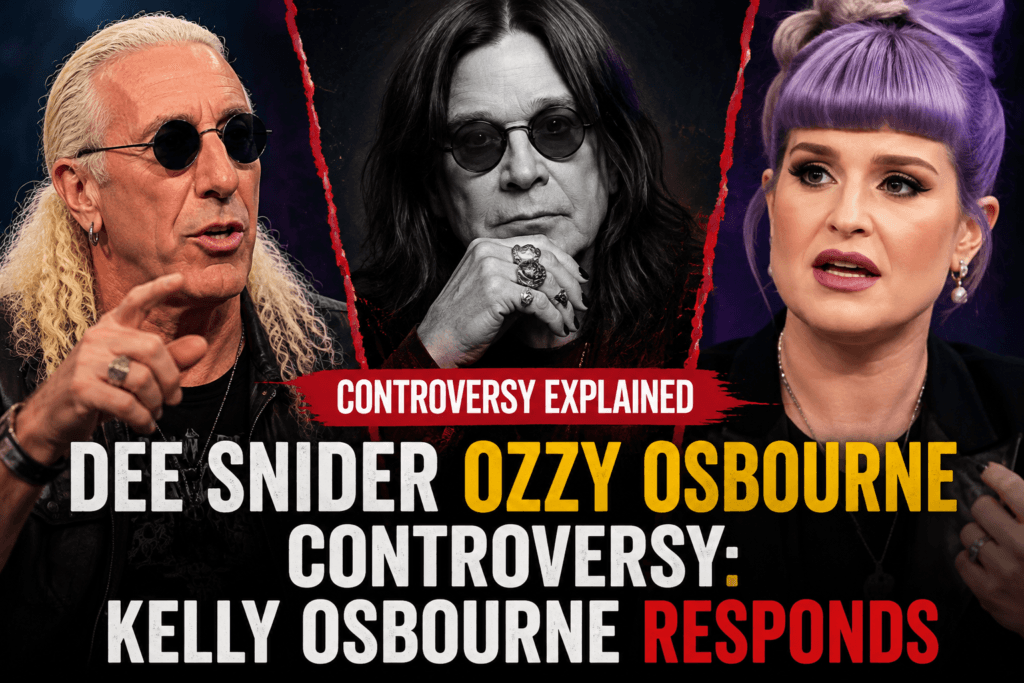
Dee Snider Ozzy Osbourne controversy featuring Kelly Osbourne’s response

Dee Snider Ozzy Osbourne Controversy: Kelly Osbourne Defends Her Father’s Legacy

A new dispute over Ozzy Osbourne’s songwriting history has put Dee Snider Ozzy Osbourne back in the spotlight. What began as a discussion about the musicians behind Ozzy’s music quickly became personal after Kelly Osbourne publicly defended her late father. At the center of the argument is a question that has followed Ozzy’s career for decades: how much of the music associated with him did he actually write? Dee Snider recently highlighted the contributions of musicians such as Bob Daisley, Geezer Butler, and Lemmy Kilmister, renewing attention on Ozzy’s collaborative songwriting history. Kelly strongly objected to Snider’s remarks. Her response focused on her father’s enormous influence and argued that his legacy cannot be reduced to individual lyrics or songwriting credits. The timing has also made the story more sensitive. Ozzy died on July 22, 2025, at age 76, after a career that stretched from Black Sabbath’s groundbreaking early years to a hugely successful solo run. Yet the songwriting debate itself is much older. Musicians who worked with Ozzy have discussed their contributions for years, while fans continue to debate how those contributions should shape his musical legacy. This article examines the Dee Snider Ozzy Osbourne controversy, the history behind the songwriting dispute, Kelly Osbourne’s response, and what the debate means for Ozzy’s lasting legacy. What Started the Dee Snider Ozzy Osbourne Controversy? Dee Snider’s Comments Bring an Old Debate Back The latest dispute began with Snider’s comments about the songwriting history surrounding Ozzy’s career. The Twisted Sister frontman pointed toward musicians who worked alongside Ozzy and highlighted their contributions to his music. Bob Daisley became one of the most important names in that discussion. Snider also referenced Geezer Butler and other musicians whose songwriting helped shape music associated with Ozzy and Black Sabbath. Those comments revived a debate that has existed for decades. Fans have long discussed how much credit a lead singer should receive when other musicians contribute lyrics, riffs, arrangements, or melodies. Ozzy’s career provides a particularly interesting example because he worked with numerous musicians across different eras. Randy Rhoads, Bob Daisley, Lee Kerslake, Zakk Wylde, Lemmy Kilmister, and others each brought different skills to his music. Consequently, the current argument involves more than one controversial statement. It raises a larger question about how collaborative music should be credited and remembered. Why Ozzy’s Songwriting History Matters Songwriting credits can tell readers who officially contributed to a composition, but they do not always describe every creative decision made during recording. A musician might create a guitar riff while another person develops lyrics. The vocalist may then shape the melody through phrasing and delivery. Producers can also influence the arrangement before a song reaches its final form. Ozzy’s records reflect that kind of collaboration. Bob Daisley, for example, has discussed his songwriting contributions to Ozzy’s early solo material for many years. Those claims form part of the historical background behind the current Dee Snider Ozzy Osbourne controversy. Still, recognizing another musician’s contribution does not automatically diminish Ozzy. His voice, stage presence, and performance style became central to the identity of the recordings. Millions of listeners connected those songs with Ozzy because of the way he delivered them. Therefore, the real question is not whether other musicians contributed. They clearly did. Instead, the debate asks how those contributions should influence the way fans understand Ozzy’s own creative role. Why the Dee Snider Ozzy Osbourne Debate Is More Complicated Than It Looks Songwriting and Performance Are Different Roles At first glance, the argument may seem straightforward: identify the writer and settle the question. Music history rarely works that neatly. A major rock recording can involve several creative layers. One person may develop lyrics, another may create a riff, and a third musician may shape the arrangement. Meanwhile, the vocalist can transform the material through melody, phrasing, emotion, and performance. Official songwriting credits remain important, but they do not necessarily capture every creative decision made during studio sessions. Ozzy’s career demonstrates that distinction particularly well. As Black Sabbath’s lead singer, he became the voice of one of heavy metal’s foundational bands. After leaving Sabbath, he built a successful solo career with a rotating group of highly talented musicians. Randy Rhoads, Bob Daisley, Lee Kerslake, and later Zakk Wylde all became important parts of different chapters in Ozzy’s musical story. Their involvement shows that collaboration was not an exception in Ozzy’s career. It was a recurring part of his creative process. Why Collaboration Does Not Diminish Ozzy The presence of multiple writers does not automatically make a performer less important. Popular music contains countless examples of artists who became iconic through interpretation and performance as much as songwriting. A singer can take material created by several people and give it a distinctive identity that audiences remember for decades. Ozzy did exactly that in different stages of his career. His voice became instantly recognizable. His stage persona became part of heavy-metal culture. His performances helped turn collaborative recordings into songs that audiences strongly associated with him. Rock history offers many examples of artists whose careers grew through changing creative partnerships. Lindsey Buckingham’s work with Stevie Nicks and Fleetwood Mac also shows how individual talent can shape a group while collaboration creates a larger musical legacy. That distinction explains why the Dee Snider Ozzy Osbourne debate has generated such strong reactions. Two different questions are getting mixed together: Who created specific parts of the music? and What did Ozzy contribute to the finished recordings? Those questions deserve separate answers. A songwriter can receive credit for lyrics or music while the vocalist contributes through melody and interpretation. Both forms of creativity can exist within the same recording. That collaborative perspective offers a more accurate way to understand Ozzy’s catalog without reducing his legacy to a single songwriting statistic. Bob Daisley and the Long-Running Ozzy Songwriting Dispute Bob Daisley is central to the historical background behind the current discussion. The Australian bassist and songwriter worked with Ozzy during the early years of his solo career. Daisley has

Dee Snider Ozzy Osbourne Controversy: Kelly Osbourne Defends Her Father’s Legacy Read More »