
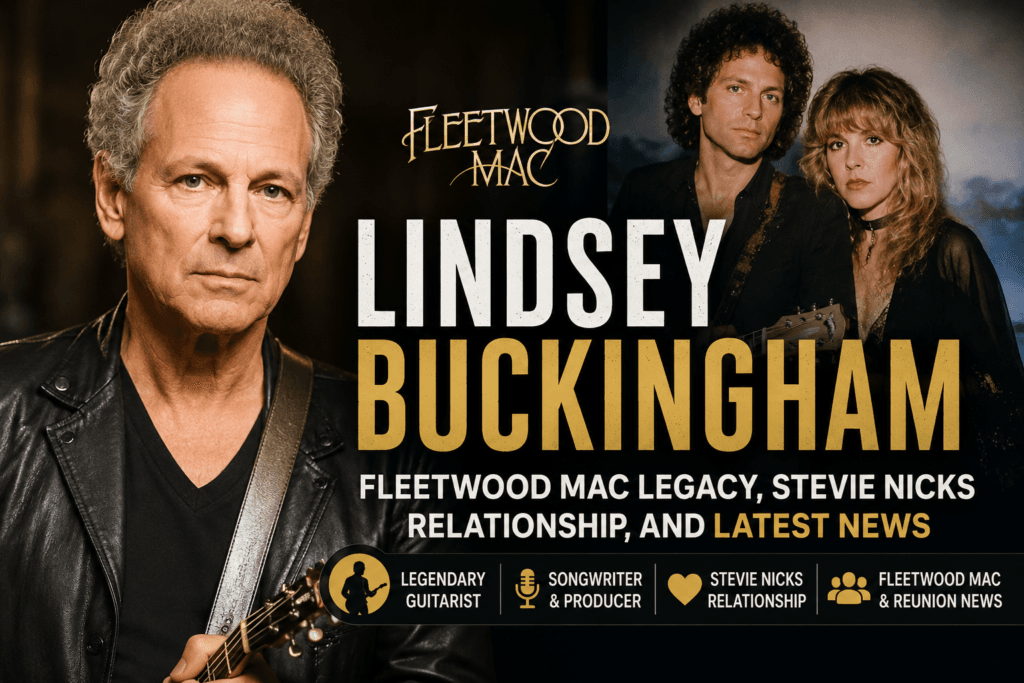
For more than five decades, Lindsey Buckingham has remained one of the most influential figures in rock music. Known for his intricate fingerpicking guitar style, inventive songwriting, and meticulous production techniques, Buckingham helped transform Fleetwood Mac into one of the world’s most successful bands. His work shaped timeless albums, inspired generations of musicians, and continues to attract millions of listeners through streaming platforms and classic rock radio.
In recent months, Lindsey Buckingham has once again become a major topic of conversation after sharing encouraging updates about his relationship with longtime bandmate Stevie Nicks. Those comments have reignited public interest in Fleetwood Mac’s future, leading fans to ask whether reconciliation could eventually open the door to another chapter in the band’s story. While no official reunion has been announced, the renewed dialogue between two of the band’s most recognizable members has sparked fresh optimism among music lovers around the world.
However, Lindsey Buckingham’s legacy extends far beyond reunion speculation. His career reflects decades of artistic innovation, creative risk-taking, and personal resilience. From his early partnership with Stevie Nicks to his groundbreaking work with Fleetwood Mac and his successful solo career, Buckingham has consistently challenged conventional approaches to songwriting and guitar performance.
This article explores every stage of Lindsey Buckingham’s remarkable journey. You’ll discover how his early years shaped his musical identity, why his partnership with Stevie Nicks became legendary, how he influenced Fleetwood Mac’s biggest successes, what recent developments reveal about his relationship with former bandmates, and what the future may hold for one of rock’s most respected artists.
Who Is Lindsey Buckingham?
Few musicians have influenced modern rock music quite like Lindsey Buckingham. Although many people recognize him as Fleetwood Mac’s lead guitarist, his contributions extend far beyond performing on stage. Throughout his career, Buckingham has worked as a songwriter, producer, arranger, vocalist, and creative visionary whose ideas helped redefine one of the most successful bands in music history.
Unlike many guitarists who rely on traditional solos, Buckingham developed a distinctive fingerpicking technique that allowed him to create rhythm, melody, and harmony simultaneously. As a result, his performances became instantly recognizable and earned admiration from fellow musicians across multiple genres.
His creative approach also extended into the recording studio. Rather than simply capturing live performances, Buckingham embraced experimentation by layering instruments, refining vocal harmonies, and exploring innovative production techniques. That attention to detail became a defining characteristic of Fleetwood Mac’s most celebrated albums.
Even after decades in the music industry, Lindsey Buckingham continues to influence artists ranging from classic rock performers to modern indie musicians. His commitment to originality has ensured that his work remains relevant to both longtime fans and younger audiences discovering his music for the first time.
Lindsey Buckingham’s Early Life
Lindsey Adams Buckingham was born on October 3, 1949, in Palo Alto, California. Growing up in Northern California, he developed an interest in music at an early age despite having no formal guitar training during his childhood.
Instead of relying on structured lessons, Buckingham largely taught himself how to play. He spent countless hours listening to records, studying different styles, and experimenting with techniques until he developed a sound that felt uniquely his own. This self-directed learning process encouraged creativity rather than imitation, allowing him to build an unconventional playing style that would later become his signature.
Music became an increasingly important part of Buckingham’s life during his teenage years. Alongside his passion for performing, he also admired artists who challenged traditional songwriting conventions. Those influences encouraged him to think beyond commercial formulas and focus on creating emotionally honest music.
As his confidence grew, Buckingham began performing locally and collaborating with other musicians. Those experiences not only strengthened his technical skills but also introduced him to the creative partnership that would define much of his career.
How Lindsey Buckingham Met Stevie Nicks
One of the most significant moments in Lindsey Buckingham’s life occurred when he met Stevie Nicks during their youth in California.
The two musicians quickly discovered that they shared similar artistic ambitions and complementary musical styles. Buckingham’s detailed approach to composition blended naturally with Nicks’ expressive songwriting and distinctive voice. Their creative chemistry became evident long before either artist achieved international fame.
As they spent more time writing and performing together, their musical partnership evolved into a romantic relationship. Although both were still searching for commercial success, they remained committed to building a future through music.
Life during those early years was far from glamorous. Buckingham and Nicks faced financial uncertainty while pursuing recording opportunities and live performances. Nevertheless, they continued refining their songwriting and supporting one another through the challenges of launching professional careers.
Those experiences created a strong artistic foundation that would later influence some of the most memorable songs in rock history.
The Buckingham Nicks Era
Before joining Fleetwood Mac, Lindsey Buckingham and Stevie Nicks performed as the duo Buckingham Nicks.
The pair released a studio album that showcased their songwriting abilities, vocal harmonies, and musical chemistry. Although the record did not become a commercial success upon release, it demonstrated the creative potential both artists possessed.
Today, many fans consider the album an important chapter in their musical journey because it captured two emerging artists before global fame transformed their lives.
During this period, Buckingham continued developing his guitar techniques while experimenting with arrangements and production ideas. Rather than following popular trends, he focused on creating music that reflected his artistic vision.
Although commercial recognition remained limited, industry professionals began noticing Buckingham’s exceptional musicianship. His innovative guitar work and careful attention to detail eventually reached people capable of changing his career forever.
A Life-Changing Opportunity
Fleetwood Mac had already established itself as a respected British-American rock band by the mid-1970s. However, the group found itself searching for a new guitarist following lineup changes.
While visiting a recording studio, drummer Mick Fleetwood heard Buckingham’s work and became impressed by his musicianship. Naturally, Fleetwood wanted Buckingham to join the band.
Buckingham, however, had one important condition.
Rather than joining alone, he insisted that Stevie Nicks should become part of Fleetwood Mac as well. He believed their partnership worked best when both artists performed together, and he was unwilling to leave her behind.
That decision ultimately reshaped Fleetwood Mac’s future.
The band’s members agreed, welcoming both Buckingham and Nicks into the lineup. Their arrival introduced fresh songwriting perspectives, stronger vocal harmonies, and renewed creative energy that would soon transform Fleetwood Mac into one of the biggest names in rock music.
Why Joining Fleetwood Mac Changed Everything
Adding Lindsey Buckingham and Stevie Nicks marked a turning point for Fleetwood Mac.
The new lineup combined diverse musical influences while maintaining a collaborative approach to songwriting. Each member contributed distinct strengths, allowing the band to create a richer and more dynamic sound than ever before.
Buckingham immediately became one of the group’s driving creative forces. His perfectionist attitude encouraged careful studio experimentation, while his guitar work added texture and sophistication to the band’s arrangements.
At the same time, Stevie Nicks brought poetic songwriting and a unique vocal style that complemented Buckingham’s musical direction.
Together, the expanded lineup created a chemistry that resonated with audiences worldwide. Their collaboration laid the groundwork for a series of landmark albums that would define an era of rock music and establish Lindsey Buckingham as one of the industry’s most respected musicians.
Lindsey Buckingham’s First Years in Fleetwood Mac
Joining Fleetwood Mac marked the beginning of a remarkable new chapter for Lindsey Buckingham. Although the band already had a loyal following, the arrival of Buckingham and Stevie Nicks introduced fresh energy that immediately changed its creative direction.
The group’s chemistry became apparent during rehearsals and recording sessions. Each member contributed a unique musical perspective, yet they shared a common goal of creating memorable songs. Buckingham’s attention to detail, combined with his willingness to experiment, encouraged the band to move beyond conventional rock arrangements.
The first album featuring the new lineup quickly demonstrated that Fleetwood Mac had entered a new era. Listeners embraced the band’s polished sound, emotionally honest lyrics, and unforgettable melodies. Commercial success followed, establishing the group as one of the biggest acts of the decade.
For Buckingham, the experience confirmed that creative collaboration could produce something greater than individual achievement. His role continued to expand as the band prepared for even more ambitious projects.
How Lindsey Buckingham Shaped Fleetwood Mac’s Sound
While Fleetwood Mac thrived because of its collective talent, Lindsey Buckingham became one of the band’s primary creative architects.
Instead of treating the guitar as only a lead instrument, he used it to build atmosphere, rhythm, and emotion. His arrangements often featured multiple guitar layers that blended seamlessly with keyboards, bass, drums, and vocals.
Several qualities became hallmarks of Buckingham’s musical style.
Innovative Guitar Playing
Buckingham rarely relied on a traditional guitar pick. Instead, he preferred fingerpicking, allowing him to create intricate patterns that sounded both rhythmic and melodic.
This technique gave Fleetwood Mac songs a distinctive character that set them apart from many other rock bands of the era.
Studio Experimentation
Buckingham believed that recording studios offered limitless creative possibilities.
Rather than settling for the first acceptable performance, he often explored different arrangements, vocal harmonies, and instrumental textures until every detail matched his artistic vision.
Although that perfectionist approach sometimes required additional recording time, it contributed to albums that have stood the test of time.
Emotional Songwriting
Many Buckingham compositions reflected deeply personal emotions.
Instead of writing generic love songs, he explored themes such as personal growth, uncertainty, relationships, self-reflection, and change. Consequently, listeners connected with his music on a more personal level.
Lindsey Buckingham’s Songwriting Philosophy
One reason Lindsey Buckingham continues to earn respect from musicians is his commitment to authentic storytelling.
He often approached songwriting by asking how music could express emotion rather than simply entertain. As a result, many of his compositions feel intimate without becoming overly complicated.
Several principles guided his creative process.
- Focus on emotional honesty.
- Allow melodies to support the story.
- Experiment without losing accessibility.
- Blend innovation with strong songwriting.
- Keep arrangements meaningful rather than excessive.
These ideas influenced not only Fleetwood Mac but also countless artists who followed.
The Creative Balance Inside Fleetwood Mac
One of Fleetwood Mac’s greatest strengths was the diversity of its songwriters.
Instead of relying on a single creative voice, the band benefited from contributions by multiple members.
| Band Member | Primary Contribution |
|---|---|
| Lindsey Buckingham | Guitar, production, songwriting, arrangements |
| Stevie Nicks | Songwriting, vocals, lyrical storytelling |
| Christine McVie | Melodic songwriting, keyboards, vocals |
| Mick Fleetwood | Drums, leadership, musical foundation |
| John McVie | Bass, rhythm section, musical stability |
Because each member brought different ideas, Fleetwood Mac produced albums that appealed to a broad audience while maintaining a recognizable identity.
Buckingham often acted as the musical organizer, helping shape individual songs into cohesive recordings.
Lindsey Buckingham’s Attention to Detail
Friends, collaborators, and fellow musicians have frequently described Lindsey Buckingham as someone who values precision.
Whether recording vocals or arranging guitar parts, he devoted significant time to refining every element of a song.
That perfectionism occasionally created creative disagreements, particularly when recording deadlines approached. However, many observers believe those high standards contributed to Fleetwood Mac’s enduring quality.
Buckingham viewed every recording as an opportunity to improve upon previous work rather than repeat familiar ideas.
His willingness to challenge expectations helped keep the band’s music fresh throughout changing musical trends.
Albums That Defined Lindsey Buckingham’s Legacy
Throughout his years with Fleetwood Mac, Lindsey Buckingham contributed to several albums that remain highly regarded today.
Although each project reflected the talents of the entire band, Buckingham’s influence can be heard in their production, arrangements, and songwriting.
Some of the most significant releases include:
| Album | Why It Matters |
|---|---|
| Fleetwood Mac (1975) | Introduced the Buckingham–Nicks lineup and launched a new era for the band. |
| Rumours (1977) | Became one of the best-selling albums in music history and showcased remarkable songwriting. |
| Tusk (1979) | Demonstrated Buckingham’s willingness to experiment creatively despite commercial expectations. |
| Mirage (1982) | Balanced polished production with accessible songwriting. |
| Tango in the Night (1987) | Reflected Buckingham’s production expertise while delivering multiple successful singles. |
These albums continue to attract new listeners, proving that thoughtfully crafted music can remain relevant across generations.
Why Lindsey Buckingham’s Guitar Style Stands Apart
Many accomplished guitarists impress audiences through speed or technical complexity.
Lindsey Buckingham, however, built his reputation differently.
His playing emphasized texture, rhythm, and emotion rather than flashy solos. Listeners often notice how his guitar parts support the overall composition instead of competing with it.
Characteristics of Buckingham’s style include:
- Fingerpicked electric guitar.
- Complex rhythmic patterns.
- Layered melodic phrases.
- Creative use of dynamics.
- Strong connection between vocals and guitar.
Because of these qualities, aspiring musicians frequently study Buckingham’s performances to better understand musical storytelling.
Lindsey Buckingham’s Influence Beyond Fleetwood Mac
Although Fleetwood Mac remains central to his legacy, Lindsey Buckingham’s influence extends well beyond the band. Many producers admire his recording techniques.
Songwriters appreciate his emotional honesty.
Guitarists study his distinctive playing style.
Meanwhile, younger musicians continue discovering his work through streaming services, documentaries, live performances, and social media.
His creative philosophy demonstrates that commercial success and artistic experimentation do not have to exist in opposition.
Instead, Buckingham proved that musicians can pursue originality while still reaching a wide audience.
Lindsey Buckingham’s influence reaches far beyond Fleetwood Mac, joining a group of legendary musicians who shaped modern music through innovation, creativity, and lasting artistic impact.
Why Lindsey Buckingham Still Matters Today
Decades after achieving international fame, Lindsey Buckingham continues to remain relevant for several reasons.
First, his recordings have introduced classic rock to new generations of listeners.
Second, his guitar work remains widely respected within the music community.
Third, discussions surrounding Fleetwood Mac, Stevie Nicks, and the band’s future frequently bring renewed attention to Buckingham’s contributions.
Finally, his willingness to evolve as both an artist and individual keeps audiences interested in his story.
Whether fans admire his songwriting, production, or guitar playing, few dispute the lasting impact he has made on modern music.
His career reflects creativity, persistence, and an unwavering commitment to artistic excellence.
How Rumours Changed Lindsey Buckingham’s Career
By the mid-1970s, Fleetwood Mac had become one of the most talked-about bands in rock music. Their self-titled 1975 album introduced the lineup featuring Lindsey Buckingham and Stevie Nicks, earning both commercial success and critical praise. However, the band’s next project would elevate them to an entirely different level.
That project was Rumours.
Released in 1977, the album became a cultural phenomenon rather than simply another successful record. It connected with listeners through emotionally honest songwriting, polished production, and unforgettable performances. Even decades later, Rumours remains one of the best-selling albums in music history and continues to attract new generations of fans.
For Lindsey Buckingham, the album represented the moment when his creative vision reached a global audience. His work as a guitarist, songwriter, vocalist, and producer played a central role in shaping the record’s distinctive sound.
Lindsey Buckingham’s Creative Role During Rumours
Although every member of Fleetwood Mac contributed to the album, Lindsey Buckingham became one of its primary creative drivers.
He focused on much more than writing songs. Buckingham worked extensively on arrangements, recording techniques, vocal harmonies, and guitar textures. His perfectionist approach pushed the band to refine every detail before the album reached listeners.
Several aspects of his contribution stood out.
Innovative Production
Buckingham viewed the recording studio as an instrument in itself.
Instead of capturing straightforward performances, he experimented with layering guitars, blending harmonies, and refining each musical element until it supported the song’s emotional message.
This approach helped create a polished yet natural sound that continues to feel fresh decades later.
Memorable Songwriting
Buckingham’s compositions balanced personal emotion with universal themes.
Rather than writing songs that focused only on specific events, he explored experiences that listeners of different generations could understand, including change, uncertainty, love, and personal growth.
Distinctive Guitar Work
His fingerstyle guitar technique remained a defining characteristic throughout the album.
Instead of relying on extended solos, Buckingham created rhythmic and melodic parts that strengthened the overall arrangement.
The Personal Stories Behind the Music
One reason Rumours continues to resonate with audiences is its emotional authenticity.
During the recording process, several members of Fleetwood Mac experienced significant personal changes in their relationships. Despite those challenges, they continued working together, channeling their emotions into their music.
For Lindsey Buckingham, songwriting became an outlet for expressing complex feelings. His music reflected personal experiences while remaining relatable to millions of listeners around the world.
Rather than weakening the band, those emotional experiences contributed to songs that felt genuine and deeply human.
As a result, audiences connected not only with the melodies but also with the honesty behind them.
Lindsey Buckingham’s Signature Songs
Throughout his time with Fleetwood Mac, Lindsey Buckingham contributed numerous songs that remain fan favorites.
Some became major commercial successes, while others earned recognition for their musical creativity and lasting influence.
| Song | Lindsey Buckingham’s Contribution | Why It Stands Out |
|---|---|---|
| Go Your Own Way | Writer, vocalist, guitarist | One of Fleetwood Mac’s signature rock anthems. |
| Second Hand News | Writer, vocalist | Energetic opening track showcasing Buckingham’s style. |
| Never Going Back Again | Writer, guitarist, vocalist | Highlights his intricate fingerpicking technique. |
| Tusk | Co-writer, producer | Bold experimentation that challenged conventional rock production. |
| Big Love | Writer, vocalist, producer | Demonstrates Buckingham’s innovative recording approach. |
These songs continue to receive radio airplay, streaming attention, and praise from critics and musicians alike.
Why Lindsey Buckingham Preferred Creative Risks
Many successful artists repeat formulas that have already proven popular.
Lindsey Buckingham often chose the opposite path.
Instead of recreating previous successes, he looked for opportunities to explore new sounds and recording techniques. While this approach occasionally surprised fans and record executives, it also allowed Fleetwood Mac to evolve creatively.
Buckingham believed artistic growth required experimentation.
That philosophy became especially visible during later recording sessions, where he encouraged the band to move beyond traditional expectations.
Although not every creative decision generated immediate commercial success, many of those ideas gained appreciation over time.
Lindsey Buckingham and the Making of Tusk
Following the extraordinary success of Rumours, Fleetwood Mac faced enormous expectations.
Many people assumed the band would simply produce another album using the same formula.
Instead, Lindsey Buckingham encouraged a different direction.
The resulting album, Tusk, explored more experimental arrangements, unconventional production choices, and broader musical influences.
While opinions initially varied, the project demonstrated Buckingham’s willingness to prioritize artistic expression over commercial predictability.
Today, many critics consider Tusk an ambitious and influential album whose reputation has grown significantly over the years.
The Growing Creative Tensions
Creative ambition often brings differing opinions.
As Fleetwood Mac’s success increased, so did discussions about the band’s musical direction.
Lindsey Buckingham frequently advocated for experimentation, while others sometimes preferred a more familiar approach.
These conversations reflected the natural challenges faced by highly creative individuals working together over many years.
Although disagreements occasionally emerged, the band continued producing music that attracted audiences worldwide.
Importantly, those creative differences also demonstrated how much every member cared about maintaining high artistic standards.
Lindsey Buckingham’s Leadership in the Studio
During recording sessions, Lindsey Buckingham became known for his meticulous attention to detail.
His responsibilities often extended beyond playing guitar.
He regularly worked on:
- Vocal arrangements
- Guitar layering
- Instrumental balance
- Recording techniques
- Overall production quality
This level of involvement earned him respect as both a musician and producer.
At the same time, the process demanded patience from everyone involved.
Buckingham believed great albums required persistence, careful listening, and continuous refinement.
Lindsey Buckingham’s Solo Career Begins to Grow
While Fleetwood Mac remained enormously successful, Lindsey Buckingham also explored opportunities outside the band.
His solo work allowed him greater creative freedom.
Without the need to balance multiple songwriting styles, Buckingham experimented with different musical ideas, production techniques, and arrangements that reflected his individual artistic vision.
Fans appreciated hearing another side of his creativity, while critics often praised his willingness to take risks.
Although Fleetwood Mac remained closely associated with his name, Buckingham gradually established himself as a respected solo artist in his own right.
The Relationship Between Lindsey Buckingham and Stevie Nicks Continued to Evolve
Public interest in Lindsey Buckingham has always extended beyond his music.
His long and complicated relationship with Stevie Nicks remained a frequent topic of discussion throughout their careers.
Despite the end of their romantic relationship, both artists continued collaborating professionally for many years.
That partnership produced remarkable music while also presenting emotional challenges.
Observers often noted the intensity of their performances together, interpreting them as reflections of a shared personal history.
Although public attention frequently focused on moments of disagreement, their artistic partnership also demonstrated mutual respect for each other’s talents.
That balance between collaboration and conflict became one of Fleetwood Mac’s defining characteristics.
Lindsey Buckingham’s Lasting Influence During Fleetwood Mac’s Peak
As Fleetwood Mac reached worldwide success, Lindsey Buckingham established himself as far more than an exceptional guitarist.
He became:
- A respected songwriter.
- An innovative producer.
- A creative arranger.
- A visionary studio leader.
- One of rock music’s most distinctive musicians.
His willingness to challenge expectations helped Fleetwood Mac remain creatively relevant even as the music industry evolved.
Many artists continue to cite Buckingham’s recordings as examples of thoughtful songwriting and imaginative production.
Consequently, his influence extends well beyond classic rock.
Lindsey Buckingham’s Career Beyond Fleetwood Mac
Although Fleetwood Mac played a defining role in his career, Lindsey Buckingham never viewed himself as an artist limited to one band. Throughout his professional journey, he consistently explored new creative directions through solo projects, collaborations, and experimental recordings.
His solo work allowed him to take risks that might not have fit Fleetwood Mac’s musical identity. Instead of balancing multiple songwriters and creative perspectives, Buckingham enjoyed complete artistic freedom. Consequently, his solo albums showcased different sides of his songwriting, guitar playing, and production style.
Fans who followed his individual career discovered music that often felt more personal and adventurous while still reflecting the craftsmanship that made him famous.
Lindsey Buckingham’s Solo Music Explored New Ideas
One defining characteristic of Lindsey Buckingham has always been his willingness to evolve.
Rather than repeating the same formula, he embraced experimentation throughout his solo career. His recordings featured innovative guitar arrangements, layered harmonies, electronic textures, and thoughtful lyrics that examined relationships, identity, and personal growth.
Several themes appeared frequently in his solo work:
- Self-discovery and reflection.
- Family and personal relationships.
- Creative independence.
- Change and resilience.
- The balance between success and artistic fulfillment.
Because of this approach, Buckingham developed a loyal audience that appreciated his willingness to prioritize creativity over commercial trends.
Lindsey Buckingham’s Relationship With Fleetwood Mac Continued to Change
Even while pursuing solo projects, Lindsey Buckingham remained connected to Fleetwood Mac through reunions, tours, and recording sessions.
Over the years, however, the band’s internal dynamics became increasingly complex.
Creative disagreements occasionally emerged regarding musical direction, touring schedules, and long-term planning. Like many long-running groups, Fleetwood Mac faced the challenge of balancing individual ambitions with collective goals.
Despite these differences, the members continued to recognize each other’s extraordinary musical contributions.
Their shared history remained an essential part of the band’s identity.
The 2018 Departure From Fleetwood Mac
One of the most significant moments in recent Fleetwood Mac history occurred in 2018 when Lindsey Buckingham parted ways with the band.
The decision surprised many fans because Buckingham had long been viewed as one of Fleetwood Mac’s defining creative voices.
Although various public statements followed, it became clear that differing perspectives regarding future touring and the band’s direction contributed to the separation.
For longtime followers, Buckingham’s absence marked the end of another important chapter.
Nevertheless, he continued focusing on his own music while expressing appreciation for the work he had accomplished with Fleetwood Mac over several decades.
How Fans Reacted to Lindsey Buckingham’s Exit
News of Buckingham’s departure generated widespread discussion across the music community.
Fan reactions generally fell into several categories.
| Fan Perspective | Common Viewpoint |
|---|---|
| Longtime Fleetwood Mac fans | Felt Buckingham’s absence would change the band’s sound. |
| Solo music supporters | Looked forward to new independent projects. |
| Music critics | Recognized Buckingham’s creative influence on Fleetwood Mac’s legacy. |
| Casual listeners | Wondered whether the band could continue without one of its key members. |
Although opinions varied, most observers agreed that Lindsey Buckingham’s impact on Fleetwood Mac could not be easily replaced.
Lindsey Buckingham Faced a Serious Health Challenge
Life presented another unexpected obstacle when Lindsey Buckingham experienced a major health emergency.
During his recovery, he underwent heart surgery that temporarily affected his ability to perform and raised understandable concerns among fans.
For a guitarist whose career depended on precision and musical expression, the recovery process required patience and determination.
Fortunately, Buckingham gradually returned to creative work.
Throughout his rehabilitation, he remained optimistic about making music again while expressing gratitude for the support he received from family, friends, and fans around the world.
His recovery demonstrated the resilience that has characterized much of his career.
Returning to Music After Recovery
Following his recovery, Lindsey Buckingham resumed writing, recording, and performing.
Rather than viewing the experience as a setback, he described it as an opportunity to appreciate music from a new perspective.
His return reminded audiences that artistic passion often extends beyond physical challenges.
Fans welcomed his renewed activity, while fellow musicians praised his perseverance.
The experience also reinforced Buckingham’s belief that creativity remains a lifelong pursuit.
Lindsey Buckingham Continued Building His Legacy
Even after leaving Fleetwood Mac, Buckingham remained active as both a recording artist and live performer.
His concerts continued to feature a combination of:
- Fleetwood Mac classics.
- Solo material.
- Deep album tracks.
- Acoustic performances.
- Stories reflecting on his musical journey.
This approach allowed audiences to experience the full range of his career while appreciating his evolution as an artist.
Many concertgoers noted that Buckingham’s enthusiasm for performing remained as strong as ever.
Recent Comments About Stevie Nicks
One of the biggest reasons Lindsey Buckingham returned to entertainment headlines involved his recent comments regarding Stevie Nicks.
After years during which their relationship appeared distant, Buckingham indicated that communication between them had improved.
Rather than focusing on past disagreements, he suggested that time had allowed both artists to gain greater perspective.
Those remarks immediately attracted attention because Buckingham and Nicks have long represented one of rock music’s most fascinating creative partnerships.
Importantly, his comments reflected a more positive tone than many fans had heard in recent years.
What Changed Between Lindsey Buckingham and Stevie Nicks?
Although neither artist has suggested that every past disagreement has disappeared, recent developments indicate a greater willingness to communicate respectfully.
Observers believe several factors may have contributed to this change.
Time Has Changed Perspectives
Years of personal growth often influence how people view past conflicts.
Buckingham has suggested that time can provide valuable perspective, allowing individuals to appreciate shared accomplishments without focusing exclusively on disagreements.
Shared Musical History
Regardless of personal differences, Lindsey Buckingham and Stevie Nicks created music that continues to inspire millions.
That shared artistic legacy remains something both artists recognize.
The Fleetwood Mac Documentary
Interest surrounding the upcoming Fleetwood Mac documentary has also renewed public attention on the band’s history.
Projects celebrating a group’s legacy often encourage reflection, collaboration, and renewed conversations among former bandmates.
While the documentary itself does not guarantee future musical plans, it has become part of the broader discussion surrounding Fleetwood Mac’s story.
Does This Mean Fleetwood Mac Will Reunite?
This remains one of the most frequently asked questions.
At present, there has been no official confirmation of a Fleetwood Mac reunion involving Lindsey Buckingham.
Improved communication should not automatically be interpreted as evidence that new tours or recordings are planned.
Several important considerations remain.
- Fleetwood Mac’s history spans many decades and multiple lineup changes.
- Individual members continue pursuing separate careers.
- The passing of Christine McVie marked a profound loss for the band.
- Public comments have emphasized appreciation for the past rather than announcing future performances.
Therefore, while fans have reasons to feel encouraged by recent developments, expectations should remain realistic until official announcements are made.
Why Lindsey Buckingham’s Story Still Resonates
Many musicians experience commercial success.
Far fewer maintain relevance across multiple generations.
Lindsey Buckingham continues attracting attention because his story combines exceptional artistry, personal resilience, creative ambition, and enduring influence.
His career reflects several important qualities.
- Innovation over imitation.
- Artistic integrity.
- Commitment to musical excellence.
- Resilience during personal challenges.
- Lasting influence on rock music.
These characteristics explain why audiences continue following every new interview, recording, and public appearance.
Lindsey Buckingham’s Influence on Modern Music
Like many rock and roll legends, Lindsey Buckingham has built a legacy that continues to influence musicians and introduce classic rock to new generations of listeners.
Few artists leave an impact that continues to grow decades after their greatest commercial success. Lindsey Buckingham belongs to that rare group of musicians whose influence extends well beyond the era in which they first became famous.
Although many people recognize Buckingham for his work with Fleetwood Mac, musicians often admire him for different reasons. His innovative guitar techniques, meticulous production style, and willingness to experiment have inspired artists across rock, pop, indie, folk, and alternative music.
Instead of following industry trends, Buckingham consistently focused on creating music that reflected his artistic vision. As a result, his recordings continue to sound fresh even as musical styles evolve.
Today, many young musicians discover Lindsey Buckingham through streaming platforms, documentaries, vinyl reissues, and live performance videos. His work demonstrates that originality can remain timeless.
Why Guitarists Continue to Study Lindsey Buckingham
Among guitar players, Lindsey Buckingham enjoys a reputation as one of rock’s most distinctive performers.
Unlike many famous guitarists, Buckingham rarely relied on speed or extended solos to impress listeners. Instead, he emphasized precision, rhythm, melody, and emotional expression.
His playing style stands out because it combines several techniques at once.
Fingerstyle Performance
Buckingham performs without a traditional guitar pick for much of his work.
Using his fingers allows him to create multiple musical layers simultaneously, giving his performances remarkable depth.
Rhythmic Complexity
His guitar parts often function as both rhythm and lead instruments.
Consequently, songs feel full and energetic even without elaborate solos.
Musical Storytelling
Every note serves the composition.
Rather than drawing attention only to technical skill, Buckingham uses his guitar to strengthen the emotional message of each song.
Because of these qualities, many instructors and professional musicians recommend studying his work as an example of thoughtful musicianship.
Lindsey Buckingham’s Production Style Changed Expectations
While fans often celebrate Buckingham’s guitar playing, his work as a producer deserves equal recognition.
Throughout his career, Lindsey Buckingham approached the recording studio as a creative environment rather than simply a place to document performances.
His production philosophy emphasized:
- Layered vocal harmonies.
- Detailed guitar arrangements.
- Careful instrument placement.
- Creative recording techniques.
- Emotional balance within each song.
Instead of rushing projects, Buckingham frequently refined recordings until they matched his artistic standards.
Although this perfectionist approach sometimes extended production schedules, it also contributed to albums that remain influential decades later.
Fleetwood Mac’s Lasting Legacy
Fleetwood Mac occupies a unique place in music history.
Over the years, the band evolved through multiple lineups, musical styles, and creative periods. Yet one constant remained: a commitment to strong songwriting.
Lindsey Buckingham played a central role in shaping that legacy during the band’s most commercially successful years.
Fleetwood Mac’s enduring popularity can be attributed to several factors.
| Factor | Why It Still Matters |
|---|---|
| Timeless songwriting | Songs remain relatable across generations. |
| Memorable vocal harmonies | Multiple voices created a distinctive identity. |
| Musical diversity | Different songwriters expanded the band’s sound. |
| Strong production | Albums continue sounding polished decades later. |
| Emotional authenticity | Listeners connect with genuine storytelling. |
Because these qualities remain relevant today, Fleetwood Mac continues attracting both longtime fans and first-time listeners.
Lindsey Buckingham’s Greatest Strengths
Throughout his career, Lindsey Buckingham has demonstrated an unusual combination of artistic abilities.
His greatest strengths include:
Exceptional Guitar Technique
Buckingham developed one of rock’s most recognizable fingerstyle approaches.
Creative Songwriting
His lyrics often balance personal experiences with universal emotions.
Innovative Production
He consistently explored new recording methods while maintaining musical clarity.
Artistic Courage
Rather than repeating familiar formulas, Buckingham embraced experimentation.
Commitment to Quality
His attention to detail helped create albums that remain respected worldwide.
Together, these strengths explain why his influence extends far beyond Fleetwood Mac.
Why Fans Continue Hoping for a Reunion
One question continues to appear whenever Lindsey Buckingham or Stevie Nicks gives an interview.
Could Fleetwood Mac perform together again?
Several factors explain why fans continue asking.
First, Buckingham and Nicks remain closely associated with some of the band’s most celebrated music.
Second, recent comments suggesting improved communication have encouraged optimism.
Third, audiences naturally enjoy seeing legendary artists reconnect after years of public disagreements.
However, emotional hope differs from practical reality.
A reunion would depend on numerous personal and professional considerations involving all remaining members.
Until official announcements are made, any expectations remain speculative.
The Importance of Christine McVie’s Legacy
Any discussion about Fleetwood Mac’s future must also recognize the lasting impact of Christine McVie.
Her songwriting, vocals, and keyboard performances shaped many of the band’s most beloved recordings.
Following her passing, many fans and observers questioned whether Fleetwood Mac could truly continue in the same form.
Both Lindsey Buckingham and other former members have spoken respectfully about McVie’s extraordinary contributions throughout her career.
Her legacy remains inseparable from Fleetwood Mac’s identity.
Consequently, conversations about the band’s future often acknowledge that her absence represents far more than the loss of a talented musician—it marks the end of an important era.
Lindsey Buckingham’s Career Timeline
The following timeline highlights several significant moments in Lindsey Buckingham’s musical journey.
| Year | Career Milestone |
|---|---|
| 1949 | Born in Palo Alto, California |
| Early 1970s | Forms Buckingham Nicks with Stevie Nicks |
| 1975 | Joins Fleetwood Mac |
| 1975 | Fleetwood Mac releases its self-titled album featuring the new lineup |
| 1977 | Rumours becomes a worldwide success |
| 1979 | Tusk showcases Buckingham’s experimental vision |
| 1980s | Expands solo career while remaining active with Fleetwood Mac |
| 2018 | Parts ways with Fleetwood Mac |
| 2019 | Recovers after major heart surgery |
| 2020s | Continues recording, touring, and discussing Fleetwood Mac’s legacy |
This timeline reflects a career defined by continuous artistic growth rather than a single period of success.
Lessons Artists Can Learn From Lindsey Buckingham
Musicians across different genres continue studying Buckingham’s career because it offers valuable creative lessons.
Some of the most important include:
- Develop your own artistic voice.
- Prioritize quality over shortcuts.
- Continue learning throughout your career.
- Accept creative risks.
- Value collaboration while maintaining individuality.
- Remain adaptable as the industry changes.
- Focus on long-term artistic growth instead of short-term trends.
These principles have helped Buckingham remain relevant for decades.
Lindsey Buckingham’s Place in Rock History
Music history includes countless talented performers.
Only a small number fundamentally change how musicians think about songwriting, recording, and guitar performance.
Many critics believe Lindsey Buckingham belongs in that category.
His work has influenced:
- Guitarists.
- Producers.
- Songwriters.
- Recording engineers.
- Independent artists.
- Classic rock performers.
- Alternative musicians.
While commercial success introduced his music to millions, artistic innovation secured his long-term reputation.
That distinction explains why discussions about Buckingham continue long after his biggest hits first appeared.
Expert Analysis: Why Lindsey Buckingham’s Legacy Endures
Music trends come and go, yet only a handful of artists remain relevant across multiple generations. Lindsey Buckingham belongs to that select group because his influence extends beyond hit songs and album sales.
Industry observers often point to three qualities that define Buckingham’s career:
- Creative originality – He consistently pursued new musical ideas instead of repeating successful formulas.
- Technical excellence – His fingerstyle guitar technique remains one of the most recognizable in rock music.
- Studio innovation – His production methods helped shape the sound of Fleetwood Mac’s most celebrated recordings.
These strengths allowed Buckingham to stand out not only as a performer but also as a creative leader. While many guitarists earn recognition for technical skill, Buckingham combined musicianship with songwriting and production, making his contributions far broader than those of a typical lead guitarist.
His work also demonstrates that commercial success and artistic experimentation can coexist. That balance continues to inspire both established musicians and emerging artists.
What Recent Developments Mean for Fans
Recent interviews featuring Lindsey Buckingham have naturally generated excitement among Fleetwood Mac fans. His comments about improved communication with Stevie Nicks suggest that time has softened at least some of the tensions that once defined their relationship.
However, fans should separate optimism from certainty.
Improved communication is encouraging because it reflects mutual respect and a willingness to acknowledge their shared musical history. Nevertheless, those personal developments do not automatically indicate future tours, recordings, or official reunions.
Like many veteran artists, Buckingham’s story reflects how music legends continue making headlines long after their biggest commercial successes, whether through personal milestones or career reflections.
Several practical factors continue influencing Fleetwood Mac’s future:
- Individual members remain focused on their own careers.
- The band has experienced significant lineup changes throughout its history.
- Christine McVie’s passing permanently changed Fleetwood Mac’s dynamic.
- Any future collaboration would require agreement among the remaining members.
Therefore, while fans have reasons to appreciate the more positive tone of recent interviews, expectations should remain realistic until official announcements are made.
Lindsey Buckingham’s Career at a Glance
| Category | Highlights |
|---|---|
| Profession | Guitarist, songwriter, producer, vocalist |
| Known For | Fleetwood Mac, solo career |
| Signature Guitar Style | Fingerstyle electric guitar |
| Musical Strengths | Songwriting, production, arrangements |
| Major Career Period | Mid-1970s through the present |
| Legacy | Influential musician, producer, and creative innovator |
Why New Generations Continue Discovering Lindsey Buckingham
One remarkable aspect of Lindsey Buckingham’s career is his ability to connect with audiences who were not even born during Fleetwood Mac’s commercial peak. Several factors explain this continued popularity.
The music industry continues to celebrate influential artists across genres, and stories about legendary musicians and producers remind fans how their contributions continue to inspire future generations.
Streaming Services
Digital platforms have introduced classic Fleetwood Mac albums to millions of younger listeners. While Lindsey Buckingham represents classic rock, audiences also continue rediscovering influential musicians across different genres, showing how timeless music connects generations.
Social Media
Short-form videos frequently feature classic songs, encouraging new audiences to explore the band’s catalog.
Documentaries and Interviews
Television specials, documentaries, and interviews help provide context for Fleetwood Mac’s extraordinary history.
Timeless Songwriting
Strong melodies and emotionally honest lyrics remain relevant regardless of changing musical trends.
As a result, Buckingham’s work continues reaching audiences far beyond those who originally experienced the music during the 1970s and 1980s.
Key Takeaways About Lindsey Buckingham
If there is one theme that defines Lindsey Buckingham’s career, it is creative authenticity.
Throughout decades in the music industry, he has consistently demonstrated several qualities:
- A willingness to experiment.
- Commitment to artistic excellence.
- Respect for thoughtful songwriting.
- Innovative guitar techniques.
- Lasting influence on multiple generations of musicians.
These characteristics explain why discussions about Buckingham remain relevant long after many of his most famous recordings were released.
Common Misconceptions About Lindsey Buckingham
Because Fleetwood Mac has such a long and eventful history, several misunderstandings occasionally appear in public discussions.
Misconception: Improved communication confirms a reunion.
Reality: Better personal relationships do not automatically mean new performances or recordings are planned.
Misconception: Lindsey Buckingham’s influence was limited to guitar.
Reality: He also contributed significantly as a songwriter, producer, arranger, and vocalist.
Misconception: His solo career simply repeated Fleetwood Mac’s sound.
Reality: Buckingham’s solo projects explored different musical directions and demonstrated greater creative experimentation.
Clarifying these points helps provide a more accurate understanding of his career.
Frequently Asked Questions
Who is Lindsey Buckingham?
Lindsey Buckingham is an American guitarist, songwriter, producer, and singer best known for his work with Fleetwood Mac and his successful solo career.
Why is Lindsey Buckingham famous?
He is widely recognized for his innovative guitar playing, songwriting, and production work that helped shape Fleetwood Mac’s most successful albums.
Is Lindsey Buckingham still performing?
Yes. Buckingham continues pursuing music through recording projects, live performances, and public appearances.
Has Lindsey Buckingham reunited with Fleetwood Mac?
As of now, there has been no official announcement confirming a Fleetwood Mac reunion featuring Lindsey Buckingham.
What makes Lindsey Buckingham’s guitar style unique?
His fingerstyle approach combines rhythm, melody, and harmony without relying heavily on a traditional guitar pick, creating a highly distinctive sound.
Why do fans remain interested in Lindsey Buckingham and Stevie Nicks?
Their creative partnership produced many memorable songs, and recent positive comments about their relationship have renewed public curiosity about their shared musical history.
Final Thoughts
Few artists have influenced modern rock music as profoundly as Lindsey Buckingham. From his early partnership with Stevie Nicks to his groundbreaking work with Fleetwood Mac and his adventurous solo career, Buckingham has consistently demonstrated that creativity thrives when artists remain true to their vision.
His contributions extend far beyond memorable guitar performances. Through innovative production, thoughtful songwriting, and an unwavering commitment to artistic quality, he helped create music that continues to resonate across generations.
Recent discussions about improved communication between Buckingham and Stevie Nicks have understandably generated excitement among fans. At the same time, those developments should be viewed as positive personal progress rather than confirmation of future Fleetwood Mac projects. The band’s remarkable legacy already stands as one of the greatest achievements in rock history, regardless of what comes next.
Ultimately, Lindsey Buckingham’s story is about far more than headlines or reunion speculation. It is the story of a musician who consistently embraced innovation, challenged creative boundaries, and inspired countless artists through dedication to his craft. Whether performing with Fleetwood Mac or pursuing his own artistic path, Buckingham has secured a lasting place among the most influential musicians of his generation.
As new listeners continue discovering his work and longtime fans revisit classic recordings, Lindsey Buckingham’s influence shows no signs of fading. His music remains a testament to originality, perseverance, and the enduring power of exceptional songwriting.