
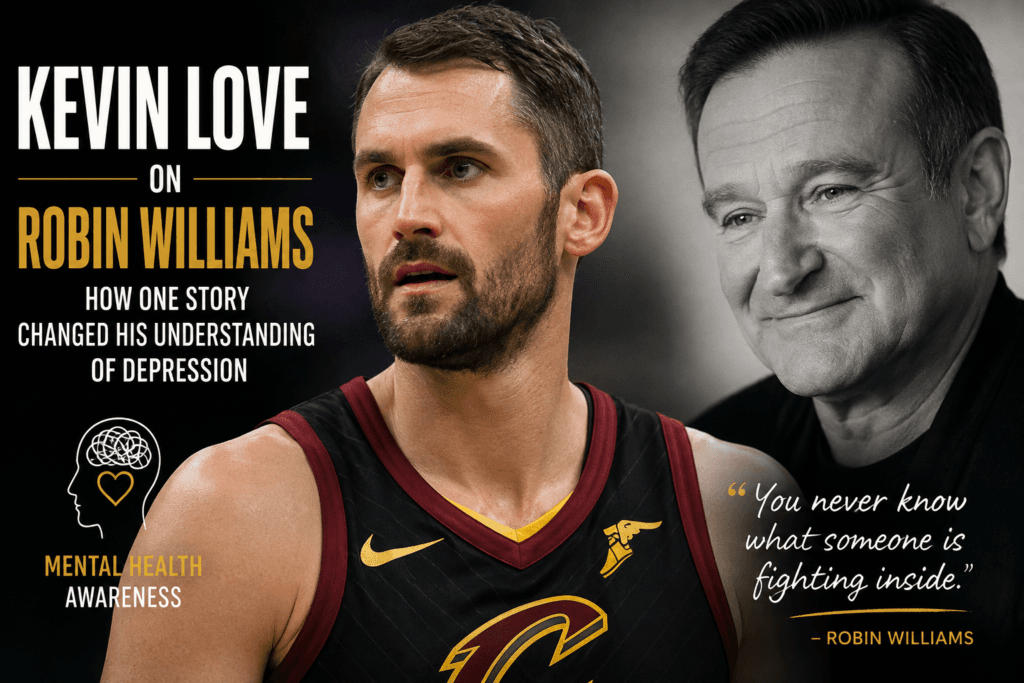
Kevin Love reflecting on Robin Williams' impact on his understanding of depression and mental health awareness.

Kevin Love Says Robin Williams Changed His Understanding of Depression: A Powerful Mental Health Lesson (2026)

Mental health conversations in professional sports have changed dramatically over the past decade, and Kevin Love has been one of the biggest reasons why. Once viewed as a topic athletes rarely discussed publicly, mental health has become an important part of conversations about performance, recovery, and overall well-being.

Recently, Kevin Love reflected on how the late actor and comedian Robin Williams fundamentally changed his understanding of depression. His comments reminded many people that depression does not always look the way society expects. Someone can appear successful, funny, energetic, and loved while quietly struggling with overwhelming emotional pain.

That realization has shaped Kevin Love’s advocacy for years. Since publicly sharing his own experiences with anxiety and panic attacks, he has encouraged millions of people to treat mental health with the same seriousness as physical health.

This article explores why Kevin Love’s perspective matters, how Robin Williams influenced his thinking, the lessons people can learn from both stories, and why the conversation about mental health continues to evolve.


Kevin Love Shares a Powerful Perspective on Mental Health

For many NBA fans, Kevin Love is known as an NBA champion, Olympic gold medalist, and one of basketball’s most skilled power forwards. Yet outside basketball, he has become equally respected for speaking honestly about mental health.

Unlike many public figures who only discuss mental health after retirement, Kevin Love chose to share his struggles while still actively competing at the highest level. That decision encouraged countless athletes, students, professionals, and parents to seek help without feeling ashamed.

His latest reflections about Robin Williams continue that mission.

Instead of focusing only on depression itself, Kevin Love highlighted something much deeper:

  • Mental illness is often invisible.
  • Success does not guarantee emotional well-being.
  • Smiles can hide pain.
  • People should avoid assuming they know what someone is experiencing.

These ideas resonate because they challenge many long-standing misconceptions.


Kevin Love and the Importance of Understanding Depression

One of Kevin Love’s most consistent messages is that depression cannot always be recognized through appearance alone.

Many people still believe someone experiencing depression will always appear sad, withdrawn, or visibly distressed. However, mental health professionals explain that symptoms vary significantly from person to person.

Some individuals may:

  • Continue working every day.
  • Maintain successful careers.
  • Laugh with friends.
  • Care for their families.
  • Participate in social events.

Yet internally, they may feel exhausted, hopeless, or emotionally disconnected.

Kevin Love’s comments reinforce that reality. Rather than judging mental health by outward appearances, he encourages empathy and open conversations.

This shift in thinking has become one of the most important developments in public awareness over the past decade.


Kevin Love’s Personal Mental Health Journey

Kevin Love’s advocacy carries weight because it comes from lived experience rather than theory.

Several years ago, he openly discussed suffering a panic attack during an NBA game. Until then, many fans assumed elite athletes were mentally resilient simply because they competed under intense pressure every night.

His story showed something different.

Even athletes with extraordinary physical conditioning can experience:

  • Anxiety
  • Panic attacks
  • Stress
  • Emotional exhaustion
  • Burnout

Instead of hiding these experiences, Kevin Love described them publicly.

That honesty became a turning point in professional sports.

For years, athletes often felt pressure to appear mentally invincible. Admitting emotional struggles was frequently misunderstood as weakness.

Kevin Love challenged that belief.

He demonstrated that vulnerability can actually inspire strength—not only in professional athletes but also in everyday people facing similar challenges.


Kevin Love Helped Change the Conversation Around Mental Health

Before high-profile athletes began discussing anxiety and depression, mental health conversations within sports often remained private.

Today, many leagues encourage players to seek counseling and emotional support.

Several important changes have occurred:

Then Now
Mental health rarely discussed Open conversations are encouraged
Therapy often carried stigma Therapy is increasingly normalized
Athletes expected to “push through” Mental well-being is recognized as part of performance
Few public role models Many athletes openly share experiences

Kevin Love deserves significant credit for helping move this conversation forward.

His willingness to speak honestly created space for others to do the same.


Kevin Love Explains Why Robin Williams Changed His Perspective

Robin Williams remains one of the world’s most beloved entertainers.

Known for his remarkable energy, humor, and compassion, Williams brought joy to millions through films, television, and stand-up comedy.

For many people, his death came as an enormous shock.

Like countless others, Kevin Love initially struggled to understand how someone who made the world laugh could experience such profound emotional pain.

Over time, that question changed the way he viewed depression.

Instead of assuming emotional suffering is always visible, he began recognizing that mental illness often exists beneath the surface.

That realization became central to his advocacy.

Kevin Love has emphasized that people should avoid making assumptions about another person’s emotional health based solely on appearances.

Someone may appear:

  • Successful
  • Popular
  • Funny
  • Wealthy
  • Confident

Yet still need support.

This understanding encourages compassion instead of judgment.


Kevin Love and the Hidden Nature of Depression

One reason Kevin Love’s comments resonate so strongly is because they address one of the biggest misconceptions surrounding depression.

Mental illness is not always visible.

Unlike a broken bone or physical injury, emotional pain often leaves no obvious external signs.

Some people become quieter.

Others become busier.

Some throw themselves into work.

Others continue smiling while struggling privately.

Because symptoms differ widely, friends and family may not recognize that someone needs help.

Kevin Love believes greater awareness begins with listening rather than assuming.

That approach encourages people to check in with loved ones instead of waiting for obvious warning signs.


Kevin Love Encourages Honest Conversations

Another recurring message from Kevin Love is that honest conversations can make an enormous difference.

Many individuals experiencing anxiety or depression hesitate to speak because they worry about:

  • Being judged
  • Appearing weak
  • Burdening others
  • Damaging relationships
  • Hurting their careers

Kevin Love understands those fears.

By sharing his own experiences publicly, he has shown that discussing mental health does not diminish someone’s accomplishments.

Instead, openness often creates stronger connections.

Friends, teammates, coworkers, and families frequently discover they are not alone once someone begins talking honestly.

That sense of shared understanding can reduce isolation and encourage people to seek professional support when needed.

Public figures have increasingly shown that stepping back during emotionally difficult moments can be an act of strength. Zach John King’s decision to cancel shows after his father’s death highlights how personal well-being sometimes takes priority over professional commitments.


Kevin Love Shows That Strength Includes Vulnerability

Professional sports often celebrate toughness.

Athletes are praised for playing through injuries, overcoming adversity, and performing under pressure.

Kevin Love has expanded that definition of strength.

According to his perspective, true resilience also includes:

  • Asking for help.
  • Accepting support.
  • Speaking honestly.
  • Prioritizing emotional health.
  • Taking care of yourself before reaching a crisis.

These ideas have become increasingly accepted throughout sports, education, and workplaces.

Kevin Love’s message reflects a broader cultural shift in which public figures are becoming more open about emotional well-being. Similar conversations have emerged around Ariana Grande’s decision to step back from public life, showing that even global celebrities sometimes prioritize personal health over constant public visibility.

Rather than replacing traditional ideas of resilience, Kevin Love’s message broadens them.

Strength is not only about enduring hardship—it is also about recognizing when support is necessary.


Why Kevin Love’s Message Matters Beyond Basketball

Although Kevin Love is an NBA player, his message extends far beyond sports.

Millions of people experience workplace stress, family responsibilities, financial uncertainty, academic pressure, or personal loss.

Mental health challenges affect individuals across every profession and stage of life.

His advocacy reminds readers that emotional well-being deserves attention regardless of age, career, or background.

Whether someone is:

  • A college student
  • A parent
  • A business owner
  • A healthcare worker
  • A teacher
  • A military veteran
  • A professional athlete

Mental health remains an essential part of overall health.

Kevin Love’s story helps reinforce that universal truth.

Conversations around wellness are becoming increasingly common across entertainment and sports. Stories like Halle Berry’s focus on confidence and wellness also remind audiences that caring for both physical and emotional health is essential throughout life.

Kevin Love Continues to Inspire Mental Health Awareness

The conversation around mental health has grown significantly in recent years, but Kevin Love believes there is still work to do. Greater awareness has helped reduce stigma, yet many people continue to struggle silently because they fear misunderstanding or judgment.

Changing that reality requires more than public campaigns. It also depends on everyday conversations between friends, families, coworkers, teachers, coaches, and community members.

Kevin Love frequently emphasizes that awareness should lead to action. Learning about mental health is valuable, but supporting people with empathy is what creates meaningful change.

Some simple actions include:

  • Listening without interrupting.
  • Asking genuine questions.
  • Respecting someone’s feelings.
  • Encouraging professional support when appropriate.
  • Staying connected over time.

These actions may seem small, but they often make a lasting difference.


Kevin Love and the Growing Acceptance of Therapy

For many years, therapy carried unnecessary stereotypes.

Some people believed seeking professional help meant they were weak or unable to handle life’s challenges. Fortunately, that perception has started to change.

Kevin Love has openly discussed the value of talking with mental health professionals, helping normalize therapy for people who may have previously avoided it.

Therapy is not reserved for moments of crisis. Many individuals use it to:

  • Manage stress.
  • Improve relationships.
  • Build healthy coping skills.
  • Process difficult experiences.
  • Better understand their emotions.
  • Maintain long-term emotional wellness.

Kevin Love’s openness has encouraged countless people to view therapy as a proactive form of self-care rather than a last resort.


Kevin Love Reminds People That Success Does Not Prevent Depression

One of the most powerful lessons from Kevin Love’s recent comments is that success and depression can exist at the same time.

Many people mistakenly believe that money, fame, or career achievements automatically protect someone from mental illness.

In reality, emotional health is far more complex.

People may appear to have everything they ever wanted while privately experiencing:

  • Anxiety
  • Depression
  • Loneliness
  • Burnout
  • Emotional exhaustion

Kevin Love’s reflections encourage people to avoid making assumptions based on someone’s lifestyle or accomplishments.

Mental health affects people from every background.


Kevin Love Highlights Why Empathy Matters

Empathy plays a central role in Kevin Love’s advocacy.

Instead of trying to immediately solve someone’s problems, empathy begins with understanding.

That may involve:

  • Listening carefully.
  • Being patient.
  • Avoiding judgment.
  • Respecting someone’s experiences.
  • Letting them know they are not alone.

Sometimes, people simply need to know someone cares enough to listen.

Kevin Love has repeatedly encouraged this approach because emotional support often starts with human connection rather than perfect words.


Kevin Love and the Importance of Breaking Mental Health Stigma

Although awareness has improved, stigma still prevents many people from seeking help.

Some common misconceptions include:

Myth Reality
Depression is simply sadness. Depression is a medical condition that affects emotions, thinking, and daily life.
Strong people never struggle mentally. Anyone can experience mental health challenges regardless of strength or success.
Asking for help shows weakness. Seeking support demonstrates courage and self-awareness.
Mental illness is obvious. Many people experience invisible symptoms.
Talking about feelings makes things worse. Healthy conversations often encourage healing and support.

Kevin Love has challenged these misconceptions by sharing his own experiences honestly.

His message encourages understanding instead of judgment.


Kevin Love’s Advocacy Reaches Beyond the Basketball Court

Kevin Love’s influence extends well beyond NBA arenas.

Through interviews, public speaking, educational initiatives, and community outreach, he has become one of the most recognizable voices promoting emotional well-being in sports.

His advocacy demonstrates that athletes can use their platforms to create meaningful social impact.

Basketball fans often follow both on-court achievements and personal milestones. Readers interested in today’s NBA stars can also explore Donovan Mitchell’s wedding and latest life updates, another story generating attention among basketball audiences.

Young athletes now grow up seeing professional players discuss:

  • Mental health.
  • Emotional resilience.
  • Therapy.
  • Anxiety.
  • Personal growth.

This visibility helps normalize conversations that previous generations often avoided.


Kevin Love Encourages Early Conversations

Many mental health professionals agree that early conversations can prevent problems from becoming more difficult over time.

Kevin Love’s message aligns with that idea.

Instead of waiting until someone reaches a crisis point, he encourages people to speak openly when they first notice emotional struggles.

Some early warning signs may include:

Changes in Mood

  • Persistent sadness.
  • Increased irritability.
  • Feeling emotionally numb.
  • Loss of motivation.

Changes in Daily Habits

  • Sleeping much more or much less.
  • Changes in appetite.
  • Difficulty concentrating.
  • Loss of interest in favorite activities.

Social Changes

  • Withdrawing from friends.
  • Avoiding family gatherings.
  • Canceling plans frequently.
  • Feeling disconnected.

Recognizing these signs does not mean someone has depression, but they may indicate it’s time for a supportive conversation or professional evaluation.


Kevin Love’s Message Resonates With Young People

Younger generations have become increasingly open about discussing emotional health.

Students face academic pressure, social media expectations, career uncertainty, and constant digital connectivity.

Kevin Love’s story resonates because it reminds young people that mental health deserves attention just like physical health.

His openness sends several important messages:

  • You are not alone.
  • Your feelings are valid.
  • Asking for help is normal.
  • Recovery looks different for everyone.
  • Progress often happens gradually.

These messages can encourage individuals to seek support earlier rather than suffering in silence.


Kevin Love and the Role of Families

Families often play an important role in supporting emotional well-being.

Kevin Love’s advocacy encourages loved ones to create environments where honest conversations feel safe.

Healthy family communication includes:

  • Listening without criticism.
  • Respecting privacy.
  • Offering encouragement.
  • Avoiding dismissive language.
  • Supporting professional care when needed.

Even small conversations can strengthen trust over time.

When people feel heard, they are often more comfortable discussing difficult emotions.


Kevin Love’s Perspective Applies to Every Workplace

Mental health discussions are no longer limited to healthcare settings or schools.

Many workplaces now recognize that emotional well-being contributes to productivity, creativity, teamwork, and long-term success.

Kevin Love’s message offers valuable lessons for employers as well.

Healthy workplaces often encourage:

  • Open communication.
  • Respectful leadership.
  • Flexible support systems.
  • Employee assistance resources.
  • Work-life balance.

Organizations that prioritize well-being often create healthier, more engaged teams.


Kevin Love Inspires Athletes at Every Level

Professional athletes are not the only people facing competitive pressure.

High school athletes, college players, and recreational competitors also experience stress related to:

  • Performance expectations.
  • Injuries.
  • Scholarships.
  • Team dynamics.
  • Public criticism.
  • Personal goals.

Kevin Love’s willingness to discuss anxiety demonstrates that emotional health matters regardless of competition level.

Coaches increasingly encourage athletes to care for both their physical and mental well-being.

This balanced approach benefits long-term performance and overall quality of life.


Kevin Love’s Lasting Legacy May Extend Beyond Basketball

Kevin Love has already built an impressive basketball career.

His achievements include:

  • NBA championship.
  • Multiple NBA All-Star selections.
  • Olympic gold medal.
  • International recognition.
  • Years of consistent performance.

Like Phil Collins’ health journey, Kevin Love’s story demonstrates that resilience is not measured only by professional success but also by the courage to face personal challenges openly.

However, many people believe his greatest legacy may ultimately be his work outside the game.

By speaking openly about mental health, Kevin Love has helped reshape public conversations around emotional wellness.

His advocacy has inspired:

  • Athletes.
  • Students.
  • Parents.
  • Healthcare professionals.
  • Coaches.
  • Employers.
  • Everyday individuals.

That influence reaches far beyond wins and championships.


What Readers Can Learn From Kevin Love’s Story

Kevin Love’s journey offers lessons that apply to nearly everyone.

Some of the most important takeaways include:

  • Mental health deserves the same attention as physical health.
  • Emotional struggles are not always visible.
  • Success does not eliminate depression.
  • Asking for help is a sign of courage.
  • Honest conversations reduce stigma.
  • Listening can change someone’s life.
  • Recovery is possible with appropriate support.
  • Every person deserves compassion.

These lessons continue to resonate because they reflect shared human experiences rather than isolated events.


Kevin Love and the Future of Mental Health Advocacy

The conversation surrounding mental health continues to evolve.

More athletes, entertainers, educators, and public leaders now speak openly about emotional well-being.

Kevin Love remains one of the most respected voices in that movement.

His recent reflections about Robin Williams reinforce a timeless message:

We should never assume we know what someone is experiencing simply because they appear happy or successful.

Compassion begins with curiosity, empathy, and a willingness to listen.

As awareness continues to grow, Kevin Love’s advocacy serves as a reminder that meaningful change happens through honest conversations, education, and consistent support for one another.


Frequently Asked Questions

Why is Kevin Love discussing Robin Williams?

Kevin Love recently reflected on how Robin Williams changed his understanding of depression. Williams’ story reminded him that mental illness is often invisible and cannot be judged by outward appearances.

Why is Kevin Love considered a mental health advocate?

Kevin Love became a leading advocate after publicly sharing his own experiences with anxiety and panic attacks. Since then, he has encouraged open conversations about emotional well-being and reducing stigma.

What message does Kevin Love want people to understand?

Kevin Love encourages people to recognize that anyone can experience mental health challenges, regardless of success, career, or public image. He believes empathy and honest communication are essential.

How has Kevin Love influenced professional sports?

Kevin Love helped normalize discussions about mental health within professional athletics. His openness encouraged athletes, teams, and leagues to prioritize emotional wellness alongside physical performance.

Why does Robin Williams remain important in mental health conversations?

Robin Williams’ life reminds many people that depression can affect anyone, including individuals who appear joyful and successful. His legacy continues to inspire conversations about awareness, compassion, and understanding.


Final Thoughts

Kevin Love’s reflections on Robin Williams go beyond a single news story. They represent a broader shift in how society understands depression, anxiety, and emotional well-being.

His advocacy has helped challenge outdated stereotypes, encourage honest conversations, and remind millions of people that mental health deserves care, respect, and attention.

Perhaps the most valuable lesson from Kevin Love’s message is also the simplest: we cannot always see what another person is carrying. A kind conversation, a willingness to listen, or an offer of support may matter more than we ever realize.

As public awareness continues to grow, Kevin Love’s voice remains an important reminder that compassion, understanding, and openness have the power to change lives.

The impact of influential public figures often extends well beyond their careers. Just as readers continue exploring John Wayne’s lasting Hollywood legacy, Kevin Love’s advocacy may ultimately become one of the defining parts of his own legacy beyond basketball.

Leave a Comment