
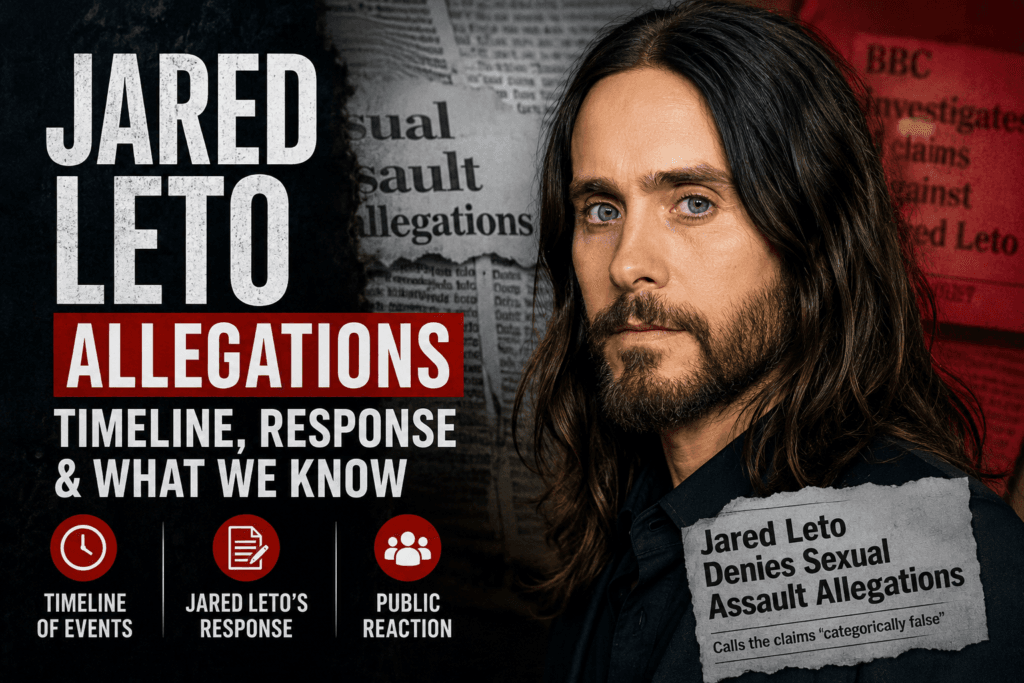
For more than three decades, Jared Leto has remained one of Hollywood’s most recognizable figures. Known for his Academy Award-winning acting career, his work as the lead vocalist of Thirty Seconds to Mars, and his unconventional public persona, he has often attracted both admiration and criticism. In late July 2026, however, conversations surrounding Jared Leto shifted dramatically after a major investigative report brought forward allegations from multiple women regarding alleged misconduct spanning several years.
The publication of those allegations quickly became one of the entertainment industry’s biggest stories. Within hours, news organizations, entertainment outlets, legal analysts, and social media users began discussing the claims, their potential implications, and the broader issues surrounding accountability in Hollywood.
At the center of the discussion are two important facts that readers should understand from the beginning:
- Multiple women made allegations that were reported by established news organizations.
- Jared Leto has denied the allegations through his representatives.
Because the matter involves serious allegations involving identifiable individuals, it is essential to separate verified facts from claims that remain unproven. Responsible reporting requires presenting the available information fairly, acknowledging uncertainty where it exists, and avoiding speculation about outcomes that have not been determined.
This article examines what has been publicly reported, explains Jared Leto’s response, provides context about how similar investigations are handled, and explores the possible impact on his career while maintaining a neutral and evidence-based perspective.
Who Is Jared Leto?
Before examining the recent controversy, it helps to understand why the story has received significant international attention.
Jared Leto’s Career in Film
Jared Leto established himself as a successful actor during the 1990s before becoming known for taking on physically and emotionally demanding roles.
Throughout his career, he has appeared in numerous critically acclaimed films across multiple genres. His performances have earned recognition from audiences, critics, and major award organizations.
Some of the characteristics commonly associated with his acting career include:
- Transformative performances
- Significant physical preparation for roles
- Selective film appearances
- Independent and blockbuster projects
- Award-winning dramatic performances
His willingness to completely immerse himself in characters helped create a reputation as one of Hollywood’s most dedicated performers.
Jared Leto’s Music Career
Outside of acting, Jared Leto is also widely recognized as the frontman of the rock band Thirty Seconds to Mars.
The band developed an international following through:
- Studio albums
- World tours
- Festival appearances
- Music videos
- Fan communities across multiple countries
For many fans, his music career introduced him before his acting work, making him a prominent figure across both the entertainment and music industries.
Jared Leto’s Public Image
Over the years, Jared Leto has cultivated an image that differs from many traditional Hollywood celebrities.
Public discussions about him have often focused on:
- His artistic approach
- Fashion choices
- Public appearances
- Creative projects
- Close fan engagement
- Unique lifestyle
That distinctive public image has frequently generated headlines independent of his professional work.
Jared Leto Allegations: What Happened?
The recent attention surrounding Jared Leto began after a high-profile investigative report published allegations from multiple women who described interactions with the actor over a period of years.
According to the published reporting:
- Several women shared accounts describing alleged inappropriate conduct.
- The allegations span different periods of Jared Leto’s career.
- The investigation included interviews and supporting reporting from journalists.
- The allegations received widespread international media coverage shortly after publication.
It is important to note that these are allegations, not findings made by a court. Public reporting of allegations does not establish legal liability or criminal guilt.
Jared Leto Denies the Allegations
Following publication of the investigation, representatives for Jared Leto issued a response rejecting the accusations.
According to publicly reported statements, Jared Leto’s representatives denied the allegations and disputed the claims presented in the investigation.
The response became an essential part of the story because it presents Jared Leto’s position regarding the allegations.
When covering stories involving serious accusations, responsible journalism includes:
- Reporting the allegations accurately.
- Including the response from the accused.
- Avoiding conclusions unsupported by evidence.
- Distinguishing allegations from established facts.
That approach allows readers to understand the current situation while recognizing that investigations, legal proceedings, or additional reporting may continue.
Why the Jared Leto Story Became Global News
Not every celebrity investigation generates worldwide attention. Several factors contributed to the rapid spread of this story.
Jared Leto Is an International Celebrity
The entertainment industry operates globally, and Jared Leto has audiences across:
| Industry | Global Reach |
|---|---|
| Film | International theatrical audiences |
| Music | Worldwide tours and streaming listeners |
| Fashion | International events and campaigns |
| Social Media | Millions of followers |
| Entertainment News | Continuous global coverage |
Because of that international recognition, developments involving Jared Leto quickly became major entertainment news.
Investigative Journalism Draws Significant Interest
Long-form investigative reporting often receives extensive public attention when it involves prominent public figures.
Readers typically seek answers to questions such as:
- What has been alleged?
- How was the investigation conducted?
- What evidence was reported?
- How has the accused responded?
- Could legal action follow?
These questions explain why stories of this nature often remain in the news cycle for an extended period.
Social Media Accelerated the Discussion
Within hours of publication, discussions expanded across multiple online platforms.
Many conversations included:
- Reactions from fans
- Commentary from critics
- Legal analysis
- Media ethics discussions
- Broader conversations about accountability
However, social media also illustrates why readers should rely on verified reporting rather than rumors or unverified posts. Early online discussions frequently include speculation that may later prove inaccurate.
Understanding Allegations vs. Proven Facts
One of the most important aspects of this story is understanding the difference between allegations and established facts.
An allegation is a claim made by an individual or reported through journalism. It does not automatically establish that the alleged conduct occurred.
A proven fact generally requires supporting evidence that has been evaluated through appropriate legal or investigative processes.
When reading stories involving public figures, it is helpful to distinguish between:
| Allegation | Established Fact |
|---|---|
| A reported claim | A verified event supported by evidence |
| May be disputed | Generally accepted after verification |
| Can lead to investigations | May result from completed investigations |
| Does not establish guilt | Based on confirmed findings |
Keeping this distinction in mind helps readers evaluate developing news responsibly.
What Readers Want to Know
As the story continues to develop, many readers are searching for answers to common questions, including:
- What exactly has been alleged?
- How has Jared Leto responded?
- Have any legal proceedings been announced?
- What happens next?
- Could future investigations change the public understanding of the case?
The answers to these questions depend on future developments, making it important to follow credible reporting rather than speculation.
Jared Leto Timeline: How the Story Developed
Understanding the sequence of events helps explain why the story surrounding Jared Leto gained international attention so quickly. While every development is still unfolding, the publicly reported timeline provides useful context for readers following the news.
Because the matter involves ongoing allegations, future reporting or legal developments could change the overall picture. For now, the timeline below summarizes the major publicly reported milestones without drawing conclusions about disputed claims.
| Date | Reported Development |
|---|---|
| 2002–2016 | Several women later alleged incidents occurred during this period. |
| 2025 | Previous media reports raised additional allegations, which Jared Leto denied. |
| July 2026 | BBC published a new investigative report featuring multiple women. |
| Same Day | Jared Leto’s representatives publicly denied the allegations. |
| Following Hours | International media organizations reported on both the allegations and the denial. |
Rather than representing the conclusion of a legal process, this timeline reflects the progression of public reporting.
Jared Leto Investigation: Understanding the Reporting Process
When a major investigative story involves a well-known public figure, readers often wonder how such reports are prepared before publication.
Investigative journalism generally differs from daily news reporting because it can require months of research, interviews, and document review before a story is released. Although every newsroom follows its own editorial standards, investigations often involve multiple layers of verification before publication.
Typical investigative reporting may include:
- Interviews with individuals connected to the story
- Review of available documents
- Requests for comment from all parties involved
- Editorial review
- Legal review before publication
These steps do not determine whether allegations are true or false. Instead, they help ensure that the reporting meets journalistic standards before reaching the public.
Jared Leto and the Importance of Fair Reporting
Stories involving public figures can quickly generate strong public opinions. However, responsible reporting requires presenting all significant perspectives that are available at the time of publication.
In this case, coverage has generally included:
- The allegations reported by journalists.
- Jared Leto’s public denial.
- The acknowledgment that the allegations have not been proven in court.
- Information about previous public reporting on similar claims.
This balanced approach helps readers distinguish between reported claims and verified legal findings.
Jared Leto Response to the Allegations
One of the most significant developments following publication of the investigation was the response issued on behalf of Jared Leto.
Jared Leto Denied the Allegations
According to statements reported by multiple news organizations, Jared Leto denied the allegations and rejected claims of criminal sexual misconduct.
Publicly reported statements from his representatives emphasized that he disputed the accusations and maintained that he had not committed the alleged acts.
For readers following the story, this response is an essential part of understanding the current state of the matter.
Why a Public Response Matters
Whenever allegations involve a public figure, a response from the individual or their representatives serves several purposes.
It can:
- Present the individual’s position.
- Address public concerns.
- Respond to specific claims.
- Become part of the public record.
Including that response also reflects a basic principle of balanced reporting: readers should have access to both the allegations and the denial when evaluating a developing story.
Jared Leto and Previous Public Allegations
The July 2026 reporting did not emerge in isolation.
Previous media reports had already discussed allegations involving Jared Leto, and those earlier reports became part of the broader context surrounding the latest investigation.
Importantly:
- Earlier allegations had also been publicly denied.
- The new reporting brought additional attention to the issue.
- News organizations have continued to distinguish between allegations and proven legal findings.
Understanding this history helps explain why the latest investigation received extensive coverage across entertainment and mainstream news outlets.
Jared Leto and Public Reaction
Public reaction developed almost immediately after publication of the investigation.
Fans Expressed Mixed Opinions
Many longtime fans expressed uncertainty while waiting for additional information.
Common reactions included:
- Requests for verified facts.
- Support for due process.
- Concern for anyone making allegations.
- Calls to avoid rushing to conclusions.
The range of opinions demonstrated how audiences often respond cautiously when high-profile allegations emerge.
Entertainment Media Expanded Coverage
Entertainment publications rapidly analyzed multiple aspects of the story, including:
- Jared Leto’s career.
- Industry reaction.
- Previous reporting.
- Potential future developments.
As more outlets covered the investigation, the discussion expanded beyond entertainment news into broader conversations about accountability and media responsibility.
Social Media Increased Visibility
Social media platforms significantly increased public awareness of the story.
Trending discussions included:
- News summaries
- Commentary videos
- Legal explanations
- Opinion posts
- Fact-checking efforts
However, social media also highlighted an important challenge: not every widely shared post contained verified information.
Readers are generally better served by relying on established news organizations rather than viral posts lacking evidence.
Jared Leto and the Legal Context
Understanding the legal framework surrounding allegations is essential.
Allegations Are Not Criminal Convictions
One of the most misunderstood aspects of high-profile cases involves the distinction between allegations and legal findings.
An allegation:
- Represents a reported claim.
- May prompt investigation.
- Does not establish guilt.
- Can be disputed.
A criminal conviction, by contrast, follows legal proceedings in which evidence is evaluated under applicable legal standards.
This distinction is fundamental to fair reporting and public understanding.
Could Future Legal Action Occur?
At the time of writing, public reporting has focused primarily on the investigative allegations and Jared Leto’s denial.
Whether additional legal action occurs depends on decisions made by the relevant parties and authorities. Because circumstances may change, readers should follow future reporting from credible news organizations rather than relying on speculation.
Why the Jared Leto Story Matters Beyond One Celebrity
Stories involving prominent public figures often become part of larger conversations about the entertainment industry.
The current discussion has prompted broader questions such as:
- How should allegations be reported responsibly?
- What standards should investigative journalists follow?
- How can media balance fairness with accountability?
- What role should audiences play in evaluating developing news?
These questions extend beyond any single individual and continue to shape discussions about ethics, journalism, and public trust.
Jared Leto Career: Potential Industry Impact
Whenever allegations involve a well-known entertainer, attention naturally turns to the possible effects on future projects. In the case of Jared Leto, that discussion extends across both his acting and music careers because he has spent decades working in multiple areas of the entertainment industry.
It is important to remember that professional consequences can vary widely from case to case. Some projects continue as planned, while others may face delays, additional scrutiny, or public discussion. Decisions are ultimately made by studios, production companies, distributors, business partners, and other stakeholders rather than by media coverage alone.
At the time of writing, no public announcement has confirmed broad industry action affecting all of Jared Leto’s current or upcoming work. Readers should therefore distinguish between speculation and officially confirmed developments.
Jared Leto and Upcoming Projects
Like many established actors, Jared Leto has been attached to several high-profile productions in recent years.
Whenever controversy surrounds a prominent performer, questions often arise about:
- Film release schedules
- Promotional campaigns
- Press appearances
- Studio marketing strategies
- Brand partnerships
- Future casting decisions
However, these decisions are highly individualized. Entertainment companies generally evaluate legal, financial, contractual, and reputational considerations before making any public announcements.
Until official statements are issued, assumptions about cancellations or project changes should be avoided.
Jared Leto and Hollywood’s Changing Environment
The entertainment industry has changed considerably over the past decade in how it responds to allegations involving public figures.
Greater Public Scrutiny
Audiences today expect greater transparency from both celebrities and entertainment companies.
This shift has resulted in:
- Increased investigative journalism.
- More public discussion about accountability.
- Faster dissemination of breaking news.
- Greater attention to workplace culture.
- Broader conversations about ethical standards.
As a result, stories involving high-profile individuals often receive extensive national and international coverage within hours of publication.
Why Studios Often Wait Before Acting
Although public reaction can be immediate, organizations frequently move more cautiously.
Companies may wait for:
- Additional verified information.
- Legal advice.
- Internal reviews.
- Official investigations, if any occur.
- Further reporting.
This measured approach helps reduce the risk of making decisions based solely on incomplete information.
Jared Leto and Public Reputation
Public reputation is shaped over many years but can change quickly during periods of intense media attention.
Reputation Takes Time to Build
Throughout his career, Jared Leto developed a reputation based on several factors:
| Area | Public Recognition |
|---|---|
| Acting | Award-winning performances |
| Music | Frontman of Thirty Seconds to Mars |
| Directing | Creative visual projects |
| Fashion | Frequent appearances at major events |
| Entertainment | Long Hollywood career |
These accomplishments contributed to his status as an internationally recognized entertainer long before the current controversy.
Reputation Can Change Quickly
High-profile allegations often influence public perception regardless of whether legal proceedings occur.
Some people may:
- Wait for additional verified information.
- Continue supporting the artist.
- Reevaluate past opinions.
- Separate artistic work from personal conduct.
- Decide to avoid future projects.
Because public opinion differs widely, there is rarely a single response shared by all audiences.
Jared Leto and the Role of Investigative Journalism
The recent reporting has also renewed discussion about investigative journalism itself.
Why Investigative Reporting Matters
Investigative journalism often focuses on issues that require extensive reporting rather than quick daily news coverage.
Such reporting may involve:
- Long-term research.
- Interviews with numerous individuals.
- Documentary evidence where available.
- Editorial review.
- Opportunities for subjects to respond before publication.
The goal is not to determine guilt or innocence but to present information that journalists believe is in the public interest, while also including responses from those involved.
Challenges Facing Investigative Journalists
Stories involving well-known public figures present unique challenges.
Journalists must balance:
- Accuracy.
- Fairness.
- Verification.
- Privacy considerations.
- Public interest.
- Legal risk.
Maintaining those standards helps readers understand complex stories without encouraging speculation.
Jared Leto and Responsible News Consumption
The speed of online information means readers often encounter headlines before they see the full story.
How Readers Can Evaluate Breaking News
When following stories involving Jared Leto or any public figure, consider the following practices:
Read Beyond Headlines
Headlines summarize a story but rarely provide complete context.
Reading the full report often reveals:
- Important qualifications.
- Responses from all parties.
- Legal context.
- Information about what has and has not been verified.
Distinguish Facts From Opinions
Online discussions frequently mix:
- Verified reporting.
- Personal opinions.
- Commentary.
- Speculation.
- Rumors.
Readers benefit from identifying which statements come from documented reporting and which reflect individual viewpoints.
Follow Credible Sources
Reliable journalism generally includes:
- Named reporters.
- Editorial oversight.
- Source attribution.
- Corrections when necessary.
- Opportunities for response from affected individuals.
These practices help improve the quality of public information.
Jared Leto and the Broader Entertainment Industry
The discussion surrounding Jared Leto extends beyond one individual because it reflects larger conversations taking place across Hollywood.
Several ongoing topics include:
- Workplace conduct.
- Professional accountability.
- Ethical leadership.
- Investigative reporting.
- Public trust.
- Industry standards.
These conversations have influenced how audiences, journalists, and entertainment companies approach similar stories involving other public figures.
Frequently Asked Questions About Jared Leto
Is Jared Leto facing criminal charges?
Based on publicly available reporting at the time of writing, news coverage has centered on reported allegations and Jared Leto’s denial. Readers should follow future official announcements for any legal developments rather than relying on speculation.
Has Jared Leto responded publicly?
Yes. Through his representatives, Jared Leto has publicly denied the allegations and stated that he has never sexually assaulted anyone.
Why is this story receiving worldwide attention?
The story involves:
- A globally recognized actor and musician.
- Allegations reported by established news organizations.
- A high-profile public denial.
- Ongoing discussion about accountability in the entertainment industry.
These factors have contributed to significant international media coverage.
Does media reporting determine guilt?
No.
News reporting informs the public about allegations, investigations, responses, and developments. It does not replace legal proceedings or establish criminal liability.
Why is careful language important?
Responsible journalism distinguishes between:
- Allegations.
- Reported claims.
- Verified facts.
- Legal findings.
- Personal opinions.
Using precise language helps readers understand developing events without drawing unsupported conclusions.
What Could Happen Next in the Jared Leto Story?
As with many high-profile news stories, the situation involving Jared Leto may continue to develop over the coming weeks or months. Additional reporting, public statements, or legal developments could provide new information that changes the public understanding of the case.
For that reason, readers should avoid treating any single report as the final word. Instead, it is better to follow updates from established news organizations and official statements from the parties involved.
Possible future developments may include:
- Additional public responses from Jared Leto or his representatives.
- Further investigative reporting by media organizations.
- Statements from business partners or production companies.
- Legal developments, if any occur.
- New information from credible and verifiable sources.
Because none of these outcomes are guaranteed, it is important not to speculate beyond confirmed reporting.
Jared Leto and the Importance of Due Process
One of the most significant principles in stories involving allegations is the concept of due process.
Why Due Process Matters
Due process is a legal principle that helps ensure individuals receive fair treatment before conclusions are reached through the justice system.
In practical terms, it means:
- Allegations deserve careful consideration.
- Evidence should be evaluated objectively.
- Individuals have the opportunity to respond.
- Legal findings are determined through established procedures rather than public opinion.
Media coverage can inform the public, but it does not replace the role of courts or official investigations.
Why Responsible Reporting Uses Careful Language
Professional journalism typically avoids language that implies guilt before legal findings exist.
Instead, reports often use phrases such as:
- “According to the investigation…”
- “The report alleges…”
- “Representatives denied the allegations…”
- “No court has ruled on the claims.”
This approach helps maintain fairness while keeping readers accurately informed.
Jared Leto and Lessons for the Entertainment Industry
Regardless of how this specific story develops, it highlights several broader trends affecting Hollywood and the entertainment business.
Increased Expectations for Accountability
Audiences increasingly expect:
- Transparent communication.
- Ethical workplace practices.
- Independent journalism.
- Respectful treatment of individuals who come forward with allegations.
- Fair treatment of those responding to allegations.
These expectations continue to influence public conversations across the entertainment industry.
The Growing Role of Investigative Journalism
Investigative journalism remains an important part of holding powerful institutions and public figures accountable.
At the same time, responsible investigations also:
- Verify information whenever possible.
- Seek comment from the people involved.
- Clearly distinguish reported claims from confirmed facts.
- Update reporting if significant new information emerges.
This balance strengthens public trust in credible news organizations.
Jared Leto and Public Opinion
Public opinion often evolves as additional information becomes available.
Early reactions may change because of:
- New evidence.
- Official statements.
- Court filings, if applicable.
- Additional reporting.
- Independent investigations.
For that reason, readers should remain open to updated information rather than relying solely on initial headlines or social media discussions.
Jared Leto: Media Literacy Tips for Readers
High-profile celebrity stories often spread rapidly online. Developing strong media literacy skills can help readers navigate these situations more effectively.
Verify the Source
Before sharing or reacting to a story:
- Check whether it comes from an established news organization.
- Read the full article instead of only the headline.
- Look for named reporters and editorial standards.
Compare Multiple Reports
Reading coverage from several reputable outlets can provide a broader understanding of a developing story.
Comparing reports helps readers identify:
- Commonly confirmed facts.
- Areas where information remains uncertain.
- Differences in analysis versus factual reporting.
Avoid Spreading Unverified Claims
Social media can amplify rumors before they are verified.
Sharing only confirmed information helps reduce misinformation and encourages more informed public discussions.
Jared Leto: Quick Facts
| Topic | Information |
|---|---|
| Full Name | Jared Joseph Leto |
| Profession | Actor, Musician, Director |
| Music Career | Lead vocalist of Thirty Seconds to Mars |
| Film Career | Academy Award-winning actor |
| Current News | Subject of publicly reported allegations that he denies |
| Legal Status | Allegations reported publicly; no court finding establishing liability or guilt at the time of writing |
Jared Leto Timeline Summary
| Stage | Summary |
|---|---|
| Career | Built an international reputation in film and music. |
| Public Reporting | Multiple women made allegations reported by major news organizations. |
| Response | Jared Leto publicly denied the allegations through representatives. |
| Public Discussion | The story generated widespread international attention. |
| Current Status | The matter remains a developing news story with no court determination on the reported allegations. |
Frequently Asked Questions
Why is Jared Leto trending?
Jared Leto is trending because several major news organizations reported allegations made by multiple women, and his representatives publicly denied those allegations. The story quickly gained international attention due to his prominence in the entertainment industry.
Has Jared Leto been convicted of a crime?
At the time of writing, publicly available reporting has focused on allegations and Jared Leto’s denial. The reports do not state that he has been convicted in connection with the allegations discussed. Readers should monitor official sources for any future legal developments.
Why do news reports repeatedly use the word “alleged”?
The term “alleged” indicates that a claim has been made but has not been established through a legal finding. Using this language is a standard journalistic practice that helps distinguish reported claims from verified facts.
How should readers follow this story?
Readers are best served by:
- Following reputable news organizations.
- Looking for official statements.
- Avoiding rumors and unverified social media posts.
- Recognizing the difference between allegations, opinions, and confirmed facts.
What should readers remember?
The key point is that this is a developing story. Responsible reporting requires presenting the reported allegations alongside Jared Leto’s denial while avoiding conclusions that are not supported by verified evidence.
Final Thoughts on Jared Leto
The recent news involving Jared Leto has become one of the most widely discussed entertainment stories of the year because it combines celebrity, investigative journalism, and broader conversations about accountability. As with any developing case, it is essential to approach new information with care, patience, and a commitment to factual accuracy.
For readers, the most responsible approach is to focus on verified reporting, understand the distinction between allegations and legal findings, and remain aware that future developments may provide additional context. Public opinion can evolve quickly, but informed judgment depends on credible information rather than speculation.
Whether future reporting leads to additional statements, legal action, or no further developments, the story serves as a reminder of the importance of balanced journalism, due process, and media literacy. By separating confirmed facts from unverified claims, readers can better understand complex issues while respecting the rights of everyone involved.