Below Netflix starring Josh Hartnett with a giant squid and iceberg

Below Netflix: Ending Explained, Cast, Plot and What the Finale Means

Below has arrived on Netflix with a premise that mixes coastal mystery, family drama, and creature horror. The six-episode limited series stars Josh Hartnett as Calvin Penney, a Newfoundland fisherman whose already difficult life becomes even more dangerous when a mysterious sea creature begins threatening his community. Readers interested in other major Netflix streaming developments can also explore our guide to The Walking Dead Netflix. Netflix classifies the show as a thriller, while its story also draws on supernatural elements, local folklore, and environmental concerns. Set in a remote Newfoundland community, Below is not simply about a monster emerging from the ocean. The series places its central threat against a town dealing with economic uncertainty, changing conditions, and a way of life that is becoming increasingly difficult to preserve. That combination gives the show a broader emotional focus: Calvin is fighting not only for his family but also for the community he calls home. What Is Below Netflix About? Below is a six-part Netflix thriller created by Jesse McKeown. The story follows Calvin Penney, a stubborn but caring fisherman living in the small Newfoundland community of Snook’s Arm. Calvin remains haunted by his father’s mysterious death and struggles to keep his fractured family together. His personal problems take a darker turn when an unidentified creature begins terrorizing the town. Calvin eventually joins forces with Fonda Howander, a visiting marine researcher played by Mackenzie Davis. Together, they try to understand what is happening beneath the water while the danger around the community continues to grow. Charlie Heaton plays Calvin’s son Wade, adding another layer to the family’s struggle. The series combines suspense with moments of humor and local character. Its isolated coastal setting also gives the story a distinctive atmosphere. Rather than treating Newfoundland as a generic backdrop, Below makes the community and its disappearing way of life central to the conflict. Netflix describes the story as a fight to protect both family and community, which captures the show’s larger focus beyond its creature mystery. Below Netflix Release Date and Episode Count For readers looking for the basic details, here’s the quick breakdown: Detail Information Title Below Platform Netflix Release Date October 8, 2026 Episodes 6 Format Limited series Genre Thriller / Creature Drama Lead Star Josh Hartnett Setting Newfoundland When Did Below Premiere on Netflix? Below premiered on Netflix on October 8, 2026. The series arrived as a complete six-episode limited series, allowing viewers to watch the entire story rather than waiting for weekly episodes. The October release places Below among Netflix’s fall thriller offerings. Its combination of Josh Hartnett, a remote coastal setting, and an unexplained creature gives the series a clear genre hook. At the same time, the family drama and community conflict give viewers reasons to look beyond the creature itself. For anyone searching for Below on Netflix, the key information is simple: the series is available to stream, and all six episodes make up its initial story. How Many Episodes Does Below Have? Below has six episodes in its first season. Netflix presents the project as a limited series rather than a conventional long-running drama. The six-episode structure allows the story to build its mystery around Calvin, his family, Fonda’s investigation, and the growing threat facing Snook’s Arm. Instead of spending dozens of episodes establishing the community, the series moves from personal conflict into the larger creature mystery within a compact narrative. That format also makes the finale particularly important. Developments involving the creature, Calvin’s family, and the future of the community carry greater weight as the story approaches its conclusion. For viewers who prefer a contained mystery rather than a long-running series, the limited format makes Below a relatively easy weekend watch. Below Netflix Plot Explained At the center of Below is Calvin Penney, a Newfoundland fisherman trying to hold his family together while dealing with the memories surrounding his father’s death. His life is already connected to a community facing major uncertainty when strange events begin changing everything around him. The arrival of an unidentified sea creature transforms the town’s problems into a fight for survival. Calvin’s connection to the area becomes important because he understands the community and its relationship with the ocean. However, understanding the sea does not mean he understands what is now emerging from it. Fonda Howander approaches the mystery from a different perspective. As a marine researcher, she brings scientific curiosity to a situation that increasingly appears connected to forces the residents do not understand. Her partnership with Calvin creates one of the show’s central tensions: local experience and scientific investigation must work together before the threat becomes impossible to control. Meanwhile, Calvin’s son Wade becomes part of the growing danger. The threat therefore feels personal rather than distant. The creature is not simply attacking an unnamed population. It is disrupting Calvin’s family, livelihood, and community at the same time. As the mystery develops, Below expands from a straightforward sea-monster story into a larger conflict involving family, survival, and a Newfoundland community trying to protect a way of life that is already disappearing. The Story Behind Snook’s Arm in Below Netflix Snook’s Arm gives Below much of its identity. The Newfoundland setting creates a strong contrast with the creature-driven danger. The town feels isolated, familiar, and deeply connected to the surrounding water. Yet that same environment becomes the source of an escalating threat. The series was filmed in Newfoundland and Labrador, and the region plays an important role in the show’s identity. That authenticity matters because the town is more than a convenient location for a monster story. The community faces a vanishing way of life, economic pressure, and uncertainty about its future. Those concerns give Calvin’s struggle a larger meaning. The ocean also works as both livelihood and threat. The residents depend on it, but they cannot fully control what lies beneath it. That tension becomes one of the show’s defining ideas. As the story moves forward, the creature mystery increasingly overlaps with questions about environmental change,

Below Netflix: Ending Explained, Cast, Plot and What the Finale Means Read More »

Tracker Season 4 cast featuring Justin Hartley and returning stars

Tracker Season 4 Cast: Who’s Returning, New Regulars and Cast Changes

The Tracker Season 4 cast brings back Justin Hartley as Colter Shaw alongside Fiona Rene, Chris Lee and Cassady McClincy Zhang, who has been promoted to series regular as Mel. The CBS crime drama returned on October 4, 2026, with “Safe Harbor,” beginning another season of investigations while continuing the show’s larger character and family storylines. The current ensemble looks different from the cast that launched Tracker in 2024. Several original regulars have since departed, while characters who started in smaller roles have become more important to Colter’s team. That makes the Tracker Season 4 cast particularly interesting for returning viewers. The fourth season has a streamlined regular lineup, while recurring characters such as Jensen Ackles’ Russell Shaw continue to expand the show’s wider story. For anyone trying to understand who is actually part of Season 4, the distinction between series regulars and recurring cast members matters. The current core centers on Colter, Reenie, Randy and Mel, with Russell and other returning characters appearing around that main group. Who Is in the Tracker Season 4 Cast? The Season 4 regular cast centers on four actors: Actor Character Season 4 Status Justin Hartley Colter Shaw Series regular Fiona Rene Reenie Greene Series regular Chris Lee Randy Series regular Cassady McClincy Zhang Mel Series regular Justin Hartley continues to lead the series as Colter, while Fiona Rene returns as Reenie Greene and Chris Lee remains part of Colter’s trusted team as Randy. Cassady McClincy Zhang now joins them as a series regular after previously appearing as Mel in a recurring role. This lineup looks different from the original ensemble. When Tracker premiered in 2024, its regular cast included Hartley, Rene, Robin Weigert, Abby McEnany and Eric Graise. The show subsequently changed its supporting structure as characters left or moved into different roles. Season 4 therefore represents another stage in the series’ evolution. Rather than rebuilding the original team, the show has concentrated its regular ensemble around characters who have developed stronger connections to Colter and his investigations. Fans of crime dramas can also explore our guide to Reacher Season 4, which covers its cast, story, release details and latest updates. The season can also feature returning recurring players. Jensen Ackles remains connected to the story as Colter’s brother Russell Shaw, giving the season another important character outside the four-person regular lineup. Justin Hartley as Colter Shaw Justin Hartley leads Tracker as Colter Shaw, a skilled tracker and survivalist who takes on missing-person cases in exchange for rewards. His unusual profession sends him across the country, where he uses his instincts, experience and network to solve difficult cases. Colter provides the show’s central perspective. Most investigations begin when someone needs his help, and the case then takes him into unfamiliar communities, dangerous situations and complicated personal histories. His professional work also connects with the show’s larger family mystery. Colter’s relationship with his brother Russell remains an important part of the continuing story, while questions surrounding their family history add a personal dimension to his investigations. In the Season 4 premiere, “Safe Harbor,” Colter searches for a teenage boy’s missing father and becomes involved with a criminal operation at the Port of Los Angeles. For the Tracker Season 4 cast, Hartley remains the key constant. The supporting ensemble has changed since the show’s debut, but Colter continues to connect the weekly cases with the show’s broader character story. Fiona Rene as Reenie Greene Fiona Rene returns as Reenie Greene, the attorney who has become one of the most important people in Colter’s professional and personal orbit. Her legal background gives Colter’s team a different perspective from the fieldwork that defines his investigations. Reenie can help navigate situations where legal knowledge matters, while her connection to Colter adds another layer to the show’s character-driven storytelling. Reenie also provides continuity as Colter moves from one case to another. While he spends much of his time following leads in the field, she remains part of the core network supporting his work. Season 4 keeps Rene among the principal cast, reinforcing Reenie’s importance to the series. Her connection with Mel is also increasingly relevant as the latter becomes a larger part of the show’s regular ensemble. For viewers following the Tracker Season 4 cast, Rene’s return represents an important piece of continuity. Reenie is more than a supporting contact for Colter; she remains part of the central group surrounding his investigations. Why the Season 4 Cast Looks Different The biggest change is not simply the addition of a new face. It is the way Tracker has gradually rebuilt its core team. Several actors from the original ensemble are no longer series regulars, while characters who initially occupied smaller roles have become more important. Mel is the clearest example heading into Season 4. That evolution gives the current cast a different dynamic from the show’s first season. Colter remains at the center, but the people surrounding him now reflect the relationships and storylines that developed over the series’ earlier seasons. For returning viewers, this means Season 4 is both familiar and noticeably different. The lead remains unchanged, while the supporting structure has evolved around him. Chris Lee as Randy Chris Lee returns as Randy, one of the key members of Colter Shaw’s support network. Randy brings technical expertise to the team, helping Colter manage the practical side of investigations while the tracker works directly in the field. His role has become increasingly important as the series has refined its ensemble. Rather than functioning only as a background assistant, Randy is now part of the regular group that helps Colter turn leads into workable cases. Lee’s continued presence also gives Season 4 some stability after several cast changes across the earlier seasons. Randy has developed into a familiar part of Colter’s operation, making his return an important piece of the current lineup. The character’s role works particularly well alongside Colter because their responsibilities are different. Colter relies heavily on observation, field experience and survival skills, while Randy contributes through

Tracker Season 4 Cast: Who’s Returning, New Regulars and Cast Changes Read More »

Chicago Fire Season 15 cast with Firehouse 51 and premiere details

Chicago Fire Season 15: Major Cast Exits, Premiere Details & What’s Next

Chicago Fire returns for Season 15 with a major transition underway at Firehouse 51. The new season brings back the long-running NBC drama while also preparing viewers for significant cast changes, including the departures of Joe Miñoso and Dermot Mulroney. For longtime fans, those exits are more than routine casting news. Miñoso has played Joe Cruz since the series began, while Mulroney joined the show more recently as Dom Pascal. Their departures create two very different changes for the Firehouse 51 team. Season 15 also follows the dangerous events of the Season 14 finale. As a result, the premiere has to continue that story while introducing the changes that will shape the new season. Here is what to know about the premiere, the major exits and the next chapter for Firehouse 51. Chicago Fire Season 15 Premiere Details Season 15 premieres on Wednesday, October 7, 2026, at 9/8c on NBC. New episodes will also be available on Peacock the day after their NBC broadcast. The season premiere is titled “New Blood,” a name that fits the changes ahead for Firehouse 51. Along with familiar characters, the new season introduces firefighter candidates while the show prepares to say goodbye to established members of its ensemble. Detail Season 15 Information Series Chicago Fire Season 15 Premiere Date October 7, 2026 Premiere Time 9/8c Network NBC Premiere Episode “New Blood” Streaming Peacock The premiere also has to address the aftermath of Season 14’s cliffhanger. That gives the opening episode two important jobs: resolving the immediate situation and establishing the new direction of Firehouse 51. For viewers returning to the series, Season 15 therefore represents both a continuation and a reset. The familiar team remains at the center, but the lineup around them is beginning to change. Chicago Fire Season 15 is also part of a broader wave of returning television franchises receiving new-season attention. For another detailed look at a major TV continuation, see our guide to Ted Lasso Season 4, including its cast, story, AFC Richmond developments and latest release updates. Major Chicago Fire Season 15 Cast Exits The biggest cast developments involve Joe Miñoso and Dermot Mulroney. Miñoso is leaving the series as Joe Cruz, one of the show’s longest-running characters. Cruz has been part of Chicago Fire since Season 1, making his departure particularly significant for the established Firehouse 51 ensemble. Mulroney is also leaving as Dom Pascal, the battalion chief who joined the series during Season 14. His exit comes much sooner than Cruz’s, giving the two departures very different contexts within the show. According to the supplied research, their Season 15 timelines also differ: Joe Cruz: Miñoso appears in several Season 15 episodes before his departure. Dom Pascal: Mulroney’s final appearance comes in the Season 15 premiere. Firehouse 51: The departures arrive alongside the introduction of new firefighter candidates. That combination gives Season 15 a clear transition point. The show is not simply removing characters; it is also creating room for new members of the Firehouse 51 ensemble. Joe Miñoso Is Leaving as Joe Cruz Joe Cruz’s departure carries particular weight because of his long history with Chicago Fire. Miñoso has played Cruz since the show’s first season. Over the years, the character became a familiar part of Firehouse 51 and developed close relationships with the firefighters around him. That history makes Cruz’s exit one of the most important changes in Season 15. His departure affects a character who has been woven into the show’s ensemble for more than a decade. However, viewers will not lose Cruz immediately when Season 15 begins. The supplied research indicates that Miñoso appears in multiple episodes during the season before his storyline concludes. That gives the series room to develop Cruz’s final chapter rather than treating his departure as an instant change at the start of the season. It also gives the remaining firefighters time to respond to the loss of a longtime colleague. Because Cruz has such a long connection to Firehouse 51, his exit can affect the team’s relationships as well as its day-to-day dynamic. For longtime viewers, his departure is likely to be one of the season’s most closely watched storylines. Dermot Mulroney’s Dom Pascal Exit Dermot Mulroney’s departure has a different context because Dom Pascal only joined Chicago Fire during Season 14. Pascal arrived as the new battalion chief, giving Firehouse 51 a different leadership dynamic. His presence also introduced a new perspective into an ensemble already built around established firefighters and officers. That storyline now reaches its conclusion early in Season 15. The supplied research identifies the Season 15 premiere as Mulroney’s final episode as Pascal. That means his departure is directly connected to the opening chapter of the new season rather than unfolding across a long Season 15 arc. Pascal’s exit is therefore different from Cruz’s in both timing and history. Cruz represents the loss of a character who has been part of the series from its beginning. Pascal, meanwhile, represents a more recent addition whose storyline ends after a shorter run. Even so, his departure contributes to the larger transition taking place at Firehouse 51. The premiere must move the story forward while also closing Pascal’s chapter. At the same time, the series begins introducing new personnel who could become part of the firehouse’s future. That makes the Season 15 premiere an important turning point for the show’s current ensemble. What’s Next for Firehouse 51? With Cruz and Pascal leaving at different points, Firehouse 51 enters Season 15 with an evolving lineup. The remaining veterans still provide the foundation of the series, but the team must adjust as familiar relationships change. Meanwhile, new firefighter candidates create opportunities for different personalities and working relationships to develop inside the house. The timing makes the transition especially interesting. Season 15 begins immediately after the dangerous events of the Season 14 finale, so Firehouse 51 first has to deal with the consequences of that crisis. After that, the focus can shift toward the team’s changing personnel. The season’s

Chicago Fire Season 15: Major Cast Exits, Premiere Details & What’s Next Read More »

Rick Devens celebrates winning Big Brother 2026 Season 28 alongside the finalists.

Who Won Big Brother 2026? Rick Devens Wins Season 28

Rick Devens won Big Brother 2026, taking home the $750,000 grand prize after defeating Taylor Brown in the Season 28 finale on October 1, 2026. The jury voted 6–1 in Devens’ favor, making him the season’s champion, while Taylor finished as the runner-up with a $75,000 prize. Devens also won America’s Favorite Player, earning an additional $50,000. Furthermore, he collected $10,000 through the season’s Pharaoh’s Curse twist, bringing his reported total winnings to $810,000. The finale featured a decisive Head of Household competition involving Devens, Taylor, and Drew Campbell. After winning the final round, Devens chose Taylor for the final two, ending Drew’s journey just before the jury vote. Here’s a closer look at the finale, the final contestants, and how Devens secured his victory. Who Won Big Brother 2026? Rick Devens won Big Brother Season 28 after defeating Taylor Brown in the final jury vote. The live finale aired on October 1, 2026, bringing the season’s competition to a close. D evens entered the house with previous reality television experience from Survivor. However, winning Big Brother required him to adapt to a different format, navigate changing alliances, and make critical decisions throughout the competition. In the final vote, Devens received six jury votes, while Taylor received one. That result secured his place as the Season 28 winner and earned him the $750,000 grand prize. The finale also gave Devens another distinction: viewers selected him as America’s Favorite Player. Combined with his additional reward from the Pharaoh’s Curse twist, the victory increased his reported season earnings beyond the main prize. For viewers searching for the winner, the result is straightforward: Rick Devens won Big Brother 2026, with Taylor Brown finishing second and Drew Campbell taking third place. Rick Devens Wins Big Brother Season 28 Rick Devens’ victory capped a season shaped by shifting alliances, competition wins, and difficult strategic decisions. His experience in reality television provided useful background, but he still needed to navigate the unique pressures of the Big Brother house. His path to the championship reached its turning point during the final Head of Household competition. Winning that contest gave Devens the power to determine which remaining houseguest would join him in the final two. Rather than taking Drew Campbell, his close ally, to the finale, Devens chose Taylor Brown. The decision ended Drew’s run and created a final matchup between Devens and Taylor. Both finalists then presented their cases to the jury, which had the responsibility of choosing the winner. Devens secured six of the seven votes, demonstrating that he had earned the support of most jurors. His victory became even more notable when he also won America’s Favorite Player. As a result, Devens left Season 28 with the main championship and the audience-voted award, adding two major achievements to his reality television career. How Much Money Did the Winner Receive? Rick Devens received the $750,000 grand prize for winning Big Brother 2026. However, the main prize was only part of his reported earnings from Season 28. He also received $50,000 after winning America’s Favorite Player. In addition, the Pharaoh’s Curse twist contributed another $10,000 to his total. Award Amount Season 28 grand prize $750,000 America’s Favorite Player $50,000 Pharaoh’s Curse reward $10,000 Total reported winnings $810,000 These awards bring Devens’ reported total to $810,000 before any applicable taxes. The $750,000 grand prize represents his reward for winning the season, while the additional payments recognize separate achievements during the competition. The distinction matters because the winner’s headline prize does not include every bonus earned throughout the show. In Devens’ case, the additional awards increased his total by $60,000. Who Were the Final Three on Big Brother 2026? The final three contestants on Big Brother Season 28 were Rick Devens, Taylor Brown, and Drew Campbell. All three reached the closing stage of the competition, but the final Head of Household contest determined which two would compete for the grand prize. Finalist Final placement Outcome Rick Devens Winner $750,000 grand prize Taylor Brown Runner-up $75,000 prize Drew Campbell Third place Evicted before the final vote Their different outcomes reflected the importance of the final competition and the decisions that followed. Devens won control of the final eviction, Taylor secured a place in the final two, and Drew fell just short of the championship. Rick Devens, Taylor Brown, and Drew Campbell Rick Devens entered the final stage with an opportunity to turn his previous reality television experience into a Big Brother championship. His performance in the last Head of Household competition gave him control over the final matchup. Taylor Brown also reached the final two and presented her case to the jury. Although she ultimately received only one vote, she finished as the runner-up and earned $75,000 for her performance. Drew Campbell reached the final three alongside Devens and Taylor. However, he did not win the decisive final competition, leaving his fate in Devens’ hands. Devens chose to take Taylor to the final two instead of Drew. That decision ended Drew’s game immediately before the jury’s final vote, leaving him in third place. The three finalists therefore finished the season with distinct outcomes. Devens claimed the championship, Taylor earned the runner-up position, and Drew finished third. Their results highlighted how one late-game decision can shape the final outcome of Big Brother. What Happened in the Big Brother 28 Finale? The Big Brother 28 finale aired on October 1, 2026, with Rick Devens, Taylor Brown, and Drew Campbell competing for the season’s final two places. The episode centered on the last Head of Household competition, the final eviction, and the jury’s decision. The final competition unfolded across three parts. Taylor won the first round, while Devens advanced by winning the second. Devens then won the decisive third round, giving him the power to choose his opponent for the final vote. With Drew eliminated from contention, Devens and Taylor faced the jury. Their final arguments gave jurors the opportunity to assess their gameplay before casting their votes. The jury ultimately selected

Who Won Big Brother 2026? Rick Devens Wins Season 28 Read More »

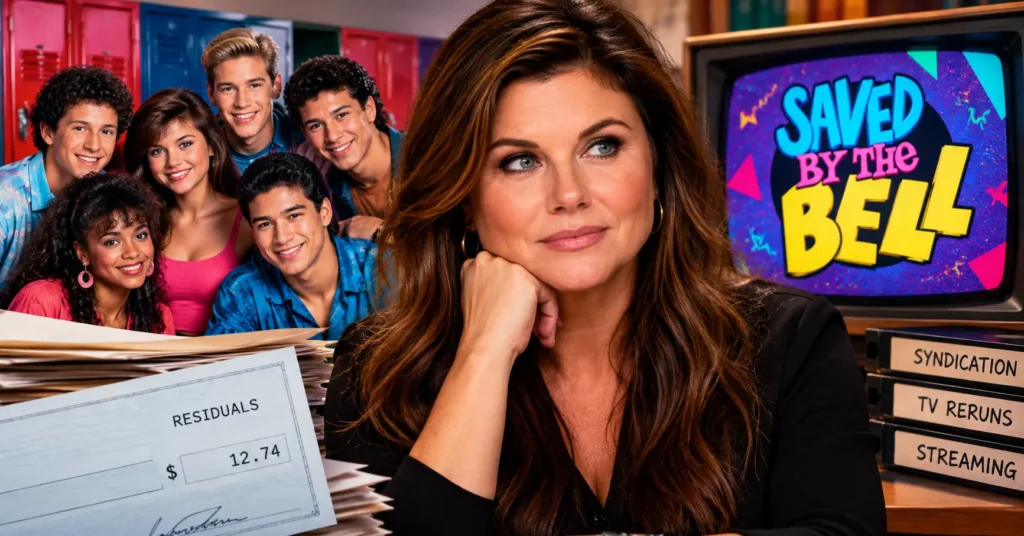
Tiffani Thiessen and Saved by the Bell residuals discussion

Saved by the Bell Residuals: What Tiffani Thiessen Revealed About Her Payments

Tiffani Thiessen’s recent comments about Saved by the Bell residuals have raised a question many viewers rarely consider: what happens financially when a show stays popular for decades after its original run? Thiessen played Kelly Kapowski on the sitcom. She said the cast did not earn substantial money from the show. She also indicated that her residual income from the series has effectively dried up. That may seem surprising for a sitcom with such a lasting cultural presence. However, a show can remain popular without generating significant residual income for every original performer. Contracts, exhibition rules and changes in the television industry can all affect those payments. Saved by the Bell Residuals: What Tiffani Thiessen Said In a September 2026 interview with SiriusXM’s Page Six Radio, Thiessen discussed the compensation she and her young co-stars received during the original run of Saved by the Bell. She described their pay as limited. She also said she did not start making what she considered significant money until she later joined Beverly Hills, 90210. Thiessen also said she no longer receives meaningful residual income from Saved by the Bell. Her comments have attracted attention because the sitcom remains closely linked to 1990s television and still has an audience decades after its original run. However, Thiessen described her own experience. Her comments do not provide a complete financial history for every cast member. Each performer could have had different contracts, payment terms and career circumstances. Her comments also connect with earlier discussions about the show’s financial arrangements. Mark-Paul Gosselaar has previously spoken about the deals surrounding the series. His remarks provide another perspective on the compensation received by the young cast. The discussion also reflects how television’s financial model has changed as older shows move between traditional television, syndication and streaming. For example, The Walking Dead Netflix coverage highlights how major streaming deals can change the way audiences access established television franchises. For readers searching for Saved by the Bell residuals, the main point is simple: Thiessen says the sitcom’s long-term financial return has not matched its lasting visibility.   Why Saved by the Bell Residuals Became a Story The renewed interest in Saved by the Bell residuals comes from a striking contrast: the sitcom has maintained cultural recognition, while Thiessen describes receiving little ongoing financial benefit from it. Saved by the Bell became a defining teen sitcom of its era. Its characters and cast remain familiar to audiences, and the series has continued to attract attention long after its original broadcast period. Yet a show’s continued popularity does not automatically determine how much an individual performer receives. Thiessen’s comments highlight the difference between a show’s commercial or cultural success and an actor’s contractual compensation. A program can remain valuable to audiences while the financial terms attached to an individual performer remain relatively limited. The story also offers a window into how television economics have changed. During the original Saved by the Bell era, audiences primarily watched programs through broadcast television, reruns and syndication. Today, viewers encounter older shows across television networks, cable channels, digital platforms and streaming services. Those distribution models can operate under different contractual arrangements. Therefore, understanding the financial history of Saved by the Bell requires more than asking how successful the sitcom became. The more useful question is how the performers’ original agreements interacted with the ways the series was later exhibited and distributed. What Are TV Residuals? Residuals are additional payments performers can receive when a television program or film receives qualifying uses beyond the original exhibition covered by their initial compensation. For television productions, the circumstances can vary. Residuals may apply to certain reruns, syndication, cable exhibitions and other qualifying forms of distribution, depending on the applicable agreement. Several factors can affect how a residual payment is calculated: The performer’s original compensation The type of production The applicable union agreement Where and how the program is exhibited The contractual terms governing later uses Therefore, residuals do not simply represent a fixed percentage of everything a successful television show earns. For viewers, the basic distinction is easier to understand when separated into two categories: Original salary Residual payment Compensation for performing in the production Additional compensation tied to qualifying later uses Connected to the actor’s original work Connected to later exhibition or distribution Governed by the original employment arrangement Governed by applicable residual rules and agreements This distinction matters when examining Saved by the Bell. The show’s popularity decades later does not, by itself, reveal what its original performers were contractually entitled to receive. How Saved by the Bell Residuals Differ From a Salary An actor’s salary and residual income represent different parts of television compensation. The original salary compensates the performer for working on the production. Residuals, when applicable, provide additional compensation when that performance receives qualifying later uses. This helps explain why a successful show does not automatically produce large residual checks for every actor. A television program can generate commercial value through advertising, licensing or distribution while an individual performer’s payment remains tied to the applicable residual formula. The show’s overall revenue and an actor’s personal residual income are therefore not interchangeable figures. For Saved by the Bell, the historical context also matters. The series originated in a television environment that differed significantly from today’s streaming-driven market. Salary vs. Residuals: The Key Difference The simplest way to understand the distinction is: Salary: Payment for the actor’s original work on the production. Residuals: Additional compensation that may arise from qualifying later uses. Show revenue: Money generated by the program or its distribution. Actor’s residual income: The amount the performer receives under the applicable agreement. These figures can vary considerably. So, when discussing Saved by Bell residuals, the show’s continued popularity should not be confused with an actor’s contractual entitlement. Understanding that distinction sets up the next part of the story: how the original Saved by the Bell cast was compensated and why those early financial arrangements became important to their long-term earnings. How Much Did the

Saved by the Bell Residuals: What Tiffani Thiessen Revealed About Her Payments Read More »

October 2026 TV shows featuring new and returning series

October 2026 TV Shows: The Biggest New and Returning Series to Watch

October 2026 TV shows bring a packed mix of new dramas, returning favorites, streaming originals and genre series to television. The month moves quickly from literary adaptations and prestige dramas into superhero stories, political thrillers and horror releases, giving viewers plenty of options across broadcast networks and major streaming platforms. For anyone tracking October 2026 TV shows, the biggest challenge is not finding something to watch. It is keeping track of when each series arrives and where it streams. Netflix, Prime Video, Disney+, Peacock and Paramount+ all have notable releases, while ABC, CBS, NBC and other networks continue their fall schedules. The month also has a strong seasonal identity. Horror becomes more prominent as Halloween approaches, with new takes on familiar properties joining the October lineup. At the same time, returning dramas and comedies give viewers familiar characters to follow throughout the month. Rather than treating every premiere equally, this guide focuses on the shows and releases that help define October’s television schedule. It covers new series, returning seasons, major streaming launches and key broadcast premieres so viewers can build an October watchlist without jumping between multiple schedules. October 2026 TV Shows: What to Expect This Month October sits at the center of the fall television season, so its schedule combines established network programming with a large number of streaming premieres. The result is a month where traditional weekly television and streaming releases compete for attention. The opening days establish that variety. Netflix launches East of Eden on October 1, bringing a new adaptation of John Steinbeck’s novel to the streaming service. The same period also features new and returning programming across broadcast and cable television. The schedule then becomes increasingly franchise-heavy. Prime Video brings Carrie on October 7, while Disney+ follows with VisionQuest on October 14. October 15 becomes especially busy, with The Diplomat Season 4 and Crystal Lake arriving alongside other major premieres. Key October Premiere Dates Date Series Type Platform October 1 East of Eden New series Netflix October 7 Carrie New series Prime Video October 14 VisionQuest New series Disney+ October 15 The Diplomat Season 4 Returning Netflix October 15 Crystal Lake New series Peacock Later in the month, returning series such as The Terminal List, Nobody Wants This and Lupin expand the streaming lineup. That makes October less about one dominant television trend and more about several different audiences finding major releases at the same time. For viewers, the practical takeaway is simple: October 2026 rewards planning. A calendar becomes useful because several significant premieres arrive within days of one another. The Biggest October 2026 TV Shows to Know Several new series stand out because they combine recognizable source material, established franchises or major creative talent with high-profile October release dates. These include: East of Eden — Netflix literary drama Carrie — Prime Video horror adaptation VisionQuest — Disney+ Marvel series Crystal Lake — Peacock horror series Together, these shows demonstrate how varied the October lineup becomes. Viewers can move from literary drama to supernatural horror, superhero storytelling and franchise television without leaving the month’s premiere schedule. East of Eden Netflix opens October with East of Eden, a seven-part adaptation of John Steinbeck’s classic novel. The series stars Florence Pugh as Cathy Ames and follows the Trask family through an expansive dramatic story. The adaptation comes from Zoe Kazan, who serves as writer and executive producer. That combination of acclaimed source material, a prominent lead performer and a serialized format gives East of Eden a clear place in the month’s prestige-drama lineup. Its timing also matters. Because the series arrives on October 1, viewers can begin the month with a complete seven-episode story rather than waiting for a later-season launch. For readers searching for new October 2026 TV shows outside the usual franchise-heavy lineup, East of Eden provides a literary drama option at the very start of the month. Carrie Prime Video brings a new television adaptation of Stephen King’s Carrie on October 7. Mike Flanagan developed the series, giving the familiar horror story a serialized television format. The story centers on Carrie White, the isolated teenager whose supernatural abilities become increasingly difficult to control. The October release date places the series directly inside the Halloween viewing season, making it one of the month’s clearest horror-focused premieres. The television format also gives the adaptation more room to explore characters, relationships and the environment surrounding Carrie’s experiences. For audiences looking specifically for October 2026 TV shows with a horror connection, Carrie is one of the clearest titles to mark on the calendar. VisionQuest Marvel’s VisionQuest arrives on Disney+ on October 14, continuing the television side of the Marvel universe. Paul Bettany returns as Vision, connecting the series to the character’s previous appearances while giving him a new story of his own. The series is particularly relevant for viewers who follow Marvel’s streaming projects rather than only its theatrical releases. Its October premiere also places a major franchise title alongside a crowded month of new dramas and returning television favorites. Because VisionQuest arrives midway through October, it becomes part of one of the month’s busiest stretches for major streaming releases. Viewers who already follow Marvel’s interconnected stories have additional context, while newcomers may approach the series differently from standalone October premieres such as East of Eden or Carrie. That makes VisionQuest an important entry in the October schedule while also giving Marvel fans a specific date to track. Crystal Lake Peacock’s Crystal Lake premieres October 15, bringing a television prequel connected to the Friday the 13th universe. The series arrives just as October’s horror programming begins to intensify, making its timing particularly suited to Halloween-season viewing. The series explores the world behind one of horror’s most recognizable franchises rather than simply presenting another standalone story. That gives longtime franchise viewers a reason to follow the series while also offering horror audiences a new television entry during one of the genre’s most important months. Its October 15 premiere also places Crystal Lake in one of the busiest

October 2026 TV Shows: The Biggest New and Returning Series to Watch Read More »

Scam 1992 The Harshad Mehta Story featuring Harshad Mehta, Sucheta Dalal and the 1992 stock market scandal

Scam 1992: The Harshad Mehta Story — Cast, Plot, Ending, True Story & Where to Watch

Scam 1992: The Harshad Mehta Story transforms one of India’s most closely watched financial scandals into a character-driven drama about ambition, money, journalism, and the risks of unchecked financial success. Released in 2020, the series follows Harshad Mehta as he rises from an ordinary background to become a major figure in Bombay’s stock market before his extraordinary success begins to unravel. Alongside Harshad’s journey, the series follows financial journalist Sucheta Dalal, whose investigation becomes central to the story. Her work provides a contrasting perspective on the events, shifting the narrative from Harshad’s rapid rise to the questions surrounding the financial activities that helped build his reputation. For viewers unfamiliar with India’s financial history, Scam 1992 offers more than a story about stocks. It introduces the people, institutions, relationships, and financial practices surrounding the 1992 securities scandal while keeping the human drama at its center. The series also recreates the atmosphere of 1980s and early-1990s Bombay, a period when India’s financial markets were undergoing significant change. At the heart of the series is Pratik Gandhi’s portrayal of Harshad Mehta. Around him, the story brings together family members, business associates, journalists, bankers, investigators, and other market participants. That wider perspective gives Scam 1992 its distinctive identity: it is a financial story, but it is equally a story about ambition, influence, reputation, and consequences. What Is Scam 1992 About? Scam 1992 is a biographical financial drama based on the events surrounding the 1992 securities scam. The series follows Harshad Mehta’s journey through Bombay’s financial world, from his early struggles to his emergence as one of the market’s most influential figures. The story begins with Harshad’s determination to improve his circumstances. He enters the financial world, learns how the market operates, and gradually develops the confidence to pursue increasingly ambitious opportunities. As his success grows, so do his wealth, reputation, and influence. However, the series does not present Harshad’s rise as an isolated success story. His expanding financial empire affects his family, associates, and professional relationships. At the same time, his growing profile attracts attention from journalists and others trying to understand how he has achieved such extraordinary results. Sucheta Dalal’s investigation becomes particularly important as questions surrounding financial transactions begin to surface. Her reporting introduces a second narrative perspective and helps move the story from market success toward public scrutiny. The result is a drama that connects personal ambition with larger institutional questions. Harshad’s rise creates excitement and admiration, but the same network that enables his success eventually brings intense attention to his activities. Because the series draws from real events, viewers should also distinguish between its historical foundation and its dramatic presentation. The show uses real people and major events while shaping them into a cohesive television narrative. Scam 1992 Cast and Characters The cast gives the financial story a strong human dimension. Rather than presenting the 1992 scandal only through market terminology, the series builds its narrative around personalities, relationships, and conflicting perspectives. Pratik Gandhi leads the series as Harshad Mehta, while Shreya Dhanwanthary plays financial journalist Sucheta Dalal. Hemant Kher portrays Ashwin Mehta, Harshad’s brother, while Anjali Barot plays Jyoti Mehta. The supporting cast expands the story beyond its two central figures. Chirag Vohra plays Bhushan Bhatt, while other actors portray bankers, investigators, journalists, family members, and people connected to the financial world surrounding Harshad. This ensemble matters because the series constantly moves between different parts of that world. Harshad’s family experiences his growing success from a personal perspective. His professional associates see the opportunities and risks surrounding his business activities. Meanwhile, journalists and investigators approach the same events from an entirely different direction. The performances also make complicated financial material easier to follow. Instead of relying entirely on explanations of transactions and securities, the series connects those concepts to characters with clear motivations and relationships. At the center are Harshad and Sucheta. Their contrasting positions create much of the show’s dramatic tension. Harshad focuses on expanding his influence within the market, while Sucheta becomes increasingly interested in understanding what lies behind that success. Pratik Gandhi as Harshad Mehta Pratik Gandhi plays Harshad Mehta, the central figure whose rise and fall drive the series. His portrayal follows Harshad through different stages of his life, allowing the audience to see how ambition develops into confidence and how confidence can lead to increasingly high-stakes decisions. The character does not begin as an established financial celebrity. The story first establishes his desire to move upward and his growing fascination with Bombay’s financial markets. His early experiences help explain why financial success becomes such a powerful goal. As Harshad gains experience, his ambitions expand. Greater success brings greater wealth and visibility, while his growing reputation changes the way people around him respond to him. The character begins operating with a much larger sense of possibility. That transformation provides much of the show’s dramatic momentum. Viewers can understand the appeal of Harshad’s ambition while also seeing the risks that accompany his increasingly aggressive pursuit of success. Gandhi’s performance keeps the character engaging even when the story moves into complicated financial territory. Market transactions and institutional conflicts can be difficult for viewers without a background in finance, but Harshad’s personal journey provides a consistent narrative thread. As a result, Harshad functions as more than the subject of a financial scandal. He becomes the central lens through which the series explores ambition, wealth, influence, reputation, and the consequences of operating within a rapidly changing financial environment. Shreya Dhanwanthary as Sucheta Dalal Shreya Dhanwanthary plays journalist Sucheta Dalal, whose investigation becomes one of the series’ most important storylines. Dalal offers a perspective that sharply contrasts with Harshad’s. While Harshad focuses on opportunities inside the financial market, Dalal approaches the same environment through questions, evidence, and reporting. As unusual financial activity attracts attention, her investigation becomes increasingly significant. The series uses her journalistic perspective to show how a financial story can grow into a much larger public story. What initially appears to involve complicated transactions eventually raises broader

Scam 1992: The Harshad Mehta Story — Cast, Plot, Ending, True Story & Where to Watch Read More »

True Detective detectives investigating a mysterious crime in Louisiana

True Detective: Seasons, Cast, Story, Episodes, and Everything to Know

True Detective is an anthology crime drama built around investigations that uncover far more than the facts of a case. Each season introduces a new story, setting, group of investigators, and central cast while maintaining the series’ focus on crime, personal conflict, mystery, and the darker sides of human behavior. The series premiered in 2014 with Matthew McConaughey and Woody Harrelson leading its first season as Louisiana detectives Rust Cohle and Martin Hart. Their investigation begins with the murder of Dora Lange and gradually expands into a much larger mystery. The story also moves across different periods, allowing the audience to see both the original investigation and its long-term impact on the detectives. Unlike a traditional crime drama that follows the same detectives throughout its entire run, True Detective uses an anthology format. Each season can establish its own characters, location, investigation, and atmosphere. That approach gives the series room to reinvent itself while retaining a recognizable identity. For viewers discovering the series, understanding this format is the key to understanding True Detective. The seasons share a common interest in complicated investigations and damaged characters, but each one tells a substantially different story. What Is True Detective About? At its core, True Detective follows investigators as they attempt to solve difficult crimes while confronting the personal consequences of their work. The cases provide the mystery, but the detectives themselves remain central to the storytelling. Their relationships, beliefs, mistakes, and memories often influence the investigation as much as the evidence does. Season 1 establishes this approach through Rust Cohle and Martin Hart. In 1995, the two Louisiana detectives investigate the murder of Dora Lange. What initially appears to be a single disturbing case becomes increasingly complex as they uncover clues pointing toward a broader mystery. The story later moves to 2012, when the old investigation comes under renewed scrutiny. Cohle and Hart must revisit events from their past, bringing unresolved questions back into their lives. That structure allows the season to work on two levels. One follows the detectives as they pursue evidence and attempt to identify a killer. The other examines what years of police work have done to the men themselves. This combination defines much of True Detective. The series does not rely solely on action or conventional procedural storytelling. Instead, it spends significant time exploring uncertainty, morality, damaged relationships, obsession, and the psychological weight of unresolved cases. The anthology format later allows the series to move beyond Louisiana and introduce completely different investigators and mysteries while preserving that central interest in crime and human behavior. True Detective and Its Anthology Format The anthology structure is one of the defining characteristics of True Detective. Instead of following one permanent cast and a single continuing investigation, each season creates a new narrative world around a different case. Season 1 centers on Rust Cohle and Martin Hart. Later seasons introduce new investigators, locations, conflicts, and ensembles. This rotating approach allows the series to explore different forms of crime and different kinds of detective stories without being tied to the same characters. The format also changes the way each season develops. A new installment can move to another region, introduce a different investigative problem, and establish another group of characters without simply repeating the formula of the previous season. Despite those changes, the seasons share several recognizable characteristics. Investigations usually remain at the center of the story, but the people conducting those investigations receive equal attention. Themes such as morality, memory, violence, loyalty, identity, justice, and personal responsibility frequently become important parts of the narrative. That balance gives True Detective a flexible identity. The title remains consistent, but the world surrounding it can change dramatically. For new viewers, the anthology format makes the series relatively approachable. You do not need to understand every character from an earlier season before beginning another one. Each installment establishes its own major story while contributing to the broader identity of the franchise. Are the True Detective Seasons Connected? The seasons are primarily separate stories, with different protagonists, investigations, and settings. Because of that structure, viewers can approach an individual season without first watching every previous installment. Rust Cohle and Martin Hart anchor Season 1 as they pursue a Louisiana investigation that stretches across several years. A new group of investigators takes over in Season 2, bringing a different criminal case and setting to the anthology. The pattern continues with Season 3, which introduces another investigation and a fresh team of detectives. However, separate does not necessarily mean completely isolated. True Detective can use recurring ideas, references, and thematic connections while still allowing each season to function as its own story. For viewers, the practical takeaway is straightforward: each season can be understood independently, but watching the series in release order provides a useful view of how its anthology format developed. True Detective Season 1 The first season establishes the storytelling approach that would become closely associated with True Detective. Matthew McConaughey plays Detective Rust Cohle, while Woody Harrelson plays Detective Martin Hart. The two Louisiana investigators become partners while pursuing a disturbing murder case in 1995. The story does not remain in that year. Instead, it moves between different periods, with the older Cohle and Hart recounting their earlier investigation years after the original case. This structure allows the audience to see not only what happened during the investigation but also how those events affected the detectives over time. The case begins with the murder of Dora Lange, but the investigation expands as Cohle and Hart uncover additional information. Their search takes them through rural Louisiana communities, religious influences, criminal networks, and a growing collection of clues that suggest the original murder may be part of something much larger. The season consists of eight episodes, giving the investigation enough space to develop gradually. Rather than rushing from one clue to another, the story uses its extended timeline to build tension and reveal information from different perspectives. At the same time, the relationship between Cohle and

True Detective: Seasons, Cast, Story, Episodes, and Everything to Know Read More »

Game of Thrones Iron Throne with medieval castle, dragon and snowy Wall

Game of Thrones Explained: Story, Characters, Houses, Seasons and Legacy

Game of Thrones is an expansive fantasy drama that combines royal politics, family rivalries, warfare, ancient mysteries, and a growing supernatural threat. Created by David Benioff and D.B. Weiss and based on George R.R. Martin’s A Song of Ice and Fire novels, the series follows a large group of characters whose lives become intertwined through the struggle for power across Westeros. At first, the story appears to center on one question: who will control the Iron Throne? However, the conflict soon becomes much larger. While powerful families compete for political control, events beyond the Wall reveal a danger that could threaten everyone in the realm. For new viewers, the world of Game of Thrones can seem complicated because the story moves between different regions, families, and competing interests. Understanding Westeros, its major houses, and the forces beyond its borders provides the foundation for following the larger story. What Is Game of Thrones About? At its core, Game of Thrones follows the struggle for control of the Seven Kingdoms of Westeros. The Iron Throne represents the highest seat of political power, but reaching it requires more than a legitimate claim. Kings, noble families, military leaders, and advisers constantly form alliances, challenge rivals, and adapt to changing circumstances. The story begins with House Stark becoming deeply involved in royal politics after King Robert Baratheon asks Eddard Stark to serve as Hand of the King. Eddard’s arrival in King’s Landing places his family in a dangerous political environment dominated by powerful interests, particularly those connected to House Lannister. Meanwhile, another story unfolds across the Narrow Sea. Daenerys Targaryen lives in exile while carrying the legacy of a family that once ruled Westeros. Her journey gradually transforms as she gains independence, supporters, and a growing connection to the Targaryen claim. Far to the north, the Night’s Watch guards the Wall. Reports of strange events beyond it hint at a danger that many political leaders fail to take seriously. As these storylines develop, the fight for the Iron Throne becomes only one part of a much larger struggle involving power, identity, loyalty, survival, and the future of Westeros. Game of Thrones World and Setting The world of Game of Thrones extends across several regions, with Westeros and Essos serving as the two major continents. Each area has its own cultures, political traditions, geography, and conflicts. Westeros contains the Seven Kingdoms and serves as the main setting for the struggle over the Iron Throne. King’s Landing functions as the political center of the realm, while regions such as the North, the Riverlands, the Vale, the Westerlands, the Reach, the Stormlands, and Dorne maintain distinct identities and powerful ruling families. Geography plays an important role in the story. Armies must travel across long distances, messages can take time to arrive, and control of castles, ports, roads, and strategic locations can influence political and military decisions. Essos provides another major setting, particularly through Daenerys Targaryen’s journey. Her experiences there introduce cultures and political systems that differ from those of Westeros. The far north adds another dimension. The Wall separates much of the Seven Kingdoms from the lands beyond it, where the Night’s Watch confronts dangers that initially seem distant from the political battles consuming the rest of the realm. Together, these locations create a world where geography and politics remain closely connected. Westeros and the Seven Kingdoms Westeros forms the political heart of Game of Thrones. Although the realm is commonly known as the Seven Kingdoms, its regions retain distinct identities, traditions, histories, and political interests. King’s Landing stands at the center of royal power. The Iron Throne sits there, making the capital a crucial destination for anyone seeking control of the realm. However, ruling from King’s Landing does not automatically guarantee loyalty throughout Westeros. The North has a particularly strong regional identity. House Stark rules from Winterfell, and its members maintain traditions that often differ from those found farther south. The family’s emphasis on duty, loyalty, and honor becomes an important contrast to the political maneuvering of the capital. Other regions also hold major strategic importance. The Westerlands are closely associated with the wealthy House Lannister, while the Riverlands frequently become a battlefield because of their central position. The Vale, Reach, Stormlands, and Dorne each bring their own interests into the wider political struggle. This regional diversity makes Westeros difficult to control. Political decisions in one part of the realm can create consequences somewhere else, while family alliances can determine whether a kingdom gains an ally or faces a new enemy. Essos, the Wall and Beyond Essos lies across the Narrow Sea from Westeros and becomes especially important through Daenerys Targaryen’s storyline. Her journey takes her through different cities and societies as she builds relationships, gains supporters, and develops her own approach to leadership. Essos also shows that the world of Game of Thrones extends well beyond the politics of King’s Landing. Its cities and cultures operate according to different traditions and ideas about power. Daenerys encounters these differences while gradually developing a stronger sense of purpose. Far north in Westeros stands the Wall, a massive defensive structure guarded by the Night’s Watch. Its members dedicate themselves to protecting the realm’s northern frontier, largely separated from the political struggles taking place farther south. At first, many characters treat the Night’s Watch as a distant institution with little connection to the fight for the Iron Throne. That view changes as reports of supernatural activity become increasingly difficult to ignore. Beyond the Wall lies an environment where political calculations offer little protection. The White Walkers introduce a threat unlike the rivalries between Westerosi families, forcing the story to confront a question much larger than who should rule. The Major Houses in Game of Thrones Family identity forms one of the strongest foundations of Game of Thrones. Characters inherit titles, loyalties, rivalries, political responsibilities, and historical grievances through their houses. As a result, understanding the major families makes the wider story easier to follow. House Stark rules from Winterfell

Game of Thrones Explained: Story, Characters, Houses, Seasons and Legacy Read More »

Nobody Wants This Season 3 release date, cast and trailer

Nobody Wants This Season 3: Release Date, Cast, Trailer, Story and Everything We Know

Nobody Wants This is entering a new chapter on Netflix. After two seasons centered on the complicated romance between agnostic podcaster Joanne and rabbi Noah, Season 3 moves their relationship into a more settled stage. Instead of focusing mainly on whether they can make their romance work, the new season explores what happens when they begin building a life together. Nobody Wants This Season 3 premieres on October 22, 2026, with all 10 episodes arriving on Netflix at once. The new season also expands the stories of Morgan, Sasha, and Esther while introducing several new characters around the show’s central couple. The Season 3 trailer offers an early look at Noah and Joanne moving into a home together. It also teases new relationship milestones, career changes, dating complications, and the familiar comedy that has helped define the series. Nobody Wants This Season 3 Release Date and Netflix Details Nobody Wants This Season 3 premieres Thursday, October 22, 2026, on Netflix. The season contains 10 episodes, and Netflix plans to release all of them on the same day rather than following a weekly schedule. That means viewers can move through Noah and Joanne’s next chapter without waiting between episodes. Season 3 continues after the couple recommits to their relationship at the end of Season 2, giving the story a new starting point. Kristen Bell returns as Joanne, while Adam Brody returns as Noah. Justine Lupe, Timothy Simons, and Jackie Tohn also return as Morgan, Sasha, and Esther. For viewers looking for the essential release information, the key details are: Premiere date: October 22, 2026 Episodes: 10 Streaming platform: Netflix Release format: All 10 episodes debut together Central couple: Joanne and Noah Netflix has also released official Season 3 promotional material, including photos and a trailer, giving viewers a clearer idea of where the story is heading. What Is Nobody Wants This Season 3 About? Season 3 begins after Joanne and Noah recommit to each other, putting their relationship on firmer ground than it was during the earlier seasons. The biggest change is that they are now moving into a home together, allowing the series to explore the everyday reality of a committed relationship. Rather than returning to the same question of whether the couple can stay together, Season 3 focuses on what comes after that decision. Noah and Joanne must navigate the excitement, awkwardness, and intimacy that come with creating a shared home while continuing to balance their different backgrounds, beliefs, families, and personalities. The wider ensemble also gets more room to develop. Sasha and Esther return to the dating world following their separation, while Morgan’s professional life moves in a new direction. At the same time, Morgan and Sasha face a more complicated dynamic as their friendship begins to carry additional emotional weight. For another look at Netflix’s upcoming TV lineup, check out our guide to The Diplomat Season 4, including its release updates, cast, plot, and trailer details. This gives Season 3 two connected storylines: Noah and Joanne learning how to live together, and the people around them figuring out what they want from their own relationships and careers. Netflix’s official Season 3 material frames the new episodes around fresh milestones for Noah and Joanne alongside new developments in the lives of their friends and family. Noah and Joanne Are Moving In Together One of the biggest developments in Nobody Wants This Season 3 is also one of the most personal: Noah and Joanne are moving in together. The Season 3 trailer gives viewers a glimpse of the couple surrounded by moving boxes and sharing everyday moments inside their new home. They are no longer simply trying to determine whether their relationship can survive their differences. Now they have to discover what it means to share a space and create routines together. That change gives the romance a different kind of tension. The question is no longer whether Noah and Joanne will choose each other. Instead, Season 3 can explore how two people with different experiences, beliefs, families, and personalities handle the ordinary details of life as a couple. The shift also gives the series an opportunity to find comedy in familiar domestic situations. Moving in together can turn small habits, expectations, and disagreements into bigger relationship moments. For Noah and Joanne, the new home represents more than a change of address. It marks a significant step forward in a relationship that has already faced plenty of uncertainty. Season 3 therefore has the chance to explore a different side of their romance: not simply falling in love, but learning how to live with the person they have chosen. Morgan, Sasha and Esther Get Bigger Storylines While Noah and Joanne remain at the center of the series, Season 3 gives its supporting characters more room to develop. Sasha and Esther enter the dating world again after their separation. Their new circumstances create opportunities for unfamiliar relationships, awkward encounters, and the uncertainty that comes with starting over. Morgan faces a different challenge. Her podcast career begins gaining momentum, giving her a stronger professional storyline as she works toward defining what she wants from her career. Her personal life becomes more complicated through Sasha. The two have built a close friendship, but Season 3 introduces new tension between them now that Sasha is single. Their connection could have wider consequences because Sasha is Noah’s brother, while Morgan is Joanne’s sister. That family connection gives the storyline an added layer. Any change between Morgan and Sasha could affect both sides of the central relationship. Esther also receives more attention as she navigates her own post-relationship life. Together, these storylines allow Season 3 to expand beyond Noah and Joanne without losing the interconnected relationships that make the ensemble work. The result is a broader season in which romance, friendship, family, and career all move forward at the same time. How Nobody Wants This Season 3 Builds on Noah and Joanne’s Relationship Season 3 begins from a very different place than the earlier chapters

Nobody Wants This Season 3: Release Date, Cast, Trailer, Story and Everything We Know Read More »