
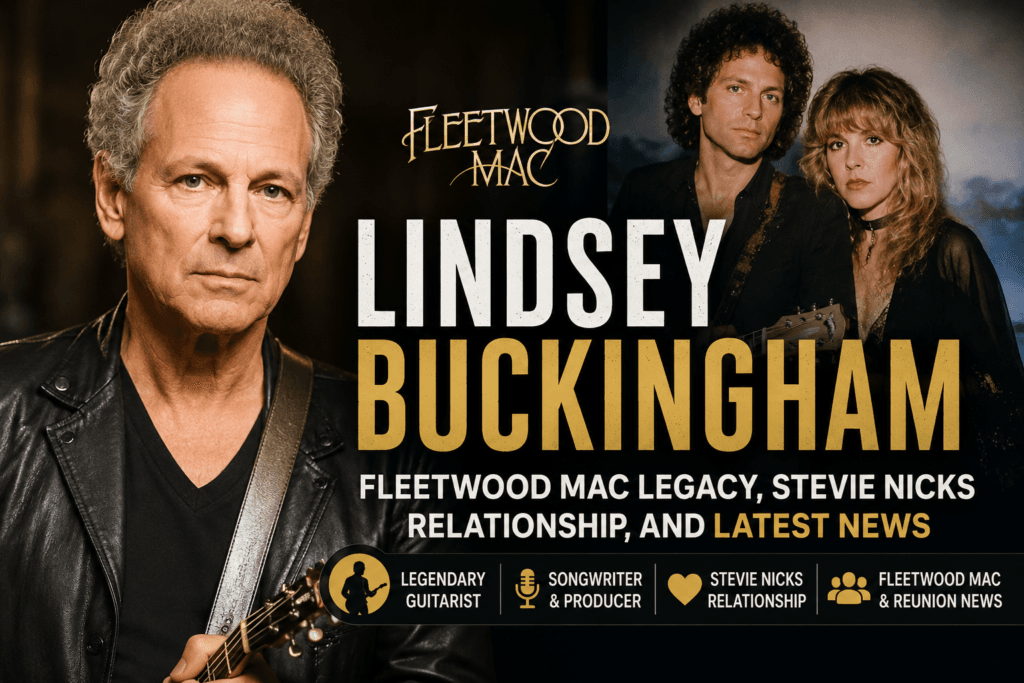
Lindsey Buckingham Opens Up About Stevie Nicks, Fleetwood Mac, and What’s Next
For more than five decades, Lindsey Buckingham has remained one of the most influential figures in rock music. Known for his intricate fingerpicking guitar style, inventive songwriting, and meticulous production techniques, Buckingham helped transform Fleetwood Mac into one of the world’s most successful bands. His work shaped timeless albums, inspired generations of musicians, and continues to attract millions of listeners through streaming platforms and classic rock radio. In recent months, Lindsey Buckingham has once again become a major topic of conversation after sharing encouraging updates about his relationship with longtime bandmate Stevie Nicks. Those comments have reignited public interest in Fleetwood Mac’s future, leading fans to ask whether reconciliation could eventually open the door to another chapter in the band’s story. While no official reunion has been announced, the renewed dialogue between two of the band’s most recognizable members has sparked fresh optimism among music lovers around the world. However, Lindsey Buckingham’s legacy extends far beyond reunion speculation. His career reflects decades of artistic innovation, creative risk-taking, and personal resilience. From his early partnership with Stevie Nicks to his groundbreaking work with Fleetwood Mac and his successful solo career, Buckingham has consistently challenged conventional approaches to songwriting and guitar performance. This article explores every stage of Lindsey Buckingham’s remarkable journey. You’ll discover how his early years shaped his musical identity, why his partnership with Stevie Nicks became legendary, how he influenced Fleetwood Mac’s biggest successes, what recent developments reveal about his relationship with former bandmates, and what the future may hold for one of rock’s most respected artists. Who Is Lindsey Buckingham? Few musicians have influenced modern rock music quite like Lindsey Buckingham. Although many people recognize him as Fleetwood Mac’s lead guitarist, his contributions extend far beyond performing on stage. Throughout his career, Buckingham has worked as a songwriter, producer, arranger, vocalist, and creative visionary whose ideas helped redefine one of the most successful bands in music history. Unlike many guitarists who rely on traditional solos, Buckingham developed a distinctive fingerpicking technique that allowed him to create rhythm, melody, and harmony simultaneously. As a result, his performances became instantly recognizable and earned admiration from fellow musicians across multiple genres. His creative approach also extended into the recording studio. Rather than simply capturing live performances, Buckingham embraced experimentation by layering instruments, refining vocal harmonies, and exploring innovative production techniques. That attention to detail became a defining characteristic of Fleetwood Mac’s most celebrated albums. Even after decades in the music industry, Lindsey Buckingham continues to influence artists ranging from classic rock performers to modern indie musicians. His commitment to originality has ensured that his work remains relevant to both longtime fans and younger audiences discovering his music for the first time. Lindsey Buckingham’s Early Life Lindsey Adams Buckingham was born on October 3, 1949, in Palo Alto, California. Growing up in Northern California, he developed an interest in music at an early age despite having no formal guitar training during his childhood. Instead of relying on structured lessons, Buckingham largely taught himself how to play. He spent countless hours listening to records, studying different styles, and experimenting with techniques until he developed a sound that felt uniquely his own. This self-directed learning process encouraged creativity rather than imitation, allowing him to build an unconventional playing style that would later become his signature. Music became an increasingly important part of Buckingham’s life during his teenage years. Alongside his passion for performing, he also admired artists who challenged traditional songwriting conventions. Those influences encouraged him to think beyond commercial formulas and focus on creating emotionally honest music. As his confidence grew, Buckingham began performing locally and collaborating with other musicians. Those experiences not only strengthened his technical skills but also introduced him to the creative partnership that would define much of his career. How Lindsey Buckingham Met Stevie Nicks One of the most significant moments in Lindsey Buckingham’s life occurred when he met Stevie Nicks during their youth in California. The two musicians quickly discovered that they shared similar artistic ambitions and complementary musical styles. Buckingham’s detailed approach to composition blended naturally with Nicks’ expressive songwriting and distinctive voice. Their creative chemistry became evident long before either artist achieved international fame. As they spent more time writing and performing together, their musical partnership evolved into a romantic relationship. Although both were still searching for commercial success, they remained committed to building a future through music. Life during those early years was far from glamorous. Buckingham and Nicks faced financial uncertainty while pursuing recording opportunities and live performances. Nevertheless, they continued refining their songwriting and supporting one another through the challenges of launching professional careers. Those experiences created a strong artistic foundation that would later influence some of the most memorable songs in rock history. The Buckingham Nicks Era Before joining Fleetwood Mac, Lindsey Buckingham and Stevie Nicks performed as the duo Buckingham Nicks. The pair released a studio album that showcased their songwriting abilities, vocal harmonies, and musical chemistry. Although the record did not become a commercial success upon release, it demonstrated the creative potential both artists possessed. Today, many fans consider the album an important chapter in their musical journey because it captured two emerging artists before global fame transformed their lives. During this period, Buckingham continued developing his guitar techniques while experimenting with arrangements and production ideas. Rather than following popular trends, he focused on creating music that reflected his artistic vision. Although commercial recognition remained limited, industry professionals began noticing Buckingham’s exceptional musicianship. His innovative guitar work and careful attention to detail eventually reached people capable of changing his career forever. A Life-Changing Opportunity Fleetwood Mac had already established itself as a respected British-American rock band by the mid-1970s. However, the group found itself searching for a new guitarist following lineup changes. While visiting a recording studio, drummer Mick Fleetwood heard Buckingham’s work and became impressed by his musicianship. Naturally, Fleetwood wanted Buckingham to join the band. Buckingham, however, had one important condition. Rather than joining alone, he insisted
Lindsey Buckingham Opens Up About Stevie Nicks, Fleetwood Mac, and What’s Next Read More »