
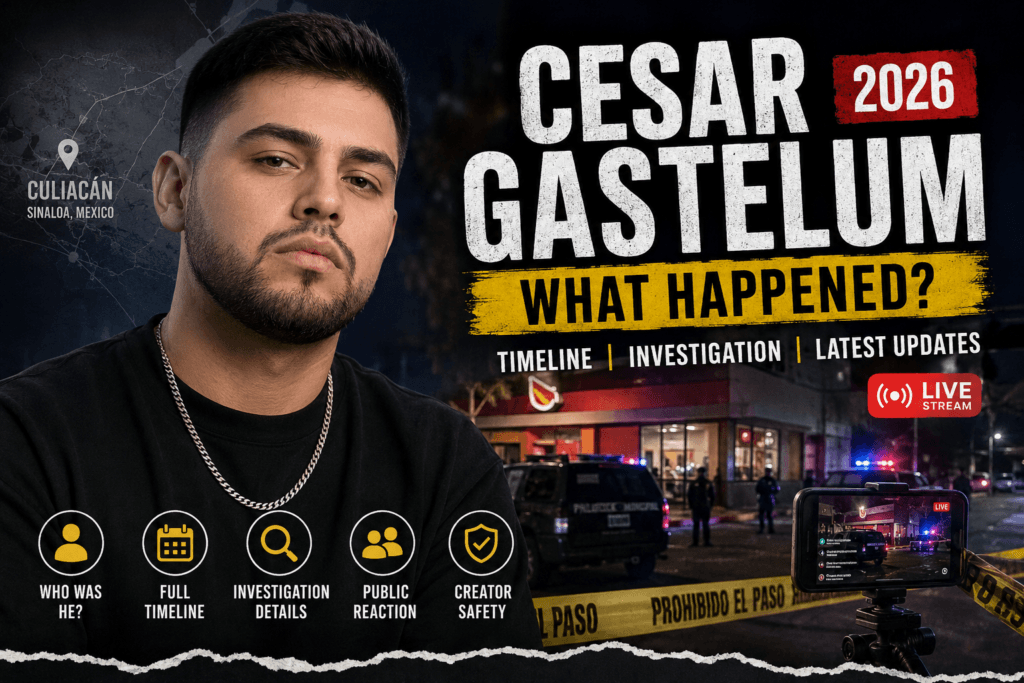
The death of Cesar Gastelum has become one of the most talked-about stories on social media in 2026. Within hours of the incident, videos, eyewitness accounts, and news reports spread across platforms worldwide, leaving millions of people searching for answers. What began as an ordinary livestream quickly turned into a tragic event that raised serious questions about creator safety, public violence, and the risks of sharing real-time locations online.
For many readers, the immediate question is simple: Who was Cesar Gastelum, and what exactly happened? Beyond the headlines, however, the story reflects broader issues affecting digital creators in today’s connected world. Influencers are no longer just entertainers. Many spend hours each day interacting with audiences in real time, documenting their daily routines, and building careers through constant online visibility. While that openness creates stronger connections with followers, it can also expose creators to unexpected risks.
This article examines the known facts surrounding the case, explains why the incident has drawn international attention, and explores the wider conversation about livestreaming, online privacy, and public safety. Rather than focusing on graphic details or speculation, the goal is to provide clear context, balanced reporting, and meaningful analysis that helps readers understand why this story matters.
Who Is Cesar Gastelum?
Before becoming the focus of international headlines, Cesar Gastelum was known to many social media users for his entertaining online content. He built an audience by creating videos that reflected everyday life, humor, and regional culture. Over time, his consistent uploads helped him gain hundreds of thousands of followers across major social platforms, where viewers appreciated his relaxed personality and approachable style.
Unlike celebrities who begin their careers through television or film, Gastelum represented a newer generation of digital creators. His success came directly from audience engagement rather than traditional media. Every post, livestream, and short-form video strengthened his relationship with viewers who followed his daily activities.
Several characteristics made his content popular:
- Lighthearted comedy
- Everyday lifestyle moments
- Regional cultural references
- Interactive livestreams
- Casual conversations with followers
This style of content helped create an online community rather than simply an audience. Many followers felt they knew him personally because livestreaming allows creators to communicate directly with viewers instead of publishing carefully edited videos.
That sense of familiarity explains why news of his death spread so rapidly. Followers were not simply reacting to another breaking news headline—they were mourning someone whose life they had watched unfold online over months and years.
Cesar Gastelum’s Rise as a Digital Creator
Building an Audience Through Authentic Content
One reason creators like Cesar Gastelum attract loyal audiences is authenticity. Instead of presenting a carefully polished image every day, many successful influencers share ordinary experiences that feel genuine.
Gastelum’s content reportedly centered on everyday situations, humor, and local culture. Rather than relying on expensive productions or elaborate editing, he focused on relatable moments that encouraged viewers to return regularly.
Modern creator platforms reward consistency. Uploading frequently helps increase visibility while strengthening audience relationships. Over time, creators develop recognizable personalities that become just as important as the content itself.
This trend reflects a major shift in digital entertainment:
| Traditional Celebrity | Digital Creator |
|---|---|
| Appears through TV or movies | Builds audience directly online |
| Limited interaction | Frequent audience engagement |
| Professionally managed image | More personal content |
| Scheduled appearances | Daily uploads and livestreams |
| One-way communication | Real-time conversations |
Because of this difference, influencer news often generates intense public reaction. Followers feel emotionally connected, making tragic events particularly impactful.
What Happened to Cesar Gastelum?
According to publicly available reports, Cesar Gastelum was participating in a livestream while outside a fast-food restaurant in Culiacán, Sinaloa, when armed attackers approached and opened fire. Emergency responders arrived after the shooting, but authorities confirmed that he died at the scene. Officials later began collecting evidence and launched an investigation into the incident.
Investigators have not publicly confirmed a motive, and no official explanation had been announced at the time of writing. As with any active criminal investigation, authorities continue examining available evidence before reaching conclusions.
Because the event occurred during a livestream, awareness spread almost immediately across social media platforms. Viewers who had been watching the broadcast realized something serious had happened even before formal news organizations published reports.
This rapid spread illustrates how technology has changed modern breaking news. Years ago, incidents were first reported by journalists. Today, livestreams can become the first public record of major events.
Why the Incident Drew Worldwide Attention
A Tragedy Witnessed in Real Time
The death of Cesar Gastelum received international attention for several reasons.
First, the incident occurred while he was broadcasting live, making it different from many other crime stories. Livestreams eliminate the delay between an event and public awareness. Instead of hearing about something later, audiences may witness the beginning of a developing situation in real time.
Second, Gastelum already had a substantial online following. His audience extended beyond one city or region, meaning news of the tragedy spread quickly through reposts, reactions, and discussions across multiple countries.
Finally, the incident renewed ongoing conversations about creator safety, especially for influencers who frequently share their locations or broadcast from public places.
Several key issues emerged almost immediately:
- Safety during livestreams
- Public visibility of influencers
- Privacy concerns
- Risks of real-time location sharing
- Platform responsibility
- Online community reactions
These discussions continue as digital platforms become increasingly central to everyday life.
What Authorities Have Confirmed So Far
As of publication, authorities have confirmed that an investigation is underway into the fatal shooting involving Cesar Gastelum. Law enforcement personnel secured the scene, collected evidence, and began examining available information shortly after the incident. Public reporting indicates that officials have not yet announced a confirmed motive or publicly identified suspects.
When investigations remain active, responsible reporting requires distinguishing verified facts from online speculation. Social media often produces rumors within minutes of major events, but these claims should not be treated as confirmed information unless supported by official evidence.
Readers should therefore keep several points in mind:
- Investigations can take weeks or months.
- Early reports may later change.
- Rumors frequently spread faster than verified facts.
- Authorities may withhold information while collecting evidence.
- Official updates remain the most reliable source for confirmed developments.
Avoiding speculation helps ensure that public understanding remains based on evidence rather than assumptions.
Cesar Gastelum Timeline: What Happened Before, During, and After the Incident
Understanding the sequence of events helps separate confirmed information from online speculation. While investigators continue gathering evidence, several details have been publicly confirmed by authorities and widely reported by established news organizations.
Before the Livestream
On the evening of August 4, 2026, Cesar Gastelum was spending time with friends near a fast-food restaurant in Culiacán, Sinaloa. Like many content creators, he started a casual livestream to interact with followers.
Nothing about the broadcast initially appeared unusual. Viewers watched a typical social media stream featuring everyday conversation rather than a planned event or special announcement. This ordinary beginning makes the tragedy even more difficult for many followers to process.
For creators, livestreaming has become a normal part of daily content production. Instead of uploading edited videos hours later, they often share moments exactly as they happen.
During the Livestream
According to publicly reported information, two individuals riding a motorcycle approached the area where Gastelum and his companions were gathered. Reports indicate both individuals wore helmets, making identification more difficult.
Authorities say shots were fired, and the livestream abruptly ended as the situation unfolded. Emergency responders were dispatched, but officials later confirmed that Gastelum died at the scene. At the time of publication, investigators had not announced a confirmed motive or identified suspects publicly.
Because the incident occurred during a live broadcast, clips and eyewitness accounts spread rapidly online before many news organizations had published verified reports.
After the Shooting
Following the attack, security personnel secured the location and began collecting forensic evidence. Investigators launched a criminal inquiry while officials urged the public not to rely on unverified claims circulating across social media. The investigation remains active, and authorities have stated that they continue reviewing evidence.
A simplified timeline is shown below.
| Timeframe | Reported Development |
|---|---|
| Before the livestream | Gastelum met with friends near a restaurant |
| Livestream begins | Casual interaction with followers |
| Incident occurs | Attack takes place during the broadcast |
| Emergency response | Security forces and medical personnel arrive |
| Investigation begins | Authorities secure the scene and collect evidence |
| Public reaction | News spreads globally across social media |
How Social Media Reacted to Cesar Gastelum’s Death
The death of Cesar Gastelum quickly became one of the most discussed topics across several social media platforms. Millions of users encountered news updates, tribute posts, and discussions within hours.
Many followers expressed disbelief because they had recently watched his videos or interacted with his livestreams. Others shared condolences for his family and friends while encouraging people to avoid distributing graphic footage.
The online reaction generally fell into several categories:
- Messages of sympathy and remembrance
- Calls for respect toward the family
- Requests not to share violent videos
- Discussions about influencer safety
- Questions regarding livestream privacy
- Appeals to wait for verified information
Many creators also reminded audiences that sensationalizing violent incidents can cause additional pain for victims’ families and may interfere with responsible reporting.
Why Livestreams Can Amplify Breaking News
Real-Time Broadcasting Changes Everything
The Cesar Gastelum case illustrates how livestream technology has transformed modern news.
Years ago, breaking events typically became public only after journalists reached the scene. Today, smartphones allow creators to broadcast instantly, meaning significant events may first appear on social platforms before television networks or newspapers publish reports.
This creates several important differences:
| Traditional News | Livestream Era |
|---|---|
| Reporter arrives later | Event may already be online |
| Edited footage | Real-time broadcast |
| Information verified before publication | Initial confusion is common |
| Limited witnesses | Thousands of viewers may watch simultaneously |
| News develops gradually | Information spreads within minutes |
While livestreaming increases transparency, it also creates challenges because incomplete or misleading information can circulate before authorities release official statements.
Why Audiences Feel Personally Connected to Creators
One reason the Cesar Gastelum story generated such widespread emotional reactions is the unique relationship between influencers and their audiences.
Unlike actors or musicians who usually appear through professionally produced media, digital creators communicate directly with followers every day. They answer comments, host livestreams, and share ordinary moments from their lives.
Psychologists sometimes describe this as a parasocial relationship—a one-sided emotional connection in which viewers feel familiar with a public figure despite never meeting them personally.
Several factors strengthen this connection:
- Frequent uploads
- Casual conversations
- Live question-and-answer sessions
- Daily routine content
- Direct replies to followers
- Authentic communication style
As a result, tragic news involving creators often feels deeply personal to longtime viewers.
Cesar Gastelum and the Growing Conversation About Creator Safety
The death of Cesar Gastelum has renewed discussions about the risks faced by digital creators.
Influencers often work outside traditional offices or studios. Many create content in restaurants, shopping areas, public streets, sporting events, or tourist attractions. This visibility helps attract audiences, but it may also increase exposure to unwanted attention.
Experts frequently recommend several safety practices for creators:
- Avoid revealing your exact location in real time.
- Delay posting location-based content.
- Be cautious during late-night livestreams.
- Travel with trusted companions when possible.
- Protect personal information across social platforms.
- Report threats immediately to platform moderators and local authorities.
While no precaution can eliminate every risk, awareness remains an important part of digital safety.
The Challenge of Separating Facts From Rumors
Whenever a high-profile incident occurs, social media often fills with theories and unverified claims long before investigators finish their work.
The Cesar Gastelum case demonstrates why readers should rely on credible reporting rather than viral speculation.
When evaluating information, ask:
- Has an official agency confirmed this claim?
- Are multiple reputable news organizations reporting the same fact?
- Does the report clearly distinguish facts from assumptions?
- Is evidence presented, or is the information based only on anonymous social media posts?
Responsible journalism depends on verified information rather than speculation. As the investigation continues, additional official updates may clarify unanswered questions about the case.
Cesar Gastelum and Culiacán: Understanding the Bigger Picture
The death of Cesar Gastelum has drawn attention not only because it happened during a livestream, but also because it occurred in Culiacán, one of Mexico’s most closely watched cities when it comes to public security.
Understanding the location provides important context. It does not explain the motive behind the attack, nor should it be used to speculate about the investigation. Instead, it helps readers understand why the incident immediately attracted international media coverage.
Culiacán, the capital of the state of Sinaloa, has experienced periods of violence linked to organized crime for many years. Security conditions have fluctuated depending on government operations, criminal investigations, and conflicts between rival groups. Authorities continue working to improve public safety, but the city has remained in international headlines because of these broader security challenges.
For visitors and residents alike, daily life often continues normally despite these broader concerns. Businesses operate, schools remain open, and millions of people go about their routines. However, isolated high-profile incidents can quickly capture worldwide attention.
Why the Cesar Gastelum Case Resonated Beyond Mexico
More Than a Local News Story
The Cesar Gastelum case became international news because it combined several major themes that affect audiences worldwide:
- The growing influence of social media creators
- Real-time livestream technology
- Public safety concerns
- Digital privacy
- The emotional connection between creators and followers
Each of these topics already receives significant public attention. When they intersect in a single event, global interest naturally increases.
Unlike traditional celebrities, influencers often share everyday moments rather than carefully planned appearances. Their audiences become familiar with daily routines, favorite locations, hobbies, and personalities.
That familiarity makes unexpected tragedies especially shocking.
Many readers who had never heard of Gastelum before the incident still became interested because the story reflected broader questions about life in the digital age.
Cesar Gastelum and the Evolution of Influencer Culture
From Hobby to Full-Time Profession
The rise of creators like Cesar Gastelum reflects a dramatic shift in how entertainment works today.
A decade ago, most online personalities treated content creation as a hobby. Today, many creators operate full-time businesses supported by advertising revenue, sponsorships, merchandise, and audience memberships.
Modern influencers often perform multiple roles simultaneously:
| Creator Responsibility | Daily Activities |
|---|---|
| Entertainer | Producing videos and livestreams |
| Editor | Managing video production |
| Community Manager | Responding to followers |
| Marketing Professional | Building audience engagement |
| Entrepreneur | Negotiating partnerships |
| Brand Representative | Maintaining public image |
Success depends on consistency.
Creators who disappear for long periods often lose visibility because platform algorithms reward regular posting.
As a result, many influencers livestream frequently, creating stronger relationships with their audiences while also increasing their public exposure.
Why Livestreaming Has Become So Popular
Instant Connection Builds Loyal Communities
One reason Cesar Gastelum developed such a dedicated audience is the unique nature of livestreaming.
Unlike pre-recorded videos, livestreams create immediate interaction.
Followers can:
- Ask questions
- Leave comments
- Suggest topics
- React instantly
- Feel included in conversations
For creators, this interaction strengthens community engagement.
For viewers, it creates a sense of participation rather than passive entertainment.
This relationship explains why livestreaming continues growing across nearly every major platform.
Instead of simply watching edited videos, audiences increasingly prefer authentic, unscripted conversations.
The Benefits and Risks of Real-Time Broadcasting
Livestreaming offers remarkable opportunities.
Creators can:
- Connect directly with supporters.
- Build stronger online communities.
- Share authentic experiences.
- Receive immediate feedback.
- Increase audience engagement.
However, broadcasting live also introduces new challenges.
Potential concerns include:
- Revealing real-time locations.
- Showing identifiable surroundings.
- Sharing predictable daily routines.
- Receiving unwanted attention.
- Limited ability to edit unexpected situations.
These risks do not mean livestreaming is unsafe by itself.
Rather, they highlight why many experienced creators now think carefully about what information they reveal while broadcasting.
Cesar Gastelum and the Importance of Digital Privacy
Although creators often share large parts of their lives online, privacy remains essential.
The Cesar Gastelum tragedy has prompted renewed discussions about balancing openness with personal security.
Many cybersecurity specialists encourage creators to think strategically about location sharing.
Some common recommendations include:
Delay Location Posts
Instead of publishing content immediately, some creators wait until they have already left a location.
This reduces the possibility of revealing their exact whereabouts in real time.
Limit Personal Information
Many influencers choose not to disclose:
- Home addresses
- Family schedules
- Frequently visited locations
- Daily routines
- Private contact details
Protecting this information reduces unnecessary exposure.
Review Livestream Settings
Some platforms offer privacy controls that allow creators to moderate comments, restrict viewers, or limit who can participate.
Using these tools helps create safer online communities.
How Platforms Respond to Critical Incidents
The Cesar Gastelum case also raises important questions about the responsibilities of social media companies.
Major platforms already use systems designed to detect harmful content, remove graphic material, and respond to emergency situations.
After high-profile incidents, platforms often review:
- Content moderation procedures
- Livestream safety tools
- Reporting systems
- Community guidelines
- Crisis response protocols
Technology companies face a difficult balance.
They want creators to communicate freely while also preventing harmful or traumatic material from spreading widely.
This remains one of the biggest challenges facing modern social media.
Why Responsible Reporting Matters
When major stories unfold online, millions of people often encounter information before professional journalists can verify it.
The Cesar Gastelum story illustrates why responsible reporting remains essential.
Reliable journalism follows several important principles:
- Verify information before publication.
- Clearly distinguish facts from speculation.
- Respect victims and families.
- Avoid sensational language.
- Update reports when new evidence emerges.
In contrast, viral posts sometimes prioritize speed over accuracy.
This can unintentionally spread misinformation during active investigations.
Readers benefit most when they rely on credible reporting supported by official statements rather than anonymous online claims.
Lessons for Content Creators
While every situation is different, the death of Cesar Gastelum has encouraged many creators to reconsider their personal safety strategies.
Several practical lessons have emerged from discussions within the creator community:
Think Before Going Live
Ask yourself:
- Does this stream reveal my exact location?
- Am I alone?
- Could someone identify where I am?
A few minutes of planning may reduce unnecessary risks.
Create a Safety Plan
Professional creators increasingly prepare emergency procedures.
These may include:
- Trusted emergency contacts
- Backup communication methods
- Location sharing with family members
- Moderators who monitor livestream chats
- Clear procedures for ending broadcasts quickly
Preparation cannot prevent every emergency, but it improves readiness.
Protect Mental Well-Being
High-profile incidents can affect creators emotionally.
Many influencers recommend:
- Taking breaks from social media
- Avoiding graphic content
- Speaking with trusted friends
- Seeking professional support when needed
Healthy content creation depends on both physical and emotional well-being.
The Investigation Into the Cesar Gastelum Case
The investigation into the death of Cesar Gastelum remains active, and authorities continue gathering evidence to determine exactly what happened and why. While the incident quickly became a global headline, investigators must follow a structured legal process before drawing conclusions or announcing criminal charges. As of now, officials have not publicly identified a confirmed motive or announced arrests directly connected to the case.
In high-profile investigations, especially those that receive worldwide attention, law enforcement agencies typically avoid releasing sensitive information too early. Doing so can protect witnesses, preserve evidence, and prevent misinformation from interfering with the investigation.
Because millions of people learned about the incident through social media, rumors spread almost immediately. However, responsible reporting requires distinguishing between verified facts and online speculation.
What Authorities Are Examining in the Cesar Gastelum Investigation
Physical Evidence
After securing the scene, forensic teams began collecting evidence that could help reconstruct the sequence of events.
Investigators generally examine:
- Ballistic evidence
- Surveillance camera footage
- Witness statements
- Vehicle movements
- Digital recordings
- Physical evidence recovered from the scene
Each piece of evidence contributes to building a clearer picture of what occurred before, during, and after the shooting.
According to publicly available reports, security personnel established a perimeter around the location while forensic specialists processed the crime scene.
Digital Evidence
The Cesar Gastelum case also involves an important digital component because the incident occurred during a livestream.
Modern investigations increasingly rely on electronic evidence such as:
- Livestream recordings
- Mobile phone data
- Social media activity
- Security system timestamps
- Digital communication records
Unlike traditional investigations from decades ago, today’s investigators often combine forensic science with digital analysis.
This helps establish timelines with greater accuracy.
Witness Interviews
People who were present before or during the incident may provide valuable information.
Investigators often interview:
- Friends
- Bystanders
- Restaurant employees
- Nearby business owners
- First responders
Each witness may have observed different details.
Combining multiple accounts allows investigators to compare statements with physical evidence.
Why Investigations Take Time
Many people expect answers within a few days after major news events.
However, criminal investigations rarely move that quickly.
Several factors influence the timeline:
| Investigation Stage | Purpose |
|---|---|
| Evidence Collection | Preserve physical and digital evidence |
| Laboratory Analysis | Examine forensic materials |
| Witness Interviews | Compare eyewitness accounts |
| Digital Review | Analyze recordings and electronic data |
| Legal Review | Ensure evidence supports criminal proceedings |
Rushing conclusions can lead to mistakes.
Therefore, authorities generally release only verified information while the investigation continues.
Why Speculation Can Be Harmful
The death of Cesar Gastelum generated enormous discussion online.
Unfortunately, viral stories often produce:
- False accusations
- Edited videos
- Fake screenshots
- Fabricated statements
- Unverified theories
Sharing inaccurate information may:
- Mislead the public
- Damage innocent people’s reputations
- Complicate investigations
- Cause additional distress to families
Similar principles apply when covering other high-profile stories. For example, our coverage of Perez Hilton Health Scare (2026): What Happened and Latest Updates also focuses on verified facts and official updates instead of online speculation.
For these reasons, responsible journalism avoids presenting rumors as facts.
Readers should rely on official statements and credible news organizations rather than anonymous social media posts.
Fellow Creators React to the Cesar Gastelum Tragedy
A Wake-Up Call for the Creator Community
The death of Cesar Gastelum prompted many creators across Latin America and beyond to discuss personal safety.
Rather than focusing only on the tragedy itself, many influencers encouraged conversations about prevention.
Common themes included:
- Protecting personal privacy
- Avoiding unnecessary location sharing
- Supporting fellow creators
- Promoting responsible online behavior
- Respecting victims and their families
Many creators also urged followers not to circulate graphic recordings from the incident.
Instead, they emphasized remembering Gastelum for his work rather than the circumstances surrounding his death.
The Emotional Impact on Followers
For longtime followers, the news was especially difficult.
Unlike movie stars or television personalities, influencers often communicate with audiences every day.
This creates stronger emotional connections.
Many supporters described feeling:
- Shock
- Disbelief
- Sadness
- Confusion
- Sympathy for the family
Mental health professionals often note that grief can occur even when someone has never met a public figure personally.
Online communities frequently become support networks during moments like these.
Media Ethics and Reporting Violent Livestreams
Balancing Public Interest With Human Dignity
The Cesar Gastelum case also raises important questions about journalism.
News organizations must decide how to report tragic events without causing unnecessary harm.
Responsible reporting generally follows several principles.
Avoid Graphic Content
Professional newsrooms usually avoid publishing disturbing footage unless there is a compelling public-interest reason.
Instead, they describe events factually without sensationalism.
Respect Victims and Families
Coverage should prioritize:
- Accuracy
- Compassion
- Privacy
- Context
Rather than repeating graphic details, responsible reporting focuses on verified facts and broader public issues.
The same editorial approach applies when reporting on other high-profile legal cases. In our article Chris Brown Pleads Guilty in London Nightclub Case: What Happened, What It Means, and What’s Next, we focus on verified developments, legal context, and confirmed information instead of speculation.
Correct Errors Quickly
Breaking news often changes as investigations develop.
Reliable news organizations update articles when new verified information becomes available.
Transparency helps maintain public trust.
What the Cesar Gastelum Story Says About Modern Social Media
The death of Cesar Gastelum illustrates how digital platforms have transformed the way people experience news.
Today, information spreads through several stages:
- An event occurs.
- Livestream viewers react.
- Clips circulate online.
- News organizations verify facts.
- Authorities release official statements.
- Public discussion continues.
This process unfolds far faster than it did even ten years ago.
While technology enables instant communication, it also increases the importance of verification.
Safety Lessons for Platforms
Although no technology can prevent every tragedy, many experts believe platforms can continue improving creator safety.
Potential improvements often discussed include:
- Better emergency reporting systems
- Faster moderation during crises
- Improved privacy controls
- Educational safety resources
- Stronger protection against harassment
Many social media companies already invest heavily in these areas, and high-profile incidents often accelerate discussions about additional safeguards.
Why the Story Matters Beyond One Individual
Although the investigation centers on Cesar Gastelum, the broader conversation extends far beyond a single creator.
The case highlights questions affecting millions of people who use social media every day.
These include:
- How much personal information should creators share?
- How can audiences support responsible online communities?
- What role should platforms play during emergencies?
- How should journalists report violent events ethically?
These discussions will likely continue long after the investigation concludes.
Key Takeaways From the Investigation So Far
At this stage, several points remain clear:
- Authorities continue investigating the case.
- No confirmed motive has been publicly announced.
- Investigators are examining physical and digital evidence.
- Responsible reporting requires avoiding speculation.
- The incident has renewed conversations about creator safety and digital privacy.
As additional verified information becomes available, public understanding of the case may evolve. Until then, the most responsible approach is to rely on confirmed facts rather than assumptions.
The Long-Term Legacy of Cesar Gastelum
The story of Cesar Gastelum is likely to remain significant well beyond the news cycle. While investigators continue their work, the incident has already influenced conversations about creator safety, responsible platform design, and the realities of living a highly public digital life.
For many people, Gastelum’s death represents more than the loss of an individual content creator. It serves as a reminder that online personalities are real people with families, friends, and communities beyond the screens where audiences watch them.
Stories involving public figures often extend beyond headlines and explore the lasting personal impact of traumatic events. A different perspective can be found in Trace Adkins Reflects on Forgiving Ex-Wife After Near-Fatal 1994 Shooting, which examines resilience and forgiveness following a life-changing incident.
The digital creator economy continues to grow every year. Millions of people now earn income through livestreaming, short-form videos, podcasts, and online communities. As this industry expands, discussions about safety, privacy, and responsible content creation are becoming increasingly important.
How the Cesar Gastelum Case Could Influence the Creator Economy
A Greater Focus on Safety
The death of Cesar Gastelum has encouraged creators to reconsider how they manage public visibility.
Many industry professionals expect greater emphasis on:
- Personal security training
- Digital privacy education
- Risk awareness
- Emergency planning
- Responsible livestream practices
These conversations are not intended to discourage creators from producing content. Instead, they encourage balancing audience engagement with personal well-being.
Changes in Content Strategies
Many influencers already delay posting photos or videos until after leaving a location.
Other creators are beginning to:
- Remove identifiable landmarks from videos.
- Avoid broadcasting predictable routines.
- Use private filming locations.
- Share fewer personal details.
- Increase moderation during livestreams.
Small adjustments like these can help reduce unnecessary exposure while maintaining strong audience relationships.
What Audiences Can Learn From the Cesar Gastelum Story
Although much attention focuses on creators, audiences also play an important role in building healthier online communities.
Viewers can contribute by:
- Respecting creators’ privacy.
- Avoiding the spread of graphic content.
- Reporting harmful posts.
- Waiting for verified information.
- Supporting responsible journalism.
Simple choices made by millions of users collectively shape the quality of online conversations.
Digital Privacy Is Becoming More Important Than Ever
The Cesar Gastelum case highlights a broader reality of modern life.
Many people—not only influencers—regularly share:
- Live locations
- Daily schedules
- Travel plans
- Family activities
- Personal routines
While social media encourages openness, thoughtful privacy decisions remain valuable.
Experts commonly recommend:
Think Before Posting
Ask yourself:
- Does this reveal where I am?
- Could strangers identify my location?
- Is this information necessary to share?
These questions apply to everyone, not only public figures.
Review Privacy Settings Regularly
Most platforms offer controls for:
- Profile visibility
- Comment moderation
- Live audience restrictions
- Direct message permissions
- Account security
Taking time to review these settings can strengthen online safety.
How Responsible Journalism Helps During Breaking News
One positive lesson from the Cesar Gastelum story is the importance of professional reporting.
Responsible journalism emphasizes:
- Verified facts
- Multiple sources
- Context
- Accuracy
- Corrections when necessary
This approach differs from viral social media posts, which often prioritize speed over reliability.
Readers benefit most when they compare information across credible organizations instead of relying on isolated online claims.
Frequently Asked Questions About Cesar Gastelum
Who was Cesar Gastelum?
Cesar Gastelum was a Mexican social media creator known for lifestyle and entertainment content that attracted a large online following.
Why is Cesar Gastelum in the news?
He became the subject of international news coverage after he was fatally shot during a livestream in August 2026. Authorities continue investigating the case.
Where did the incident happen?
According to publicly available reports, the shooting occurred outside a fast-food restaurant in Culiacán, Sinaloa, Mexico.
Was the livestream public?
Reports indicate that Gastelum was broadcasting live on social media when the incident occurred.
Has a motive been confirmed?
No. As of publication, authorities have not publicly confirmed a motive for the attack.
Have police announced arrests?
Public reporting at the time of writing had not confirmed arrests directly connected to the case. Readers should follow official updates for the latest developments.
Why did the story receive international attention?
The incident occurred during a livestream involving a popular digital creator, leading to rapid global discussion across news outlets and social media.
What lessons does this case highlight?
The case has renewed conversations about:
- Online privacy
- Creator safety
- Livestream risks
- Responsible journalism
- Digital well-being
Should creators stop livestreaming?
No. Many creators continue livestreaming successfully while using privacy measures and safety practices to reduce potential risks.
How can creators improve safety?
Common recommendations include delaying location sharing, protecting personal information, moderating livestreams, and developing emergency plans.
Why is digital privacy important?
Limiting unnecessary personal information helps reduce exposure and improves online security for creators and everyday users alike.
How should readers respond to breaking news?
Readers should rely on verified reporting, avoid spreading rumors, and respect the privacy of victims and their families.
Why shouldn’t people share graphic videos?
Sharing disturbing footage can cause additional harm to victims’ families, spread misinformation, and encourage sensationalism.
Will new information become available?
Possibly. Since the investigation remains active, authorities may release additional verified information as the case progresses.
Why is this case significant beyond one individual?
The story highlights larger issues involving technology, creator culture, public safety, and responsible use of social media.
Final Thoughts
The death of Cesar Gastelum has become one of the most widely discussed digital-era tragedies of 2026. While the investigation continues, the incident has already sparked meaningful conversations about the responsibilities shared by creators, audiences, platforms, journalists, and public institutions.
Social media has transformed how people communicate, build careers, and connect with communities across the world. At the same time, increased visibility brings new challenges that require thoughtful approaches to privacy and safety.
As authorities continue investigating the circumstances surrounding Gastelum’s death, readers should remain cautious about unverified claims circulating online. Responsible journalism depends on evidence, context, and accuracy—not speculation.
Ultimately, this story is not only about one creator. It reflects broader questions about how society navigates technology, public life, and human connection in an increasingly digital world.