

Cassandra Wilson, the Grammy-winning jazz singer whose deep, distinctive voice helped reshape contemporary vocal jazz, has died at 70 in her hometown of Jackson, Mississippi. The news marks the loss of one of American jazz’s most influential vocalists, but Wilson’s career reached far beyond traditional jazz. She brought blues, folk, pop, R&B and country influences into her music while developing an unmistakable artistic identity.
For decades, Cassandra Wilson built a reputation as an adventurous interpreter and recording artist. Her work earned four Grammy nominations and two wins, while albums such as Blue Light ’Til Dawn, New Moon Daughter and Loverly established important milestones in her career.
Her influence also extended beyond awards. Wilson became a National Endowment for the Arts Jazz Master in 2022, joining an elite group recognized for major contributions to American jazz.
Cassandra Wilson Dies at 70: What We Know
Cassandra Wilson died at the age of 70 in Jackson, Mississippi, according to reporting published after her death. She was known professionally as a singer, songwriter and producer and spent several decades developing a sound that resisted easy classification.
Her death closes a remarkable chapter in contemporary jazz. Wilson emerged from the New York jazz scene in the 1980s and eventually became one of the most recognizable voices associated with modern vocal jazz.
Rather than limiting herself to established jazz standards, she regularly explored music from different American traditions. Blues, folk, R&B, country and pop became important parts of her musical vocabulary. That flexibility helped her connect with listeners who might not have considered themselves traditional jazz audiences.
Wilson’s recording career also produced several critically important albums. Her 1993 Blue Note debut, Blue Light ’Til Dawn, represented a major artistic turning point and helped establish the direction that would define much of her later work.
Her achievements included two Grammy victories. She won Best Jazz Vocal Album for New Moon Daughter in 1997 and again for Loverly in 2009.
In addition, her recognition reached the highest levels of American jazz. The National Endowment for the Arts named Wilson a Jazz Master in 2022.
Who Was Cassandra Wilson?
Cassandra Wilson was an American jazz vocalist celebrated for her powerful contralto voice and adventurous approach to song interpretation. She developed a style that could move from intimate jazz performances to blues-rooted material without losing its distinctive character.
Her musical journey started early. According to Blue Note Records, Wilson began playing piano and guitar at nine and was already working as a vocalist by the middle of the 1970s. Her early musical experiences exposed her to a wide range of material rather than one narrowly defined style.
That broad foundation became important later. Wilson never treated genre boundaries as fixed rules. Instead, she approached songs as material that could be rearranged, reinterpreted and given a different emotional character.
Her career eventually took her to New York, where she became involved with a younger generation of musicians pushing jazz in unconventional directions. That period helped expand her musical vocabulary before she developed the roots-oriented sound that brought her wider recognition.
Wilson’s later success did not erase those experimental beginnings. Instead, she combined them with her interest in older American musical traditions.
That balance became one of the defining qualities of her career: she could honor the past while still making the material sound personal and contemporary.
Early Musical Beginnings
Wilson grew up in Mississippi in a musical environment that encouraged her early development. Her first instruments included piano and clarinet, while she later developed as a vocalist and guitarist.
Blue Note’s biography notes that she began playing piano and guitar at nine and was performing as a vocalist by the mid-1970s.
Those early experiences gave Wilson a foundation that extended beyond vocal technique. She learned to approach music through rhythm, melody and instrumentation, which later helped her work comfortably with musicians from different jazz traditions.
Her Mississippi background also remained an important part of the musical identity she carried into adulthood. Even after entering the New York jazz world, Wilson continued to draw from blues and other roots traditions.
That connection became especially important when she eventually moved toward the acoustic, blues-oriented sound that defined her breakthrough period.
Moving Into the New York Jazz Scene
Wilson moved to New York in 1982 after spending a year in New Orleans. There, she began working with established musicians including Dave Holland and Abbey Lincoln.
Her meeting with saxophonist and composer Steve Coleman became another important step. Wilson joined the M-Base Collective, a group associated with an experimental approach to rhythm, composition and contemporary jazz.
The experience placed her in a demanding creative environment. The M-Base musicians explored complex structures and influences drawn from funk, soul and other musical traditions. Blue Note identifies Wilson among the musicians connected to the collective.
Wilson also worked with the group New Air and recorded her first album as a leader in 1985.
These early years mattered because they gave her experience outside conventional vocal-jazz settings. She was learning how to use her voice inside increasingly adventurous musical arrangements.
That background would later help her create a sound that felt both rooted and experimental.
Cassandra Wilson’s Breakthrough With Blue Note Records
Cassandra Wilson’s career changed dramatically when she began exploring a more roots-oriented sound. After several earlier recordings, she turned toward acoustic arrangements and material connected to blues, folk and other American traditions.
That shift produced Blue Light ’Til Dawn, her 1993 Blue Note debut. The album became a defining moment because Wilson no longer sounded confined to conventional vocal-jazz expectations. Instead, she built performances around atmosphere, rhythm and the emotional character of each song.
The album included three original compositions alongside striking interpretations of songs associated with artists such as Robert Johnson, Joni Mitchell and Van Morrison. Wilson’s approach made those songs feel connected to jazz while retaining their blues, folk and popular-music identities.
Blue Note later described the record as a landmark release that helped open another path for vocal jazz. Its influence reached younger singers as well, with Norah Jones identifying the album as an important influence while developing her own Blue Note debut.
For Wilson, the breakthrough was not simply about commercial recognition. It established a creative formula she could keep developing: take familiar musical traditions, reshape them through jazz, and make the final performance unmistakably personal.
Why Blue Light ’Til Dawn Changed Her Career
The importance of Blue Light ’Til Dawn comes from the way Wilson connected seemingly different musical worlds.
Rather than treating jazz, blues, folk and R&B as separate categories, she allowed them to interact within the same recording. The result gave her music a strong sense of place while leaving room for improvisation and experimentation.
The album also demonstrated Wilson’s ability to transform familiar songs. Her interpretations of Robert Johnson’s “Come On in My Kitchen” and “Hellhound on My Trail,” Joni Mitchell’s “Black Crow,” Van Morrison’s “Tupelo Honey” and Ann Peebles’ “I Can’t Stand the Rain” showed how broadly she could draw from American music.
That approach helped distinguish Wilson from singers who focused primarily on established jazz standards. She could still work within jazz traditions, but she treated the recording studio as a place for reinvention.
The album’s success ultimately gave Wilson greater freedom to pursue that direction. Instead of fitting neatly into an existing category, she developed a sound that became closely associated with her name.
Cassandra Wilson’s Most Important Albums
Wilson’s discography reflects a career built around experimentation rather than a single formula. After Blue Light ’Til Dawn, she continued changing the balance between jazz, roots music, standards, original songwriting and modern production.
Blue Note’s catalog includes major releases such as New Moon Daughter, Traveling Miles, Belly of the Sun, Glamoured, Thunderbird, Loverly, Silver Pony and Another Country.
Several albums stand out because they represent different stages of Wilson’s artistic development:
- Blue Light ’Til Dawn — Her breakthrough Blue Note recording and a major statement of her roots-influenced approach.
- New Moon Daughter — A critically important album that earned Wilson her first Grammy win.
- Traveling Miles — A project inspired by the music and legacy of Miles Davis.
- Belly of the Sun — A roots-focused recording drawing from blues, country, soul and rock.
- Glamoured — An album that placed greater emphasis on Wilson’s own songwriting.
- Thunderbird — A later experiment incorporating sampling and hip-hop-influenced production.
- Loverly — A return to standards that earned her second Grammy.
- Another Country — A mostly original project that continued her pattern of musical reinvention.
Together, these records show why Wilson’s career cannot be reduced to one successful album or one musical style.
New Moon Daughter
New Moon Daughter became one of the most important recordings in Cassandra Wilson’s career. Released after the breakthrough established by Blue Light ’Til Dawn, it continued her exploration of material that crossed traditional genre boundaries.
The album demonstrated that her new direction was not a temporary experiment. Wilson had developed a musical identity that could combine the intimacy of vocal jazz with elements of folk, blues and contemporary popular music.
The project also brought major industry recognition. At the 39th Annual Grammy Awards in 1997, New Moon Daughter won Best Jazz Vocal Album, giving Wilson her first Grammy victory.
That award carried particular significance because it followed the transformation of her sound earlier in the decade. Wilson had moved from the experimental New York jazz environment into a style that reached a wider audience without abandoning the improvisational character of jazz.
The album therefore represents more than an award-winning release. It helped establish Wilson as one of the defining vocalists of 1990s jazz and confirmed that her genre-crossing approach could receive recognition at the highest level.
Traveling Miles
Wilson took another ambitious direction with Traveling Miles, a project built around her relationship with the music of Miles Davis.
The album followed her 1997 work with Wynton Marsalis’ Blood on the Fields production and appeared in 1999. Blue Note identifies it as a tribute to Davis, but Wilson approached the material through her own vocal and compositional perspective rather than simply reproducing his recordings.
That distinction mattered. Davis had already established an enormous musical legacy across several eras of jazz, so a straightforward tribute could easily have become overly dependent on the original recordings.
Wilson instead used the project as another opportunity to interpret jazz history through her own artistic language.
Traveling Miles also earned Grammy recognition. The album received a nomination for Best Jazz Vocal Album at the 42nd Annual Grammy Awards in 2000.
The project reinforced an important feature of Wilson’s career: she could engage deeply with jazz history while still making room for her own voice, arrangements and perspective.
Loverly
Nearly a decade after New Moon Daughter, Wilson returned to a more standards-focused project with Loverly.
The album represented another change in direction. Instead of relying primarily on roots-oriented material or contemporary production, Wilson revisited songs from the jazz-standard tradition and used her mature vocal style to give them fresh interpretations.
Blue Note’s catalog identifies Loverly as part of Wilson’s long exploration of the interpretive possibilities of familiar songs.
The project also produced her second Grammy win. At the 51st Annual Grammy Awards in 2009, Loverly won Best Jazz Vocal Album.
The award showed that Wilson’s experimentation had not pulled her away from jazz’s traditional repertoire. Instead, she could return to standards on her own terms after years of exploring blues, folk, country, rock and contemporary production.
That versatility became one of the strongest threads running through her career.
Cassandra Wilson’s Grammy Awards and Career Recognition
Cassandra Wilson’s Grammy history reflects how successfully she combined jazz tradition with her own adventurous musical identity. The Recording Academy lists two Grammy wins and four nominations for Wilson, all in the jazz category.

Her first Grammy victory came in 1997, when New Moon Daughter won Best Jazz Vocal Album at the 39th Annual Grammy Awards. The recognition arrived after Wilson had already established her distinctive roots-oriented approach through Blue Light ’Til Dawn.
Three years later, Traveling Miles earned a nomination for Best Jazz Vocal Album. The project showed that Wilson was still willing to reinterpret jazz history rather than settle into a fixed formula.
Her second win came in 2009. Loverly received the Best Jazz Vocal Album award at the 51st Annual Grammy Awards. The album marked another turn toward jazz standards while retaining Wilson’s highly personal interpretive style.
Her Grammy record can be summarized as follows:
| Year | Recording | Category | Result |
|---|---|---|---|
| 1995 | Blue Light ’Til Dawn | Best Jazz Vocal Album | Nominee |
| 1997 | New Moon Daughter | Best Jazz Vocal Album | Winner |
| 2000 | Traveling Miles | Best Jazz Vocal Album | Nominee |
| 2009 | Loverly | Best Jazz Vocal Album | Winner |
These honors helped confirm Wilson’s position among the leading jazz vocalists of her generation.
A Career Built Beyond Awards
Although the Grammys provided major milestones, awards alone do not explain Wilson’s importance.
Blue Note describes her as a distinctive and flexible vocalist who was willing to take musical chances. That willingness became one of the clearest patterns throughout her recording career.
Wilson repeatedly changed her musical surroundings. She could move from acoustic blues and folk influences to standards, original compositions and contemporary production without abandoning her individual identity.
That flexibility also made her career unusually difficult to place in a single category. She was firmly rooted in jazz, yet her recordings regularly reached into other American musical traditions.
Her work with the M-Base Collective gave her experience with an experimental form of contemporary jazz. Later, Blue Light ’Til Dawn brought blues and folk elements to the center of her sound. Thunderbird explored sampling and hip-hop techniques, while Another Country returned to mostly original material.
This constant movement mattered more than any individual award. Wilson demonstrated that a jazz vocalist could respect tradition without becoming trapped by it.
Her Grammy wins therefore represent important markers within a much larger artistic journey.
What Made Cassandra Wilson’s Voice So Distinctive?
Cassandra Wilson’s voice immediately separated her from many other jazz singers. Its low, husky character gave her performances a sense of weight and intimacy, while her phrasing allowed her to reshape familiar melodies rather than simply reproduce them.
GRAMMY’s description of Best Jazz Vocal Album emphasizes elements such as improvisational phrasing, melodic interpretation and jazz vocabulary. Wilson’s work consistently demonstrated those qualities while bringing additional influences into the performance.
Her approach often depended on restraint. Instead of overpowering a song, she could let a phrase breathe, alter its rhythm or emphasize an unexpected emotional detail.
That quality became especially effective when she performed material originally associated with blues, folk or popular music. Her interpretations did not require the listener to forget the original song. Instead, they offered another way of hearing it.
Blue Note has highlighted Wilson’s low, husky voice when discussing her performances of jazz standards.
The combination of vocal depth and interpretive freedom gave her recordings a recognizable atmosphere.
Even when the musical setting changed, listeners could usually identify the same artistic personality: understated but expressive, rooted but exploratory, and deeply attentive to the emotional meaning of a song.
A Voice That Crossed Musical Boundaries
Wilson’s greatest strength may have been her ability to make different musical traditions feel connected.
She drew from blues and folk music while maintaining a jazz sensibility. She also explored country, soul, rock and R&B, particularly during the period following Blue Light ’Til Dawn. Blue Note’s career biography documents this broad range across her recordings.
That approach made her repertoire unusually diverse.
A Wilson performance could begin with a familiar melody but develop through different rhythms, textures and vocal choices. Instead of treating genre as a boundary, she used it as a starting point.
Her interpretation of songs associated with artists from outside the traditional jazz canon became an important part of that identity. Blue Note specifically points to material by Van Morrison, Joni Mitchell and Robert Johnson among the songs she transformed during her career.
This helped Wilson reach listeners across musical communities. Jazz audiences could appreciate her phrasing and improvisational instincts, while blues, folk and singer-songwriter listeners could recognize the emotional foundations of the material.
Her influence therefore came partly from demonstrating that vocal jazz could remain sophisticated without becoming isolated from the broader American musical landscape.
Cassandra Wilson’s Musical Influence and Legacy
Cassandra Wilson’s influence extends beyond the records she released. She helped demonstrate that contemporary vocal jazz could absorb outside influences while maintaining a strong connection to its core traditions.
Her breakthrough with Blue Light ’Til Dawn became particularly important in this regard. Blue Note described the album as helping define a new style of jazz by drawing from blues, folk and R&B.
That creative direction influenced how later artists approached the relationship between jazz and popular music.
Her impact was not limited to singers. Producers, instrumentalists and arrangers could also draw from the spacious, roots-oriented environments that characterized many of her recordings.
Wilson’s influence can be seen in the way younger artists have approached jazz as an open musical language rather than a fixed genre. Blue Note has also documented how New Moon Daughter influenced Norah Jones as she developed her own sound.
Most importantly, Wilson showed that experimentation did not require abandoning emotional accessibility.
She could work with sophisticated jazz musicians while maintaining a direct connection with the listener. She could revisit standards without sounding like she was simply recreating earlier versions. She could also take songs from other traditions and place them inside a jazz setting without stripping away their original character.
That balance became a defining part of her legacy.
Expanding the Definition of Vocal Jazz
Wilson’s career challenged the idea that a jazz singer must remain within a narrow repertoire.
Her recordings moved between standards, blues, folk, country, soul, rock, original songwriting and contemporary production. Blue Note’s catalog traces that evolution across projects including Belly of the Sun, Glamoured, Thunderbird, Loverly and Another Country.
The significance of that range lies in the consistency underneath it. Wilson changed musical settings without losing the character of her voice or interpretive approach.
That made experimentation feel natural rather than forced.
She also helped create a model for artists who wanted to respect jazz history while engaging with modern musical ideas. Her career showed that tradition and innovation could exist in the same recording.
For vocal jazz, that was an important lesson. A singer did not have to choose between preserving the past and exploring new territory.
Wilson’s recordings offered another possibility: understand the tradition deeply, then use it as a foundation for something personal.
That philosophy helps explain why her work continues to matter beyond the period in which many of her best-known albums first appeared.
Cassandra Wilson’s Later Career
Cassandra Wilson did not settle into one sound after establishing herself as a major jazz vocalist. Instead, she continued testing new ideas and changing the musical environments around her.
Her 2002 album Belly of the Sun drew from blues, country, soul and rock, continuing the roots-based exploration that had become central to her work. Two years later, Glamoured offered another shift, with Wilson writing roughly half of the material herself. (bluenote.com)
Then came Thunderbird in 2006. Produced with T Bone Burnett, the album moved away from the acoustic guitar-centered sound of several earlier records and incorporated programming, loops and sampling. (bluenote.com)
Wilson followed that experiment with Loverly in 2008, returning to jazz standards and earning her second Grammy Award.
Her next major releases continued that pattern of artistic movement. Silver Pony arrived in 2010, while Another Country followed in 2012 as a mostly original project co-produced with guitarist Fabrizio Sotti. The latter was recorded in Italy, New Orleans and New York. (bluenote.com)
This period reinforced something fundamental about Wilson’s career: success never stopped her from experimenting.
Thunderbird and Another Musical Turn
Thunderbird stands out because Wilson deliberately moved away from the acoustic approach that had defined several of her earlier recordings.
The album incorporated programming, loops and sampling, giving her music a more contemporary production environment. T Bone Burnett served as producer, helping Wilson explore a sound that connected her jazz background with newer production techniques. (bluenote.com)
The change could have seemed risky. Wilson had already established a successful identity through her intimate combination of jazz, blues and roots music. Instead of simply repeating that formula, however, she treated the recording as another opportunity to experiment.
That willingness became one of her defining artistic traits.
Thunderbird also demonstrated that Wilson’s musical identity did not depend on a particular type of instrumentation. Whether she worked with acoustic guitars, jazz ensembles or programmed sounds, her phrasing and interpretive instincts remained central.
The album therefore belongs to the larger story of Wilson’s evolution rather than standing apart from it.
She repeatedly changed the musical framework while keeping the listener’s attention on the emotional character of the song. That ability allowed her to explore contemporary sounds without abandoning the vocal approach that had made her distinctive.
Cassandra Wilson’s Billie Holiday Tribute
Wilson continued engaging with jazz history later in her career. In 2015, she marked Billie Holiday’s centennial with Coming Forth by Day, an album devoted to Holiday’s repertoire. The project arrived decades after Wilson had first established herself as an adventurous interpreter of songs.
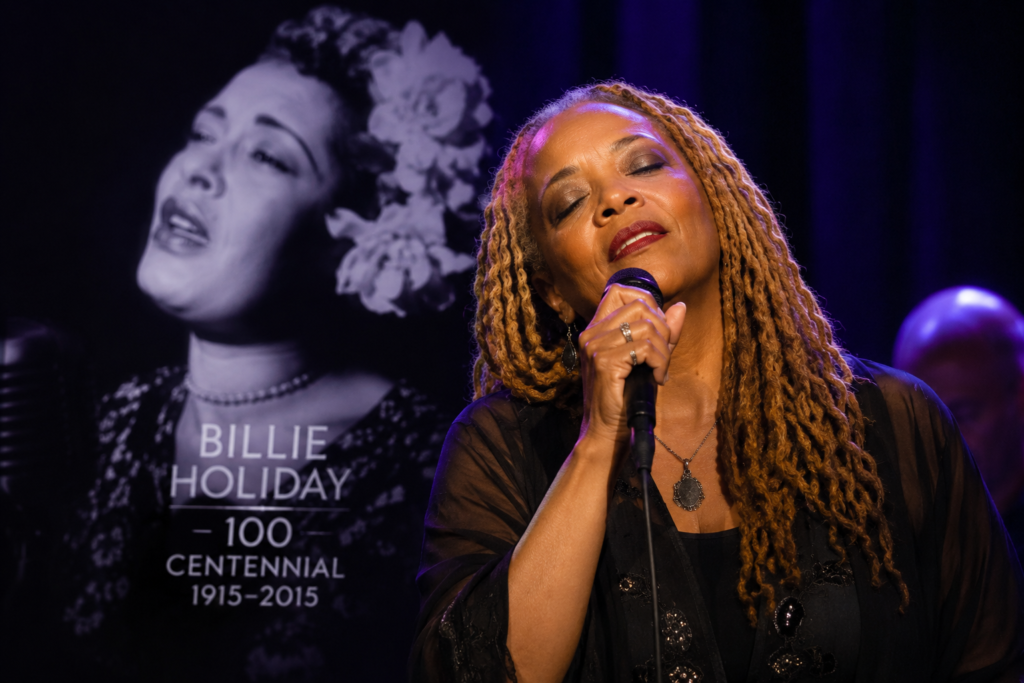
The project offered another example of how Wilson approached musical history. She did not simply attempt to reproduce Holiday’s performances. Instead, she brought the material into her own musical world.
That distinction mattered because Holiday’s recordings occupy an enormous place in jazz history. Any artist interpreting her work faces the challenge of honoring those performances while creating something that has its own purpose.
Wilson’s career had prepared her for that challenge. She had spent decades transforming songs associated with other artists, from blues musicians to singer-songwriters and jazz legends.
Her connection to Holiday also reflected Wilson’s broader relationship with influential women in jazz. She understood that interpretation could serve as both tribute and conversation with the past.
By revisiting Holiday’s songs in 2015, Wilson showed that her interest in jazz history remained active even as her own career continued to evolve.
The project became another chapter in a career defined by musical dialogue across generations rather than simple nostalgia.
Cassandra Wilson’s Recognition as an NEA Jazz Master
One of the highest points of Wilson’s career came in 2022, when the National Endowment for the Arts named her an NEA Jazz Master.
The designation carries particular weight because it recognizes artists whose careers have made significant contributions to the history and development of American jazz. Wilson entered that distinction after decades of recording, performing and expanding the possibilities of vocal jazz. (apnews.com)
The honor also placed her career in a broader historical context.
Wilson was not simply a successful recording artist with Grammy-winning albums. Her work represented a sustained contribution to an American musical tradition. She connected earlier jazz and blues practices with contemporary sounds while maintaining a strong individual voice.
That combination helps explain why her career continued to receive recognition long after her breakthrough years.
Her NEA Jazz Master designation also reinforced the importance of her influence on vocal jazz. Wilson’s recordings gave later artists an example of how they could work within jazz without limiting themselves to a fixed repertoire or production style.
By the time she received the honor, her career had already covered experimental jazz, acoustic roots music, standards, original songwriting and modern studio techniques.
The recognition therefore served as a career-level acknowledgment of the breadth of her contribution.
What Was Cassandra Wilson’s Cause of Death?
Cassandra Wilson died at 70 in Jackson, Mississippi, according to The Associated Press. The report confirms her death and highlights her career as a Grammy-winning singer, songwriter and producer.
However, readers should distinguish confirmed information from speculation about the circumstances surrounding her death.
At the time of reporting, the AP account does not establish a publicly confirmed cause of death. Therefore, claims circulating without reliable sourcing should not be treated as fact.
That distinction matters in coverage of a major artist’s death. Social media posts and unofficial reports can quickly introduce details that have not been verified by family representatives, medical authorities or established news organizations.
For now, the confirmed story is that Wilson died in her hometown at age 70 after a career that stretched across several decades. Her professional achievements included two Grammy wins, four Grammy nominations and recognition as an NEA Jazz Master in 2022.
As additional official information becomes available, reputable reporting may provide more context about her death. Until then, the focus should remain on facts that have been established and on the extraordinary musical career she left behind.
Cassandra Wilson’s Lasting Impact on Jazz
Cassandra Wilson leaves behind a body of work that changed how many listeners understood vocal jazz. Her importance came not only from her Grammy wins, but from the musical freedom she claimed throughout her career.
Wilson treated jazz as a living tradition. She could draw from blues, folk, country, R&B and popular music while keeping her own vocal identity at the center. The National Endowment for the Arts said her arrangements and distinctive voice helped expand the definition of jazz.
Her influence also reached artists who followed her. Blue Note has noted that her work on Blue Light ’Til Dawn helped open new possibilities for vocal jazz, while Norah Jones has identified Wilson’s music as an important influence on her own artistic development.
Wilson also maintained a strong connection to her Mississippi roots. Her music carried elements of the American South into sophisticated jazz settings, creating a sound that felt both contemporary and deeply connected to musical history.
That combination became her signature.
She did not need to choose between tradition and experimentation. Instead, she showed that a jazz artist could respect the past while continuing to redefine what the genre could become.
Why Cassandra Wilson Still Matters
Wilson’s career offers an important lesson about artistic independence.
She moved from the experimental M-Base environment to acoustic blues, explored standards, recorded tributes to major jazz figures, incorporated modern production techniques and continued writing original material. Her Blue Note discography documents that remarkable range.
That variety could have made her career feel disconnected. Instead, her voice provided continuity.
Listeners could recognize Wilson whether she was interpreting Robert Johnson, Joni Mitchell, Van Morrison, Miles Davis or traditional jazz standards. Her phrasing and vocal character gave each performance a recognizable emotional center.
Her influence also continues through the availability and renewed recognition of her recordings. Blue Light ’Til Dawn, for example, later received a major reissue and became part of Blue Note’s Classic Vinyl Series, reflecting its continuing importance within the label’s catalog.
For contemporary vocalists, Wilson demonstrated that genre boundaries could be starting points rather than restrictions.
That may ultimately be one of her most important contributions to jazz.
Frequently Asked Questions About Cassandra Wilson
Who was Cassandra Wilson?
Cassandra Wilson was an American jazz singer, songwriter and producer from Jackson, Mississippi. She became one of the most acclaimed vocalists of her generation through a career that blended jazz with blues, folk, R&B, country and other musical traditions. She earned two Grammy Awards and was named an NEA Jazz Master in 2022.
How old was Cassandra Wilson when she died?
Cassandra Wilson was 70 years old when she died on September 2, 2026, in Jackson, Mississippi, her hometown. Her death was confirmed by the Hinds County coroner and announced by her longtime manager.
How many Grammy Awards did Cassandra Wilson win?
Cassandra Wilson won two Grammy Awards. She won Best Jazz Vocal Album for New Moon Daughter in 1997 and again for Loverly in 2009. She received four Grammy nominations during her career.
What was Cassandra Wilson’s most famous album?
Blue Light ’Til Dawn is widely regarded as one of Cassandra Wilson’s defining albums. Released by Blue Note in 1993, it blended jazz with blues, folk and R&B and helped establish the musical direction that became central to her career.
What was Cassandra Wilson known for?
Wilson was best known for her deep, distinctive contralto voice and her ability to combine jazz with blues, folk, country, R&B and popular music. Her interpretations of songs from different traditions became a defining part of her artistry.
What made Cassandra Wilson’s voice distinctive?
Her low, dark and smoky contralto gave her performances an immediately recognizable character. However, her identity as a vocalist came from more than vocal range. She used phrasing, rhythm and restraint to give familiar songs a personal emotional perspective.
Was Cassandra Wilson an NEA Jazz Master?
Yes. The National Endowment for the Arts named Cassandra Wilson a 2022 NEA Jazz Master, one of the highest honors associated with American jazz. The NEA recognized her contribution to expanding the definition of jazz through her voice and arrangements.
What is Cassandra Wilson’s musical legacy?
Wilson’s legacy rests on her ability to connect jazz with the wider traditions of American music. She demonstrated that a vocalist could embrace blues, folk, country and contemporary influences without losing the improvisational and interpretive foundations of jazz. Her recordings continue to provide a model for artists seeking creative freedom within the genre.
Cassandra Wilson’s Final Musical Legacy
Cassandra Wilson’s career cannot be measured by awards or album sales alone. Her greatest contribution came from the way she expanded the possibilities of contemporary vocal jazz.
Throughout her career, Wilson treated genre as something open to interpretation. Blues, folk, country and R&B could sit alongside jazz without losing their individual character. At the same time, her arrangements and vocal choices gave familiar material a fresh emotional quality.
Her Mississippi roots remained an important part of that identity. Even as her career took her to major stages and recording studios around the world, the musical traditions of the American South continued to shape her sound. That connection helped give her work a strong sense of place.
Wilson’s achievements were substantial. She won two Grammy Awards, received four Grammy nominations and earned recognition as an NEA Jazz Master in 2022. The NEA also notes that she released more than 20 recordings as a leader and appeared on projects with numerous prominent musicians.
Why Cassandra Wilson Still Matters
Wilson’s lasting achievement was her ability to respect jazz tradition without becoming limited by it.
Her recordings moved comfortably between classic jazz, blues, folk and modern influences. That freedom allowed her to create music that felt rooted in history while remaining relevant to new generations of listeners.
As audiences revisit her recordings following her death, they will find more than the work of a celebrated Grammy winner. Wilson left behind an artistic example built on curiosity, independence and musical openness.
Her career showed that a jazz vocalist could honor the past while continuing to explore new sounds. In doing so, Cassandra Wilson helped broaden the language of vocal jazz and created a legacy that extends well beyond any single album or award.