
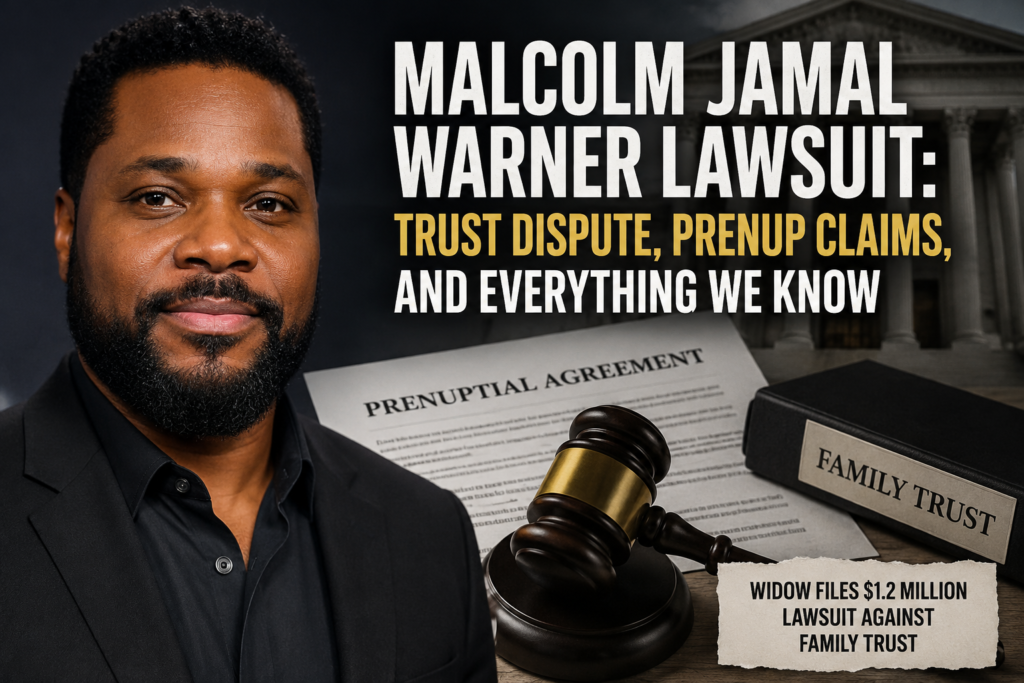
Malcolm Jamal Warner lawsuit featured image showing a courthouse, legal documents, gavel, and symbolic trust dispute illustration.

Malcolm Jamal Warner Lawsuit: Trust Dispute, Prenup Claims, and Everything We Know

Introduction

The Malcolm Jamal Warner lawsuit has become one of the most talked-about entertainment legal stories in the United States. Although many people first heard about the case through celebrity news, the lawsuit is about much more than a public figure. It focuses on estate planning, a prenuptial agreement, and a family trust. Because these legal issues affect many families, the case has attracted attention far beyond the entertainment industry.

Why Is the Lawsuit Receiving So Much Attention?

According to court filings, Malcolm-Jamal Warner’s widow, Tenisha Warner, is seeking more than $1.2 million from the Warner Family Trust. The trust is managed by Pamela Warner, the actor’s mother, who serves as its successor trustee. Tenisha alleges that several financial obligations outlined in the couple’s 2022 prenuptial agreement were not fulfilled after Warner’s death.

What Is the Lawsuit Really About?

The lawsuit does not question the circumstances surrounding Malcolm-Jamal Warner’s death. Instead, it asks whether certain financial commitments should be honored under the terms of the prenuptial agreement and the family trust. The case also raises questions about estate planning, life insurance, and the responsibilities of a trustee. Like any ongoing court case, these allegations remain unproven until the legal process is complete.

Why This Case Matters

While the lawsuit involves a well-known actor, its legal issues are not unique to celebrities. Many families face similar challenges when estate plans, trusts, or financial agreements are not updated after major life events such as marriage or the birth of a child. As a result, the case has sparked broader discussions about inheritance planning and financial responsibility.

What You’ll Learn in This Article

This article provides a detailed look at the Malcolm Jamal Warner lawsuit using publicly reported information and legal context. We’ll explain the background of the dispute, examine the reported claims, explore the legal questions involved, and discuss what the case could mean moving forward. Throughout the article, the focus remains on verified information, clear explanations, and practical insights rather than speculation.

What Is the Malcolm Jamal Warner Lawsuit About?

The Malcolm Jamal Warner lawsuit is a legal dispute involving the late actor’s widow, his family trust, and the financial obligations described in a prenuptial agreement. Although the story has received widespread media coverage, it is important to understand that the lawsuit is about estate administration rather than the actor’s death itself.

According to publicly reported court filings, Malcolm-Jamal Warner’s widow, Tenisha Warner, is seeking more than $1.2 million from the Warner Family Trust. She alleges that several financial commitments made before their marriage were not fulfilled after Warner’s passing. The trust is overseen by Pamela Warner, the actor’s mother, who serves as its successor trustee.

At this stage, these claims remain allegations presented in court. The legal process is still ongoing, and no final ruling has been issued.

The Main Focus of the Case

Unlike many celebrity lawsuits, this case does not involve defamation, contracts for entertainment projects, or business disputes. Instead, it focuses on estate planning and whether certain financial obligations should be honored after a person’s death.

Several legal documents reportedly play a central role in the case, including:

  • A 2022 prenuptial agreement
  • The Warner Family Trust
  • Estate planning documents
  • Life insurance arrangements
  • Financial records related to the estate

Because multiple legal documents are involved, the court will need to review how they interact before reaching a decision.

Why Has the Lawsuit Drawn So Much Attention?

The lawsuit has generated significant public interest for several reasons. Malcolm-Jamal Warner was a respected actor with a career that spanned decades, and many fans remember him for his memorable television roles. As a result, news about his estate quickly attracted national attention.

However, public interest extends beyond his celebrity status. Many readers want to understand how trusts, prenuptial agreements, and estate plans work after someone dies. Legal professionals often point out that these issues can become complicated if documents are outdated or appear to conflict with one another.

For that reason, the case has become both an entertainment story and a legal discussion.

Understanding the Reported Claims

Court filings describe several financial obligations that Tenisha Warner believes should be satisfied. While the court has not ruled on these claims, they provide insight into the issues being debated.

Alleged Obligations Under the Prenuptial Agreement

According to the reported lawsuit, the couple signed a prenuptial agreement before marrying in 2022. Such agreements commonly establish financial responsibilities during the marriage and explain how certain assets or obligations should be handled in the future.

The lawsuit alleges that some of those responsibilities remained incomplete after Malcolm-Jamal Warner’s death. As a result, Tenisha Warner argues that the family trust should fulfill those obligations.

Whether those claims are legally enforceable will ultimately depend on the court’s interpretation of the agreement and applicable law.

Questions About the Family Trust

Another important issue involves the Warner Family Trust. A trust is a legal arrangement that allows assets to be managed according to written instructions. Many people create trusts to simplify inheritance, reduce probate proceedings, and provide long-term financial management.

In this case, the lawsuit argues that the trust contains assets that should be available to satisfy certain contractual obligations. The trustee, however, has legal responsibilities that require administering the trust according to its governing documents and applicable law.

The court will determine whether the trust can be used in the way the lawsuit requests.

Why Estate Planning Plays a Major Role

Estate planning often receives little attention until a legal dispute arises. However, this case shows why careful planning can be important.

An estate plan may include:

Estate Planning Document Primary Purpose
Will Explains how property should be distributed
Trust Holds and manages assets for beneficiaries
Prenuptial Agreement Defines financial rights between spouses
Life Insurance Policy Provides financial protection for beneficiaries
Powers of Attorney Authorize financial or legal decisions during incapacity

When these documents are created at different times, they may not always reflect later changes in a person’s life. Marriage, children, new assets, or updated financial goals can all affect an estate plan.

If those documents appear inconsistent, disputes may arise after death. Courts are then responsible for interpreting the documents and determining each party’s legal rights.

A Reminder About Ongoing Legal Proceedings

Although the Malcolm Jamal Warner lawsuit has received extensive media coverage, it remains an active legal matter. Court filings present one side’s allegations, while the defendants have the opportunity to respond through the judicial process.

Until the court reviews the evidence and issues a ruling, none of the allegations should be viewed as established facts. For readers, the most important takeaway is that this lawsuit highlights how estate planning, trusts, and contractual agreements can become complex when they are tested in court.

The Timeline of the Malcolm Jamal Warner Lawsuit

Understanding the sequence of events helps explain why the Malcolm Jamal Warner lawsuit has attracted so much public attention. While the legal dispute became public in 2026, many of the issues raised in court date back several years.

The timeline shows how personal decisions, estate planning documents, and later legal claims became connected after Malcolm-Jamal Warner’s death.

Before the Marriage

According to publicly available reports, Malcolm-Jamal Warner created parts of his estate plan before getting married. Like many people, he also established a family trust to manage certain assets and provide long-term financial planning.

Later, he and Tenisha Warner reportedly signed a prenuptial agreement before their marriage in 2022. The agreement outlined several financial responsibilities that would apply during the marriage.

At the time, these legal documents were intended to provide financial clarity rather than create future disputes.

Marriage and Family Life

After marrying, Malcolm-Jamal Warner and Tenisha Warner built a private family life together. Unlike many celebrities, Warner rarely discussed his personal relationships in public interviews or on social media.

The couple also welcomed a daughter. However, they continued to keep their family largely out of the public spotlight.

Because of this privacy, many people knew very little about Warner’s personal finances until court documents became public.

Warner’s Death Changed the Situation

Everything changed after Malcolm-Jamal Warner’s death in July 2025. Fans across the country remembered his television career and paid tribute to his work.

However, once estate administration began, questions reportedly arose about financial obligations connected to the prenuptial agreement and other legal documents.

Estate administration often takes months or even years. During that process, attorneys review assets, debts, contracts, trusts, insurance policies, and beneficiary designations before distributing property.

As a result, legal disputes sometimes appear long after a person’s death.

The Financial Claims Explained

One reason the Malcolm Jamal Warner lawsuit has generated so much interest is the amount of money involved. However, the dollar figure tells only part of the story.

The lawsuit is based on several reported financial claims rather than one single payment.

Alleged Life Insurance Obligation

One reported claim involves life insurance.

According to the lawsuit, Malcolm-Jamal Warner allegedly agreed to maintain a life insurance policy for his wife under the terms of the prenuptial agreement. The complaint argues that this obligation was not fulfilled.

Life insurance is often included in estate planning because it provides immediate financial support to surviving family members. When questions arise about a policy, courts may examine whether the obligation was contractual and whether another source must satisfy it.

The court has not yet determined whether this claim is legally enforceable.

Claims for Financial Compensation

The lawsuit also reportedly seeks additional financial compensation connected to obligations described in the prenuptial agreement.

Although media reports summarize these claims, the court will ultimately determine:

  • Whether the contractual obligations existed.
  • Whether they remained unpaid.
  • Whether the trust can be responsible for those payments.
  • Whether state law supports the requested relief.

Until then, these issues remain disputed.

Why the Amount Matters

Large financial claims naturally attract media attention. However, the amount requested is only one part of the legal process.

Courts generally focus on questions such as:

  • What do the legal documents actually say?
  • What was the intent of the parties?
  • Which assets belong to the estate?
  • Which assets belong to the trust?
  • Are the reported obligations legally enforceable?

The answers to these questions often matter more than the total dollar amount.

Understanding the Role of a Trustee

Many readers are unfamiliar with the responsibilities of a trustee. However, that role is central to the Malcolm Jamal Warner lawsuit.

A trustee manages property held in a trust. Instead of acting on personal preferences, the trustee must follow the instructions contained in the trust document while also complying with state law.

What Does a Trustee Do?

A trustee commonly has responsibilities such as:

  • Managing trust assets.
  • Paying approved expenses.
  • Protecting property.
  • Following the trust’s written instructions.
  • Acting in the best interests of beneficiaries.
  • Keeping accurate financial records.

These duties are often called fiduciary responsibilities because the trustee must place the interests of the trust above personal interests.

Why the Trustee Is Named in the Lawsuit

According to public reports, Pamela Warner serves as the successor trustee of the Warner Family Trust.

The lawsuit names her in that official capacity rather than challenging her personal relationship with Malcolm-Jamal Warner.

This distinction is important because lawsuits involving trusts are often directed toward the trustee responsible for managing trust assets.

Ultimately, the court will decide whether the trustee acted according to the governing documents and applicable law.

Estate vs. Trust: Why the Difference Matters

Many people use the terms estate and trust as if they mean the same thing. In reality, they serve different legal purposes.

The distinction is one of the key issues in this lawsuit.

Estate Trust
Created automatically after death Usually created during a person’s lifetime
Includes property owned individually Holds assets transferred into the trust
Often goes through probate May avoid probate
Managed by an executor Managed by a trustee
Distributes remaining assets Manages assets according to trust instructions

If an asset belongs to the trust instead of the estate, different legal rules may apply.

Because of that difference, determining who controls specific assets can become one of the most important questions in an estate dispute.

What Happens Next?

The Malcolm Jamal Warner lawsuit is still working its way through the court system. Both sides will have the opportunity to present evidence, interpret the legal documents, and respond to the claims made by the other party.

Until a judge issues a ruling or the parties reach a settlement, the outcome remains uncertain. While the legal process continues, the case also serves as a reminder that clear estate planning and regularly updated legal documents can help reduce the risk of future family disputes.

Legal Issues That Could Shape the Malcolm Jamal Warner Lawsuit

As the Malcolm Jamal Warner lawsuit moves through the court system, judges will likely examine more than one legal document. Instead, they will consider how different agreements work together. That process can take time because estate disputes often involve detailed financial records and legal interpretations.

Although every case is unique, several legal questions appear to be at the center of this dispute.

Can a Prenuptial Agreement Be Enforced After Death?

A prenuptial agreement, often called a prenup, is a legal contract signed before marriage. Most people associate these agreements with divorce. However, some prenups also include obligations that continue after one spouse dies.

If a contract contains valid post-death provisions, a court may decide that those obligations remain enforceable. At the same time, judges also examine whether the agreement was properly drafted, signed, and carried out.

In this case, the court will review the reported prenuptial agreement alongside other estate documents before reaching any conclusions.

How Do Trust Documents Affect the Case?

Trust documents usually explain how assets should be managed and distributed. However, they do not automatically override every other legal agreement.

If two legal documents appear to conflict, the court may need to determine:

  • Which document controls a particular asset.
  • Whether both documents can operate together.
  • Whether later agreements changed earlier estate plans.
  • Whether the trust contains assets that can satisfy contractual obligations.

Because these questions depend on the specific language of the documents, courts often spend significant time reviewing written evidence.

Why Estate Planning Updates Matter

Estate plans should reflect major life changes. Marriage, children, new property, or business interests can all affect financial planning.

When legal documents are updated regularly, families often face fewer disputes after a person’s death. However, if older documents remain in place while circumstances change, disagreements may arise.

For that reason, many estate planning attorneys recommend reviewing important documents every few years or after major life events.

Why Similar Estate Disputes Happen

The Malcolm Jamal Warner lawsuit has received national attention because it involves a well-known actor. Even so, similar legal disputes happen every year across the United States.

Many families experience disagreements after the death of a loved one, especially when multiple legal documents exist.

Common Causes of Estate Disputes

Several issues can increase the risk of legal conflicts, including:

  • Estate plans that are never updated.
  • Different beneficiaries named in different documents.
  • Unclear trust instructions.
  • Questions about life insurance policies.
  • Disagreements over property ownership.
  • Conflicting interpretations of contracts.

In many situations, family members genuinely believe they are following the deceased person’s wishes. Unfortunately, different interpretations can still lead to litigation.

How Courts Usually Handle These Cases

Judges do not decide estate disputes based on public opinion or media coverage. Instead, they focus on legal evidence.

During the process, the court may review:

Evidence Why It Matters
Trust documents Show how trust assets should be managed
Prenuptial agreement Defines contractual obligations
Financial records Confirm assets, payments, and liabilities
Insurance documents Verify policy coverage and beneficiaries
Witness testimony Explains the intent behind certain agreements

After reviewing the evidence, the court applies state law before issuing a decision.

Public Interest and Media Coverage

The lawsuit has generated widespread media coverage because Malcolm-Jamal Warner remained a respected figure throughout his career. News organizations, entertainment websites, and legal analysts have all reported on the case.

However, readers should remember that early news reports often summarize allegations from court filings. Those reports do not determine the outcome of the lawsuit.

Why Accurate Reporting Matters

Court cases can evolve over time. New filings, legal arguments, or settlements may change the direction of a dispute.

For that reason, readers should distinguish between:

  • Court allegations.
  • Verified legal documents.
  • Judicial rulings.
  • Media commentary.
  • Public speculation.

Understanding these differences helps avoid confusion while the legal process continues.

Lessons Beyond Celebrity News

Although this lawsuit involves a famous actor, its broader lessons apply to many families.

The case highlights the importance of:

  • Reviewing estate plans after marriage.
  • Keeping beneficiary information current.
  • Updating trust documents when family circumstances change.
  • Maintaining clear financial records.
  • Seeking professional legal advice when creating estate plans.

These steps cannot eliminate every disagreement. However, they may reduce the likelihood of future disputes.

What the Malcolm Jamal Warner Lawsuit Means Going Forward

The Malcolm Jamal Warner lawsuit remains an active legal matter. As the proceedings continue, the court will review the evidence, interpret the legal documents, and determine whether the reported claims have legal merit.

Until a final ruling is issued, the allegations remain unproven. Even so, the case has already sparked important conversations about estate planning, trusts, and financial agreements after death.

For many readers, the lawsuit serves as a reminder that careful planning today can help prevent difficult legal questions in the future. While every family’s situation is different, clear documentation and regular updates to legal agreements often provide greater certainty for everyone involved.

Frequently Asked Questions About the Malcolm Jamal Warner Lawsuit

The Malcolm Jamal Warner lawsuit has generated many questions from readers looking for reliable information. Below are answers to some of the most common questions based on publicly reported information and general legal principles.

What is the Malcolm Jamal Warner lawsuit about?

The lawsuit is an estate-related legal dispute filed by Malcolm-Jamal Warner’s widow, Tenisha Warner. According to court filings, she seeks more than $1.2 million from the Warner Family Trust. The claims involve alleged financial obligations connected to a prenuptial agreement and other estate planning documents. The lawsuit does not concern the circumstances of Malcolm-Jamal Warner’s death.

Who filed the lawsuit?

The legal action was filed by Tenisha Warner, the late actor’s widow. She alleges that certain financial commitments made before their marriage were not fulfilled after his passing.

Who is named as the defendant?

The lawsuit names Pamela Warner, Malcolm-Jamal Warner’s mother, in her role as the successor trustee of the Warner Family Trust. The claims focus on her official responsibilities as trustee rather than on a personal dispute.

Is the lawsuit about Malcolm-Jamal Warner’s death?

No. The lawsuit is not related to the cause or circumstances of his death. Instead, it focuses on estate administration, the family trust, and the enforcement of reported financial obligations.

Has the court reached a final decision?

No. At the time of writing, the case remains ongoing. The allegations described in the lawsuit have not been proven in court, and no final judgment has been issued.

What is a family trust?

A family trust is a legal arrangement used to manage and protect assets. It allows a trustee to administer property according to written instructions for the benefit of designated beneficiaries. Trusts are commonly used to simplify estate planning and reduce probate proceedings.

Why has the lawsuit received so much attention?

The case has attracted national interest because Malcolm-Jamal Warner was a well-known actor with a long and respected career. At the same time, the lawsuit raises broader questions about trusts, prenuptial agreements, life insurance, and estate planning—topics that can affect many families.


Key Takeaways

The Malcolm Jamal Warner lawsuit is more than a celebrity legal dispute. It highlights how estate planning documents, family trusts, and contractual agreements can become the subject of court proceedings after a person’s death. While the headlines often focus on the reported financial claims, the underlying legal questions are far more significant.

As the lawsuit continues, the court will review the relevant documents, examine the evidence, and determine whether the reported obligations are legally enforceable. Until then, all allegations remain part of an active legal process.

For readers, the case offers several important lessons:

  • Keep estate plans up to date after major life events.
  • Review trusts and beneficiary designations regularly.
  • Ensure that prenuptial agreements work alongside other estate planning documents.
  • Maintain clear financial records and written agreements.
  • Seek professional legal advice when making significant estate planning decisions.

Although every family’s circumstances are different, careful planning can help reduce uncertainty and avoid future legal disputes.

Final Thoughts

The Malcolm Jamal Warner lawsuit demonstrates how complex estate matters can become when multiple legal documents intersect. Even well-prepared financial plans may face challenges if they are not reviewed after significant life changes such as marriage or the birth of a child.

As the legal proceedings move forward, additional court filings and rulings may provide greater clarity about the issues raised in the case. Until then, readers should rely on verified court information and reputable news reporting rather than speculation.

Beyond the celebrity headlines, this case serves as a reminder that estate planning is an ongoing process rather than a one-time task. Regular updates, clear documentation, and professional guidance can help families protect their interests and reduce the likelihood of future disputes.

Leave a Comment